
Puerto Rican Chicken Paella with Sausage and Plantain is a hearty, one-pot twist on classic Valencian paella, made with longaniza, bone-in chicken, pork chunks, pigeon peas (gandules), and green plantains. This paella is packed with island flavor and perfect for feeding a crowd.
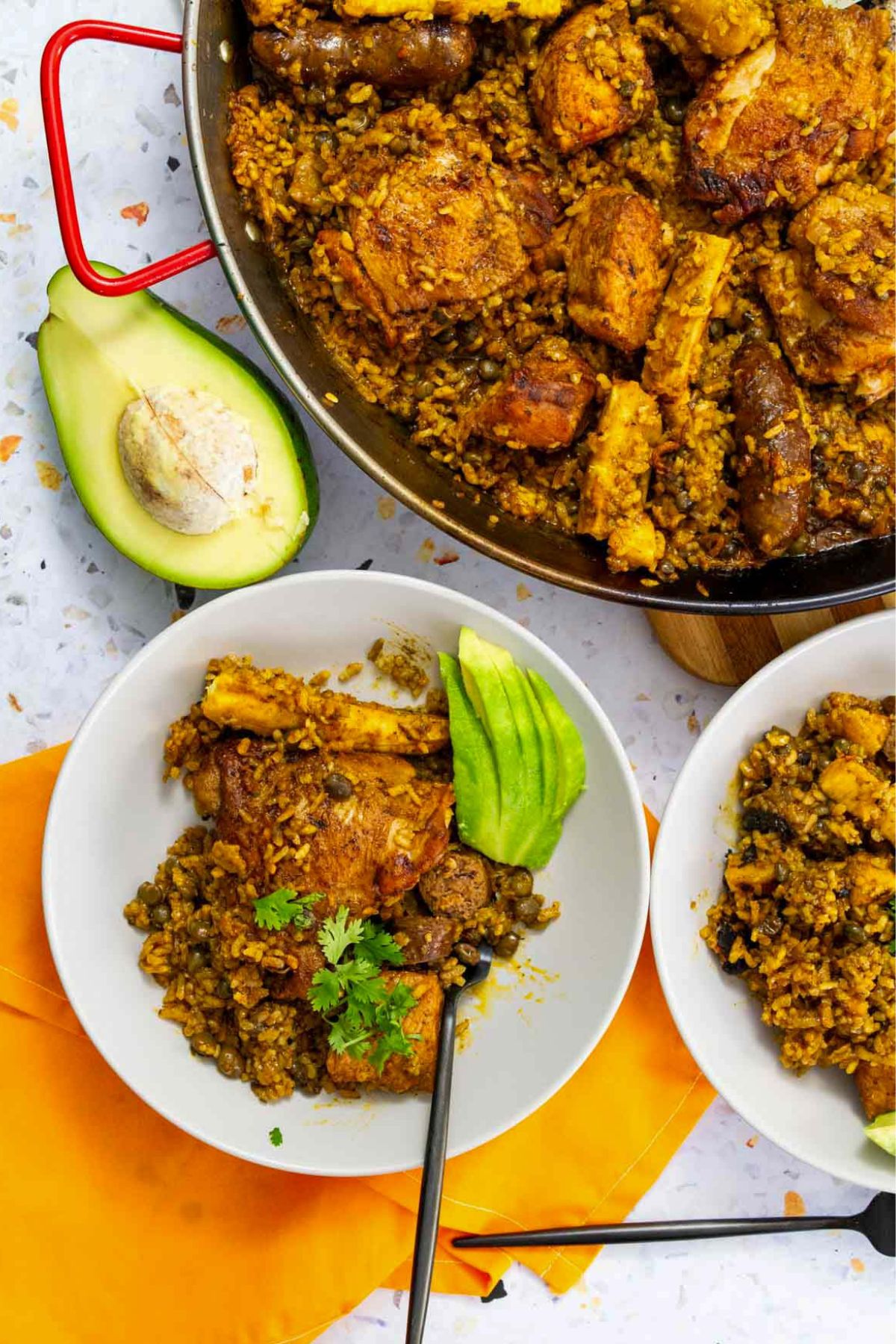
Bold Puerto Rican flavor makes this chicken paella a new crowd favorite, right alongside Instant Pot Pernil, Pinchos de Cerdo, and Guineitos en Escabeche.
If you're looking for more delicious rice recipes that can feed an army, check out Arroz con Gandules (Rice and Pigeon Peas), Arroz con Pollo (Chicken and Rice), Arroz con Habichuelas (Rice with Beans), and Asopao de Pollo (Puerto Rican Chicken and Rice Soup).
Jump To
- Why you'll love this recipe ❤️
- 🍚🔥What Is Socarrat (a.k.a. Pegao)?
- Ingredient Notes
- Variations and Substitutions
- 🔥Top Tip
- How to make Puerto Rican Chicken Paella with Sausage and Plantain
- 🥘 Expert Tips
- Recipe FAQs
- More Rice, Pasta, and Grains Recipes
- 📖 Recipe
- Puerto Rican Chicken Paella with Sausage and Plantain
- 🥘 Expert Tips
- Comments
Why you'll love this recipe ❤️
- Intentional use of Puerto Rican ingredients: This isn't just tossing in some gandules and calling it Boricua. It uses real Puerto Rican longaniza, ripe plantains, banana leaves, and sofrito to bring the flavor home.
- Depth of flavor: The rice simmers in a rich blend of beef broth and homemade chicken stock, creating a deep and savory base that you'll want to eat by the spoonful, even before adding the meat.
- Relatively easy to make: Whether you're using a stove, grill, or paella pan, the method is straightforward. Sear the meats, sauté the aromatics, build your layers, and let the pot do the work. It's a low-fuss showstopper.
- Gatherings: Paella is meant to be shared, and this dish is perfect for feeding a crowd. It's ideal for birthdays, BBQs, or family weekends. Bonus points if you cook it outside over an open flame.
- Bring people together: There's something special about making a dish that encourages community, whether it's prepping together or digging into the pegao at the bottom of the pan.
🍚🔥What Is Socarrat (a.k.a. Pegao)?
Socarrat is the crispy golden layer of rice at the bottom of a paella pan, an essential part of a proper paella in Spain. The word comes from Valencian or Catalan and means "to scorch," and it's beloved for its deep toasted flavor and crunch. In Puerto Rico, we call it pegao, and it's just as sacred. But we're not the only ones in this torrid love affair. Other countries love their crispy rice too, here are a few of them: there's Nurungji in Korea, Xoon in Senegal, Con-con in the Dominican Republic, and Bo Zai fan in China. Socarrat, pegao, whatever you call it, it's always the best part.
Ingredient Notes

- Arroz Bomba: I came across this at the store and had to give it a try. Traditionally used in Spanish paella, this short-grain rice absorbs liquid beautifully and finishes with a creamy, tender bite-perfect for one-pot dishes like this.
- Chicken Thighs, bone-in: I use bone-in, skin-on chicken thighs because they hold up better to longer cooking and bring more flavor than breast meat, thanks to their higher fat content. Most Hecho en Puerto Rico chicken comes bone-in and skin-on, which works perfectly for this recipe.
- Longaniza (Puerto Rican-Style Sausage): Puerto Rican longaniza is a fresh sausage seasoned with achiote, garlic, oregano, and vinegar. It's usually made with pork and has a finer, smoother texture, closer to andouille than chorizo. The flavor is bold and distinctly Puerto Rican.
- Plantain and Banana Leaves: This recipe utilizes both green and ripe plantains. Green for a pasteles vibe, and ripe for a touch of sweetness, like amarillos. The banana leaves are used to cover the rice as it steams, infusing the dish with that unmistakable Puerto Rican flavor.
See my recipe card below for a complete list of the ingredients with measurements.
Variations and Substitutions
- Rice Options: In Puerto Rico, we typically use medium-grain rice, which works beautifully in this dish. Arborio rice, commonly used for risotto, is another excellent option, especially with the generous amount of broth. It creates a creamy texture with a satisfying bite. Long-grain rice, such as jasmine or basmati, can be used for a lighter finish, but be mindful of the cooking time to avoid overcooking. Brown rice also holds up well, though it has a firmer, chewier texture.
- Sausage: Italian sausage, chorizo, or andouille make great substitutes for longaniza. Not into sausage? Try diced ham, pancetta, or even a spicy cured ham for a savory punch.
- Other Beans or Peas: Can't find pigeon peas? Traditionally, green peas are used in paella and make an excellent substitute for it. Want to go non-traditional? Try garbanzos, black beans, navy beans, lima beans, or red beans for your twist.
- Tocino, Bacon, or Summer Sausage: These are all traditional in Puerto Rican and Spanish cooking, often used to render fat for cooking and flavor. Consider adding tocino (fatback) alongside the olive oil at the beginning of the recipe to enhance richness and create a deeply seasoned base.
🔥Top Tip
Prep everything ahead; rinse, chop, and measure your ingredients before you start. Refer to the recipe card for complete preparation details.
How to make Puerto Rican Chicken Paella with Sausage and Plantain
This paella was cooked in a 16" carbon steel pan. It can feed four to six people. Many paella pans come with an enamel coating, but if yours is carbon steel like mine, make sure to "cure" it before first use.
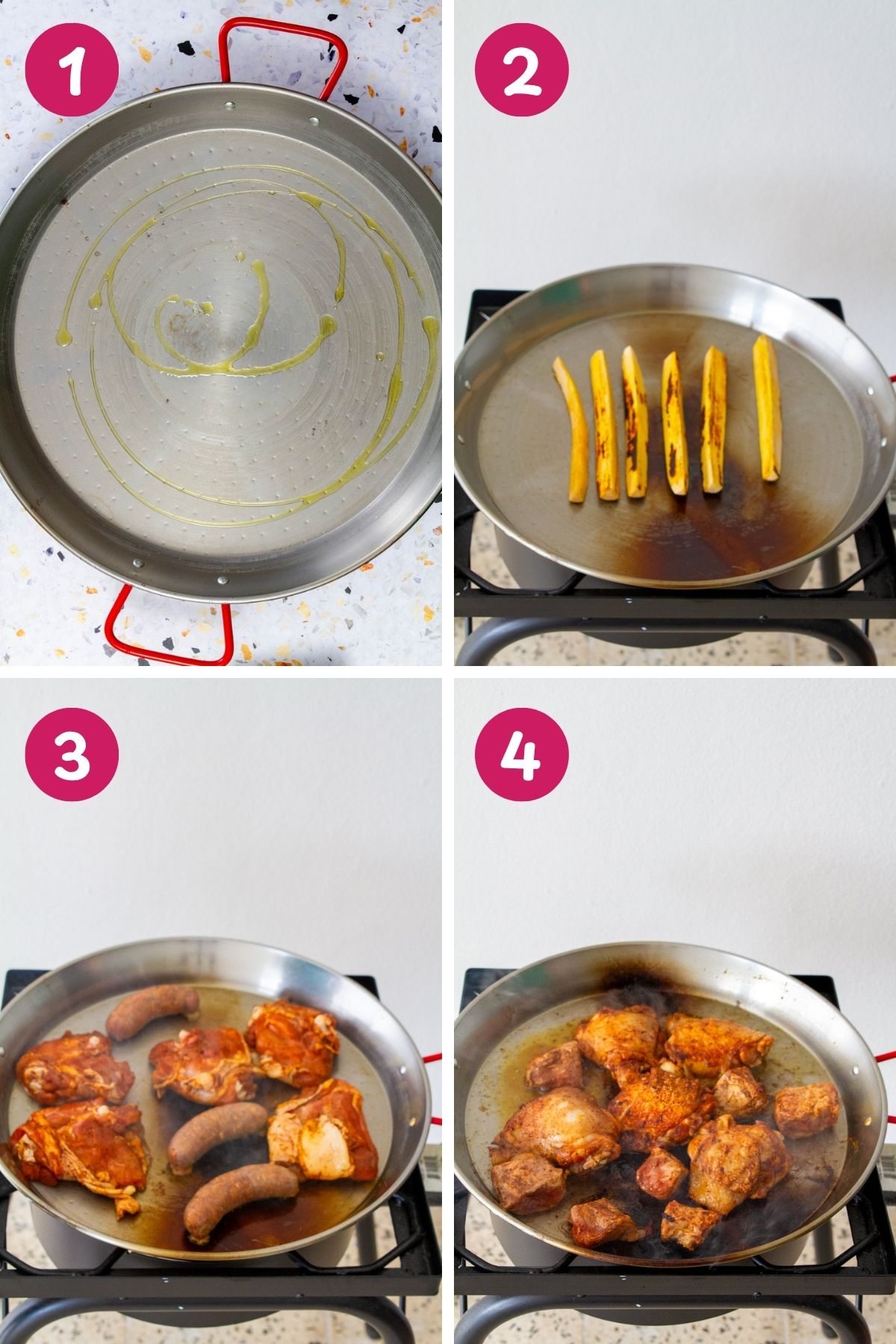
- Heat the paella pan and add olive oil. (I admit, I should have used a bit more oil in this step to fry the plantains better.) Add enough oil so that the plantain sits in a pool of oil.
- Fry the ripe plantains until golden. They do not need to cook fully, since we will add them later into the dish.
- Remove the plantains, and start searing the meats skin side down.
- Flip the meat to the other side and quickly sear the meat. Again, do not cook thoroughly. Remove the meat from the pan.
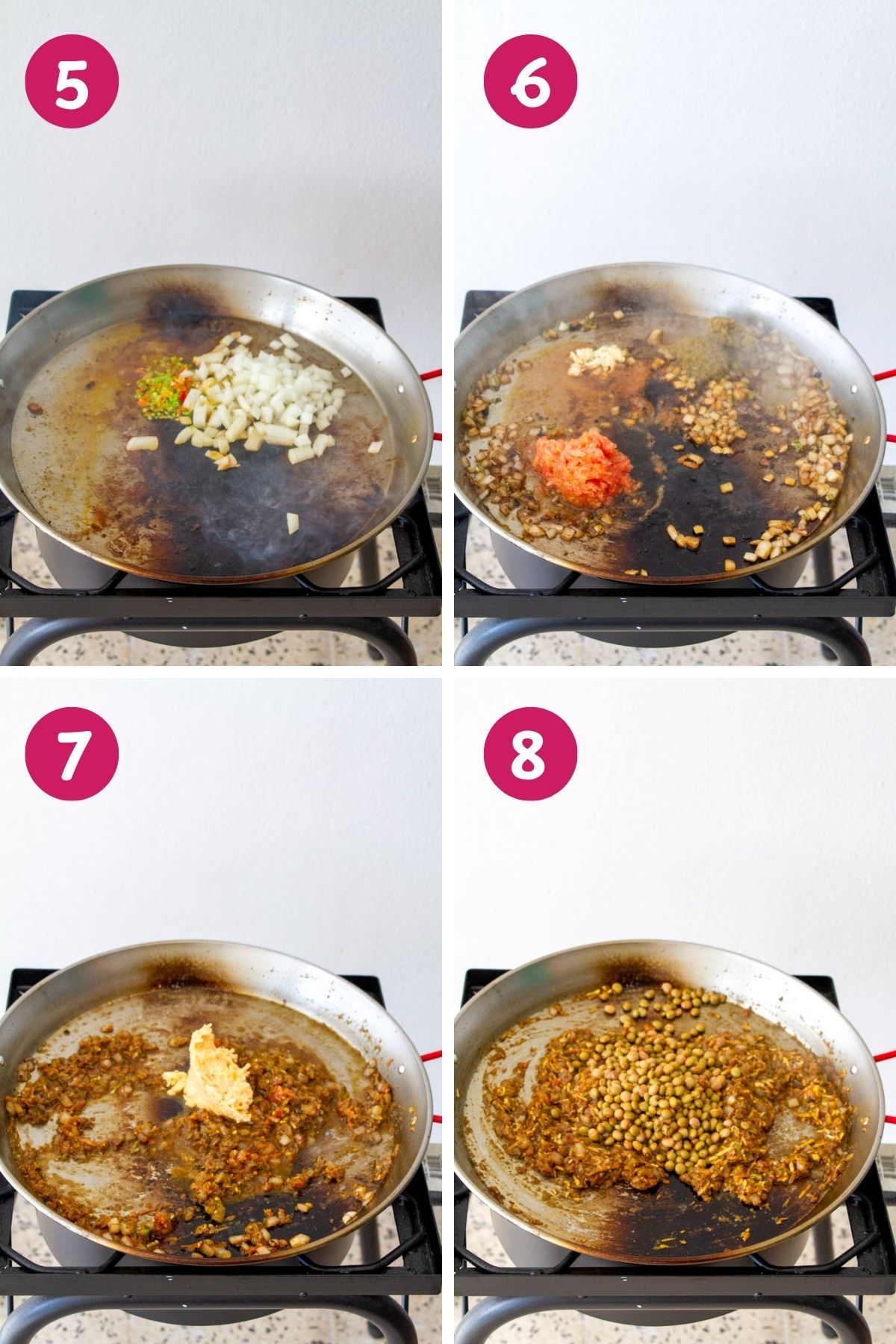
- Begin cooking the sofrito. Add chopped onions and sweet peppers. Sautee until soft and tender.
- Add garlic paste, homemade sofrito, and shredded tomato. Saute for a few minutes until ingredients tender and soft.
- Add shredded green plantain, and cook until soft, about 5 minutes.
- Saute green pigeon peas with sofrito mix to infuse flavor into the peas.
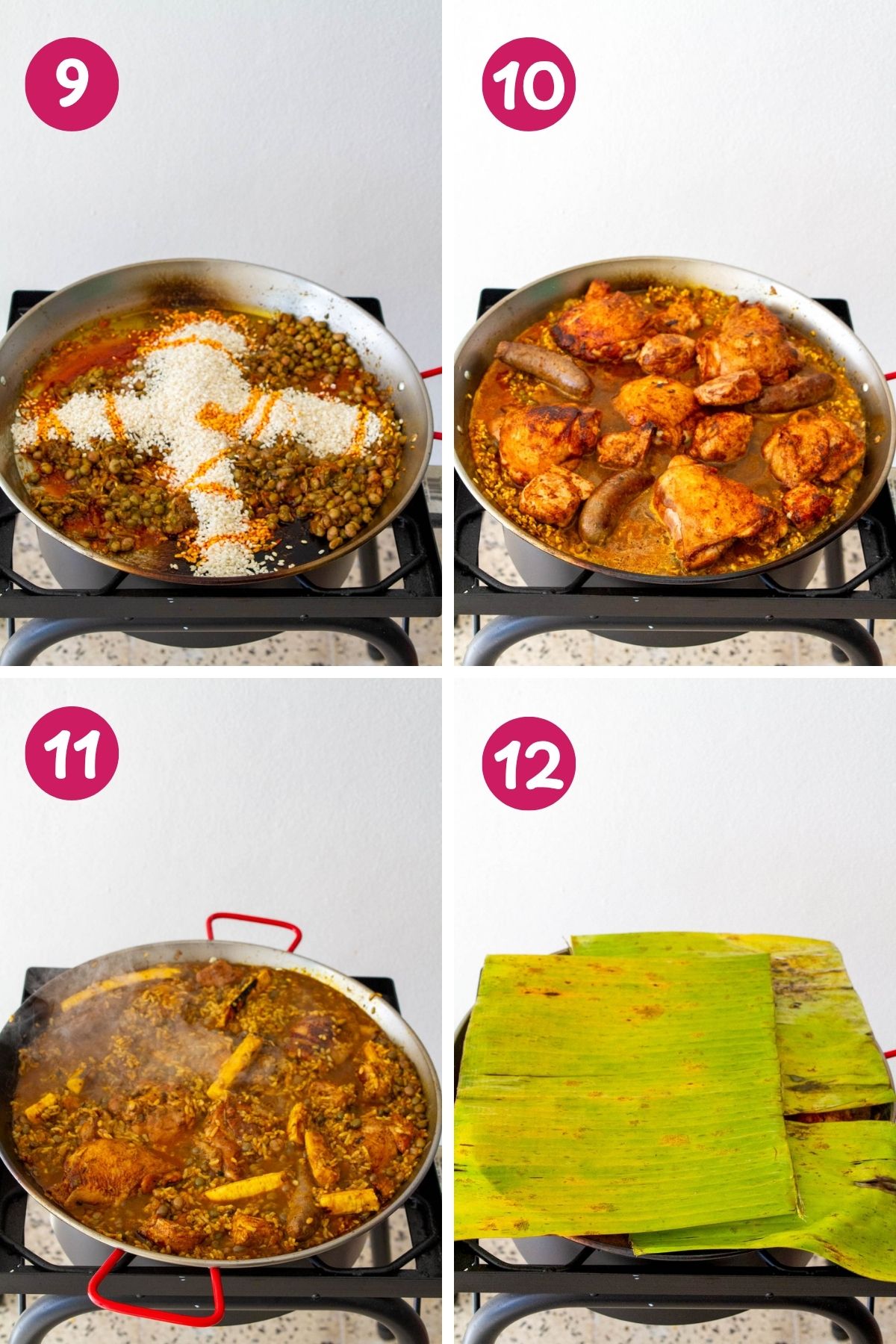
- Add rinsed rice to the pan, (No, you do not need to do a cross with the rice, but the rice helps to distribute it in such a large flat pan. Pour achiote oil over the rice and distribute the rice and oil throughout the pan. We want to lightly fry the rice.
- Add hot or warm broth. Ensure you have enough broth or water. You'll need to add liquid to the pan as needed to cook the rice.
- Cook uncovered for a few minutes until the rice begins to dry.
- This is the extra Puerto Rican touch: cover the pan with banana leaves. This step can be skipped, since traditionally paellas are not covered. However, the use of banana leaves in Puerto Rican cooking is a traditional practice that provides a subtle aroma and flavor.
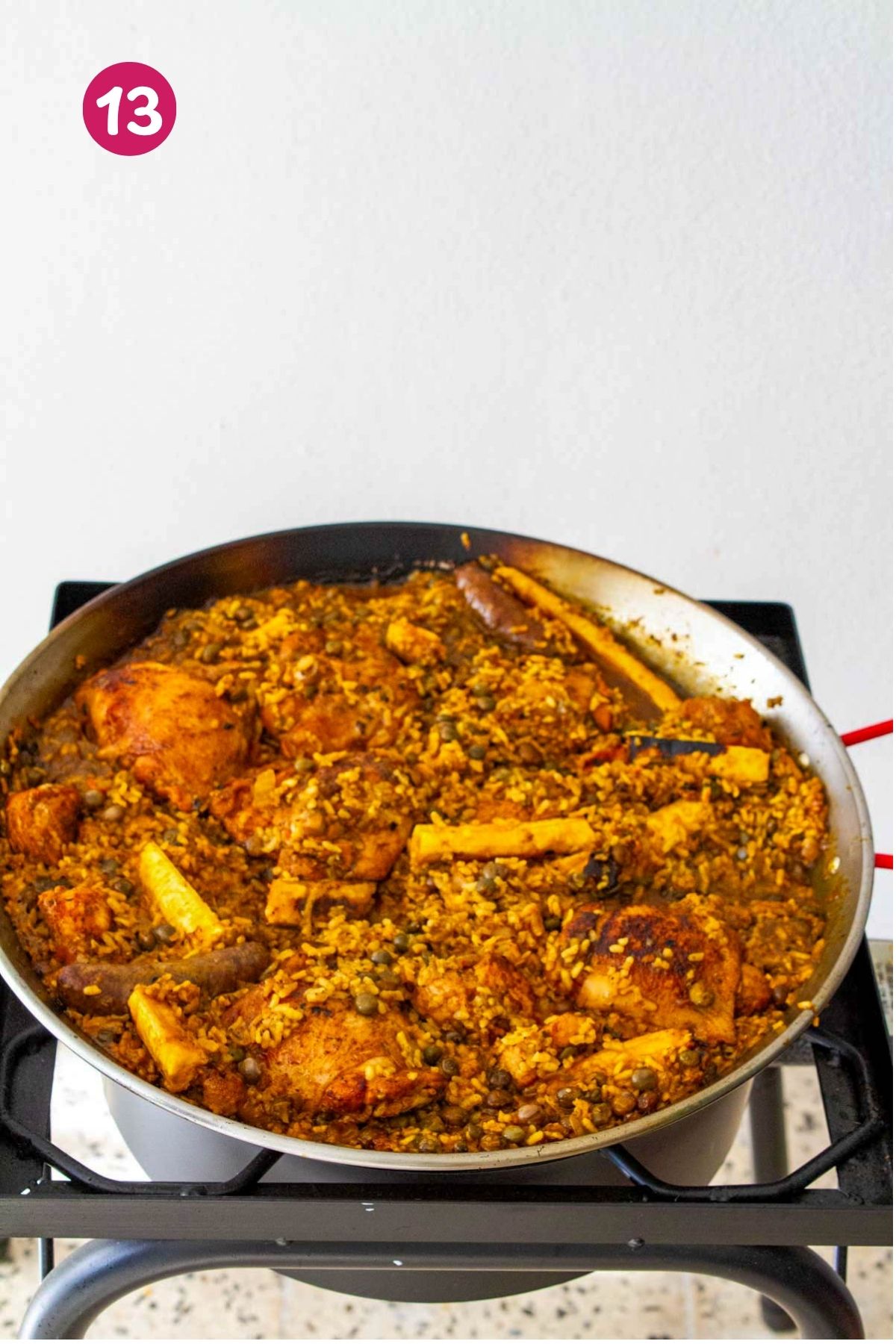
- Continue cooking until the rice is tender and cooked through. Do not stir the rice.
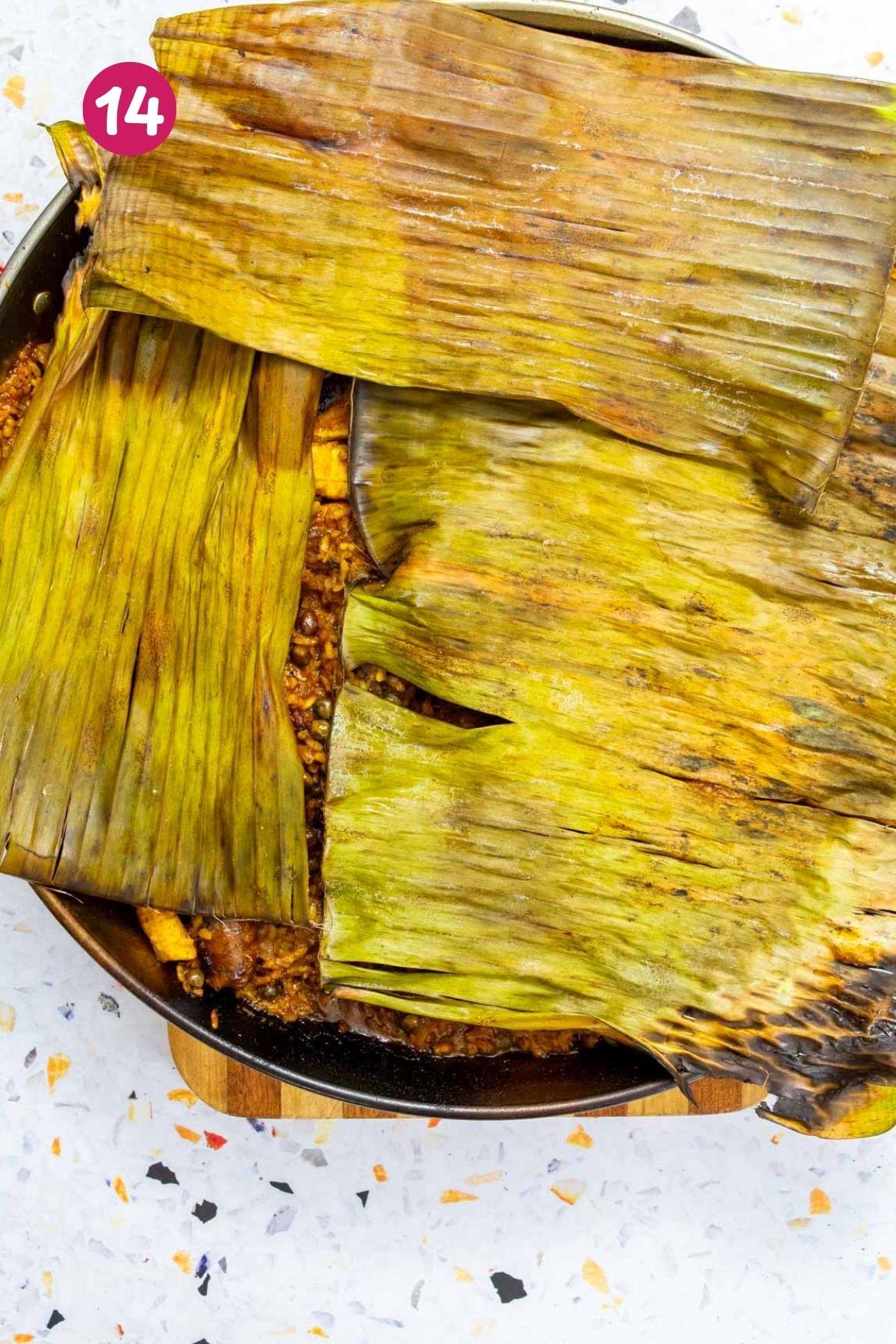
- You can continue to cover the rice with the banana leaves until ready to serve.
🥘 Expert Tips
- Sear meats in batches for better browning. Crowding the pan can cause steaming instead of searing, which prevents browning in stages to build flavor.
- Don't stir after adding broth. Stirring releases starch and can ruin the socarrat (pegao) layer at the bottom.
- Use hot broth. Adding cold broth can slow down cooking and affect rice texture. Warm it up beforehand.
- Control your heat zones. Traditional paella is cooked over open fire with rotating heat. If using a stovetop or grill, rotate the pan to ensure even cooking.
- Banana leaves = moisture lock + flavor. While not traditional in paella, they act like a lid and gently steam the rice while adding a subtle earthy aroma.
- Let it rest before serving. Give the paella 5-10 minutes covered (with banana leaves or foil) off the heat. It finishes cooking and helps flavors settle.
- Listen for the pegao. When the rice starts crackling faintly, that's your pegao forming. Don't panic; that's the good stuff.
- Layer your rice evenly. Avoid piling it too deep. A thinner, even layer helps rice cook uniformly and develop socarrat.
Recipe FAQs
Yes, but bone-in thighs add more flavor and hold up better during long cooking. Breast meat can dry out, so reduce cook time, or add it closer to the end of the cooking process.
Bomba rice is traditional for Spanish paella, but medium-grain rice (commonly used in Puerto Rican cooking) works perfectly. Arborio is a great backup. Avoid quick-cooking or instant rice.
You can substitute with raw chorizo, Italian sausage, or Andouille sausage. For a sausage-free version, diced ham or pancetta can be used as an alternative.
Yes. The banana leaves add aroma and presentation, but you can cover the pan with foil or a lid as an alternative.
Pigeon peas (gandules) are traditional in Puerto Rican rice dishes. If you can't find them, use green peas, garbanzos, or even black or red beans.
Let the rice cook undisturbed until the end, then listen for a gentle crackle. A cast iron or carbon steel pan works best. Just don't stir it once the liquid is absorbed.
More Rice, Pasta, and Grains Recipes
- How To Cook Dried Beans
- Asopao de Pollo, Puerto Rican Chicken and Rice Soup
- Mamposteao, a Puerto Rican Leftover Rice Comfort Food
- 11 Puerto Rican Rice Dishes you'll make on Repeat


I'd love to hear from you! Did you try this recipe? Leave a review and rating below. Let's connect on Instagram, and don't forget to join my weekly email list for fresh new recipes.
📖 Recipe

Puerto Rican Chicken Paella with Sausage and Plantain
Equipment
- cazuelas for serving
Ingredients
- ½ cup olive oil
- 1 ripe plantain cut into long wedges
- 6 chicken thighs bone-in, skin-on
- 3 longaniza sausages
- ½ lb pork diced
- 1 onions small diced
- 2 tablespoon sofrito
- 3 sweet peppers small diced
- 2 roma tomatoes shredded
- 1 green plantain shredded
- 1 can pigeon peas
- 2 cups bomba rice or short/medium-grain
- ¼ cup achiote oil
- 1 qrt broth have more available if possible
- 2 banana leaves optional
Instructions
- Prepare everything ahead: rinse the rice, chop onions, peppers, and garlic, slice the ripe plantains, shred the plum tomatoes and green plantain, and measure your broth or water before you start. Doing this makes this recipe a lot easier once you get going.
- Heat the paella pan and add olive oil. (I admit, I should have used a bit more oil in this step to fry the plantains better.) Add enough oil so that the plantain sits in a pool of oil.
- Fry the ripe plantains until golden. They do not need to cook fully, since we will add them later into the dish.
- Remove the plantains, and start searing the meats skin side down.
- Flip the meat to the other side and quickly sear the meat. Again, do not cook thoroughly. Remove the meat from the pan.
- Begin cooking the sofrito. Add chopped onions and sweet peppers. Sautee until soft and tender.
- Add garlic paste, homemade sofrito, and shredded tomato. Saute for a few minutes until ingredients tender and soft.
- Add shredded green plantain, and cook until soft, about 5 minutes.
- Saute green pigeon peas with sofrito mix to infuse flavor into the peas.
- Add rinsed rice to the pan. (No, you do not need to cross the rice, but it helps distribute it in the large, flat pan.) Pour achiote oil over the rice and distribute it evenly throughout the pan. We want to lightly fry the rice.
- Add hot or warm broth. Ensure you have enough broth or water. You'll need to add liquid to the pan as needed to cook the rice.
- Cook uncovered for a few minutes until the rice begins to dry.
- This is the extra Puerto Rican touch: cover the pan with banana leaves. This step can be skipped, since traditionally paellas are not covered. However, the use of banana leaves in Puerto Rican cooking is a traditional practice that provides a subtle aroma and flavor.
- Continue cooking until the rice is tender and cooked through.

Notes
🥘 Expert Tips
- Sear meats in batches for better browning. Crowding the pan can cause steaming instead of searing, which prevents browning in stages to build flavor.
- Don't stir after adding broth. Stirring releases starch and can ruin the socarrat (pegao) layer at the bottom.
- Use hot broth. Adding cold broth can slow down cooking and affect rice texture. Warm it up beforehand.
- Control your heat zones. Traditional paella is cooked over an open fire with rotating heat. If using a stovetop or grill, rotate the pan to ensure even cooking.
- Banana leaves = moisture lock + flavor. While not traditional in paella, they act like a lid, gently steaming the rice while adding a subtle, earthy aroma.
- Let it rest before serving. Give the paella 5-10 minutes to rest, covered (with banana leaves or foil), off the heat. It finishes cooking and helps flavors settle.
- Listen for the pegao. When the rice starts crackling faintly, that's your pegao forming. Don't panic; that's the good stuff.
- Layer your rice evenly. Avoid piling it too deep. A thinner, even layer helps rice cook uniformly and develop a crispy, caramelized crust, known as socarrat.


Craig says
Loved it! Lots of ingredients, but easy to make. The depth of flavor is amazing. This is definitely the kind of dish to wow a crowd. But easy enough for a family dinner.
Zoe Forestier Villegas says
Definitely a "show-stopper"!