
Puerto Rican Guava Cake, known as panetela de guayaba, is a buttery, tender cake layered with guava paste and baked until golden. It is one of those recipes that does not need an occasion, just a cup of coffee and someone to share it with.

Panetela de Guayaba can be found at many grocery stores and bakeries, but Carla's Sweets is the most famous and my favorite when I create care packages for friends and family in the States. The best way to serve panetela is alongside a warm cup of Café con Leche, or Chai with Coconut Milk (I can't drink coffee, so I drink Chai instead).
For more Puerto Rican Desserts worthy of that 3 p.m. coffee try, Flancocho, or Impossible cake, half flan-half cake-all delicious. Tembleque de Coco, a no-bake coconut custard with hints of cinnamon. And of course, Puerto Rico's sweethearts, Polvorones, Puerto Rican crumbly shortbread cookies.
Jump To
Why you'll love this recipe
- Simple ingredients: This is a pantry-friendly recipe that's ready whenever.
- Unmistakably Puerto Rican: That layer of guava paste baked inside the cake says it all.
- Scales easily: Double the recipe for a 9x13 pan when you are feeding a crowd; this is a party staple for good reason.
- Keeps well: The texture actually improves the next day as the moisture from the guava paste works its way through the crumb.
What's Panetela?
If you have ever searched for panetela recipes and come back confused, you are not alone. The word panetela travels across the Caribbean and Central America, carrying a different meaning in nearly every country it passes through.
In Puerto Rico, Panetela de Guayaba, which is what you are looking at right now: a rich, buttery cake with guava paste layered inside, baked in a pan, and cut into bars. In Cuba, Panetela refers to something else entirely: a light, egg-heavy sponge cake with no guava, traditionally cooked in a pressure cooker on the stovetop. What Puerto Rico calls panetela de guayaba, Cuba calls masa real. Same concept, different name.
In Nicaragua, their panetela or bizcotela is closer to what we call donas rojas in Puerto Rico: a flat donut glazed with red sugar. I have never had a bizcotela from Nicaragua, but the donas rojas have always tasted stale to me. Maybe this is a sign to try the recipe and taste them fresh.
Ingredient Notes
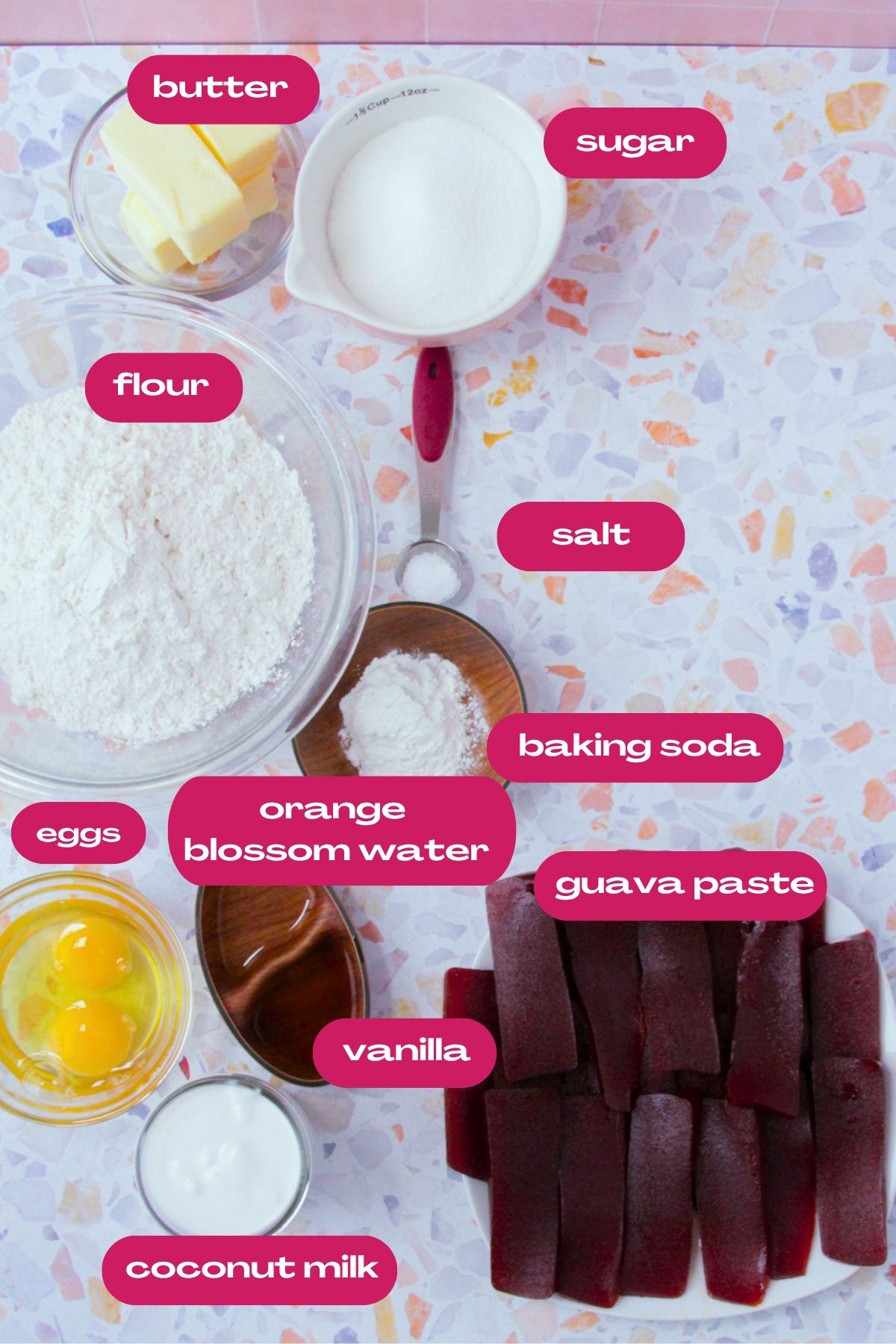
- Butter: Butter keeps this cake tender, gives it lift when creamed with sugar, and delivers a depth of flavor that oil cannot replicate.
- Eggs: They bind the batter, keep it smooth, and produce the tight, dense crumb that holds a layer of guava paste without falling apart when sliced.
- Guava paste: Guava paste is the star of this cake. It holds its shape well during baking, making this a one-step layered cake. The guava layer adds sweetness and texture to the final dish.
See my recipe card below for a complete list of the ingredients with measurements.
Variations and Substitutions
- Cream Cheese: Lay thin slices of cream cheese alongside the guava paste in the filling layer. It is a classic combination; guava and cheese are as Puerto Rican as it gets.
- Guava jam or preserves: If guava paste is unavailable, guava jam or preserves can be used as a substitute. Keep in mind the texture will be softer and the layer less defined.
- Almond extract: Swap the vanilla for almond extract for a tropical variation that pairs beautifully with the guava.
- Coconut Milk and Oil: Swap coconut milk for the milk 1:1, and coconut oil for butter. Coconut oil can be swapped 1:1 or about 20% less than the butter. Remember, butter is about 80% fat, whereas coconut oil is 100% fat. So use roughly ¾ cup + 2 tablespoons of coconut oil.
- 9x13 pan: Double the recipe and use a 9x13 pan to feed a larger crowd. Add 10 to 15 minutes to the baking time, then check with a toothpick.
Not all variations and substitutions have been tested with this recipe. If you do try any of the suggestions, let me know in the comments.
Top Tip
Room temperature matters: Before you begin, take a moment to set your butter, eggs, and milk out on the counter. When everything is at the same temperature, the batter comes together smoothly, the butter creams properly with the sugar, and the cake bakes up with a lighter, more even crumb. About an hour on the counter is all it takes.
How to make Puerto Rican Guava Cakes (Panetela de Guayaba)
Bring butter, eggs, and milk to room temperature before starting. Preheat the oven to 350°F. Line an 8x8 square baking pan with parchment paper, leaving an overhang on two sides for easy removal.
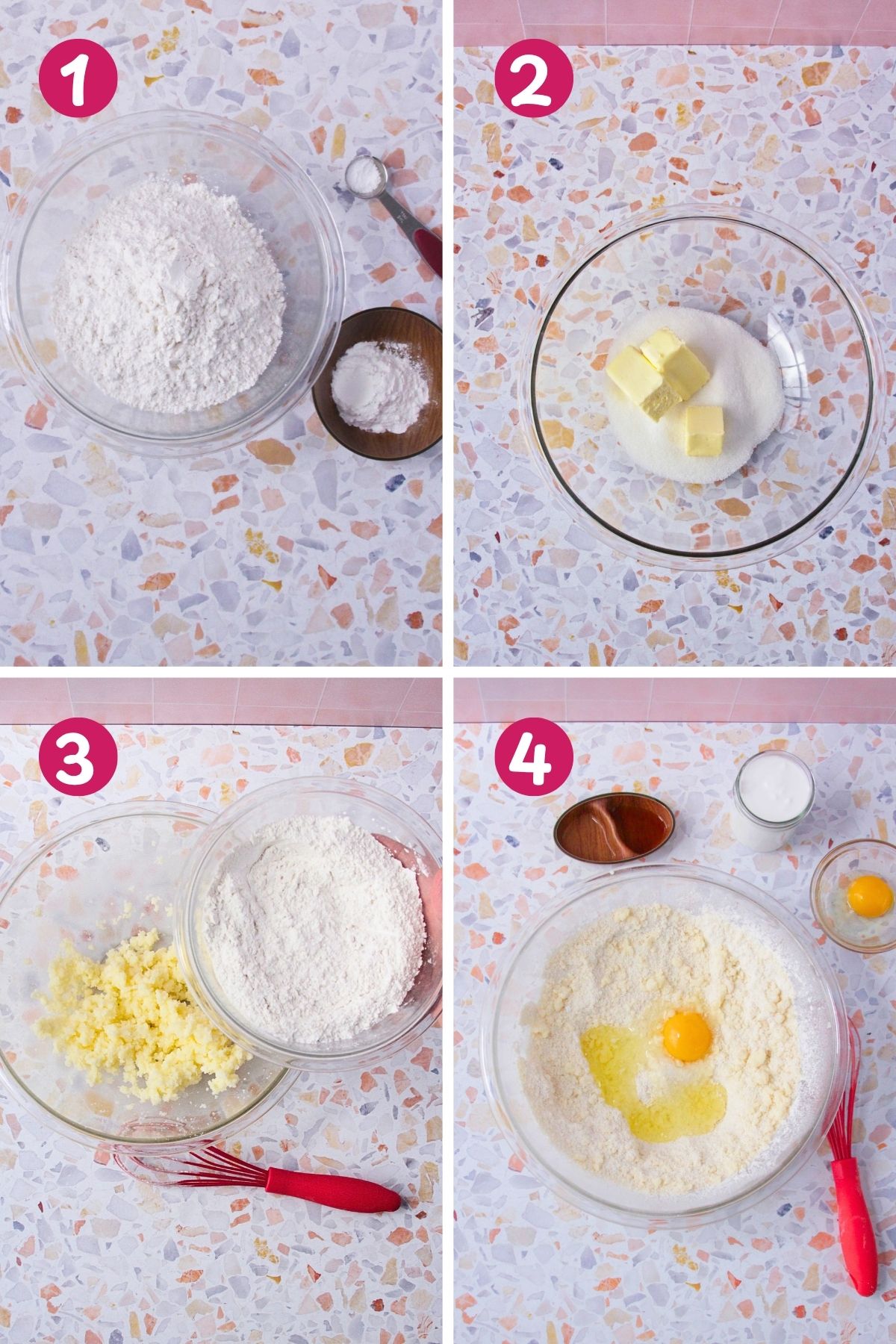
- In a medium bowl, sift together the flour, baking powder, and salt. Set aside.
- In a large bowl, beat the butter and sugar together until light and fluffy, about 3 to 4 minutes.
- Incorporate the flour with the butter.
- Add the eggs one at a time, beating well after each addition and scraping down the sides of the bowl as needed. I have added milk to the recipe (which is not a traditional ingredient). To incorporate milk, follow steps 5-8.
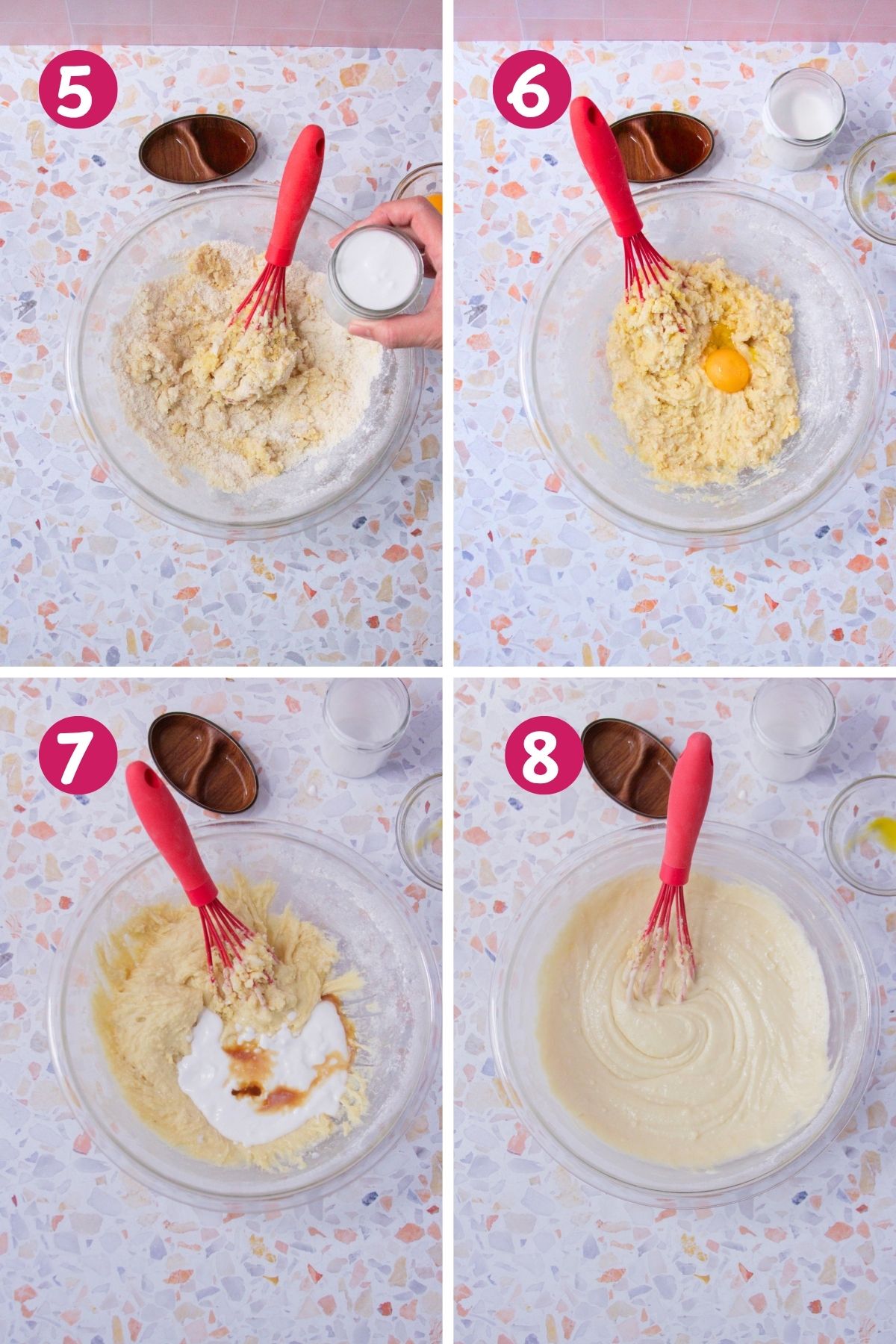
- For a softer cake crumb, I have added milk to the batter between each egg.
- Incorporate second egg.
- Add the last of the milk along with orange blossom water and vanilla or almond extract.
- Incorporate until just combined.
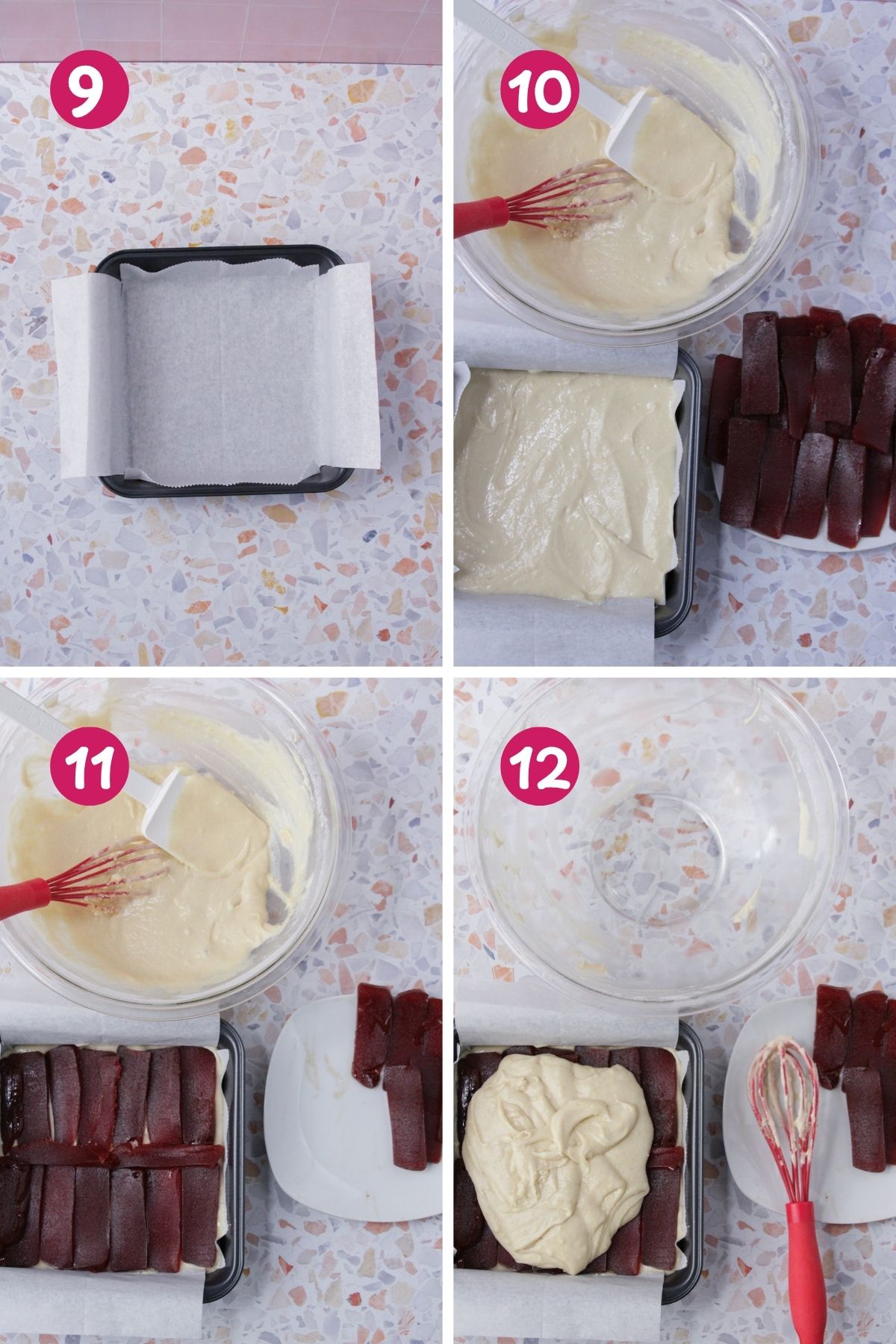
- Line an 8x8 baking pan with parchment paper, leaving excess on the sides; this will help you lift the cake out of the pan for cooling later.
- Pour half the batter into the pan. You may weigh out the batter to get the total weight. Then place the baking pan on the scale, zero the scale, and pour half the batter.
- Line the guava paste slices on top of the bottom half of the batter. Try to fill the area as much as possible with the paste, since the paste does not fully melt and will leave gaps.
- Then pour the remaining batter over the sliced guava. Bake in the preheated oven at 350°F for 30-35 minutes, or until a toothpick inserted into the center comes out clean and the top is golden. If you insert the toothpick too low, you will touch the guava paste, and that will remain moist throughout the baking process.
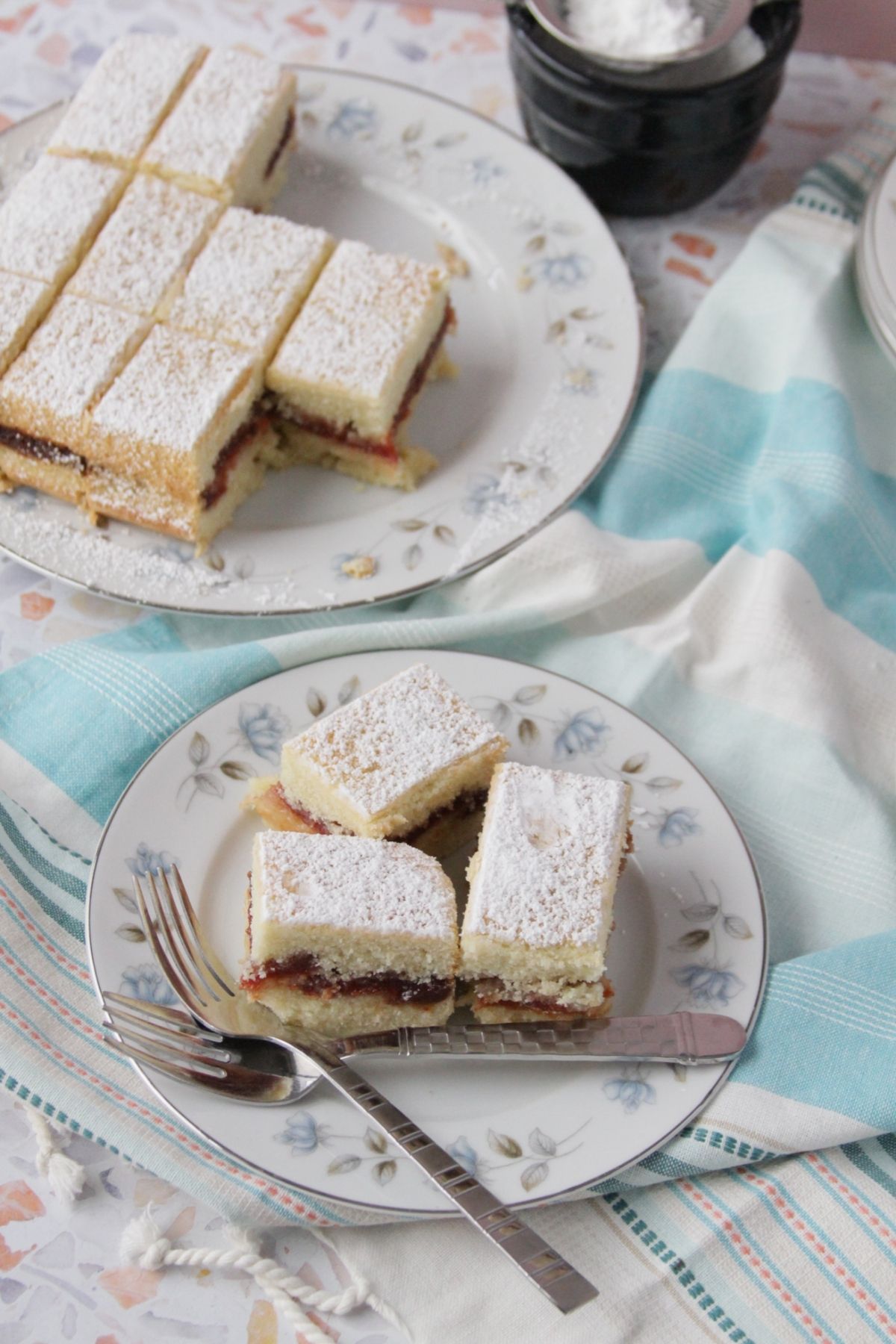
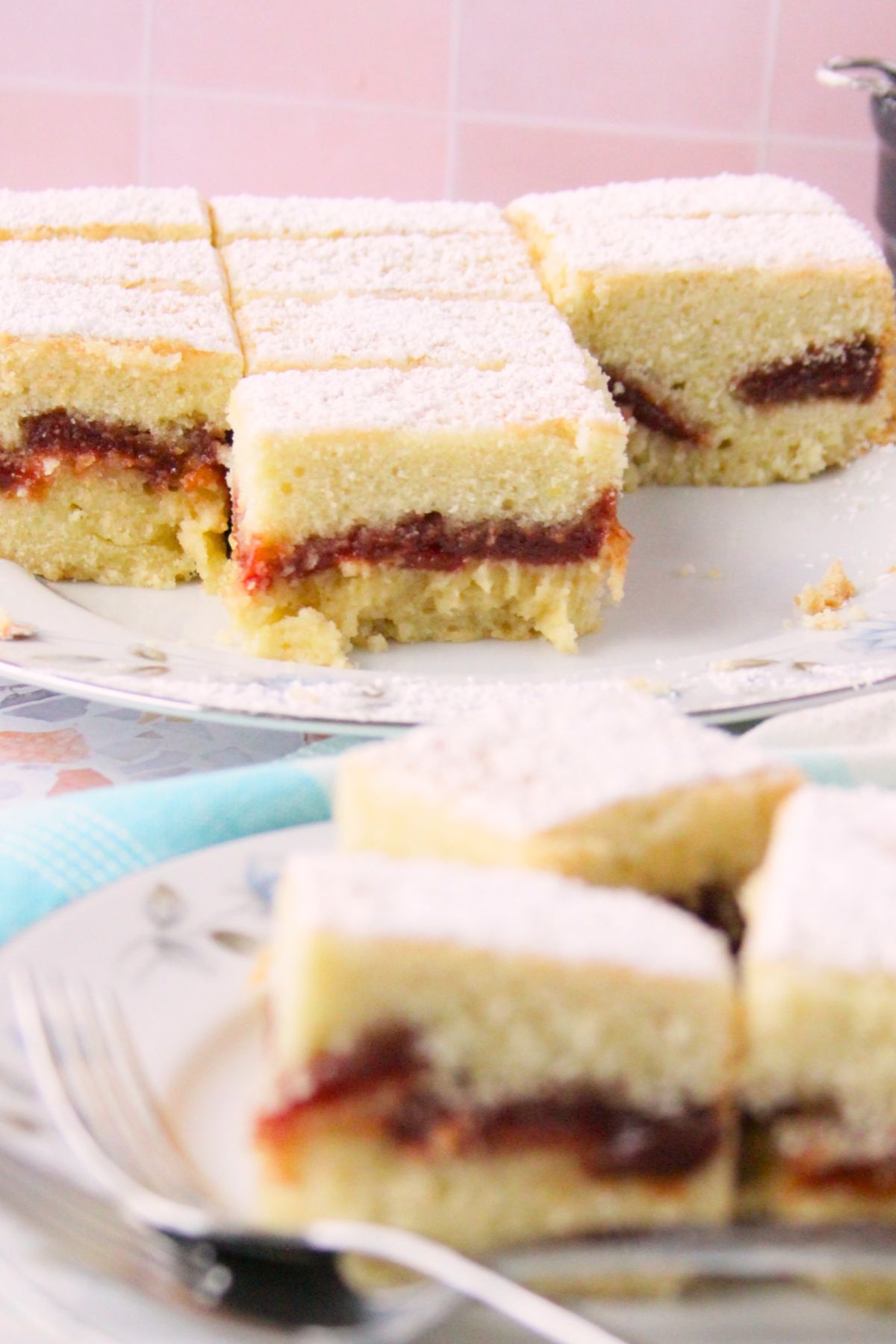
- Once ready, place the pan on a cooling rack. Once cooled, use the overhang parchment to lift the cake from the pan. Place some powdered sugar on the cutting area, then slice into 12 slices. Dust the top of the cake with powdered sugar.
Expert Tips
- Oven timing varies: I always begin checking at half the lowest suggested bake time. This gives me a chance to assess progress and rotate the pan for even browning. Even with a convection oven, I rotate halfway through. Every oven is different, so keep an eye on yours and use the toothpick test to find the sweet spot for your kitchen.
- The guava paste does not melt. This surprises first-time makers every time. Unlike chocolate or jam, guava paste holds its shape in the oven. Place the strips deliberately and with intention; they will bake exactly where you put them. Full coverage of the batter layer means every bite has guava in it. Also consider how you are cutting the bars, as chopped-up pieces will be visible when the bars are cut.
- Do not overmix: Once the flour goes in, switch from your mixer to a spatula or wooden spoon. Gently fold the flour and milk into the batter until just combined. Overmixing at this stage develops gluten and turns a tender cake tough, undoing all the work you did by properly creaming the butter.
- The parchment sling: For easy removal, line your pan with a parchment sling, leave an overhang on two opposite sides, and lift the cooled cake out cleanly before slicing.
- Let it rest: This cake is better the next day. The guava paste moisture migrates into the crumb overnight, and the flavor deepens. Make it the day before if you can.
- Cut the cake before dusting with sugar: You may dust the surface on which you will be cutting the cake with powdered sugar; this will give you coverage on the underside of the pieces, but do not dust with sugar until all the pieces are cut. It will make for a more aesthetically pleasing presentation.
- Slicing the guava paste: Keep a tall container with warm water nearby when you decide to cut into the cake. As you cut, rinse, and wipe your blade in warm water, you clean the cuts on your cake.
- Storage: Store covered at room temperature for up to 2 days, or in the refrigerator for up to 5 days. Bring to room temperature before serving.
Recipe FAQs
It is worth noting that guava cake in Hawaii is a different cake entirely; a light pink chiffon or butter cake made with guava juice or nectar, topped with cream cheese frosting. It shares the name and the fruit, but has no connection to the Caribbean tradition. Panetela de guayaba has its roots in Spanish colonial baking traditions, adapted over generations to incorporate local ingredients like guava. I have not been able to find a direct ancestor to this recipe except for Brazo Gitano, which we do make in Puerto Rico and the Caribbean. A nearly identical version of Puerto Rican Panetela exists in Cuba under the name Masa Real, which suggests the recipe traveled across the Greater Antilles and took root in each island's kitchen in its own way.
Tembleque, flan, tres leches, and arroz con dulce are the classics that appear at every holiday table and restaurant. However, panetela de guayaba is the one we reach for regularly when the afternoon cup of coffee is calling.
Guava is called guayaba in Puerto Rico and throughout the Spanish-speaking Caribbean. Guayaba is a Taino word, like Barbacoa, and it has been spread throughout the world following the fruit. The fruit grows across the island in pink and white varieties. Guava paste, pasta de guayaba, is made by cooking the fruit down with sugar until it sets firm enough to slice, and it is one of the most versatile ingredients in Puerto Rican baking and cooking.
Panetela Nicaragüense, also called bizcotela, is a dry, crunchy glazed sweet bread or cookie that is a staple of Nicaraguan bakeries, particularly in regions like León. It is typically dipped in coffee, hot cocoa, or milk. Despite sharing the name, it has nothing in common with Puerto Rican panetela de guayaba. What Nicaraguans call panetela, Puerto Ricans call donas rojas.
More Desserts, Sweets, and Bread Recipes
- Pumpkin spice coquito
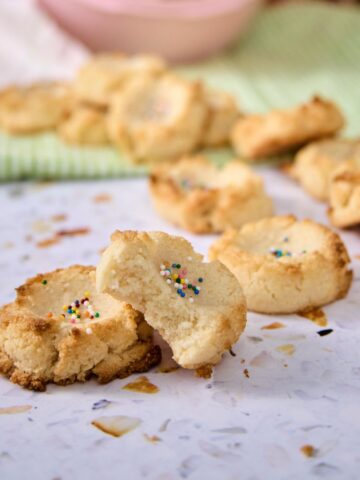
- Puerto Rican Polvorones (Shortbread Cookies)
- Low-Carb Polvorones
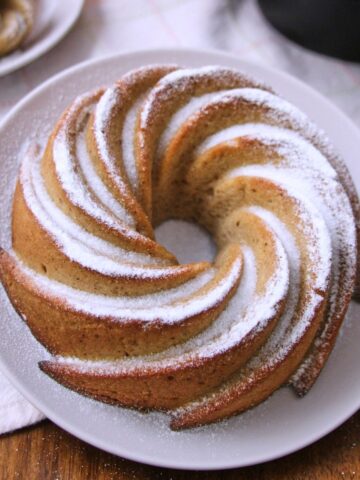
- Puerto Rican Spice Cake (Hojaldre Añasqueño)

Before You Go . . .
Cooked it and loved it? Rate it. Review it. Share it. Your feedback helps others and keeps this blog cooking.
📖 Recipe

Puerto Rican Guava Cakes (Panetela de Guayaba)
Equipment
- 1 8X8 baking pan 9x13 for a double recipe
- 1 mixing bowl-medium for dry ingredients
- 1 mixing bowl-large for wet ingredients
- 1 electric hand mixer
- 1 Rubber Spatula wooden spoon
- 1 offset spatula optional, if available
Ingredients
- 2 cups flour
- 1 tablespoon baking powder
- ¼ teaspoon salt
- 1 stick butter at room temperature
- 2 tablespoon lard at room temperature, substitute with butter or coconut oil.
- 1 cup sugar
- 2 large eggs at room temperature
- 1¼ cup milk
- 1 tablespoon orange blossom water optional
- 1 teaspoon almond or vanilla extract optional
- 1 lb guava paste cut into 16 slices
- powdered sugar for decoration
Instructions
- Preheat the oven to 350°F. Line with parchment paper and allow the ends to hang on the sides. If you do not have parchment paper, grease the baking pan with butter and set it aside.
- Sift together twice the flour, baking powder, and salt. Set aside.2 cups flour, 1 tbsp baking powder, ¼ tsp salt
- In a bowl, cream butter, lard and sugar until light and fluffy1 stick butter, 2 tbsp lard, 1 cup sugar
- Incorporate the flour mixture with the creamed butter.
- Add the eggs one at a time, beating well after each addition and scraping down the sides of the bowl as needed. I have added milk to the recipe (which is not a traditional ingredient).2 large eggs
- For a softer cake crumb, I have added milk to the batter between each egg. Incorporate the second egg.1¼ cup milk
- Add the last of the milk along with orange blossom water and vanilla or almond extract.1 tbsp orange blossom water, 1 tsp almond or vanilla extract
- Spoon half of the batter into the baking dish. Use an offset spatula to move the batter in the pan to ensure evenness.
- Take the guava paste slices and place them over the batter. The paste will not melt and spread, so keep this in mind while placing them over the batter. An alternative for the paste could be a guava preserve or jam.1 lb guava paste
- Cover the guava with the other half of the cake batter. Again, use the offset spatula to ensure the batter has been spread evenly throughout the pan.
- Bake for 35 to 40 minutes or until a toothpick or a fork comes out clean. Remove from the oven and let it cool. Once the pan has cooled, lift the cake out of the pan and place it on a cooling rack to cool completely. Dust the cutting surface with powdered sugar. Place the cake on it and cut the cake into bars, about 12 to 16 pieces, depending on your liking. Once cut, dust the bars with powdered sugar for the final presentation. ¡Buen Provecho!powdered sugar




nila smith says
I love this recipe it turned out better than i thought it would taste. I'm going to substitute the dairy tho for my own allergy. Usually it turns out the same. We shall see.
Zoe Forestier Villegas says
Please let me know how it comes out!