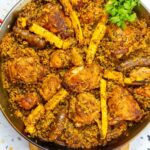
Puerto Rican Chicken Paella with Sausage and Plantain
Puerto Rican Chicken Paella with Sausage and Plantain is a hearty, one-pot twist on classic Valencian paella, made with longaniza, bone-in chicken, pork chunks, pigeon peas (gandules), and green plantains. It’s packed with island flavor and perfect for feeding a crowd.
Servings: 6 servings
Calories: 232kcal
Equipment
- cazuelas for serving
Ingredients
- ½ cup olive oil
- 1 ripe plantain cut into long wedges
- 6 chicken thighs bone-in, skin-on
- 3 longaniza sausages
- ½ lb pork diced
- 1 onions small diced
- 2 tablespoon sofrito
- 3 sweet peppers small diced
- 2 roma tomatoes shredded
- 1 green plantain shredded
- 1 can pigeon peas
- 2 cups bomba rice or short/medium-grain
- ¼ cup achiote oil
- 1 qrt broth have more available if possible
- 2 banana leaves optional
Instructions
- Prepare everything ahead: rinse the rice, chop onions, peppers, and garlic, slice the ripe plantains, shred the plum tomatoes and green plantain, and measure your broth or water before you start. Doing this makes this recipe a lot easier once you get going.
- Heat the paella pan and add olive oil. (I admit, I should have used a bit more oil in this step to fry the plantains better.) Add enough oil so that the plantain sits in a pool of oil.
- Fry the ripe plantains until golden. They do not need to cook fully, since we will add them later into the dish.
- Remove the plantains, and start searing the meats skin side down.
- Flip the meat to the other side and quickly sear the meat. Again, do not cook thoroughly. Remove the meat from the pan.
- Begin cooking the sofrito. Add chopped onions and sweet peppers. Sautee until soft and tender.
- Add garlic paste, homemade sofrito, and shredded tomato. Saute for a few minutes until ingredients tender and soft.
- Add shredded green plantain, and cook until soft, about 5 minutes.
- Saute green pigeon peas with sofrito mix to infuse flavor into the peas.
- Add rinsed rice to the pan. (No, you do not need to cross the rice, but it helps distribute it in the large, flat pan.) Pour achiote oil over the rice and distribute it evenly throughout the pan. We want to lightly fry the rice.
- Add hot or warm broth. Ensure you have enough broth or water. You'll need to add liquid to the pan as needed to cook the rice.
- Cook uncovered for a few minutes until the rice begins to dry.
- This is the extra Puerto Rican touch: cover the pan with banana leaves. This step can be skipped, since traditionally paellas are not covered. However, the use of banana leaves in Puerto Rican cooking is a traditional practice that provides a subtle aroma and flavor.
- Continue cooking until the rice is tender and cooked through.
Notes
🥘 Expert Tips
- Sear meats in batches for better browning. Crowding the pan can cause steaming instead of searing, which prevents browning in stages to build flavor.
- Don’t stir after adding broth. Stirring releases starch and can ruin the socarrat (pegao) layer at the bottom.
- Use hot broth. Adding cold broth can slow down cooking and affect rice texture. Warm it up beforehand.
- Control your heat zones. Traditional paella is cooked over an open fire with rotating heat. If using a stovetop or grill, rotate the pan to ensure even cooking.
- Banana leaves = moisture lock + flavor. While not traditional in paella, they act like a lid, gently steaming the rice while adding a subtle, earthy aroma.
- Let it rest before serving. Give the paella 5–10 minutes to rest, covered (with banana leaves or foil), off the heat. It finishes cooking and helps flavors settle.
- Listen for the pegao. When the rice starts crackling faintly, that’s your pegao forming. Don’t panic; that’s the good stuff.
- Layer your rice evenly. Avoid piling it too deep. A thinner, even layer helps rice cook uniformly and develop a crispy, caramelized crust, known as socarrat.
Nutrition
Serving: 1cup | Calories: 232kcal | Carbohydrates: 10g | Protein: 14g | Fat: 15g | Saturated Fat: 4g | Polyunsaturated Fat: 3g | Monounsaturated Fat: 7g | Trans Fat: 0.04g | Cholesterol: 67mg | Sodium: 181mg | Potassium: 206mg | Fiber: 1g | Sugar: 0.4g | Vitamin A: 152IU | Vitamin C: 1mg | Calcium: 13mg | Iron: 1mg
