
These low-carb polvorones are my solution to satisfying a childhood favorite without blowing my carb limit. Crumbly, nutty, buttery, and every bit as good as the original.
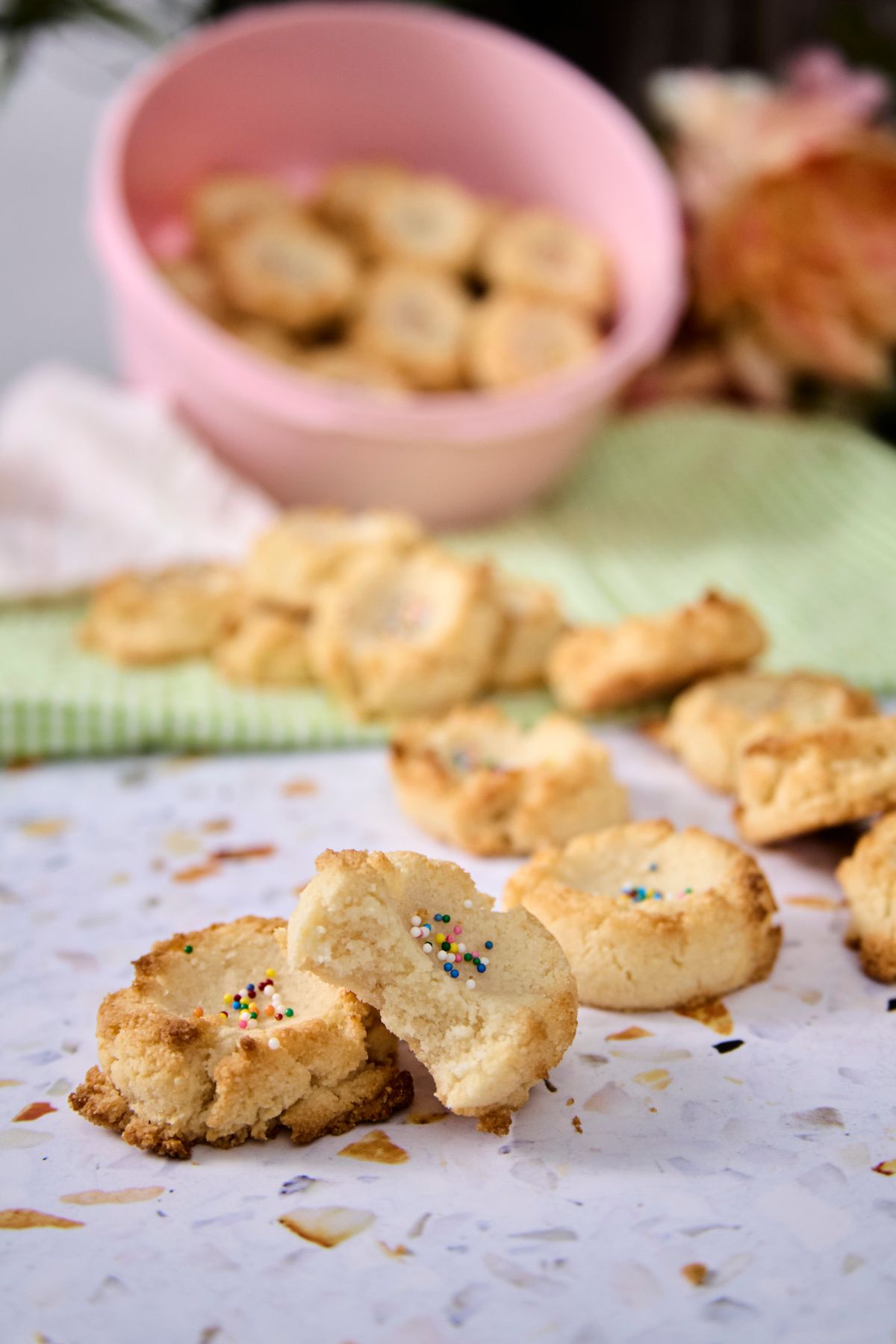
Growing up, there were two desserts I could never say no to: polvorones and tembleque. When I started following a ketogenic diet, I thought those treats were behind me, but I was not ready to give them up that easily.
If you are exploring low-carb eating and craving something sweet, these low-carb polvorones fit right alongside other Puerto Rican low-carb favorites like cauliflower yellow rice, zucchini en escabeche, and lasaña de berenjena. Proof that cutting carbs does not mean cutting flavor.
Jump To
Why you'll love this recipe
- Close to the Original: These low-carb polvorones are remarkably close to the original in both flavor and texture. Crumbly, nutty, and satisfying in all the right ways.
- Substantial and Satisfying: They feel like real food. No empty calories here. The almond and coconut flour, combined with quality fats, make every bite count.
- Basically a Baked Fat Bomb: If you follow a ketogenic diet, these deliver all the indulgence of a fat bomb in cookie form.
- Easy to Make: They come together quickly, especially if you already keep a low-carb or keto pantry stocked.
Ingredient Notes
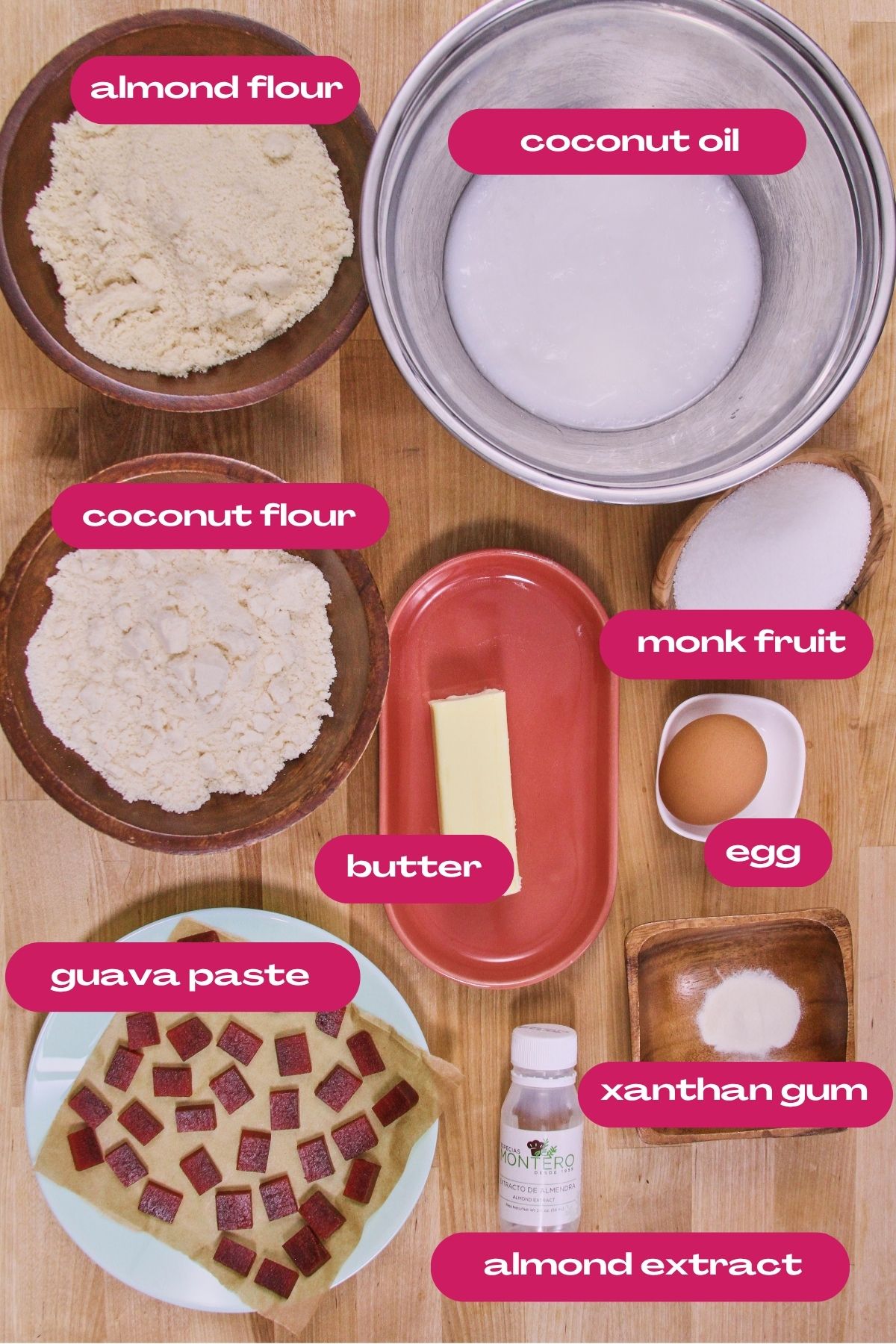
- Coconut Flour: Coconut flour is made from dried, pressed coconut meat that has been stripped of its oils and liquid. Because of this, it is highly absorbent and will soak up moisture in the recipe. A little goes a long way.
- Almond Flour: Almond flour is simply blanched almonds ground into a fine flour. It adds natural fat. Look for finely ground almond flour, not almond meal, for the best texture.
- Butter: Use good-quality butter here. Since there are so few ingredients, the quality of each one shows up in the final cookie. Grass-fed butter is worth it if you can find it.
- Xanthan Gum: Xanthan gum acts as a binder, replacing the role that gluten plays in traditional flour. Without it, your cookies may crumble more than intended.
See my recipe card below for a complete list of ingredients and their measurements.
If you do not have Xanthan Gum
Xanthan gum is one of those ingredients that, if you are not currently using it, you might not have a use for it other than this recipe. As stated earlier, it helps with binding in low-carb/keto recipes since you will not be using traditional flours or emulsifiers. Here is a list of alternatives if you do not want to purchase a bag of Xanthan gum.
- Guar gum: Works similarly to xanthan gum as a binder and is often used at a 1:1 ratio. Some people find it works better in cold applications than in baked goods, but it can be substituted here.
- Arrowroot powder: Lower carb than cornstarch and works as a light binder, though not strictly keto.
The following could work, but they need to be soaked to activate before use. Mix into the beaten egg in this recipe:
- Psyllium husk powder: A popular keto baking binder. It adds a slight density and can affect color, making baked goods a touch darker. 1 teaspoon soaked in 1 tablespoon of water for about 5 minutes until it forms a gel.
- Flax egg: 1 tablespoon ground flaxseed soaked in 3 tablespoons water for 5-10 minutes until gel forms. More natural option, but it slightly changes the flavor profile.
- Chia egg: 1 tablespoon chia seeds soaked in 3 tablespoons water for 5-10 minutes, until a gel forms; same process as flaxseed. Neutral flavor, but adds visible seeds.
Some of these variations have not been tested. They are ideas I would try to alter the recipe. If you give any of them a go, let me know in the comments! If you are interested in more keto or low-carb recipes, check out All Day I Dream About Food. Carolyn Ketchum is actively living a Keto lifestyle and creates amazing Keto-friendly recipes.
Pro tip
The Secret to the Egg
Unlike traditional polvorones, this recipe calls for an egg. Alternative flours like almond and coconut lack gluten to hold the cookie together, so the egg is essential for binding. Do not skip it.
How to make Low-Carb Polvorones
Preheat the oven to 325℉. Line a baking sheet with parchment paper.
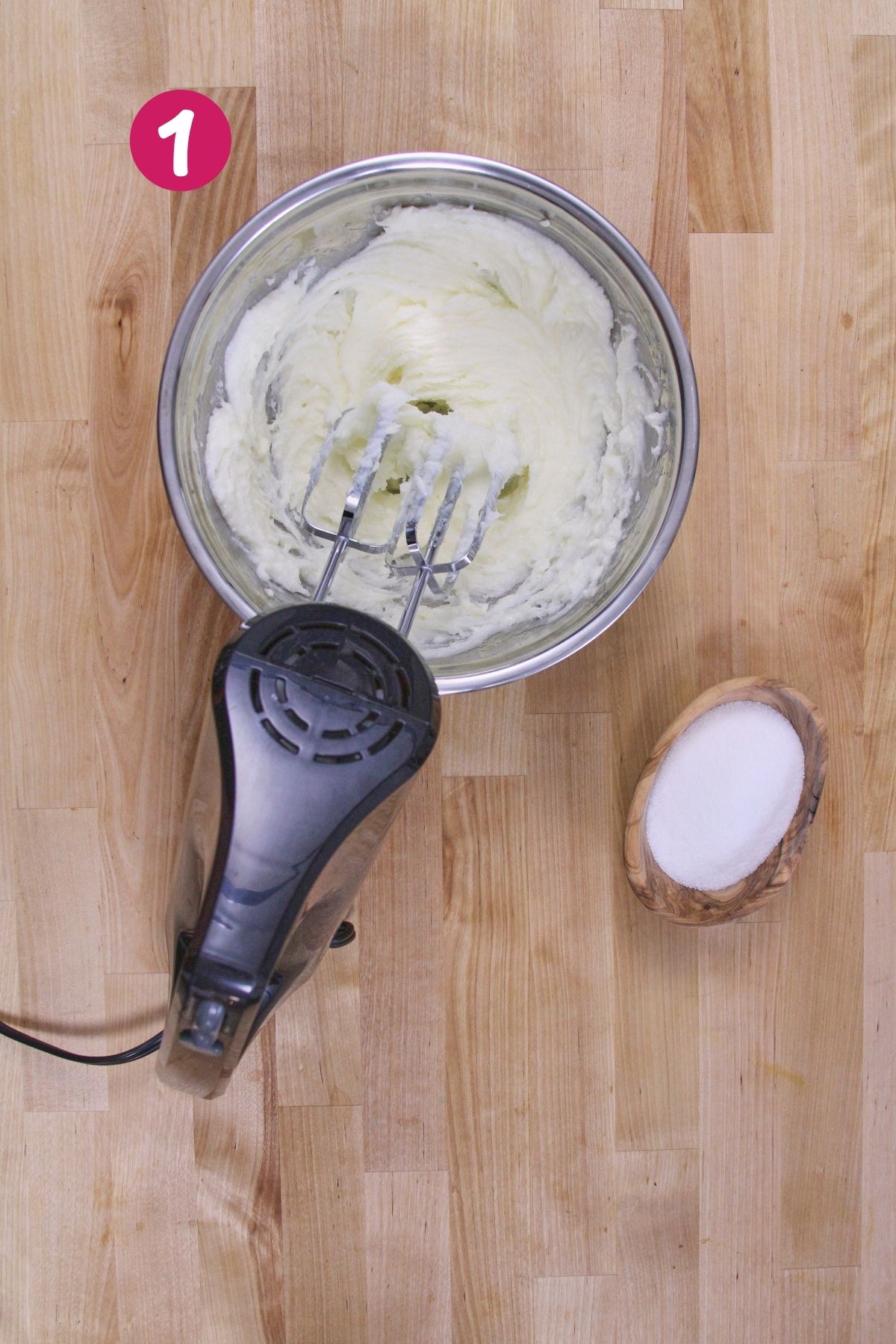
- Creaming: Cream the butter and the coconut oil together until well combined. Add the sweetener and cream until light and fluffy.
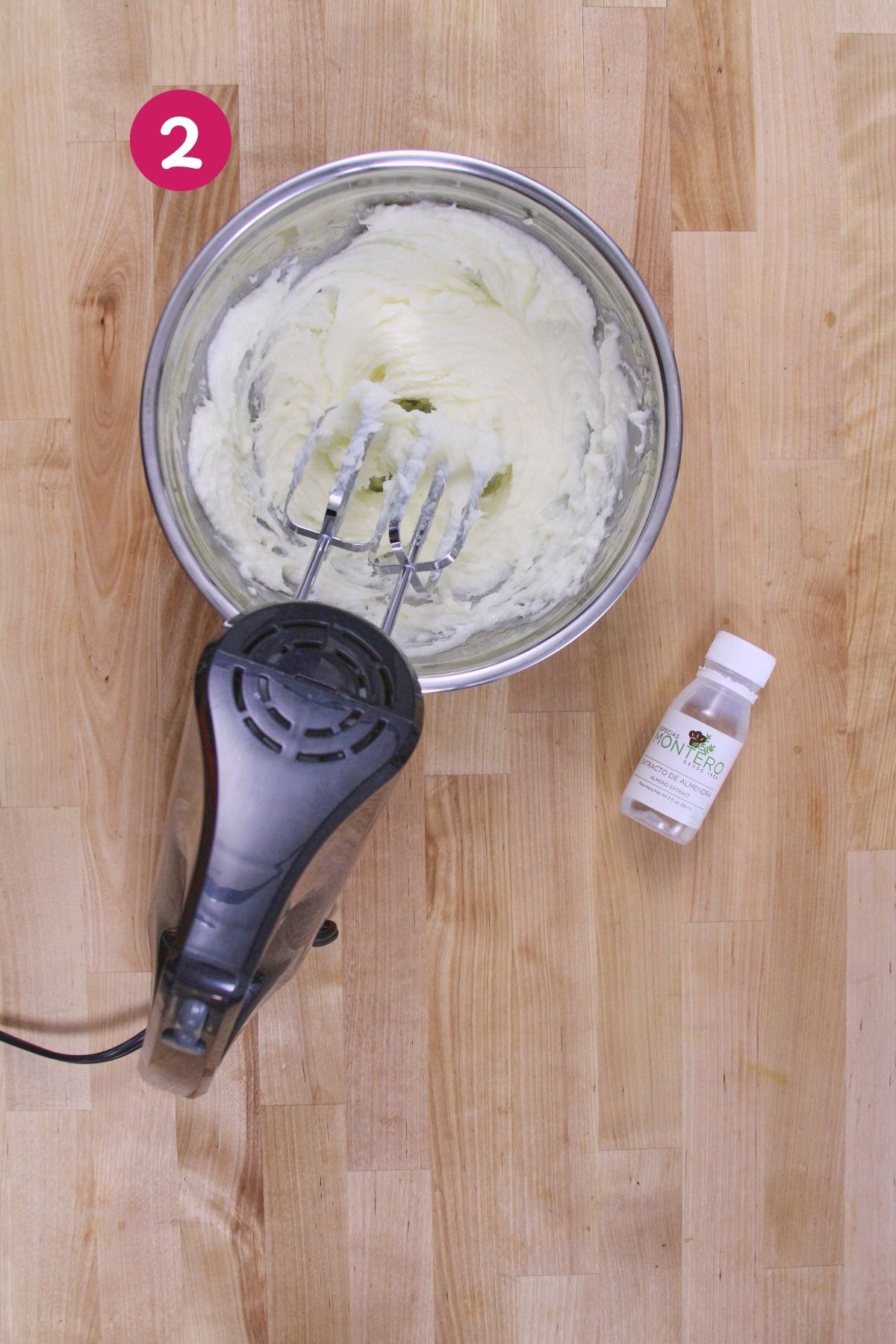
- Flavoring: Optional to add almond extract for added flavor; vanilla extract is great here too. Combine well.
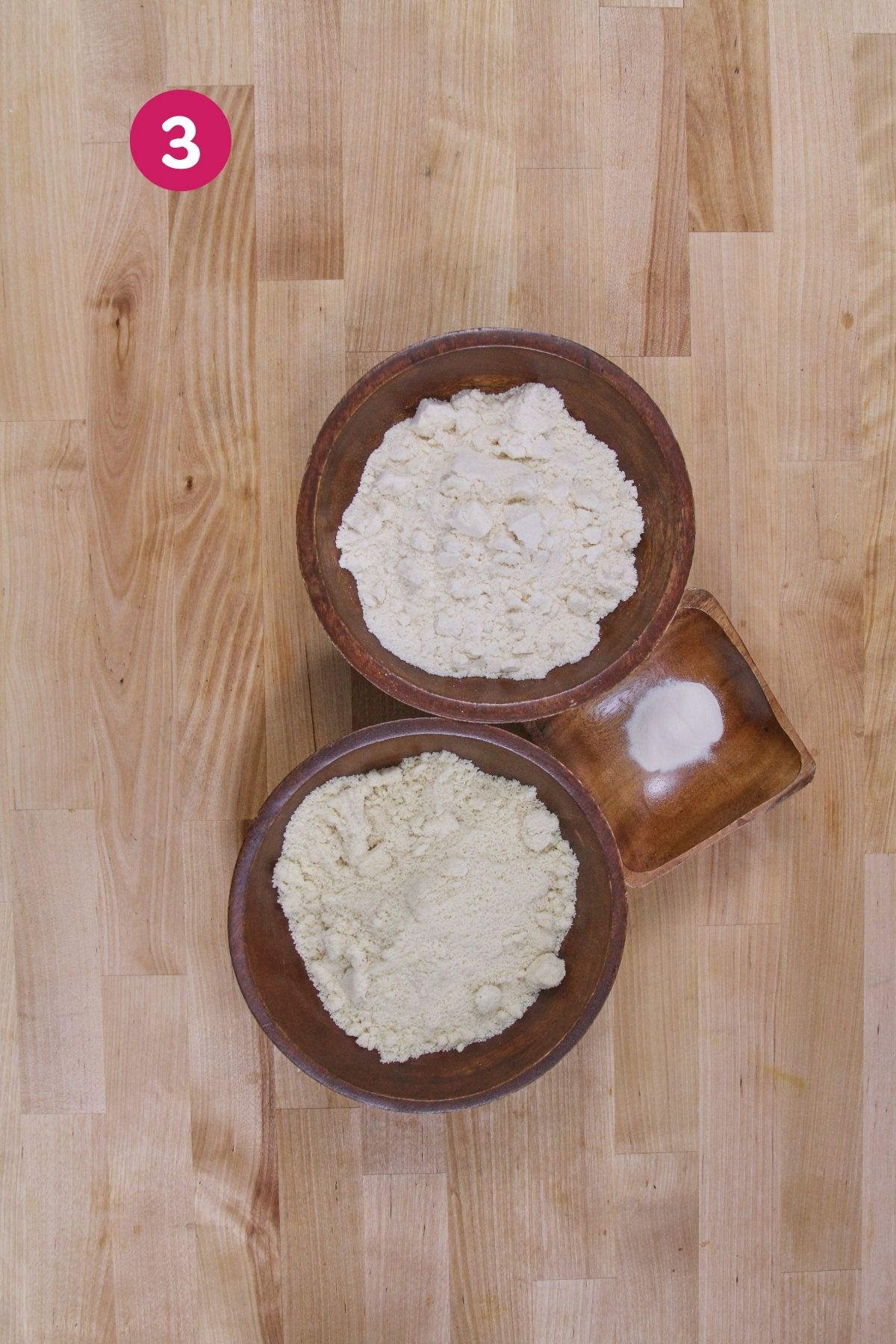
- Dry Ingredients: In a medium bowl, mix together the coconut flour, almond flour, and xanthan gum. (If not using xanthan gum, check out the section on xanthan alternatives.)
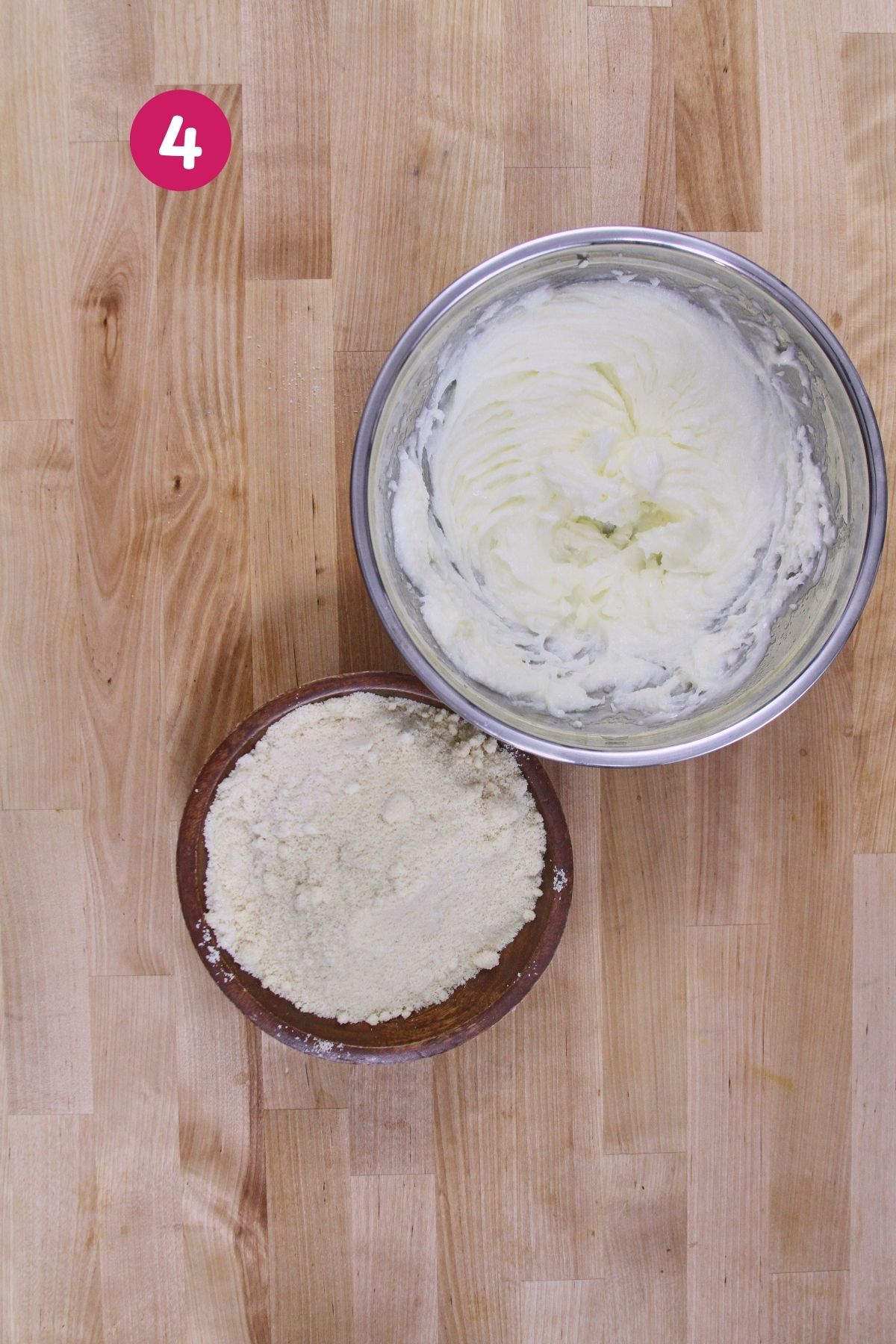
- Combine Dry and Butter Mix: Blend the dry ingredients with the butter mixture. You will end up with a sandy consistency.
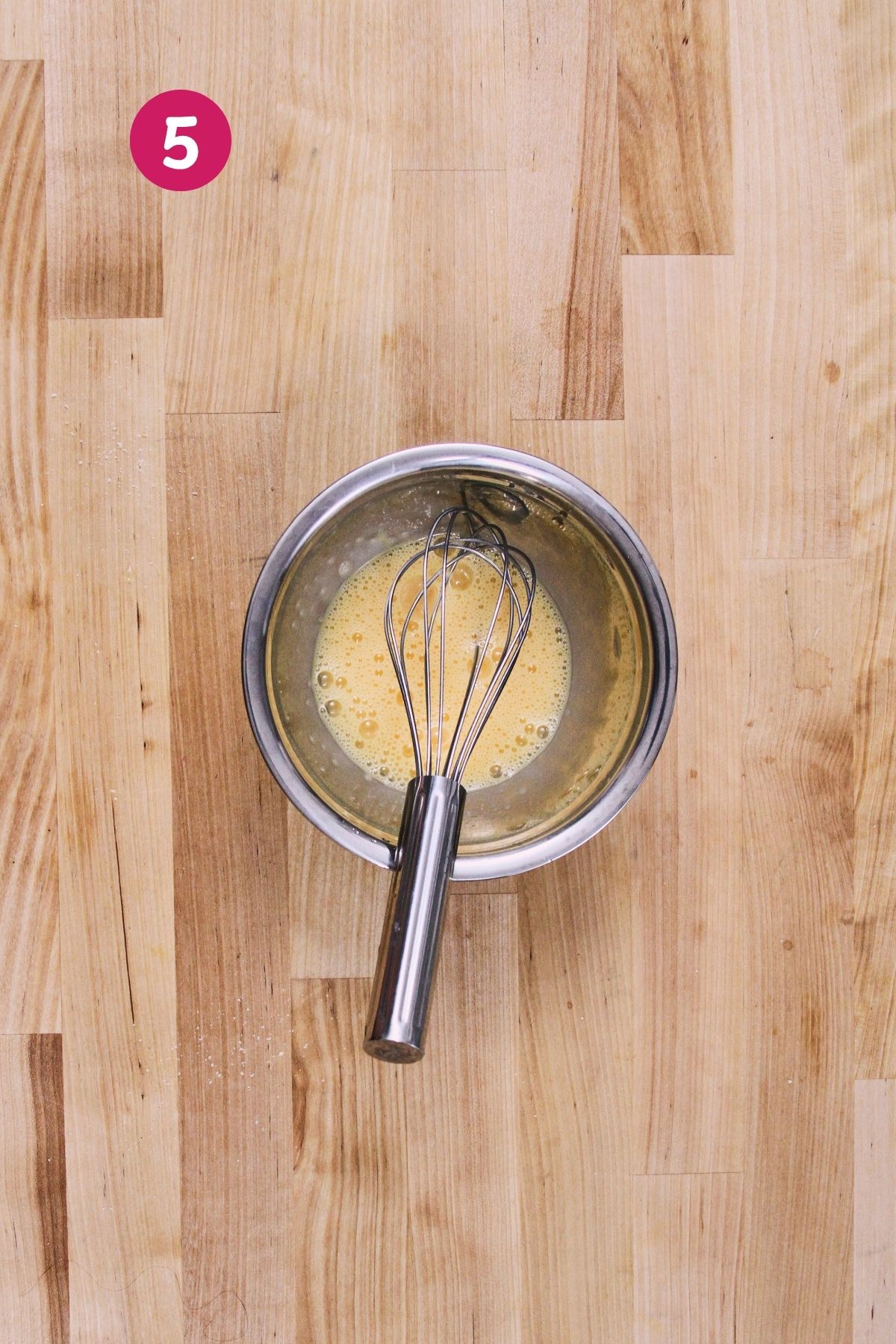
- Egg: Lightly beat an egg with a pinch of salt. The salt helps the egg beat more easily. If using a xanthan gum alternative, add it to the beaten egg.
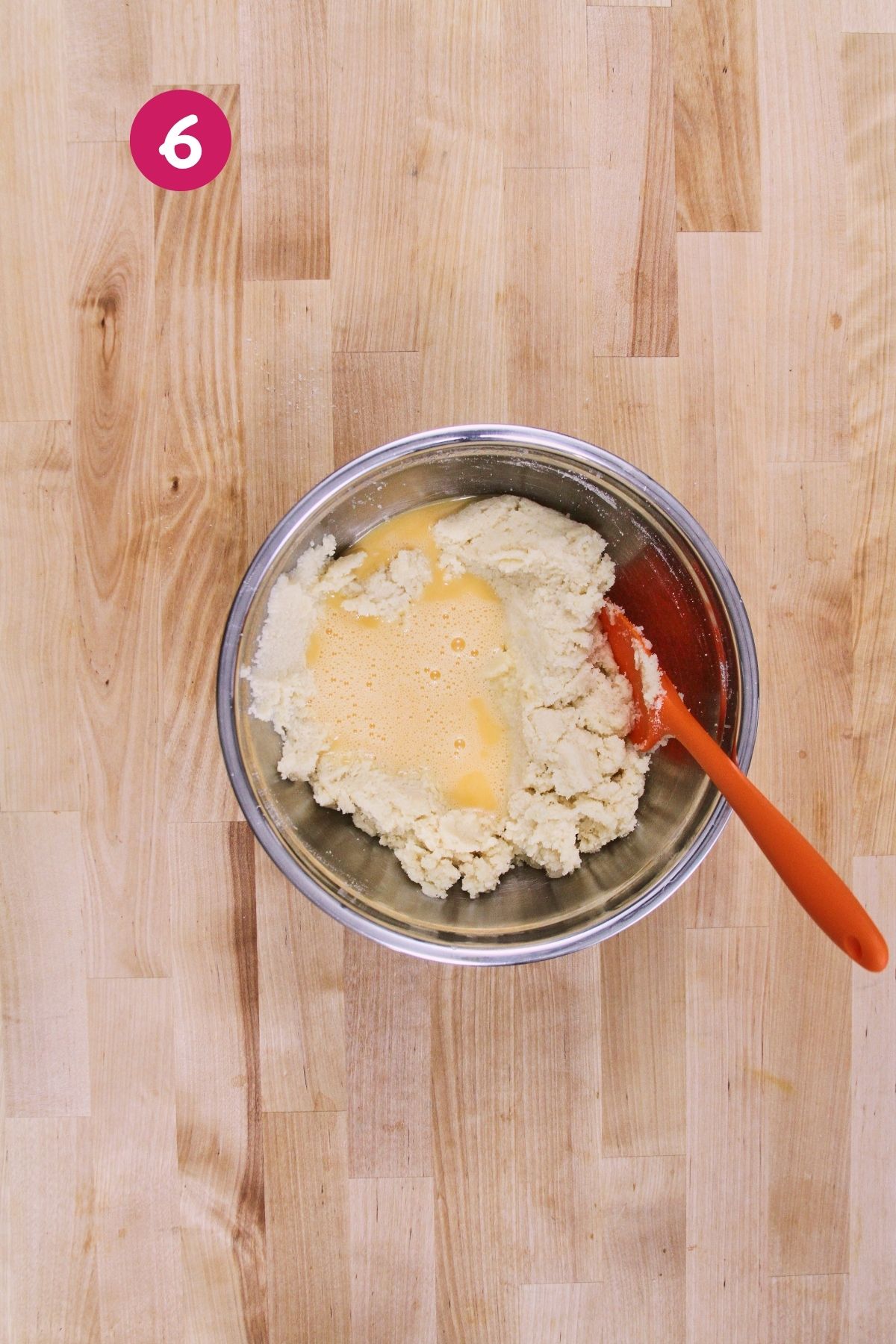
- Incorporate to dough: Incorporate the egg mixture into the dough until you have a shapeable dough.
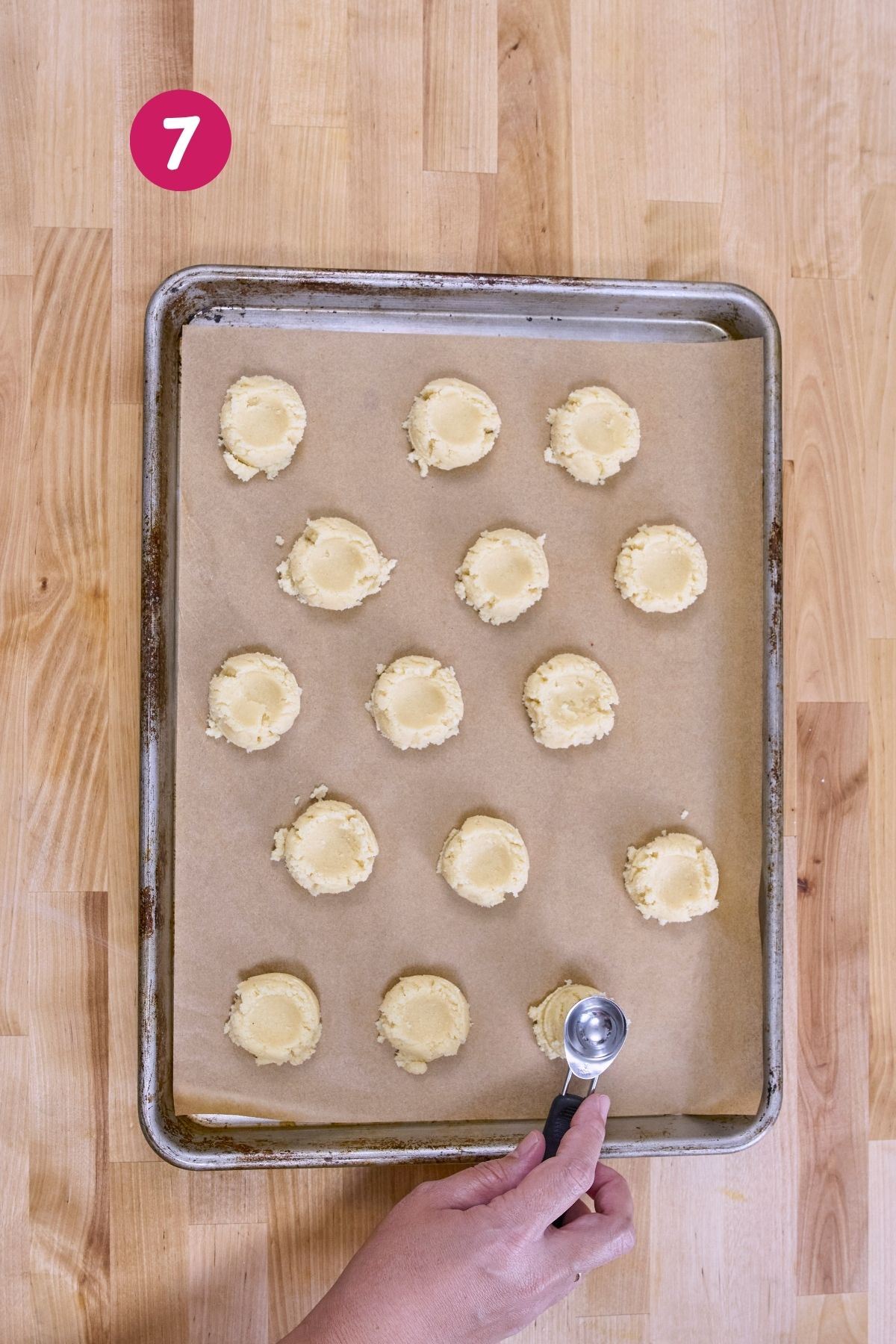
- Shape cookies: With a scoop or a spoon, shape the dough into little balls and place them on a parchment-lined baking sheet. Using the back of a teaspoon (I use a ½ teaspoon, for my size cookie), press the teaspoon into the ball to create an indent.
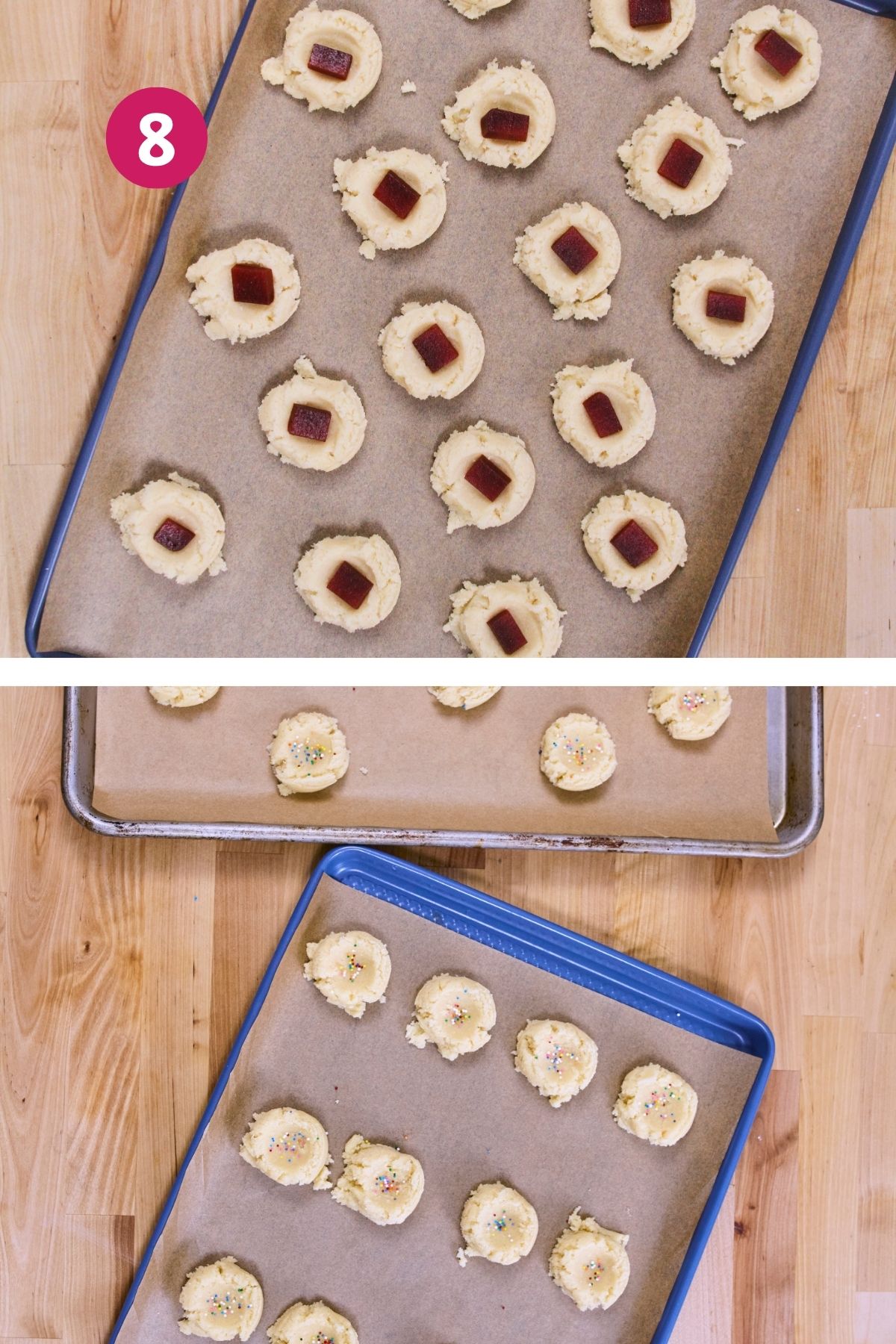
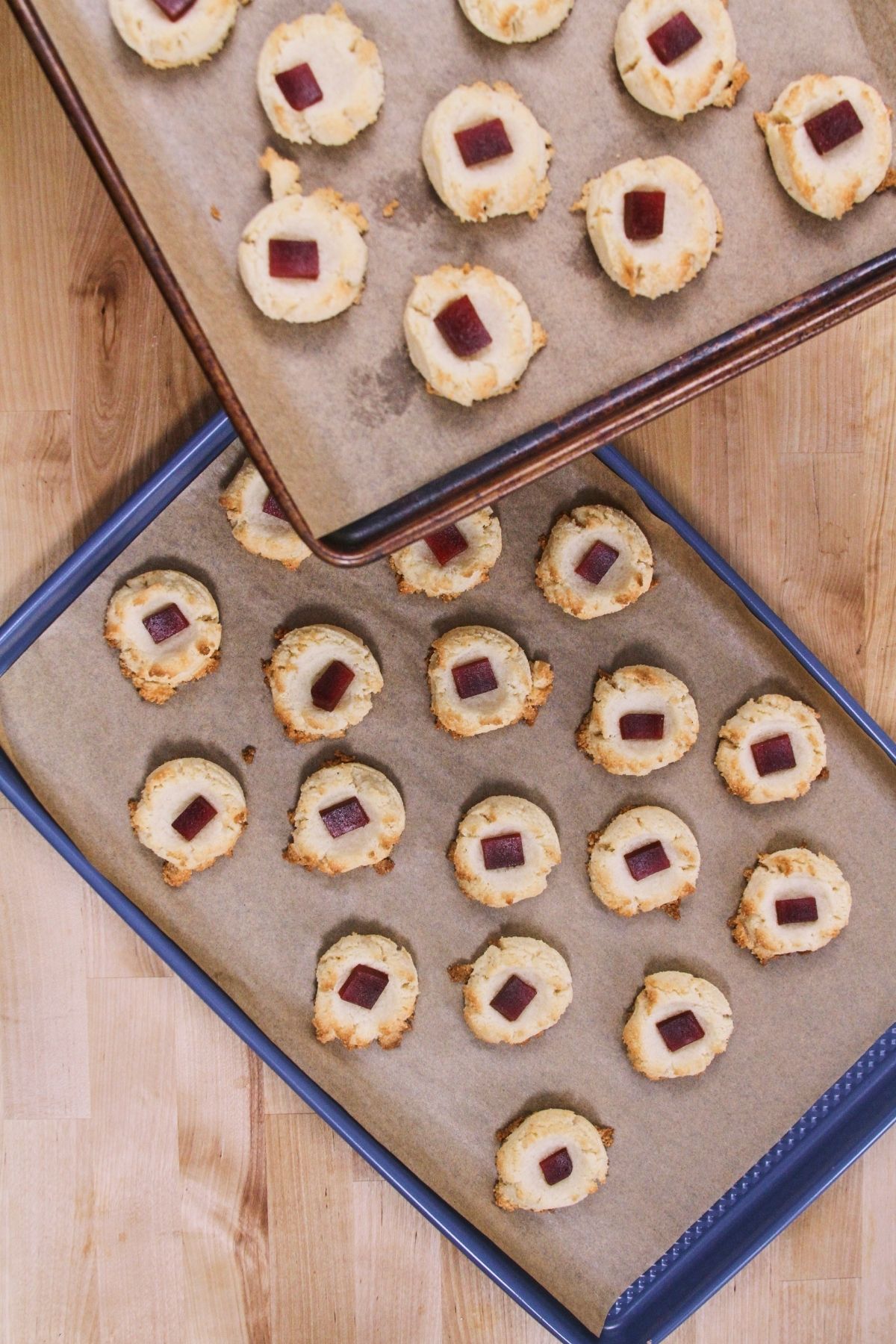
- Garnish & Bake: Garnish with sugar-free guava paste or Keto sprinkles. Bake in the preheated oven for 18-20 minutes (ovens may vary).
Expert Tips
- Coconut oil: I keep mine in the refrigerator because otherwise it will not stay solid. Remove from the refrigerator for a few minutes to let it soften.
- Creaming: We cream the butter and coconut oil first to create an aerated base, then add the sweetener. When the sweetener is incorporated and creaming continues, it cuts into those air pockets and expands them, giving the cookies a lighter, fluffier texture.
- Sweetener: I tasted quite a few different sugar alternatives, but monk fruit is the closest to sugar flavor I have liked. For this recipe, please use any sweetener you would like if you do not use monk fruit.
- Lard: If you are on a ketogenic diet, feel free to use lard instead of butter or coconut oil. Traditional polvorones are made with lard. I have used a bit of bacon fat in the past to give my cookies a salty-sweet profile.
- Xanthan gum: Because there is so much fat in these cookies but no absorbent ingredient (aside from coconut flour), Xanthan gum helps stabilize the cookies as they bake.
- Baking: Keep an eye on these cookies, as they will turn golden brown rather quickly.
Recipe FAQs
Each serving of 3 cookies contains 250 calories, 8 g total carbohydrates, and 6g net carbs. The sugar alcohol count reflects the monk fruit sweetener, which does not affect blood sugar the same way regular carbohydrates do.
You can, but the results will be different. Almond flour alone will make your cookies denser and fatter. Coconut flour alone is tricky; it absorbs a lot of moisture, so you would need to adjust the liquid amounts significantly. Using both together creates the best balance of texture and structure. These variations have not been tested, so if you try them, let me know in the comments.
Yes. Solid coconut oil is the closest to butter in this recipe and was used to develop it. If you prefer butter only, in the traditional polvorones recipe I have used butter at 1:1, with good results, so it is worth trying here as well.
The most likely culprit is a missing or insufficient egg. Unlike traditional polvorones, this recipe relies on the egg for binding since almond and coconut flour have no gluten. Make sure your butter and coconut oil are properly creamed, and your oven is at 325℉. A temperature too high will brown these cookies before they have a chance to set.
It is not recommended. Xanthan gum acts as a binder in this recipe, helping hold the cookies together in the absence of gluten. Without it, your cookies may be more fragile than intended. If you do not have xanthan gum, check out the substitutes section above.
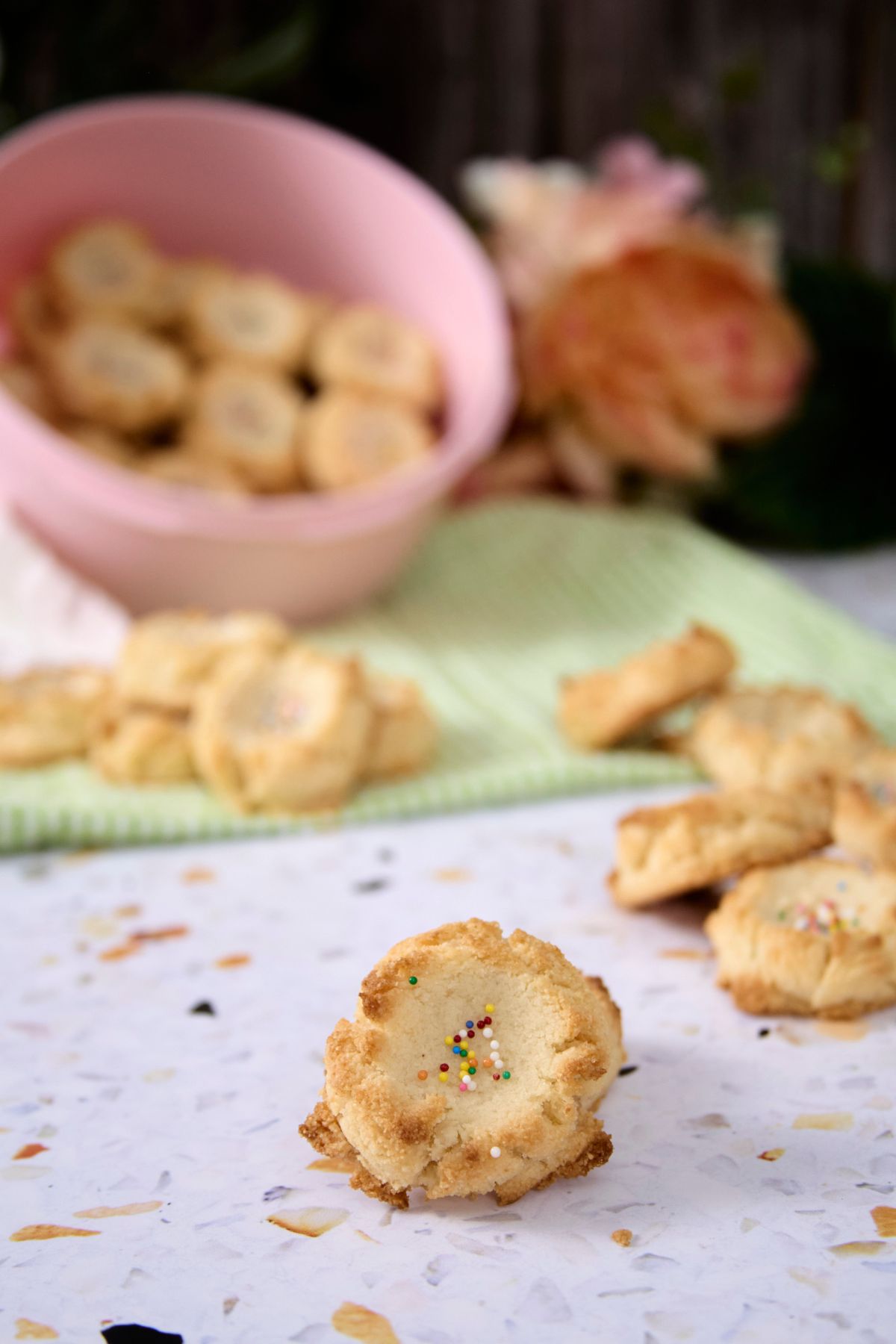
Store your low-carb polvorones in an airtight container at room temperature for up to 5 days or refrigerated for up to 2 weeks. You can also freeze them for up to 3 months. Layer them between sheets of parchment paper to prevent sticking.
More Desserts, Sweets, and Breads Recipes
- Pumpkin spice coquito
- Puerto Rican Polvorones (Shortbread Cookies)
- Puerto Rican Spice Cake (Hojaldre Añasqueño)
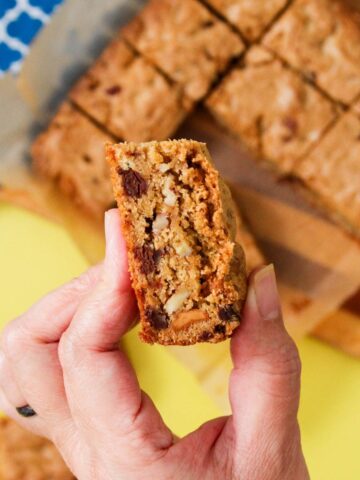
- Peanut Butter Blondies


Before You Go . . .
Cooked it and loved it? Rate it. Review it. Share it. Your feedback helps others and keeps this blog cooking.
📖 Recipe

Low-Carb Polvorones
Equipment
- 2 baking sheets
- 1 electric hand mixer
- 1 Rubber Spatula or wooden spoon
Ingredients
- ½ cup coconut oil at room temperature
- ¼ cup butter at room temperature
- 1½ cup monk fruit or prefered sweetener
- ½ teaspoon almond extract optional, sub with vanilla
- 1 cup coconut flour
- 1 ¼ cup almond flour
- ½ teaspoon of Xantham
- 1 egg at room temperature
- 3 slices sugar-free guava paste cut into ½" squares
- 1 cup Keto Sprinkles enough for topping some cookies.
Instructions
- Preheat oven to 325℉. Line baking sheets with parchment paper
- In a large bowl, cream the lard and butter until smooth. Add the sweetener and cream until light and fluffy½ cup coconut oil, ¼ cup butter, 1½ cup monk fruit
- Incorporate the almond extract if using.½ tsp almond extract
- In a medium bowl, whisk together coconut flour, almond flour, and xanthan gum.1 cup coconut flour, 1 ¼ cup almond flour, ½ teaspoon of Xantham
- Incorporate the dry ingredients (coconut flour mixture) into the coconut oil mixture. The dough will be loose and sandy.
- Lightly beat an egg with a pinch of salt.1 egg
- Add the lightly beaten egg to the sandy cookie mixture and incorporate until the cookie dough holds together.
- Using a scoop or a tablespoon, portion about 1 tablespoon of dough and shape it into a ball. Press the top gently to flatten or create a small divot. You can also use the back of your ½ teaspoon.
- Garnish with your desired topping: sugar-free guava paste or keto sprinkles
- Bake for 18-20 minutes, until the edges are golden.
- Cool completely before moving. They firm up as they cool.

Notes
Expert Tips
- Egg: Unlike traditional polvorones, this recipe calls for an egg. Alternative flours like almond and coconut lack gluten to hold the cookie together, so the egg is essential for binding. Do not skip it.
- Coconut oil: I keep mine in the refrigerator because otherwise it will not stay solid. Remove from the refrigerator for a few minutes to let it soften.
- Creaming: We cream the butter and coconut oil first to create an aerated base, then add the sweetener. When the sweetener is incorporated and creaming continues, it cuts into those air pockets and expands them, giving the cookies a lighter, fluffier texture.
- Sweetener: I tasted quite a few different sugar alternatives, but monk fruit is the closest to sugar flavor I have liked. For this recipe, please use any sweetener you would like if you do not use monk fruit.
- Lard: If you are on a ketogenic diet, feel free to use lard instead of butter or coconut oil. Traditional polvorones are made with lard. I have used a bit of bacon fat in the past to give my cookies a salty-sweet profile.
- Xanthan gum: Because there is so much fat in these cookies but no absorbent ingredient (aside from coconut flour), Xanthan gum helps stabilize the cookies as they bake.
- Baking: Keep an eye on these cookies, as they will turn golden brown rather quickly.