

Puerto Rican Crab Rice is another popular side dish in many coastal restaurants in Puerto Rico. It features all the traditional flavors of sofrito and achiote oil, complemented by the added sweetness of locally harvested crabs.
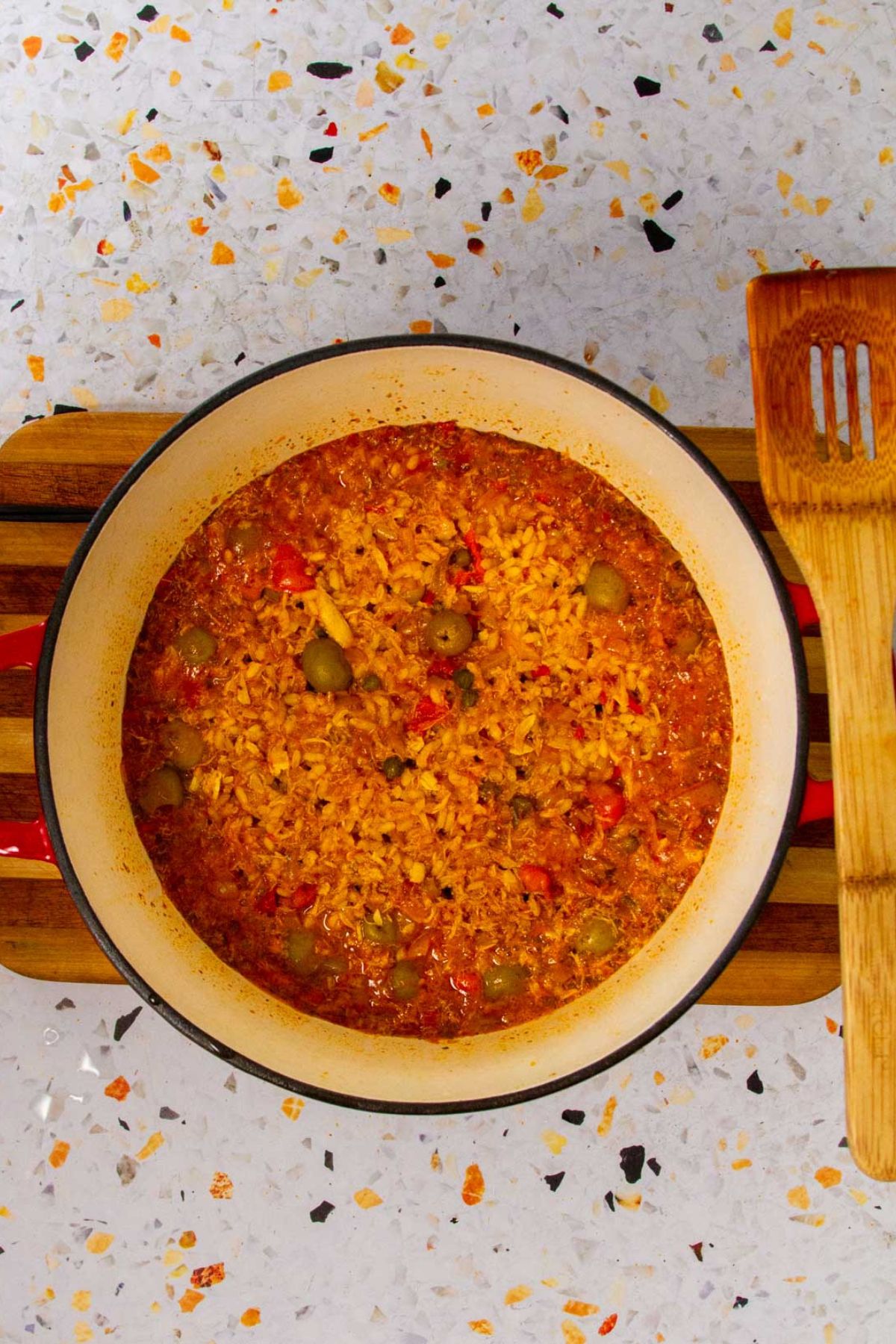
Puerto Rican Crab Rice is a side dish that holds its own, but it truly shines when paired with Puerto Rican Fried Red Snapper with Mojo Isleño, Grouper Bites, Bacalaitos, or even Seafood Pomodoro. Make them all for a full-on Puerto Rican seafood feast.
Puerto Rican Crab Rice isn't just for seafood spreads; it also plays nicely with classic Puerto Rican comfort dishes. Serve it with Habichuelas Guisadas for a hearty combo, Guineos en Escabeche for a tangy bite, Mofongo for a rich, garlicky contrast, or Puerto Rican Bacalao a la Vizcaína for a full-on coastal moment.
Jump To
Why You'll Love This Recipe ❤️
- Easy preparation: Puerto Rican Crab Rice is a one-pot wonder that comes together in about 20 minutes. It's great for make-ahead meals and scales up easily for feeding a crowd.
- Bold flavors: The sofrito and achiote oil create a savory base, while the crab adds a subtle sweetness that evokes a beach day in every bite.
- Crowd pleaser: Whether you're serving it at a family gathering or a casual weekend lunch, this dish disappears fast! Everyone always wants seconds.
- Deep cultural roots: It's a dish that brings coastal Puerto Rican cooking to the table. Nostalgic for many, and a tasty discovery for others.
- Flexible protein: You can use fresh jueyes, frozen crab, or even canned if that's what's available-flavor still shines through.
- Freezer-friendly: It stores and reheats well, making it perfect for batch cooking or easy weeknight meals.
Crab Rice and the Flavors of Loíza 🦀
Puerto Rican Crab Rice isn't just a coastal favorite. It's especially beloved in Loíza, a town on the northeastern coast known as the heart of Afro-Puerto Rican culture. Dishes like arroz con jueyes and caldo santo are local staples, carrying deep cultural roots and generations of cooking traditions. In Loíza, the food tells a story of the sea, resilience, and flavors that extend beyond the plate.
Ingredient Notes
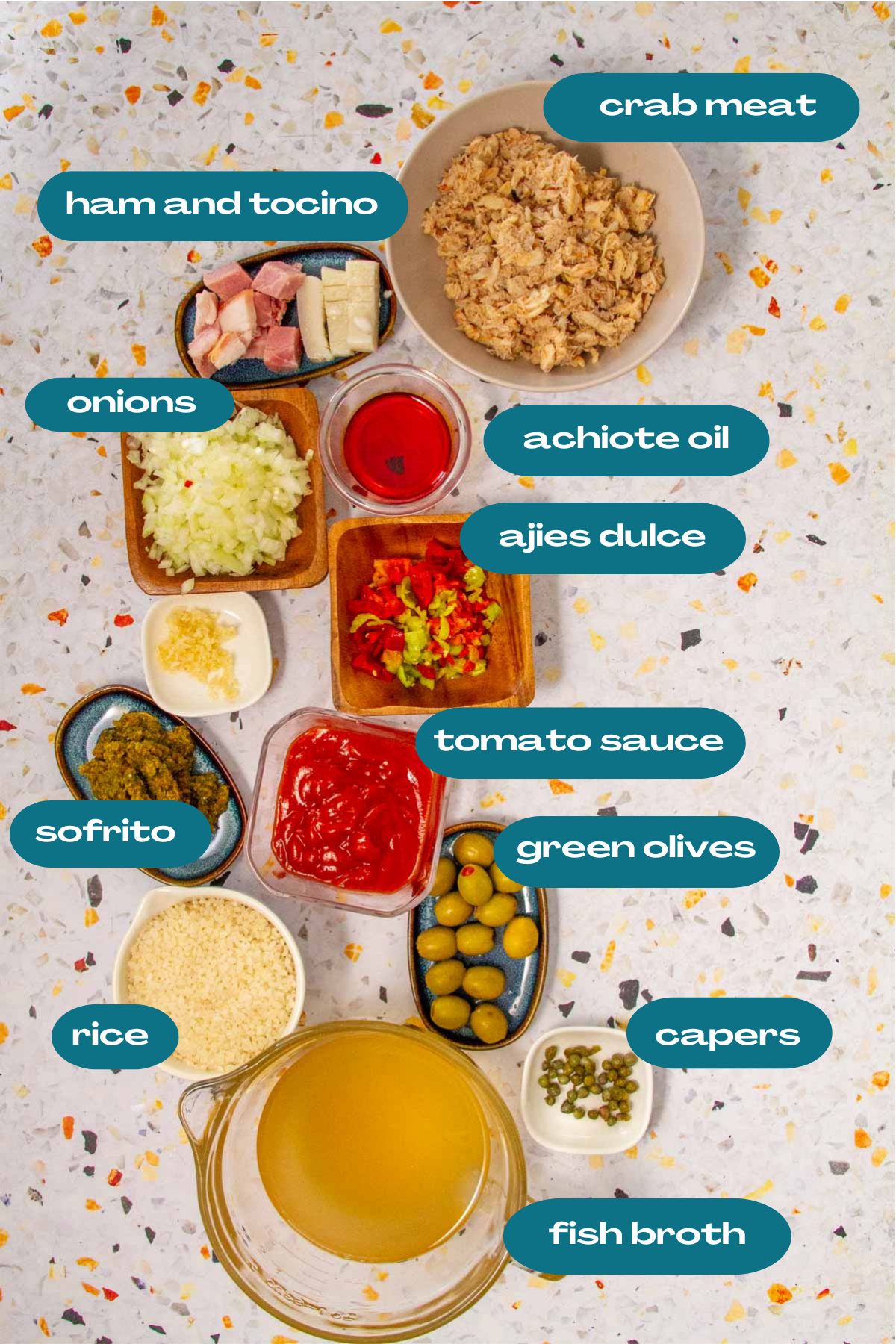
- Crab: Already-shelled frozen crab meat is perfect for this recipe. While traditional arroz con jueyes uses freshly caught land crabs (jueyes), most of us have better access to packaged or frozen crab. Use whatever you can find. Just make sure it's authentic and flavorful, not imitation.
- Medium‑grain rice: This is the gold standard in Puerto Rico for dishes like arroz con jueyes. It's plump and slightly creamy, yet still holds its shape and offers a satisfying chew.
- Sofrito: I will never tire of discussing sofrito and its place in Puerto Rican kitchens. Fresh-made will always hit harder, and if you've got your abuela's recipe, hold on to it. If you don't (or want one), I've gotchu. A good frozen or refrigerated sofrito from the store can still bring solid flavor.
- Achiote oil: This iconic ingredient is a staple in Puerto Rican cooking. It adds color, fragrance, and a gentle smoky flavor that pulls the whole dish together.
See my recipe card below for a complete list of the ingredients with measurements.
Variations and Substitutions
- Rice: If you don't have medium-grain rice, any type of rice you have available will work. But let me add a bit more on medium rice. Popular varieties like Calrose (often used in PR) absorb flavorful/seasoned liquids beautifully, blend well with sofrito, and deliver those fluffy-but-cohesive grains you want.
- Add-ins and swaps: You can bulk up this dish with extra veggies like diced bell peppers, corn, or peas. For a heartier twist, try tossing in a handful of cooked shrimp or flaked fish at the end-just enough to stretch the seafood flavor without overpowering the crab.
- Tiny shrimp or fish meat: If you don't like crab or can't find it, try canned tiny shrimp, shredded salted cod, or even canned salmon. The flavor will shift, but it still makes a tasty, seafood-forward dish. Just note-it won't be arroz con jueyes anymore, but more of a Puerto Rican-style seafood rice.
Top Tip
Don't over-stir the rice: Once you add the liquid, stir to even it out, then let it be. Too much stirring breaks the grains and messes with the texture. Plus, minimal stirring gives you a better shot at that glorious pegao at the bottom.
How to make Puerto Rican Crab Rice
Here are the step-by-step instructions to make this Arroz con Jueyes.
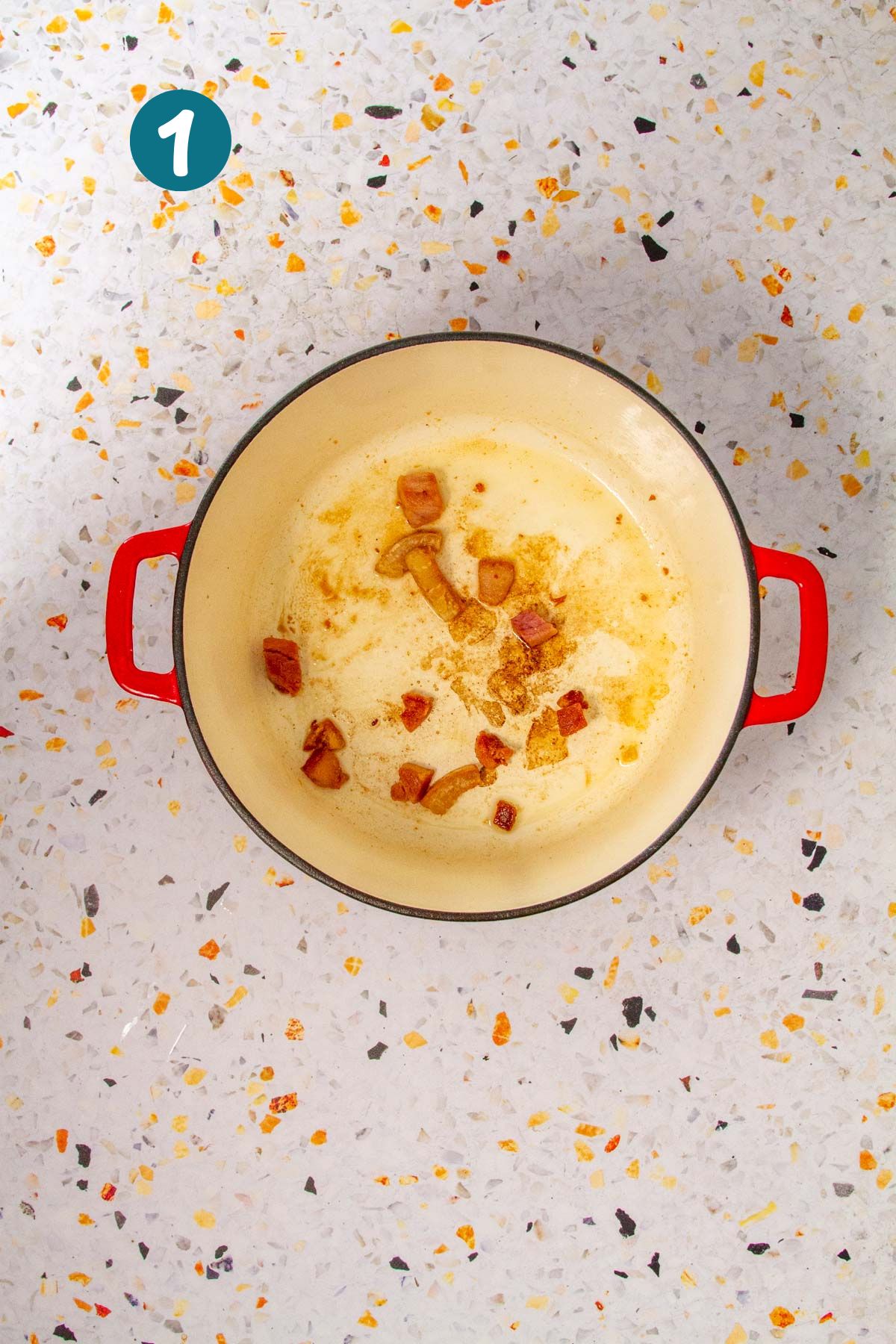
- Step 1: Render the tocino and ham until golden and crispy. This step builds depth and a savory base for the rice.
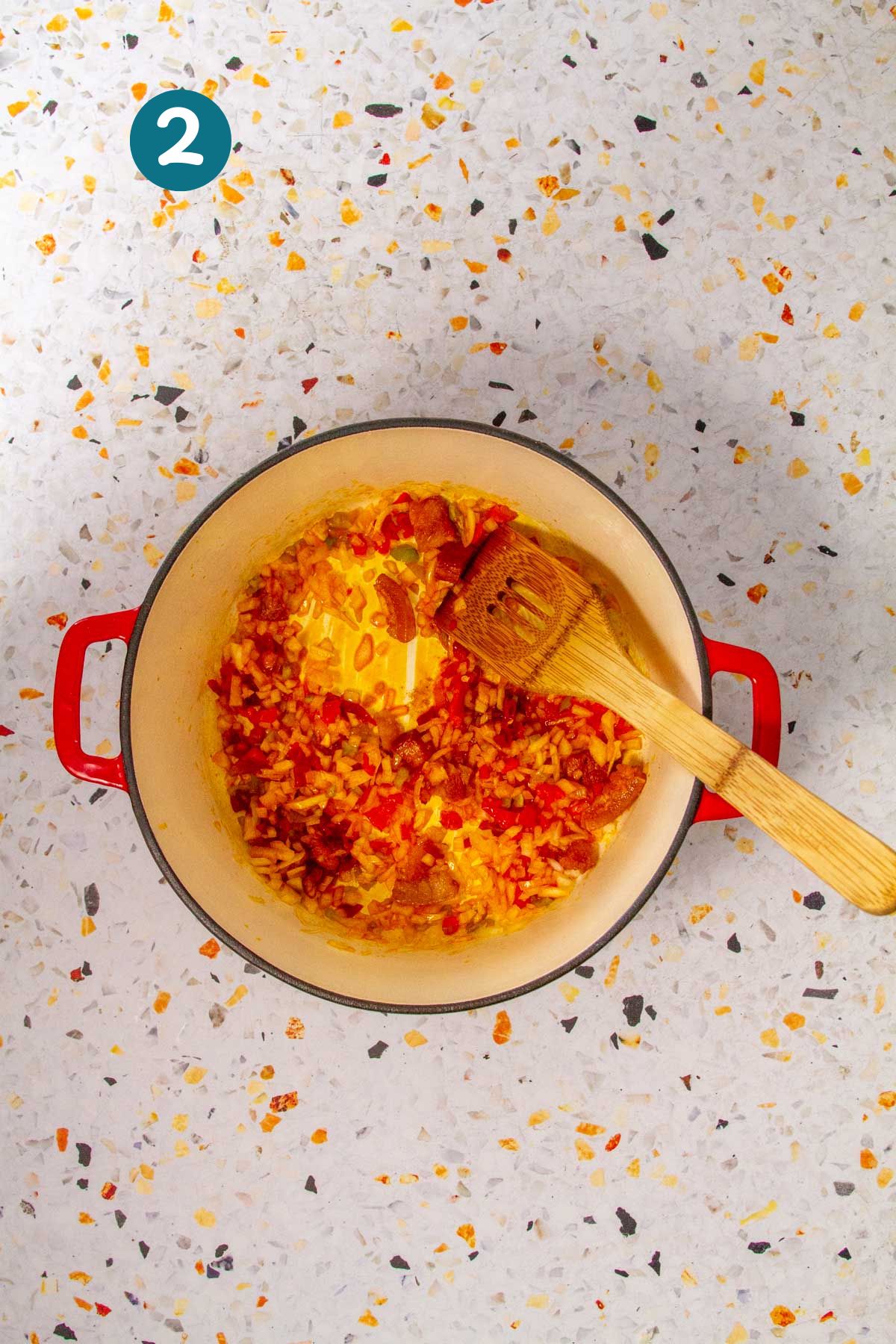
- Step 2: Add achiote oil, onions, and ajíes dulces. Sauté until the vegetables begin to soften and the oil turns golden and aromatic.
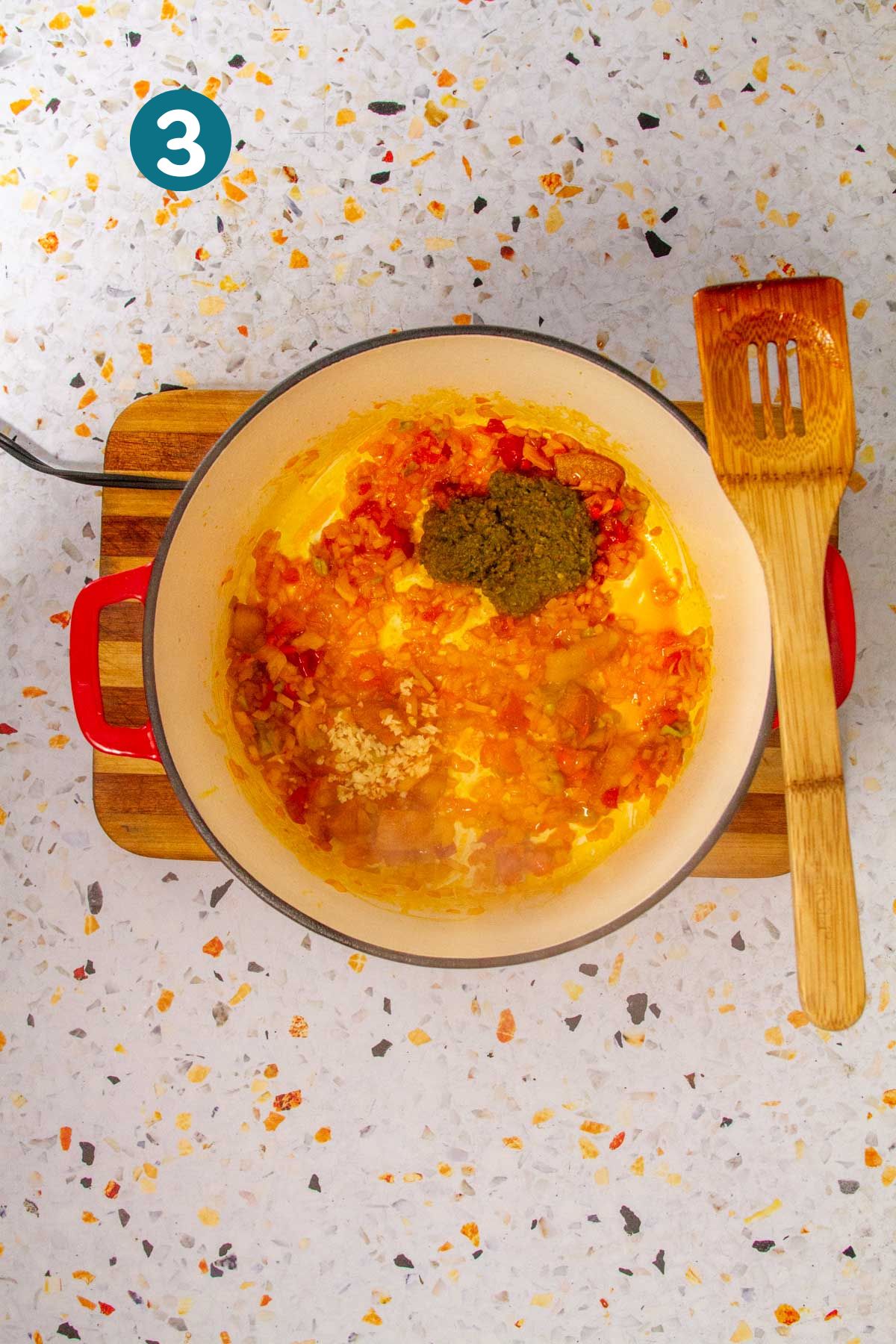
- Step 3: Stir in sofrito and garlic. Cook until fragrant and the mixture becomes thick and saucy.
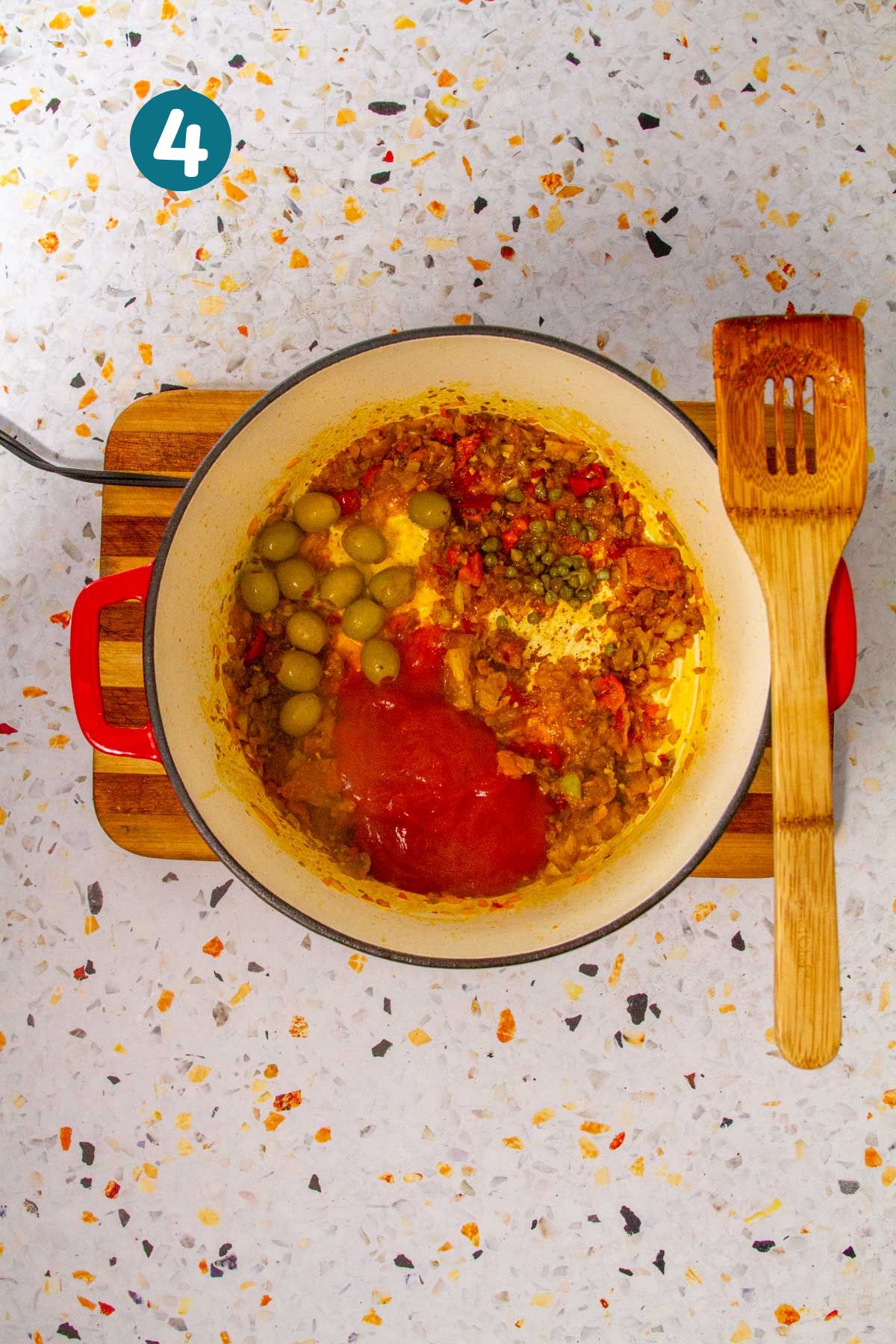
- Step 4: Add tomato sauce, olives, and capers. Stir to combine and let it simmer to deepen the flavor.
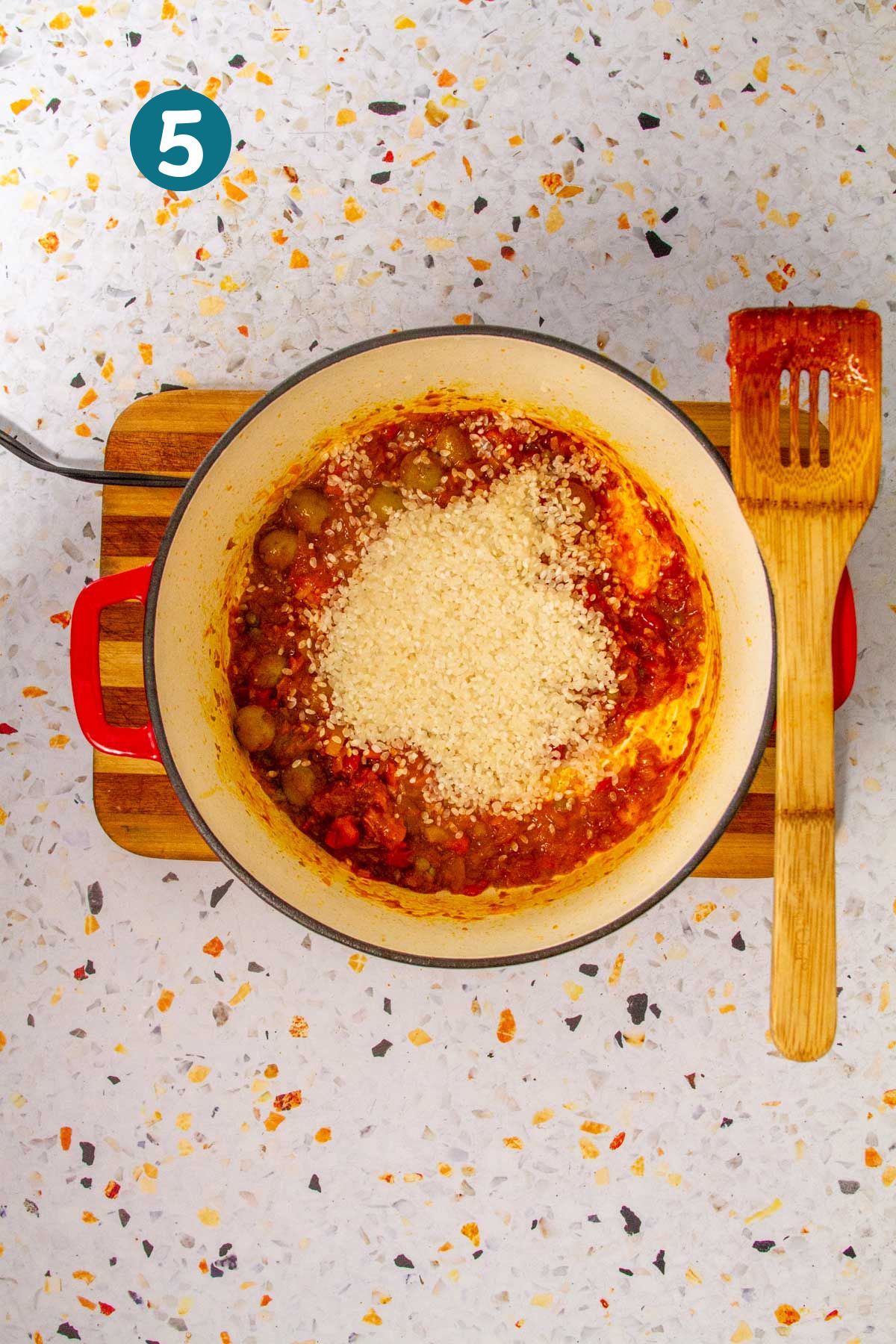
- Step 5: Add the rice and mix to coat every grain with the seasoned base.

- Step 6: Pour in the fish broth and stir once. Bring to a boil for about 5 minutes. Then reduce to low and cook, covered, for about 15 minutes, undisturbed, until tender. Let it rest 10 minutes before serving.
Expert Tips
- Don't over-stir the rice: Once you add the liquid, stir to even it out, then let it be. Too much stirring breaks the grains and messes with the texture. Plus, minimal stirring gives you a better shot at that glorious pegao at the bottom.
- Let the flavors build: Sauté the sofrito until it's fragrant and the oil turns green-it means the aromatics have released their magic. Don't rush this part.
- Watch your crab meat: Add crab toward the end to keep its texture intact. Overcooking it makes it stringy and dull.
- Let it rest before serving: Once the rice is done, turn off the heat and cover it for 5 to 10 minutes. This allows steam to redistribute, making the rice fluffier.
- Add a touch of broth if reheating: Leftovers reheat well, but a splash of broth or water helps revive the texture without drying it out.
Recipe FAQs
Yes, just make sure it's real crab and not imitation. Drain it well and add it toward the end of cooking so it doesn't overcook.
Medium-grain rice is ideal for this texture and ability to absorb flavor. Calrsore is an excellent option. If you only have long- or short-grain rice, they'll still work, just expect a slightly different texture.
Totally. It reheats well with a splash of broth or water. Store it in the fridge for up to 3 days.
Yes, but be gentle when reheating. Use a covered pan over low heat with a bit of broth or water to revive the texture.
Nope. It's flavorful but not spicy. If you want heat, feel free to add a little pique on the side.
More Rice, Pasta, and Grain Recipes
- How To Cook Dried Beans
- Asopao de Pollo, Puerto Rican Chicken and Rice Soup
- Mamposteao, a Puerto Rican Leftover Rice Comfort Food
- 11 Puerto Rican Rice Dishes you'll make on Repeat


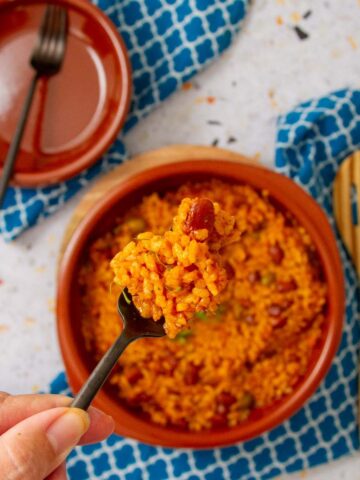

I'd love to hear from you! Did you try this recipe? Leave a review and rating below. Let's connect on Instagram, and don't forget to join my weekly email list for fresh new recipes.
📖 Recipe

Puerto Rican Crab Rice, Arroz con Jueyes
Equipment
Ingredients
- ¼ cup tocino small diced
- ¼ cup ham small diced
- 1 cup onion small diced
- ¼ cup ajies dulce small chop (use peppers as substitue0
- 2 tablespoon sofrito
- 1 tablespoon garlic paste or 2 garlic cloves
- 2 ounces tomato sauce
- 12 green olives optional
- 1 tablespoon capers optional
- 2 tablespoon achiote oil
- 1 cup medium-grain rice or favorite rice
- 1 cup fish broth or water
- 1½ cups crab meat all shells removed
Instructions
- Render the tocino and ham until golden and crispy. This step builds depth and a savory base for the rice.
- Add achiote oil, onions, and ajíes dulces. Sauté until the vegetables begin to soften and the oil turns golden and aromatic.
- Stir in sofrito and garlic. Cook until fragrant and the mixture becomes thick and saucy.
- Add tomato sauce, olives, and capers. Stir to combine and let it simmer to deepen the flavor.
- Add the rice and mix to coat every grain with the seasoned base.
- Pour in the fish broth and stir once. Bring to a boil for about 5 minutes. Then reduce to low and cook, covered, for about 15 minutes, undisturbed, until tender. Let it rest 10 minutes before serving.

Notes
Top Tip
Don’t over-stir the rice: Once you add the liquid, stir to even it out, then let it be. Too much stirring breaks the grains and messes with the texture. Plus, minimal stirring gives you a better shot at that glorious pegao at the bottom.Expert Tips
- Don't over-stir the rice: Once you add the liquid, stir to even it out, then let it be. Too much stirring breaks the grains and messes with the texture. Plus, minimal stirring gives you a better shot at that glorious pegao at the bottom.
- Let the flavors build: Sauté the sofrito until it's fragrant and the oil turns green-it means the aromatics have released their magic. Don't rush this part.
- Watch your crab meat: Add crab toward the end to keep its texture intact. Overcooking it makes it stringy and dull.
- Let it rest before serving: Once the rice is done, turn off the heat and cover it for 5 to 10 minutes. This allows steam to redistribute, making the rice fluffier.
- Add a touch of broth if reheating: Leftovers reheat well, but a splash of broth or water helps revive the texture without drying it out.



Zoe Forestier Villegas says
A taste of island summers.