

Homemade Chicken Broth is rich, clean-tasting, and versatile, making it ideal for soups, rice dishes, stews, and everyday cooking. Kept unsalted and neutral, it serves as a versatile base for many recipes.
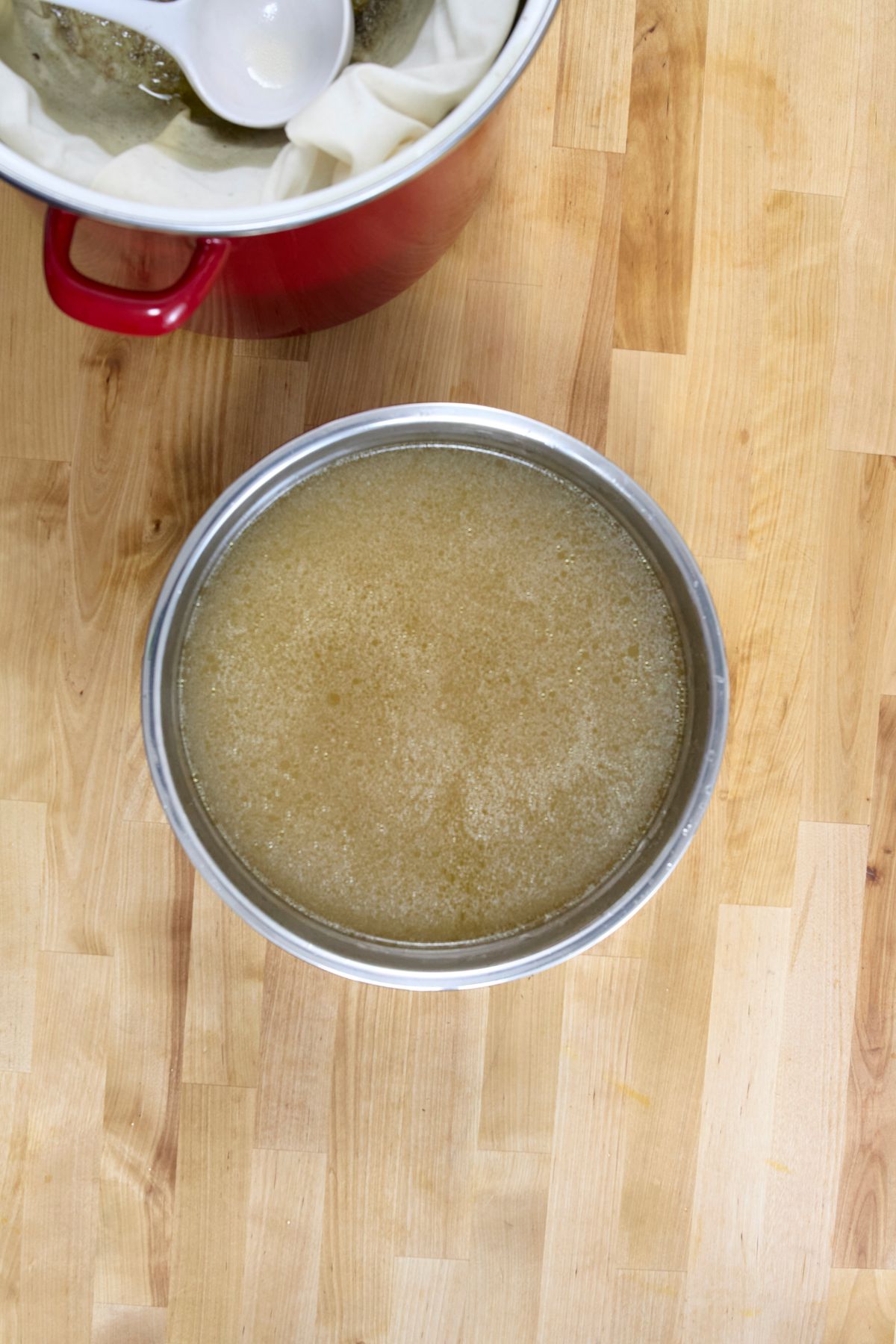
Homemade chicken broth is one of the most essential building blocks in Puerto Rican cooking, at least for me. It adds depth to dishes like Puerto Rican Arroz con Pollo, Asopao de Pollo (Puerto Rican Chicken and Rice Soup), Habichuelas Guisadas (Puerto Rican Stewed Beans), and soups like Caldo Gallego, Galician Broth, quietly doing the heavy lifting behind the scenes. Once you start making it at home, boxed broth just doesn't compare.
If you have ever used a chicken cube, powder, or bouillon, using broth is the same thing. You can use broth in White Rice, Arroz Amarillo, Chicken Chorizo Stew, Chicken Enchiladas, or Puerto Rican Chicken Paella with Sausage and Plantain, Yum!!!
Jump To
- Why you'll love this recipe
- Difference Between Stock and Broth
- Ingredient Notes
- Variations and Substitutions
- How to make this Homemade Chicken Broth recipe
- Top Tip-Making an Ice Bath
- Expert Tips
- Recipe FAQs
- More Soups, Stewes, and Braised Dishes Recipes
- Before You Go . . .
- 📖 Recipe
- Homemade Chicken Broth Recipe
- Comments
Why you'll love this recipe
- Pure flavor: No preservatives, coloring, or excess sodium. Just clean, savory chicken flavor you control.
- Versatile: Use it for soups, rice, beans, stews, and sauces. It freezes well, so it's always ready.
- Budget-friendly: Made with chicken backs and scraps that are inexpensive and often overlooked.
- Beginner-friendly: No complicated techniques. Gentle simmering does all the work.
- Customizable: Keep it light for soups or richer for arroz dishes, depending on how long you simmer and what you add.
Difference Between Stock and Broth
Broth is made with more meat than bones and simmered for a shorter time, resulting in a lighter, clean flavor suited for soups, rice dishes, and everyday cooking.
Stock is made mostly from bones and simmered longer to extract collagen, giving it more body and richness, often used for sauces and reductions.
This homemade chicken broth sits in between, offering depth without heaviness and staying flexible across many recipes.
Ingredient Notes

- Chicken: Use chicken bones rather than meat. It's normal if some meat remains attached, but aim for mostly bones, about 90% bone to muscle, for the best flavor without turning this into soup.
- Mirepoix: Mirepoix is the French equivalent of sofrito. Onions, carrots, and celery form a neutral aromatic base that adds depth while keeping the broth flexible for many recipes.
- Water: Water makes up most of the broth and directly affects its strength. More water yields a lighter broth, while less water yields a deeper, more concentrated flavor.
See my recipe card below for a complete list of the ingredients with measurements.
Variations and Substitutions
- Other poultry: This same method works for turkey or duck broth. Use leftover turkey or duck carcasses and bones just as you would chicken. Turkey broth is especially good for gravies and for adding depth to stuffing, while duck broth will be more decadent and fattier, making it ideal for hearty dishes. Chill and skim the fat from the duck broth if needed.
- Vegetable swaps: Leeks instead of onions, parsnips instead of carrots, mushrooms for extra depth.
- Cut size: Large chunks extract flavor slowly; smaller cuts speed things up.
- Roasted option: Roast the chicken and vegetables first for a darker, more robust broth.
- Acid boost: A splash of apple cider vinegar or lemon juice helps pull flavor from the bones. Optional.
- Herb swaps: Bay leaf, scallions, oregano brujo, or culantro all work depending on how you'll use the broth.
How to make this Homemade Chicken Broth recipe

- Step 1: Cut your chicken into sections and remove the muscle. These can include backs, wings, or a carcass prepared for broth. (Option to roast the bones for deeper flavor)

- Step 2: Transfer the chicken to a large pot and add chopped onions, carrots, and celery.

- Step 3: Add whole garlic cloves to the pot with the chicken and vegetables.

- Step 4: Add whole peppercorns to the pot.

- Step 5: Add the bay leaves, then pour in enough cold water to cover the chicken bones and vegetables by about 1 to 2 inches. 1 pound of chicken bones to about 2 quarts (8 cups) of water

- Step 6: Bring the pot to a gentle simmer. Simmering longer builds deeper flavor, but chicken broth does not require extended cooking. Simmer for 60-90 minutes for a clean, well-balanced chicken flavor. For a slightly richer, stock-like result, you can simmer for up to 2 hours, but avoid boiling.

- Step 7: Once the broth is finished simmering, strain it through a cloth-lined strainer to separate the liquid from the solids.

- Step 8: Cool the broth in an ice bath, then divide it into containers for freezing or later use.
Top Tip-Making an Ice Bath
Cool soups, sauces, and broths quickly to prevent bacterial growth. Transfer hot liquid to shallow containers and place them in an ice bath. Avoid putting hot liquids directly in the fridge. Cool to 140°F within 2 hours, then to below 40°F within the next 4 hours.
Expert Tips
- Peel or don't: Onion skins deepen color. Peel them if you want a lighter broth.
- 1 pound of chicken bones to about 2 quarts (8 cups) of water.
- Start with cold water for better extraction.
- Keep the broth at a gentle simmer, not a boil.
- Skim foam early for a cleaner flavor.
- Strain through a fine-mesh sieve for clarity.
- Refrigerate for 5-7 days or freeze for longer storage.
- Freeze in small portions for easy use later.
Recipe FAQs
A savory liquid made by simmering chicken bones, vegetables, and herbs. It's a foundational cooking ingredient used for soups, rice dishes, stews, and sauces.
Yes. Homemade chicken broth freezes very well for several months. Store it in airtight containers or freeze in portions for easy use.
About 5-7 days when cooled quickly and stored correctly in an airtight container.
If the broth smells sour, funky, or unpleasant, please feel free to discard it. Fresh broth should smell clean and savory. Cloudiness alone is normal, but slime, mold, or bubbling are clear signs it's spoiled.
Cloudiness usually happens when the broth boils too hard or is stirred too much. it affects appearance, not flavor.
Not at all. Gelatin, which comes from bones, is a good sign. It will melt back into liquid when reheated.
Yes. This broth is the base for chicken soup, rice soups, and dishes like asopao de pollo.
More Soups, Stewes, and Braised Dishes Recipes
- Sancocho, Puerto Rican Stew
- How To Cook Dried Beans
- Asopao de Pollo, Puerto Rican Chicken and Rice Soup
- 11 Puerto Rican Rice Dishes you'll make on Repeat



Before You Go . . .
Cooked it and loved it? Rate it. Review it. Share it. Your feedback helps others and keeps this blog cooking.
📖 Recipe

Homemade Chicken Broth Recipe
Equipment
- 1 Stockpot
Ingredients
- 1-1½ pound chicken bones including leftover carcass, neck, wings, backs
- 2 onions medium diced
- 1 carrot medium diced
- 2 stalks celery medium diced
- 6-8 peppercorns
- 1-2 bayleaves
- 3 sprigs parsley
- 3 cloves garlic optional
Instructions
- Place raw chicken pieces on a cutting board. These can include backs, wings, or a carcass prepared for broth or left over from a rotisserie chicken.
- Transfer the chicken to a large pot and add chopped onions, carrots, and celery.
- Add whole garlic cloves to the pot with the chicken and vegetables.
- Add whole peppercorns to the pot
- Add bay leaves to the pot, then cover the chicken and vegetables with cold water.
- Bring the pot to a gentle simmer. The chicken and vegetables should be fully submerged and slowly cooking.
- Once the broth is finished simmering, strain it through a cheesecloth-lined strainer to separate the liquid from the solids.

Notes
- Cool soups, sauces, and broths quickly to prevent bacterial growth. Transfer hot liquid to shallow containers and place them in an ice bath. Avoid putting hot liquids directly in the fridge. Cool to 140°F within 2 hours, then to below 40°F within the next 4 hours.
- Start with cold water for better extraction.
- Keep the broth at a gentle simmer, not a boil.
- Skim foam early for a cleaner flavor.
- Strain through a fine-mesh sieve for clarity.
- Refrigerate up to 5-7 days or freeze for longer storage.
- Freeze in small portions for easy use later.
Zoe Forestier Villegas says
The amount of flavor this broth can add to soups, sauces, and rice is incredible. Must try!