
Pan de Mallorca is Puerto Rico's best-kept baked secret, as rich as brioche and as soft and sweet as a Hawaiian roll.

Pan de Mallorca is most often enjoyed for breakfast or brunch, but it works just as well for lunch or dinner. Serve it warm with butter and coffee, along with a slice of Tortilla Espanola, or stuff it with cheese and Pernil (Puerto Rican Pork Roast). It's especially popular for holidays like Three Kings Day, Easter, Mother's Day, and Christmas morning, when lightly sweet breads are part of a shared table.
For more Puerto Rican baked goods, check out Polvorones, crumbly shortbread cookies. Budín de Pan is soft and moist, often served with caramel sauce. Pumpkin Fritters are gooey pumpkin treats that work well as a snack or breakfast bite. Or try Hojaldre, a Puerto Rican Spice Cake that hits the spot, especially when served with café con leche.
Jump To
Why you'll love this recipe
- Soft and rich: This dough bakes up fluffy with a tender crumb, striking a balance between richness and lightness without being heavy or greasy.
- Not just for breakfast: While Pan de Mallorca is often served in the morning, these rolls work just as well for brunch, lunch, dinner, on the side, or split and filled.
- Reliable enriched dough: This straightforward, well-tested dough is easy to work with and forgiving, even if you're new to yeasted breads.
- Versatile: The recipe can be adapted for dairy-free or egg-free needs, and the shaped rolls can be left plain or filled before baking.
- Freezer-friendly: These rolls freeze well after baking, making them practical for entertaining or planning ahead. Bake in advance, reheat gently, and serve fresh without stress.
What is Pan de Mallorca?
While Pan de Mallorca has become a Puerto Rican classic, its roots trace back to the Spanish Ensaimada de Mallorca, a spiral-shaped, sweet Spanish bread from the Balearic Islands. In Puerto Rico, the pastry evolved: lard was replaced with butter, and the dough became slightly denser to better suit local tastes. The version once popularized at La Bombonera in Old San Juan, often grouped among Puerto Rico's pan dulce traditions, is now a beloved staple throughout the island.
Ingredient Notes

- Yeast: Yeast is what gives Pan de Mallorca its light, airy structure. This is an enriched dough, so proper yeast activation is key to achieving a soft crumb rather than a dense roll.
- Milk (or Milk and Cream): Milk adds tenderness and moisture to the dough. Using a milk-and-cream combination makes the rolls richer and softer, especially helpful if you want a more indulgent texture without increasing butter.
- Butter: Butter replaces the lard traditionally used in the Spanish ensaimada and gives Pan de Mallorca its signature richness. It also helps keep the crumb tender and contributes to the soft exterior once the rolls are brushed after baking.
- Eggs: Eggs enrich the dough, add structure, and give the rolls their pale golden color. They also help balance softness with strength, making the dough easier to shape and coil.
- Honey: Honey adds subtle sweetness and helps feed the yeast during fermentation. It also contributes to moisture retention, keeping the rolls soft even after cooling.
See my recipe card below for a complete list of the ingredients with measurements.
Variations and Substitutions
- Dairy-free: Coconut oil can be used in place of butter to create a dairy-free version of Pan de Mallorca. While the flavor will be slightly different, the dough will still bake up soft and enriched, making it a workable alternative for those avoiding dairy.
- Egg-free: Replace eggs with aquafaba or a commercial egg replacer to make an egg-free dough. The rolls will be less rich and slightly more delicate, but they will still rise and bake properly when handled gently.
- Richer dough: For a more indulgent texture, use a combination of whole milk and heavy cream instead of milk alone. This increases richness and softness without altering the dough's overall structure.
- Filled rolls: This is not a traditional way of making this bread, but Pan de Mallorca can be filled before shaping. Guava paste, cream cheese, or a combination of both (a popular combination in Puerto Rico) can be spread over the dough before coiling to create stuffed rolls.
Top Tip
If your dough seems too soft or spreads thin, it likely needs more flour or a longer knead. Look for a dough that's tacky but clears the sides of the bowl.
How to make Pan de Mallorca
1 Reserve extra butter to spread on the dough before forming the rolls. 2 You will need a parchment paper-lined sheet pan or cookie sheet for final proofing and baking. 3 The oven will be preheated during the second proof. 4 If you plan to use an egg wash for a more golden finish, whisk 1 egg with a splash of milk and set aside.

- Activate the yeast: In a small bowl, mix warm milk, yeast, and honey. Let sit for about 10 minutes, until foamy.
- Mix dry ingredients: In the bowl of a stand mixer, whisk together the flour, sugar, and salt.
- Start the dough: Add the yeast mixture and eggs to the dry ingredients. Mix on low speed with the dough hook until a sticky dough forms.
- Incorporate the butter: With the mixer running on medium-low speed (Speed 2), gradually add the softened butter. Knead for 8-10 minutes, until the dough is smooth and elastic, and pulls from the sides of the bowl. If the dough is still very loose, add flour 1 tablespoon at a time as needed. Make sure the flour is fully incorporated before adding more.

- First proof (start): Transfer the dough to a lightly greased bowl.
- Cover the dough: Cover with plastic wrap or a damp towel. A friend of mine uses a dedicated shower cap for proofing dough.
- First proof (finished): Let rise for 1½-2 hours, until doubled in size.
- Deflate and rest: Gently deflate the dough and return it to the bowl to prepare for shaping.

- Divide the dough: Weigh and portion the dough into 2-ounce pieces for smaller rolls or 4-ounce pieces for larger rolls.
- Rest the portions: Cover the dough portions with a clean kitchen towel and let them rest briefly to relax the gluten.
- Roll and butter: Roll each portion into a small rectangle and spread lightly with softened butter 1 (or filling, if using).
- Roll into logs: Roll the dough tightly into a log.

- Shape the Mallorcas: Coil each log into a spiral shape.
- Second proof: Place the shaped rolls on a parchment-lined baking sheet 2, about 2 inches apart. Cover and let rise for 45-60 minutes. Preheat the oven to 350oF 3.
- Ready to bake: The rolls should look puffy and relaxed. Brush with egg wash if using 4.
- Bake and finish: Bake at 350°F for 15-18 minutes, rotating the pan halfway through for even baking. Brush with melted butter while still warm, then dust with powdered sugar once cooled before serving.

Expert Tips
- Milk temperature matters: Warm the milk to between 105°F and 115°F. Milk that's too cold won't allow the yeast to bloom, and milk hotter than 115°F (or colder than 37°C) can kill the yeast. If heating, let it rest briefly before using.
- Don't rush the dough: Make sure the flour is fully incorporated before adding more. Adding excess flour too early can lead to tough, dense rolls.
- Weigh for consistency: Weigh your dough portions to ensure even size and uniform baking, especially important when shaping spiral rolls.
- Butter creates texture: Spreading softened butter before rolling helps create subtle layers and contributes to the soft, rich crumb.
- Watch the oven, not the clock: Use an oven thermometer if possible. Overbaking is the fastest way to dry out enriched doughs like Pan de Mallorca.
- Let the rolls cool before dusting: If you dust them with powdered sugar while they're still hot, the sugar will melt instead of coating the surface.
- Plan ahead: Baked rolls or shaped dough can be frozen after the first rise. Wrap tightly and thaw overnight before baking or reheating.
Recipe FAQs
No. Pan de Mallorca is a yeasted, enriched dough, which means it relies on yeast for leavening and needs time to rise. Quick breads use chemical leaveners like baking powder or baking soda and can be mixed and baked right away. BAnana bread or soda bread are good examples of a quick breads.The proofing time in Pan de Mallorca is what gives the rolls their soft texture and light crumb.
Active dry or instant yeast (the packet kind) both work in this recipe, which is what I used. Block (fresh) yeast is traditional and commonly used by professional bakers, but it's not required here.
Yes. Pan de mallorca can be adapted for egg-free and dairy-free diets. Replacing the eggs with aquafaba or commercial egg replacer will produce rolls that are slightly less rich and more delicate, but they will still rise and bake properly when handled gently. See the Variations section above for specific substitutions.
Pan de Mallorca dough is meant to be soft, but if it feels too sticky, add flour one tablespoon at a time while mixing and lightly flour the work surface when kneading.

More Desserts, Sweets, and Breads
- Pumpkin spice coquito
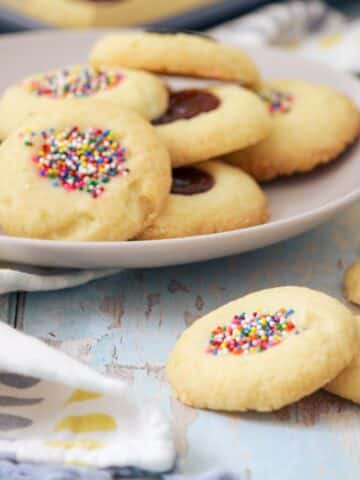
- Puerto Rican Polvorones (Shortbread Cookies)
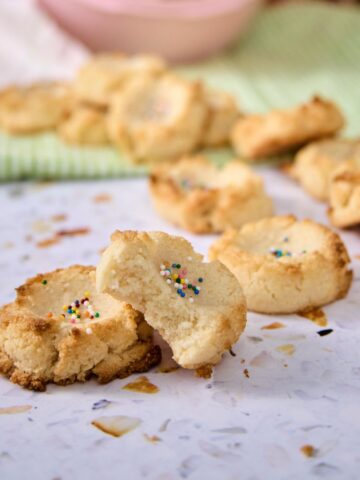
- Low-Carb Polvorones
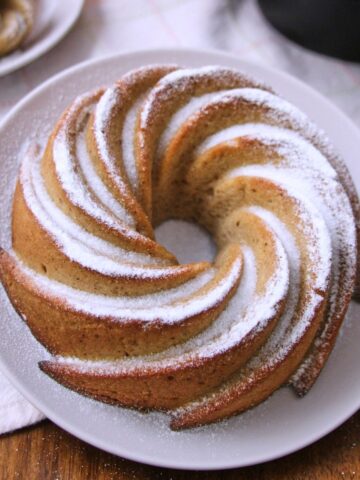
- Puerto Rican Spice Cake (Hojaldre Añasqueño)

Before You Go . . .
Cooked it and loved it? Rate it. Review it. Share it. Your feedback helps others and keeps this blog cooking.
📖 Recipe

Pan de Mallorca
Equipment
Ingredients
- 3½ cup flour all-purpose-420g
- ⅓ cup sugar 67g
- 1 packet active dry yeast (2.25 tsp-7g)
- ¾ teaspoon salt 4g
- ¾ cup milk warm, around 100°F, 180ml
- 2 sticks butter soften and divided. 6 tablespoon for dough, rest for bruhing. 85g
- 1 tablespoon vanilla
- 1 tbs honey 21g
- 2 large eggs plus one extra egg yolk
Instructions
- Reserve extra butter to spread on the dough before forming the rolls. You will need a parchment paper-lined sheet pan or cookie sheet for final proofing and baking. The oven will be preheated during the second proof. If you plan to use an egg wash for a more golden finish, whisk 1 egg with a splash of milk and set aside.
- Activate the yeast: In a small bowl, mix warm milk, yeast, and honey. Let it sit for about 10 minutes, until foamy.1 packet active dry yeast, ¾ cup milk, 1 tbs honey
- Mix dry ingredients: In the bowl of a stand mixer, whisk together the flour, sugar, and salt.3½ cup flour, ⅓ cup sugar, ¾ tsp salt
- Start the dough: Add the yeast mixture and eggs to the dry ingredients. Mix on low speed with the dough hook until a sticky dough forms.2 large eggs
- Incorporate the butter and the vanilla: With the mixer running on medium-low speed (Speed 2), gradually add the softened butter. Knead for 8-10 minutes, until the dough is smooth and elastic, and pulls from the sides of the bowl. If the dough is still very loose, add flour 1 tablespoon at a time as needed. Make sure the flour is fully incorporated before adding more.2 sticks butter, 1 tbsp vanilla
- First proof (start): Transfer the dough to a lightly greased bowl.
- Cover the dough: Cover with plastic wrap or a damp towel. A friend of mine uses a dedicated shower cap to cover the bowl and proof the dough.
- First proof (finished): Let rise for 1½-2 hours, until doubled in size.
- Deflate and rest: Gently deflate the dough and return it to the bowl to prepare for shaping.
- Divide the dough: Weigh and portion the dough into 2-ounce pieces for smaller rolls or 4-ounce pieces for larger rolls.
- Rest the portions: Cover the dough portions with a clean kitchen towel and let them rest briefly to relax the gluten.
- Roll and butter: Roll each portion into a small rectangle and lightly spread with softened butter (or filling, if using).
- Roll into logs: Tightly roll the dough into a log.
- Shape the Mallorcas: Coil each log into a spiral shape.
- Second proof: Place the shaped rolls on a parchment-lined baking sheet, about 2 inches apart. Cover and let rise for 45-60 minutes. Preheat the oven to 350℉.
- Ready to bake: The rolls should look puffy and relaxed. Brush with egg wash if using.
- Bake and finish: Bake at 350℉ for 15-18 minutes, rotating the pan halfway through for even baking. Brush with melted butter while still warm, then dust with powdered sugar once cooled before serving.

Notes
- If your dough seems too soft or spreads too thin, it likely needs more flour or a longer kneading time. Look for a dough that's tacky but clears the sides of the bowl.
- Milk temperature matters: Warm the milk to about 98°F. Milk that's too cold won't allow the yeast to bloom, and milk hotter than 98°F (or colder than 37°C) can kill the yeast. If heating, let it rest briefly before using.
- Don't rush the dough: Make sure the flour is fully incorporated before adding more. Adding excess flour too early can lead to tough, dense rolls.
- Weigh for consistency: Weigh your dough portions to ensure even size and uniform baking, especially important when shaping spiral rolls.
- Butter creates texture: Spreading softened butter before rolling helps create subtle layers and contributes to the soft, rich crumb.
- Watch the oven, not the clock: Use an oven thermometer if possible. Overbaking is the fastest way to dry out enriched doughs like Pan de Mallorca.
- Let the rolls cool before dusting: If you dust them with powdered sugar while they're still hot, the sugar will melt instead of coating the surface.
- Plan ahead: Baked rolls or shaped dough can be frozen after the first rise. Wrap tightly and thaw overnight before baking or reheating.
Katherine says
This recipe is fantastic! Next time, I plan on adding orange or lemon to the melted butter on top. My only question: Should there be vanilla extract in the dough? The photo mentions vanilla but I don’t see it in the directions.
Zoe Forestier Villegas says
There's nothing quite like a fresh Pan de Mallorca. Pillowy soft with just a hint of sweetness, and wait until you try it as a sandwich.
Zoe Forestier Villegas says
I am glad you liked the recipe! Yes, add the vanilla with the butter. I will adjust the recipe right now to correct my error.