

Learn how to make Puerto Rican Fish Broth with fish heads, onions, culantro, oregano brujo, and herbs. This richly flavored caldo de pescado is perfect for soups, rice dishes, or seafood-based recipes. Fish broth is also known as fish stock or fumet.
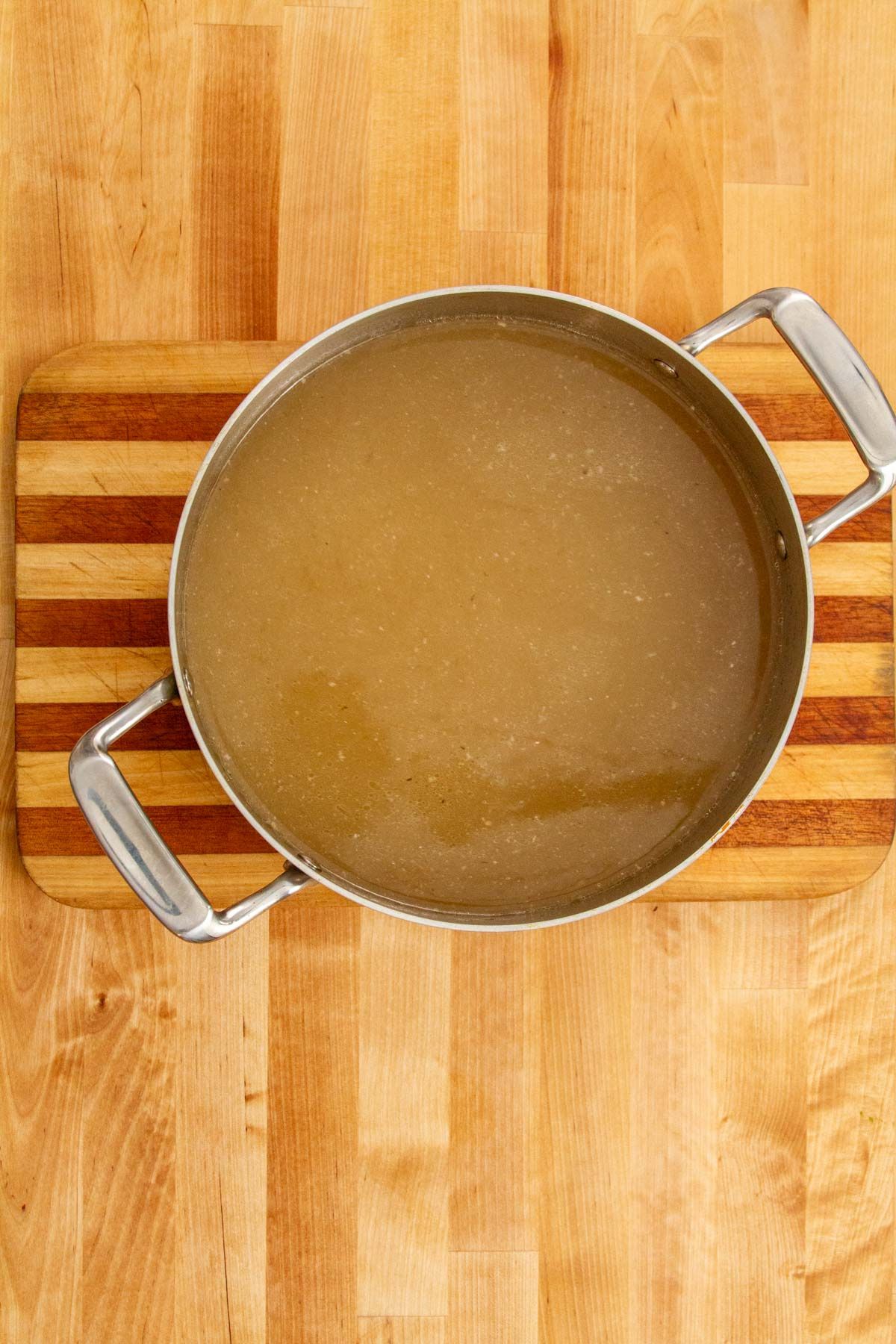
Fish broth (caldo de pescado) is a staple in Puerto Rican cooking, adding depth and richness to dishes such as Loíza's Caldo Santo, Seafood Pomodoro, and Steamed Mussels with Sofrito and White Wine. A good fish broth brings serious flavor to whatever seafood dish you're building.
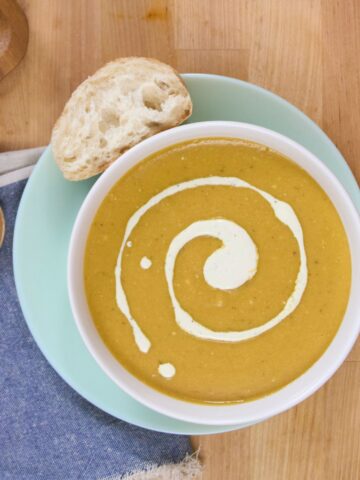
Besides the recipes above, here are a few more ways to use up all the fish broth you'll be making soon. Shrimp and Butternut Squash Bisque is a rich, creamy soup featuring shrimp and a hint of cayenne. Shrimp and Scallop Stew is a tomato-based braise that's great over pasta or served on its own. Crab Rice is a one-pot wonder that tastes like it came straight from a beachside restaurant in Puerto Rico. And finally, Mojo Isleño is a tomato and olive sauce traditionally served with fried red snapper in the coastal town of Salinas.
Jump To
- Why You'll Love This Recipe
- What's the Difference Between Fish Broth, Stock, and Fumet?
- Ingredient Notes
- A Quick Note on Fish Choice
- Variations and Substitutions
- Top Tip
- How to Make Puerto Rican Fish Broth, Caldo de Pescado
- Expert Tips
- Recipes FAQs
- More Soups, Stews, and Braised Dishes
- 📖 Recipe
- Puerto Rican Fish Broth, Caldo de Pescado
- A Quick Note on Fish Choice
- Expert Tips
- Comments
Why You'll Love This Recipe
- Flavor: The flavors you add to this broth will carry through to any dish you use it in-no preservatives, no artificial colors, and no sodium overload. Just pure, clean flavor.
- Versatility: You can use this fish broth in countless recipes. I'm sharing seven to get you started. It also freezes beautifully, so you'll always have some on hand.
- Delicious on its own: In Puerto Rico, seaside restaurants often offer caldo de pescado to guests while they wait. This broth brings that same warmth and comfort. Try it with domplines for a cozy weekend lunch.
- Cultural Roots: This recipe reflects Puerto Rican coastal cooking traditions and features ingredients such as oregano brujo and culantro. Local flavors you won't find in store-bought stock.
- Tested and Refined: This broth has been thoroughly tested in authentic recipes, such as my Shrimp & Scallop Stew and Mojo Isleño, ensuring its effectiveness.
- Cost-Effective: Made with fish heads and vegetable scraps, this broth turns leftovers into something flavorful and practical, creating zero waste with full flavor.
- Beginner-Friendly: No fancy techniques needed. If you can simmer, you can do this.
- Customizable: You can adjust the herbs, aromatics, and intensity depending on what you're making-light for soups, deep and rich for arroz dishes.
What's the Difference Between Fish Broth, Stock, and Fumet?
Fish Broth vs. Fish Stock:
Traditionally, stock is made with bones and simmers for a longer period, while broth typically includes meat and is often seasoned. With fish, the line blurs-fish bones are delicate, so both simmer quickly. This recipe utilizes fish heads with meat and bone, providing deep flavor and body in one pot.
Fish Fumet:
Traditionally, fumet is a concentrated fish stock made with wine and used in sauces. Wine adds acidity and brightness, but it's not required. This recipe skips it and instead leans into Puerto Rican flavors, such as oregano brujo and culantro. You can reduce the broth after straining to create a more intense version that works like a fumet, eliminating the need for wine.
Fish Bone Broth:
Popular in wellness circles, this focuses on extracting collagen and nutrients from bones. While fish doesn't need long simmering, this broth still offers depth and nutritional value.
Consommé & Bouillon:
Consommé is a clarified broth, best made with just fish bones for a clear result. Bouillon cubes and powders are concentrated, shelf-stable versions of broth, often packed with salt, coloring, and added flavors, not quite the same as homemade.
Ingredient Notes
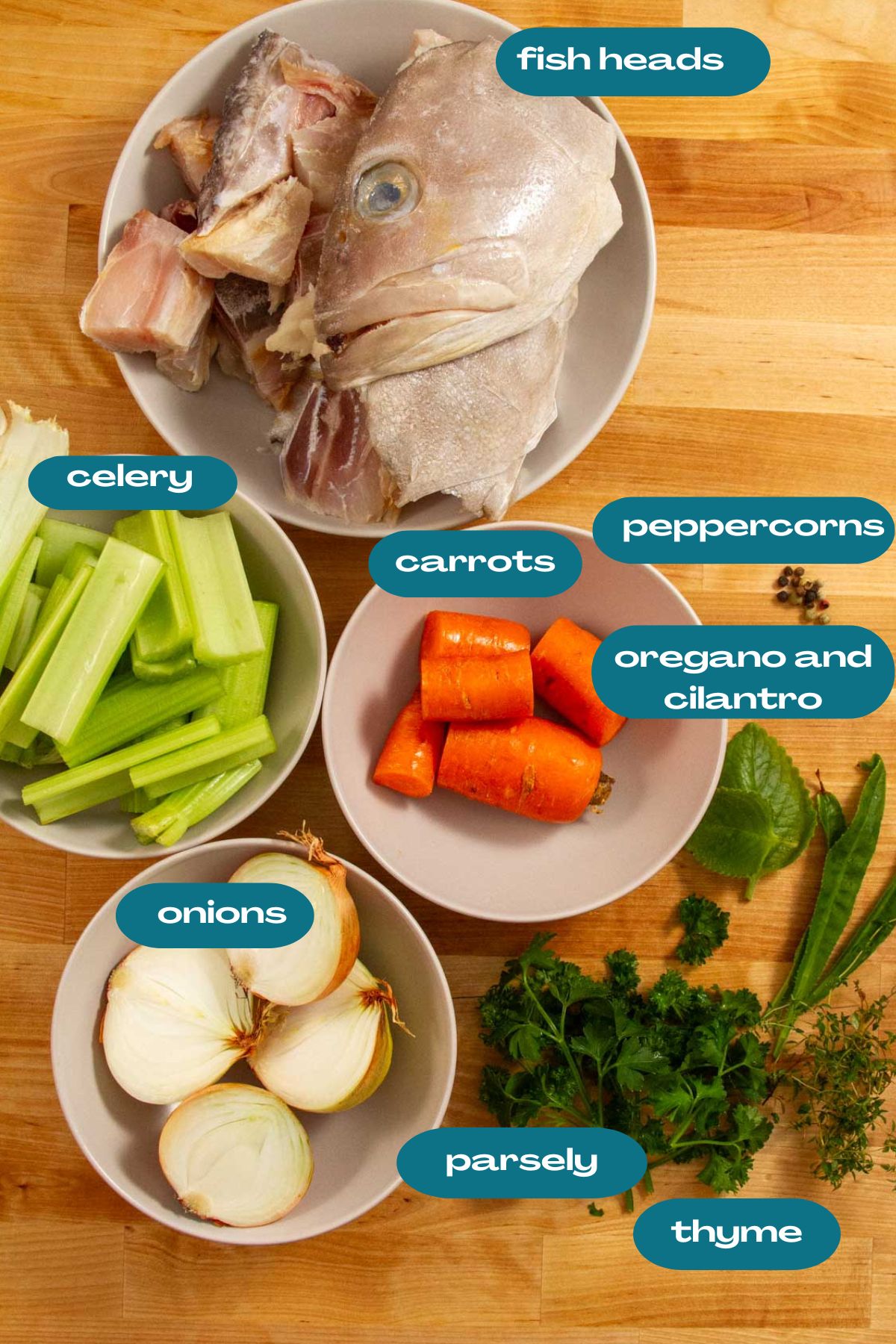
- Fish Heads: Look for heads with plenty of meat still on them, snapper, grouper, or whatever's fresh and local. You can often find them explicitly sold for broth at your supermarket or fish market. Frames (skeletons), collars, and bones also work great if heads aren't available.
- Mirepoix: A mirepoix is a classic French flavor blend of onion, celery, and carrot (basically a sofrito) that forms the base of this broth. It's the same aromatic mix used in many classic stocks.
- Herbs: I used Oregano Brujo and culantro to achieve that unmistakable Puerto Rican flavor, complemented by a bit of parsley and thyme for balance. This herb combo isn't traditional for classic fish stock, but since I'm using the broth in Puerto Rican recipes, these flavors make the most sense and complement the dishes beautifully. Again-tu cocina, tus reglas (your kitchen, your rules) 😉.
A Quick Note on Fish Choice
When making fish broth, stick to white-fleshed, mild-tasting fish like snapper, grouper, halibut, or cod. Avoid oily fish, such as mackerel, sardines, or salmon. Their strong flavors and oils can turn the broth bitter, murky, or overpowering. You want clean, balanced flavor that complements, not something that competes with whatever dish you're making.
Sourcing Tip: When buying fish for broth, especially whole heads or bones, ask your fishmonger where the fish is from and how it was caught. To make eco-conscious choices, check out the Seafood Watch Consumer Guide to see which fish are sustainably sourced in your region.
Variations and Substitutions
- Vegetable Ratio & Swaps: A classic mirepoix is composed of 50% onions, 25% carrots, and 25% celery. You can substitute leeks for onions, parsnips for carrots, and mushrooms for celery. Fennel or cabbage trimmings also add great flavor and body.
- Peeling Onions: If you're after a clearer or lighter broth, peel your onions. Onion skins add a deeper color but don't significantly affect the flavor. I left them on and still got a rich broth.
- Chop Size Matters: For quicker simmering or short cook times, smaller vegetable cuts help extract more flavor faster. I went with large chunks for a slower infusion.
- Roasted vs. Raw: Roast the fish and vegetables first for a darker, richer broth. For a more delicate flavor that blends into dishes like arroz con mariscos or seafood stews, simmer them raw like I did.
- Acid Options: A splash of lemon juice, white vinegar, or a bit of tomato can help draw out flavor and collagen from the fish bones. Optional, but useful if you want a slightly brighter broth.
- Herb Alternatives: Besides oregano brujo, culantro, you can use bay leaves, sage, lemon balm, lemons, tarragon, dill, chives, or scallions. Select herbs that are flavorful yet versatile enough to work in various applications.
Top Tip
Don't Salt the Broth (Yet): Keep the broth unsalted so it stays neutral. You can always season later when you know how you'll use it, whether in rice dishes, soups, or sauces.
How to Make Puerto Rican Fish Broth, Caldo de Pescado
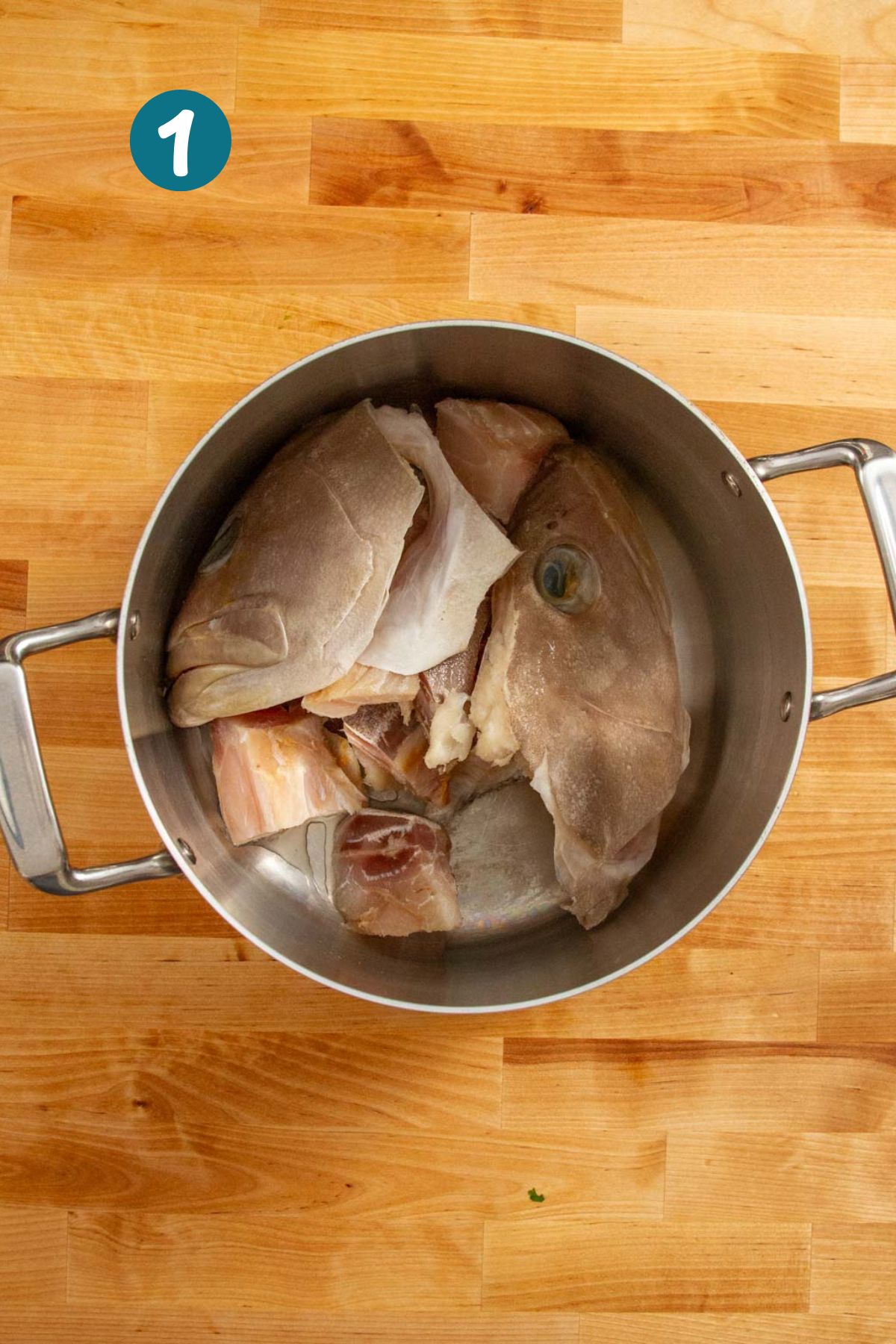
- Step 1: Place the fish heads and fish bones into the stock pot.
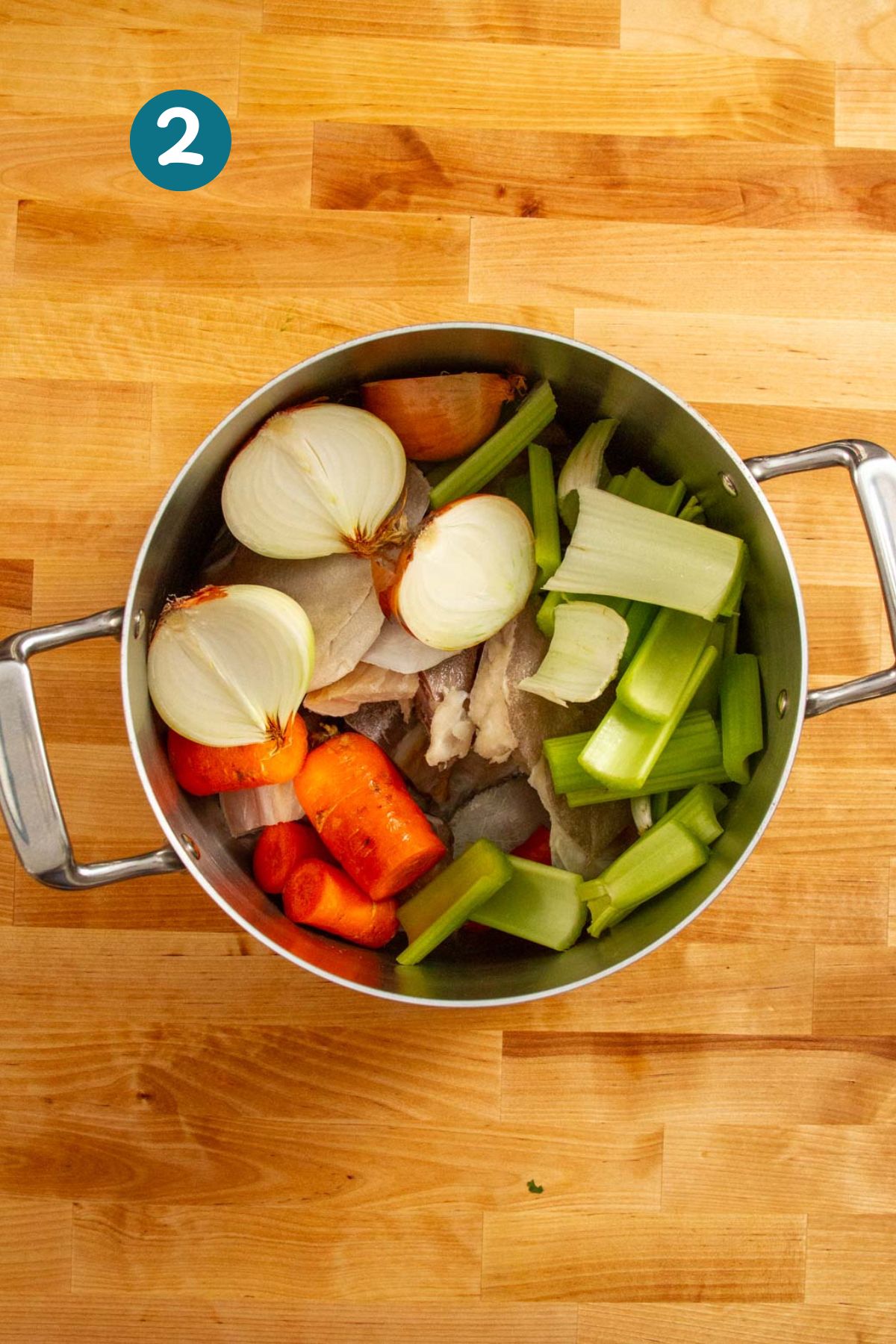
- Step 2: Add onions, carrots, and celery.
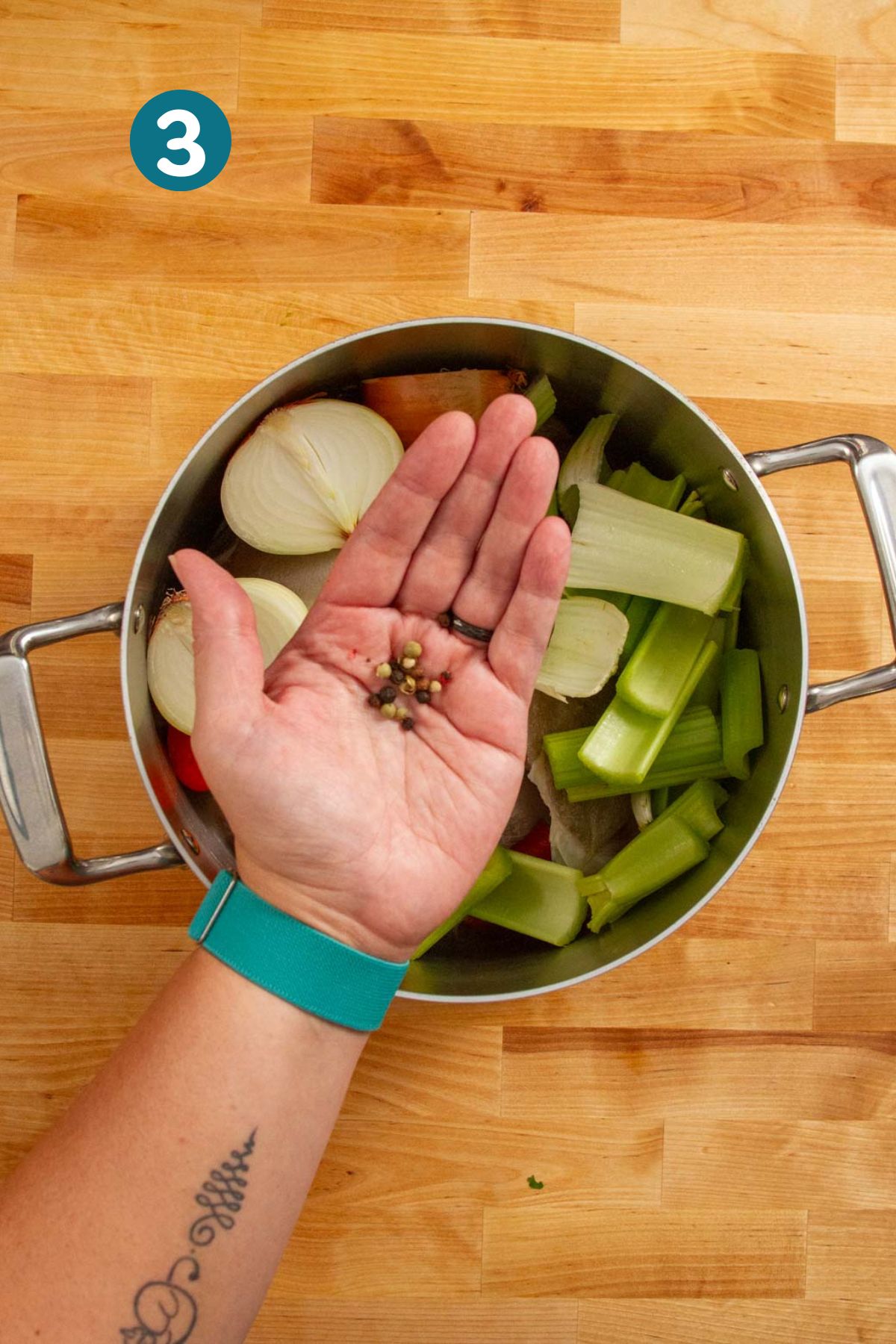
- Step 3: Add peppercorns.
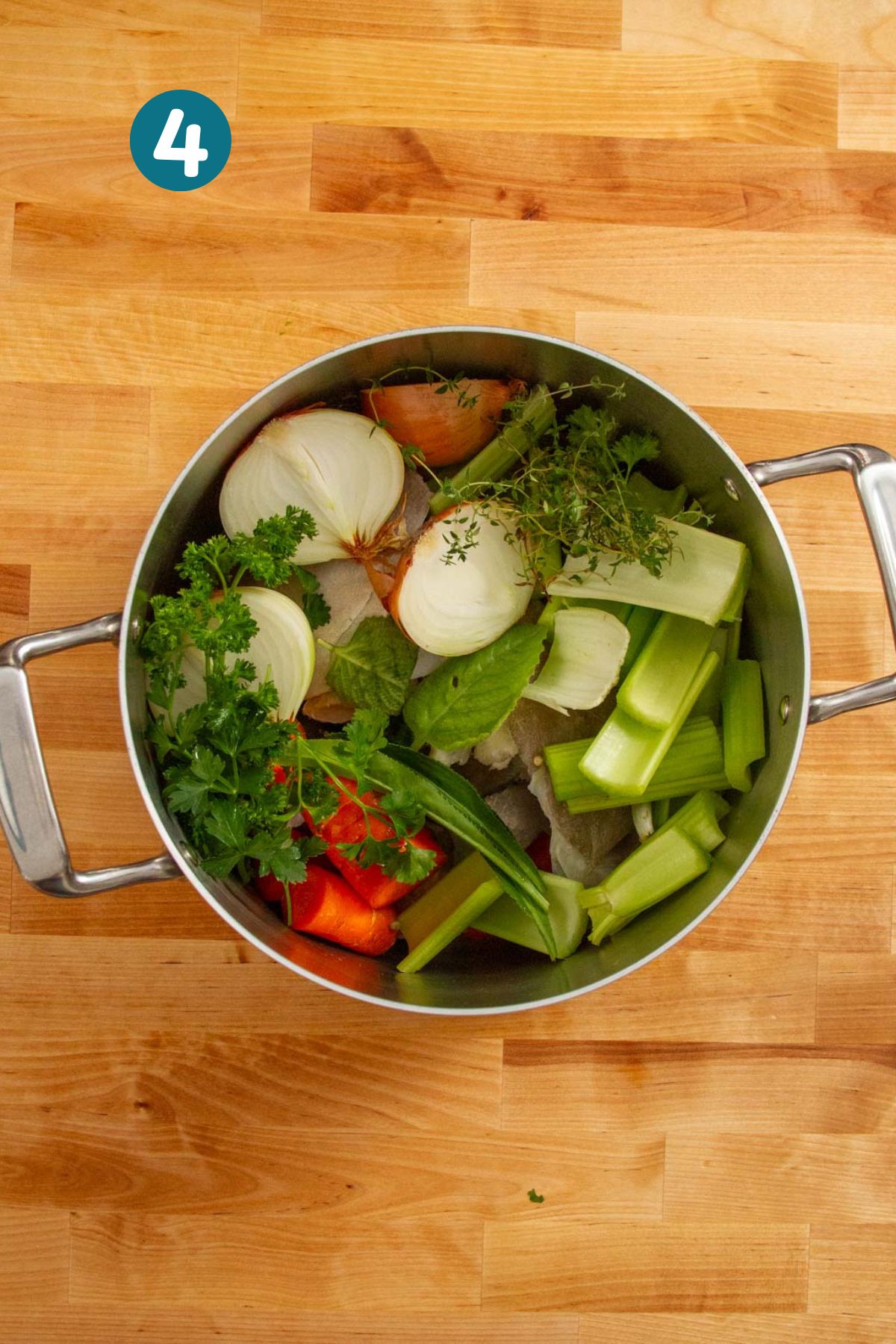
- Step 4: Also add oregano brujo, culantro, parsley, and thyme.
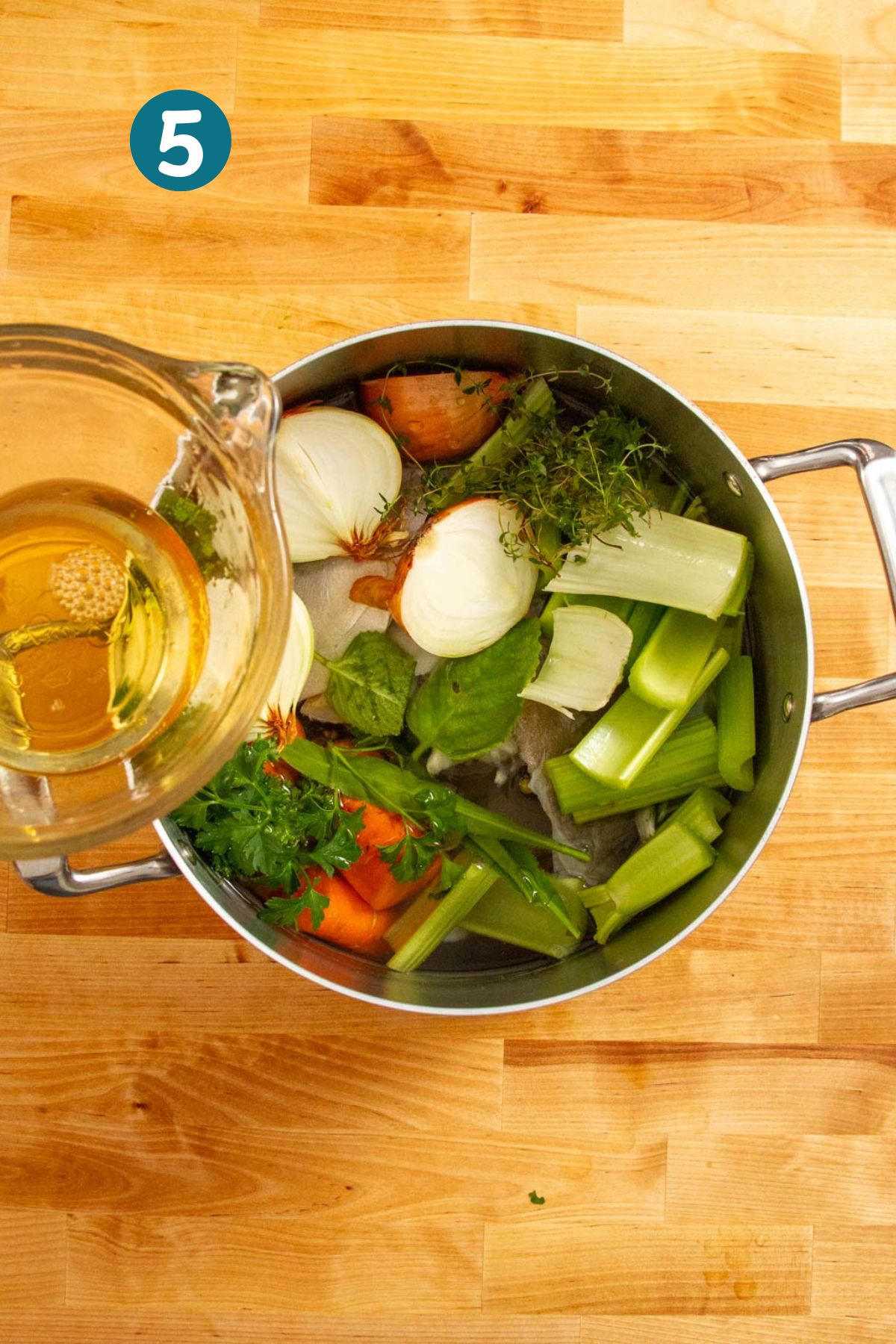
- Step 5: Pour cold water over the ingredients in the pot to cover them by at least 1 inch. Bring the mixture to a simmer, skimming any foam or particles that float to the surface. Simmer for about 30 to 45 minutes. Don't add salt, remember this broth is used as based for other applications and salting it may change the seasoning of other recipes.
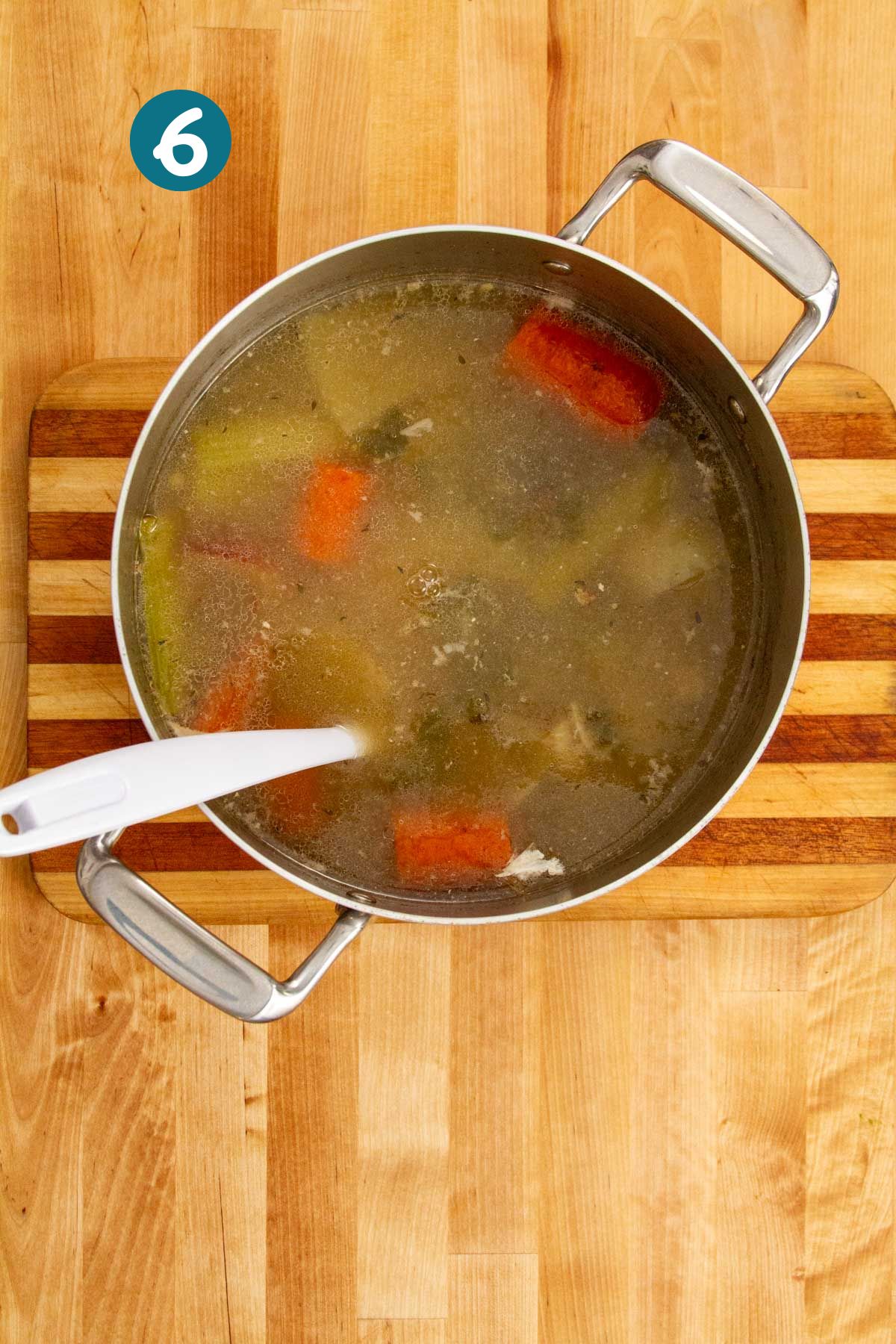
- Step 6: Once the broth is ready, strain it and cool it quickly by placing the pot in an ice bath or dividing it into shallow containers before refrigerating. Don't let it sit for more than one to two hours.
Expert Tips
- Freeze in Portions: Broth freezes beautifully. Pour into ice cube trays, muffin tins, or small containers for easy grab-and-use portions. Label with the date and whether it's reduced for better planning later.
- Start with Cold Water: Always start your broth with cold water. It helps extract flavor and collagen more evenly from the bones as the temperature gradually rises.
- Simmer, Don't Boil: Keep the heat at a gentle simmer. A rolling boil can break down the fish bones too fast, cloud the broth, and make it taste muddy.
- Skim Early Foam: During the first 10 minutes of simmering, skim off any foam that rises to the top. It helps keep your broth clean-tasting and clear.
- Use a Fine-Mesh Strainer: Once done, strain the broth through a fine-mesh sieve or cheesecloth to remove small bone bits and veggie remnants, especially if you're aiming for a smooth or delicate result.
- Use Within a Week or Freeze: Fish broth is more delicate than chicken or beef stock. Use it within 5-7 days if refrigerated, or store in the freezer for long-term use.
- Cool Your Broth Quickly: Fish broth is delicate and can spoil fast if left out too long. Once strained, cool it quickly by placing the pot in an ice bath or dividing it into shallow containers before refrigerating. Don't let it sit out for more than 1-2 hours.
Recipes FAQs
Fish broth, also known as caldo de pescado, is a savory liquid made by simmering fish heads or bones with vegetables and herbs. It's used as a base for soups, stews, and rice dishes.
Fish stock typically refers to a bone-based, unsalted liquid simmered for structure, whereas broth may include meat and is generally more flavorful. With fish, the terms are often used interchangeably since both cook quickly.
Yes! Portion it into ice cube trays, muffin tins, or small containers. Label and date it, and note if it has been reduced. It'll last in the freezer for 2-3 months.
Up to 5-7 days. Cool it quickly after cooking and store it in a sealed container to maintain its freshness.
Use white, mild fish like snapper, grouper, or halibut. Avoid oily fish, such as mackerel, tuna, or salmon, as they can make the broth taste too strong or bitter.
It usually means the pot boiled too hard or wasn't skimmed early on. It's still usable, just not as clear.
More Soups, Stews, and Braised Dishes



I'd love to hear from you! Did you try this recipe? Leave a review and rating below. Let's connect on Instagram, and don't forget to join my weekly email list for fresh new recipes.
📖 Recipe
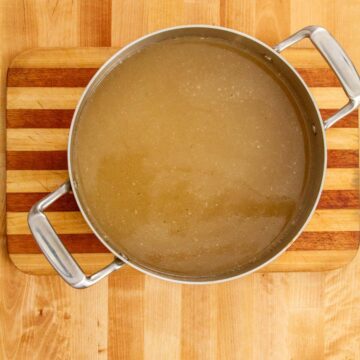
Puerto Rican Fish Broth, Caldo de Pescado
Equipment
- chinios or fine mesh strainer
Ingredients
- 2 fish heads and or fish bones
- 3 onions medium, cut in half. skin removed
- 3 carrots cut into medium chunks
- 4 celery stalks root removed, cut into medium dices
- 1 bunch parsley Italian parsley is preferred, but curly parsley would work too.
- 2 sprigs thyme
- 3 leaves culantro optional
- 3 leaves oregano brujo optional
- 1 teaspoon peppercorns peppercorn mix will work
- 12 cups cold water
Instructions
- Place the fish heads and fish bones into the stock pot.
- Add onions, carrots, and celery.
- Add peppercorns.
- Also add oregano brujo, culantro, parsley, and thyme.
- Pour cold water over the ingredients in the pot to cover them by at least 1 inch.
- Bring the mixture to a simmer, skimming any foam or particles that float to the surface. Simmer for about 30 to 45 minutes. Do not add salt.
- Once the broth is ready. Strain it and cool it quickly by placing the pot in an ice bath or dividing it into shallow containers before refrigerating. Do not let it sit for more than one to two hours.

Notes
A Quick Note on Fish Choice
When making fish broth, stick to white-fleshed, mild-tasting fish like snapper, grouper, halibut, or cod. Avoid oily fish like mackerel, sardines, or salmon—their strong flavors and oils can turn the broth bitter, murky, or overpowering. You want clean, balanced flavor that complements—not competes with—whatever dish you’re making.
Expert Tips
-
- Freeze in Portions: Broth freezes beautifully. Pour into ice cube trays, muffin tins, or small containers for easy grab-and-use portions. Label with the date and whether it's reduced for better planning later.
-
- Start with Cold Water: Always start your broth with cold water. It helps extract flavor and collagen more evenly from the bones as the temperature gradually rises.
-
- Simmer, Don't Boil: Keep the heat at a gentle simmer. A rolling boil can break down the fish bones too fast, cloud the broth, and make it taste muddy.
-
- Skim Early Foam: During the first 10 minutes of simmering, skim off any foam that rises to the top. It helps keep your broth clean-tasting and clear.
-
- Use a Fine-Mesh Strainer: Once done, strain the broth through a fine-mesh sieve or cheesecloth to remove small bone bits and veggie remnants, especially if you're aiming for a smooth or delicate result.
-
- Use Within a Week or Freeze: Fish broth is more delicate than chicken or beef stock. Use it within 5-7 days if refrigerated, or store in the freezer for long-term use.
-
- Cool Your Broth Quickly: Fish broth is delicate and can spoil fast if left out too long. Once strained, cool it quickly by placing the pot in an ice bath or dividing it into shallow containers before refrigerating. Don't let it sit out for more than 1-2 hours.

Zoe Forestier Villegas says
Excellent base for seafood soups, stews, and rice.