

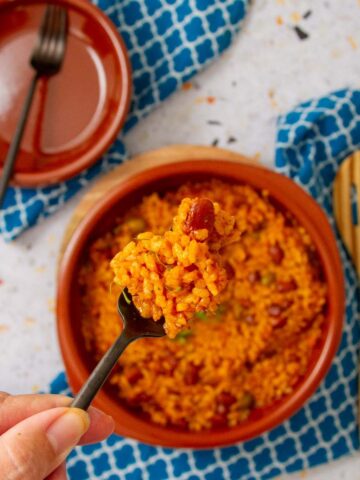
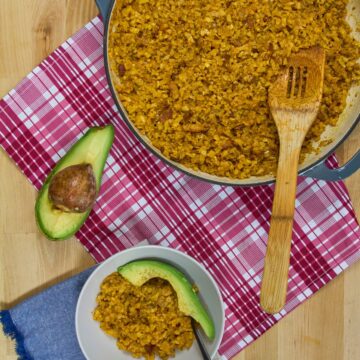
Puerto Rican Cauliflower Yellow Rice brings all the color, warmth, and achiote flavor of Puerto Rican arroz amarillo to the table, without the rice. It's a satisfying alternative to rice that still delivers the flavors you expect from a traditional Puerto Rican kitchen.
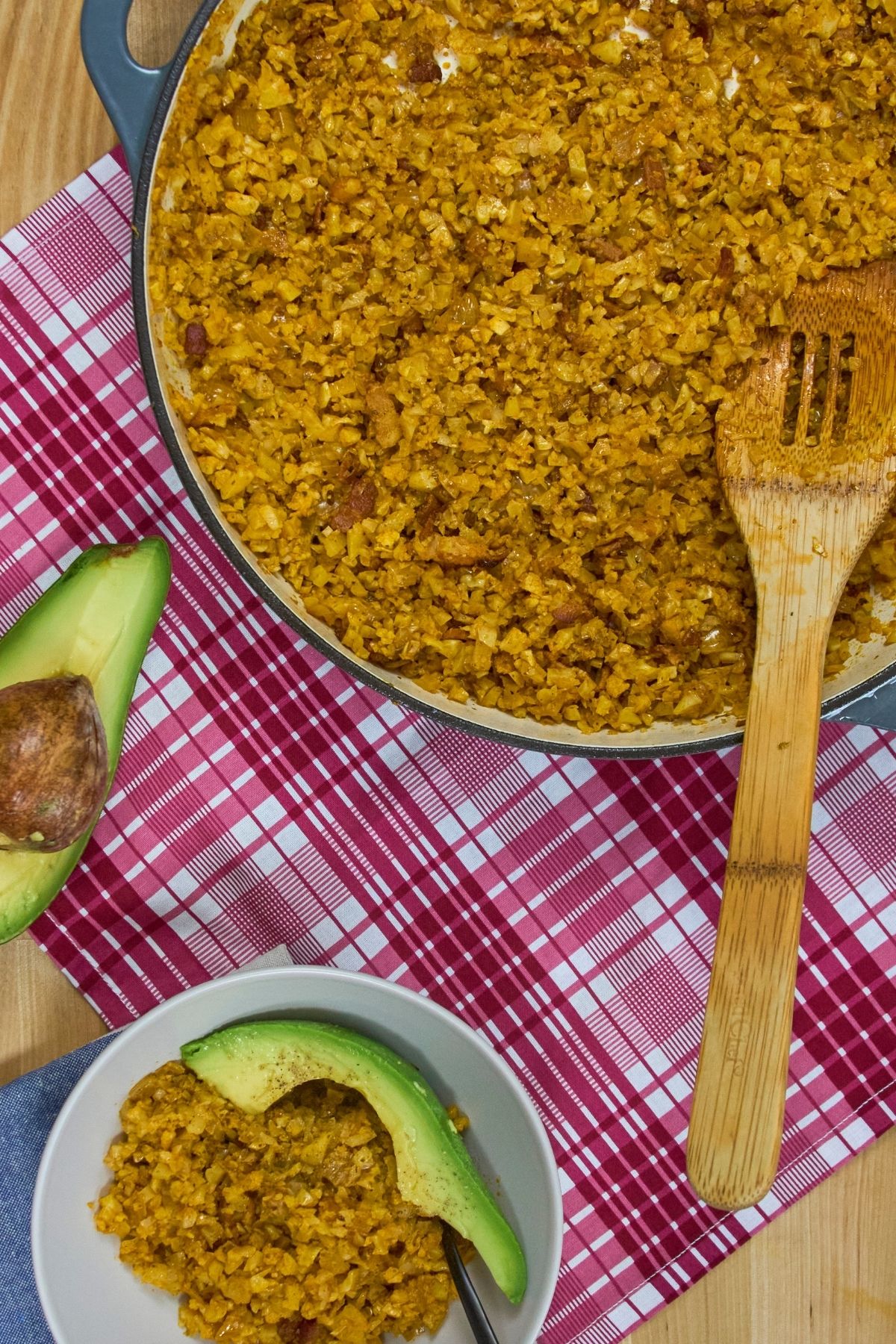
Puerto Rican Cauliflower Yellow Rice is one of those dishes that starts as a compromise but earns its place in your heart. Puerto Rican cuisine is quite carb-heavy, and for some of us who struggle with weight, eating this many carbs is not something we need to do. I made this version of cauliflower rice as an homage to my Puerto Rican roots, and as an alternative to our favorite starchy side dish. This is the dish I reach for when I want to increase my vegetable intake while still giving myself the rice texture. I serve it as part of a classic Puerto Rican plate, Habichuelas Guisadas, and Pollo Asado or Chuletas Fritas.
For more low-carb options from the GMF kitchen, try Zucchini en Escabeche or Low-Carb Linguini with Shrimp and Parmesan Cheese. Bacalao a la Vizcaína traditionally calls for potatoes, but cauliflower makes a seamless swap. And if you are looking for something sweet, Guilt-Free Tembleque delivers.
Jump To
Why this recipe works
- It is on the table in under 15 minutes. No boiling, no pot, no waiting. One braiser and you are done. Especially if you use frozen cauliflower.
- The flavor is fully Puerto Rican. Sofrito, achiote oil, and sazobo bring forth the unmistakable Puerto Rican sabor.
- It works with everything on the plate. Pollo asado, pernil, chuletas, grilled fish; cauliflower yellow rice holds its own next to all of it.
Defining Spanish Rice
Spanish rice is not one dish; it is a tradition that traveled. In Spain, rice gets its color from saffron, the dried stigmas of the crocus flower, expensive and unmistakably floral. When that tradition moved through Latin America during colonization, each culture adapted it with what was available and familiar. In Mexico, tomato and cumin became the base, producing the reddish-orange rice most people recognize as "Spanish rice" today, a name that stuck even though the preparation is distinctly Mexican. Like the assumption that all Spanish speakers are Spanish, we are not. In Puerto Rico, the adaptation followed the original Spanish tradition more closely; achiote served as a stand-in for saffron, giving arroz amarillo its deep golden color and subtle earthiness. This substitution was not accidental. Across Latin America and the Philippines, annatto became the documented replacement for saffron in the Valencian rice tradition. This cauliflower yellow rice follows that same lineage, just without the rice.
Ingredients
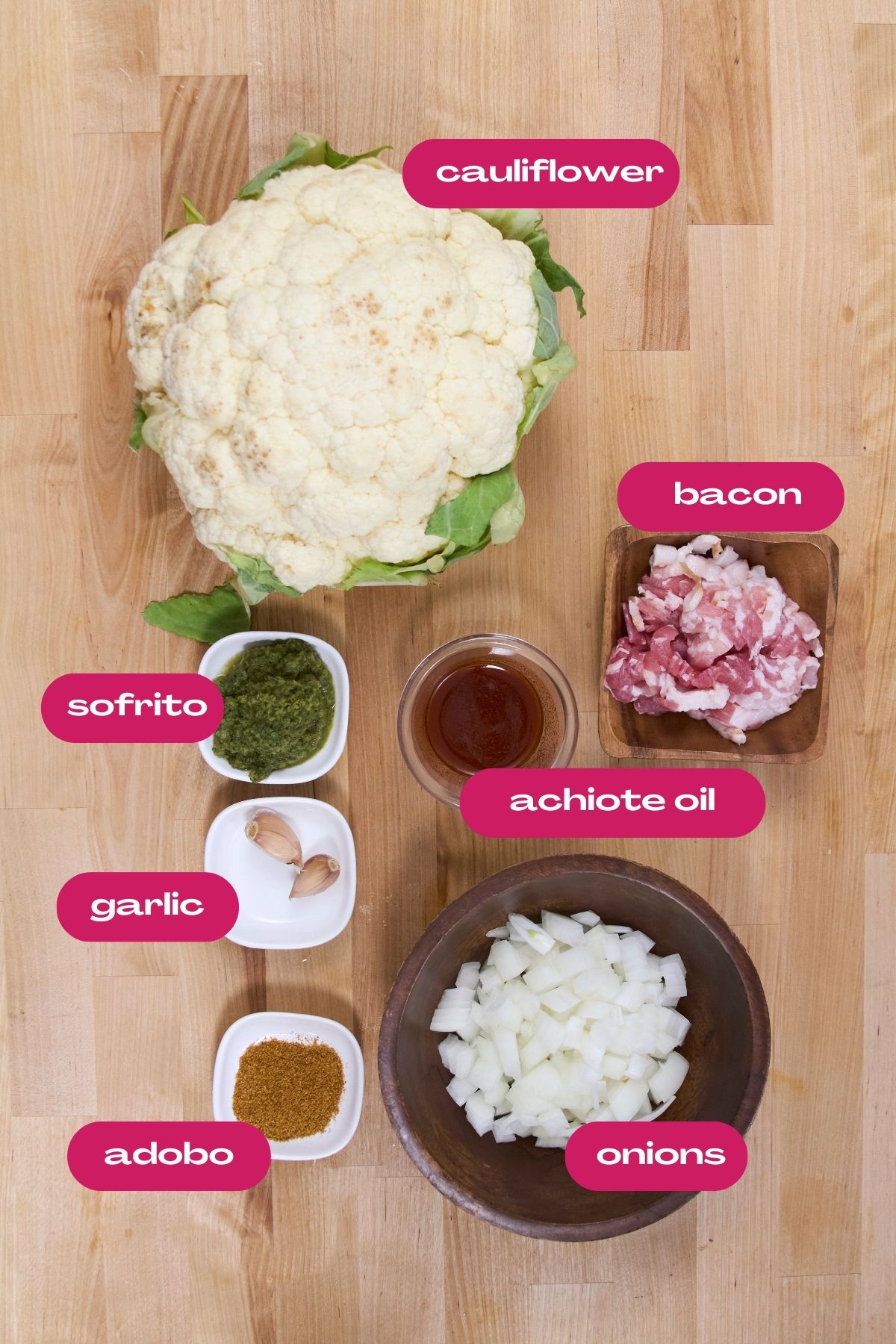
- Cauliflower: You can use frozen cauliflower, but I want to show you how to break down a fresh head of cauliflower in case you do not have frozen on hand. If using frozen, cook it from frozen; do not thaw it out.
- Bacon: Diced small and rendered first. The fat becomes your cooking base, and the crispy bits stay in the pan throughout. This is flavor foundation, not garnish.
- Achiote oil: This is what gives the dish its color and its distinctly Puerto Rican warmth. It goes in with the cauliflower, so every grain gets coated. I cover how to make this quick and easy oil in my Achiote Oil post.
- Sofrito: Sofrito is Puerto Rico's flavor calling card, and it is what separates this from a generic vegetable side dish. Use homemade sofrito or store-bought.
For a complete list of ingredients, please see the recipe card.
Variations/Substitutions
- Vegan: Skip the bacon and start with just achiote oil for a vegan/vegetarian version.
- Riced broccoli: Riced broccoli is a direct substitute and holds up well to the same seasoning and technique. Look for it in the freezer section next to the riced cauliflower. You would break down the head in the same fashion as the cauliflower.
- Jicama or celeriac (apio): More work, but worth knowing. Small dice either vegetables or pulses in a food processor until you reach a rice-like consistency. Squeeze out the excess liquid thoroughly before adding it to the pan. The result is mild, slightly crisp, and takes the achiote and adobo beautifully.
- Palmini rice: Hearts of palm rice is available in cans or pouches at many grocery stores. Drain and rinse well before using. It has a mild brine flavor that cooks off quickly in the hot pan.
Some substitutions have not been tested. If you try one, let us know how it went in the comments.
Top Tip
Do not cover the pan. Cauliflower releases moisture as it cooks, and a lid traps that steam, making your rice soggy. Keep it open, keep the heat at medium, and stir it enough to prevent sticking without working it so hard that it breaks down. The goal is tender with a little texture left, not mush.
How to make Puerto Rican Cauliflower Yellow Rice

Step 1
Remove the leaves and trim the stem. Break the head into florets, then chop them finely with a chef's knife until you have small, rice-sized pieces. Work in sections and aim for an even size; this helps everything cook at the same rate. A food processor with a grater attachment does the same job faster if you prefer. But you get greater control of the cuts with the knife.
Step 2
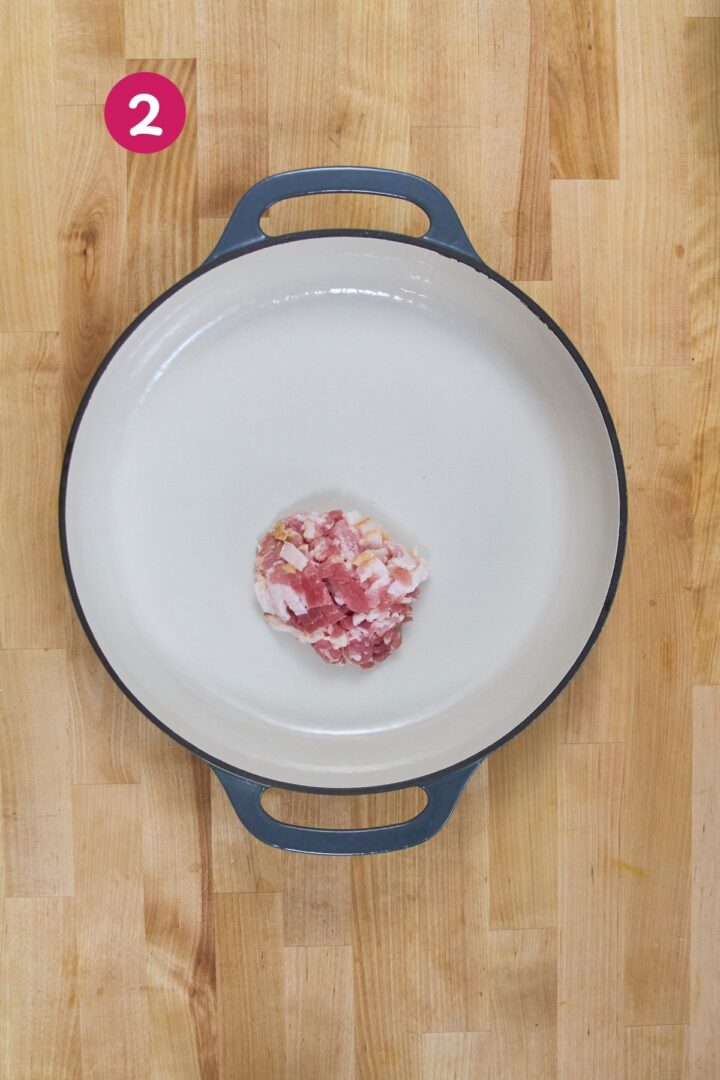
Place the diced bacon in a cold braiser and bring the heat up to medium. Starting in a cold pan gives the fat time to render slowly and evenly. Cook until the fat is released and the bacon pieces are beginning to crisp at the edges. You are welcome to add a bit of olive oil to help the bacon come along if you need to.

Step 3
Add the onion, sofrito, and garlic directly to the bacon fat. Stir to combine, then cook over medium heat until the onion is soft and translucent and the sofrito has cooked down into the fat, about 4 to 5 minutes. The pan should smell like the beginning of every good Puerto Rican dish.
Step 4
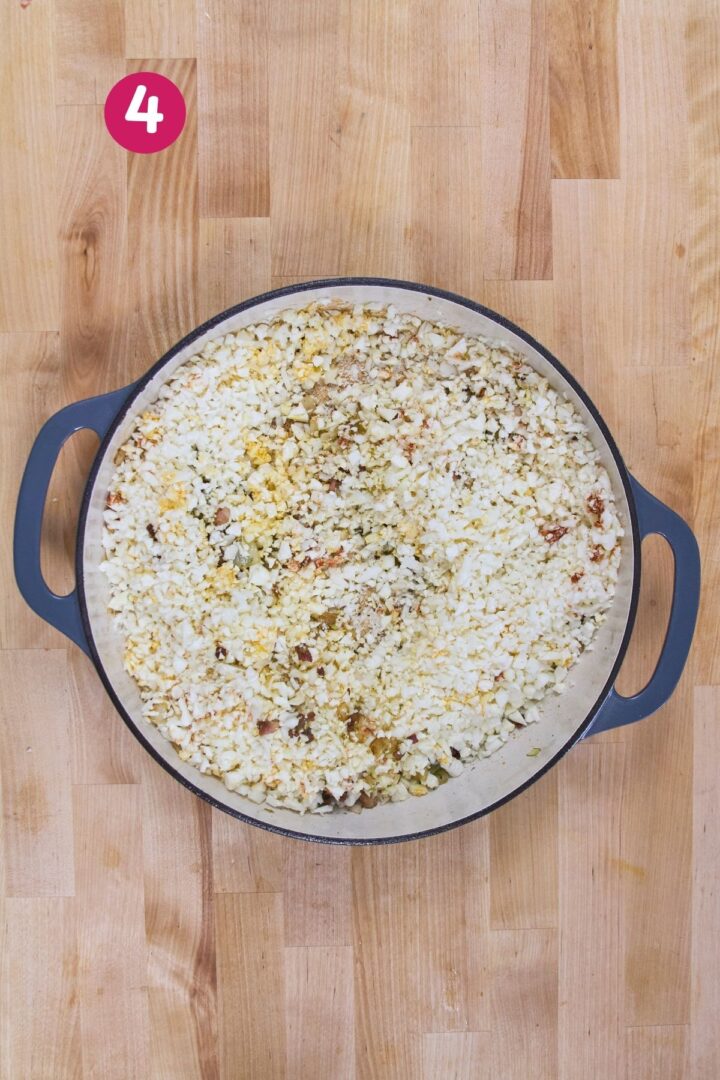
Add the riced cauliflower to the pan and drizzle the achiote oil over it. Sprinkle the adobo evenly across the top. Toss everything together until the cauliflower is fully coated and the color begins to spread; that golden-orange should reach every corner of the pan. Continue cooking over medium heat, stirring occasionally, until the cauliflower is tender and deeply colored, about 6 to 8 minutes. Taste and adjust seasoning before serving.
Expert Tips
- Frozen riced cauliflower works with one condition: do not thaw it. Thawing the cauliflower will release all the liquid, whereas adding the frozen cauliflower to a hot pan will create steam, which will aid the cooking process. If the cauliflower is already thawed, place it on paper towels to drain excess liquid.
- When using frozen sofrito. If you keep sofrito frozen in ice cube trays, one to two cubes dropped into the hot bacon fat works perfectly here.
- Start the bacon in a cold pan. Dropping diced bacon into an already-hot pan causes it to seize rather than render slowly. A cold start gives the fat time to release gradually and gives you a better cooking base for everything that follows.
- Season in layers. The bacon brings salt, the sofrito brings depth, and the adobo finishes the dish. Taste before you reach for more seasoning; the bacon and adobo together can increase the salt levels.
- Rice the cauliflower with a knife for better texture. A food processor is faster but tends to produce uneven pieces, some too fine, some too chunky. A chef's knife gives you more control and a more consistent result that more closely mimics rice. Plus it is a great way to practice your knife skills.
- Reheat in a dry pan. Cauliflower yellow rice reheats well over medium heat with a small drizzle of achiote oil to bring back its color and moisture. A microwave always works, but it softens the texture more than a hot pan will.
Recipes FAQ's
It is a Puerto Rican-style Spanish cauliflower rice made with riced cauliflower seasoned with sofrito, achiote oil, and adobo to replicate the color and flavor of arroz amarillo, the yellow rice that anchors so many Puerto Rican plates.
Not exactly. The texture is softer and more delicate, and it cooks much faster. But when you build the same flavor base you would use for arroz amarillo, the result earns its place on the plate. The flavor is the familiar part; the texture is its own thing.
Yes, with one condition. Do not thaw it. Thawing the cauliflower will release all the liquid, whereas adding the frozen cauliflower to a hot pan will create steam, which will aid the cooking process. If the cauliflower is already thawed, place it on paper towels to drain excess liquid.
Wherever rice would go on the plate, this goes instead. It works as a side, as a base for a protein bowl, or as part of a complete Puerto Rican spread.
Yes. Start with just the achiote oil and proceed with the sofrito, onion, and garlic. The dish loses the smoky depth the rendered fat contributes, but the sofrito and achiote oil carry it well.
Achiote oil is made by warming annatto seeds in neutral oil until the oil turns a deep orange-red. It is used throughout Puerto Rican and Caribbean cooking for both color and flavor. You can make it at home in about ten minutes; it keeps well, and you will find yourself reaching for it constantly.
Sazobo is what I call my homemade blend that combines the seasoning roles of both adobo and sazón into one. It seasons the dish with the layered flavor and color that sazón brings, alongside the salt and depth that adobo contributes.
More Side and Salads Recipes
- Arroz Amarillo, Puerto Rican Yellow Rice
- How To Cook Dried Beans
- Mamposteao, a Puerto Rican Leftover Rice Comfort Food
- 11 Puerto Rican Rice Dishes you'll make on Repeat



Before You Go . . .
Cooked it and loved it? Rate it. Review it. Share it. Your feedback helps others and keeps this blog cooking.
📖 Recipe
Puerto Rican Cauliflower Yellow Rice
Equipment
- 1 Lodge braiser
Ingredients
- 1 head cauliflower diced
- 1 strip bacon diced
- 1 small onion chopped
- 2 cloves garlic minced
- 1 tbsp sofrito
- 1 tsp adobo
- 1 tbsp achiote oil
Instructions
- Remove the leaves and trim the stem. Break the head into florets, then chop them finely with a chef's knife until you have small, rice-sized pieces. Work in sections and aim for an even size; this helps everything cook at the same rate. A food processor with a grater attachment does the same job faster if you prefer. But you get greater control of the cuts with the knife.
- Place the diced bacon in a cold braiser and bring the heat up to medium. Starting in a cold pan gives the fat time to render slowly and evenly. Cook until the fat is released and the bacon pieces are beginning to crisp at the edges. You are welcome to add a bit of olive oil to help the bacon come along if you need to.
- Add the onion, sofrito, and garlic directly to the bacon fat. Stir to combine, then cook over medium heat until the onion is soft and translucent and the sofrito has cooked down into the fat, about 4 to 5 minutes. The pan should smell like the beginning of every good Puerto Rican dish.
- Add the riced cauliflower to the pan and drizzle the achiote oil over it. Sprinkle the adobo evenly across the top. Toss everything together until the cauliflower is fully coated and the color begins to spread; that golden-orange should reach every corner of the pan. Continue cooking over medium heat, stirring occasionally, until the cauliflower is tender and deeply colored, about 6 to 8 minutes. Taste and adjust seasoning before serving.

Notes
- Frozen riced cauliflower works with one condition: do not thaw it. Thawing the cauliflower will release all the liquid, whereas adding the frozen cauliflower to a hot pan will create steam, which will aid the cooking process. If the cauliflower is already thawed, place it on paper towels to drain excess liquid.
- When using frozen sofrito. If you keep sofrito frozen in ice cube trays, one to two cubes dropped into the hot bacon fat works perfectly here.
- Start the bacon in a cold pan. Dropping diced bacon into an already-hot pan causes it to seize rather than render slowly. A cold start gives the fat time to release gradually and gives you a better cooking base for everything that follows.
- Season in layers. The bacon brings salt, the sofrito brings depth, and the adobo finishes the dish. Taste before you reach for more seasoning; the bacon and adobo together can increase the salt levels.
- Rice the cauliflower with a knife for better texture. A food processor is faster but tends to produce uneven pieces, some too fine, some too chunky. A chef's knife gives you more control and a more consistent result that more closely mimics rice. Plus it is a great way to practice your knife skills.
- Reheat in a dry pan. Cauliflower yellow rice reheats well over medium heat with a small drizzle of achiote oil to bring back its color and moisture. A microwave always works, but it softens the texture more than a hot pan will.




Mar says
Looks good! Definitely trying this out for a keto dinner night. Thank you ❤️
Zoe Forestier Villegas says
I hope you enjoy it! Please let me know how you like it!