
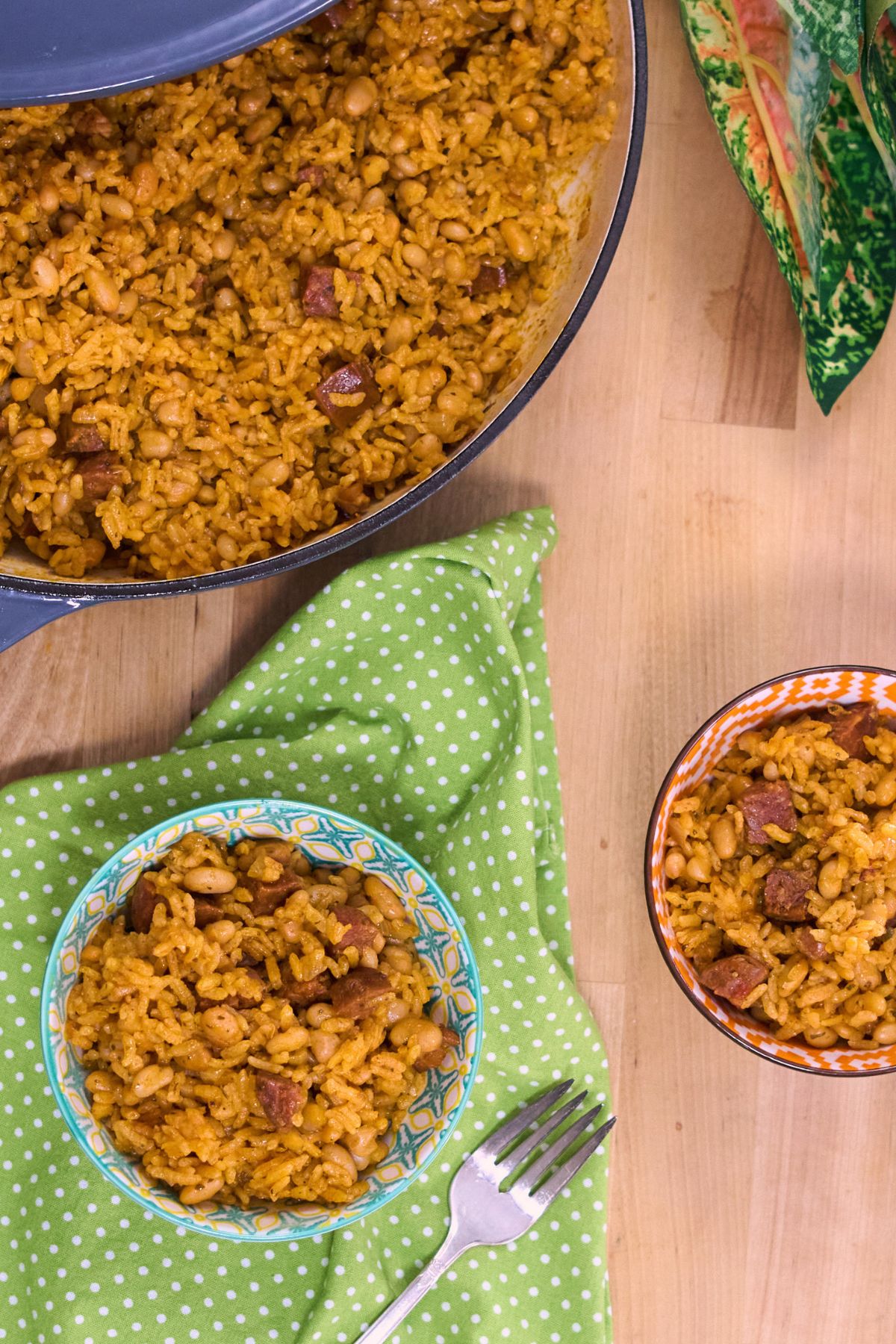
Arroz con chorizo y habichuelas blancas is a one-pot dinner that doesn't apologize for being rich. It's built for a Tuesday when you want something that tastes like it simmered all day but only takes about 40 minutes.
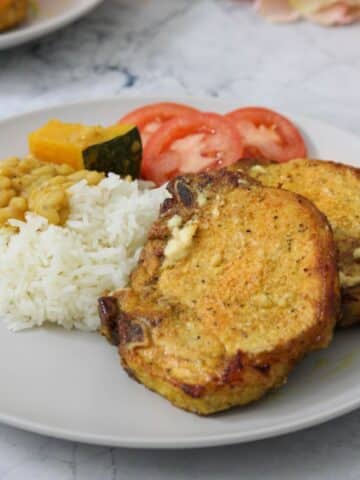
Arroz con Chorizo y Habichuelas Blancas takes the classic rice-and-beans formula and gives it a smokier, punchier backbone. Even though it works as a one-pot meal, it also pairs beautifully with Chuletas Fritas or Biftec Encebollado. Add some Guineitos en Escabeche, and you've got a full spread.
If you love a good rice-and-bean combination, don't miss my Arroz con Habichuelas, the everyday version made with pink beans and ham. My Arroz con Gandules is the holiday table staple, and Puerto Rican Chicken Paella with Sausage and Plantain is a Puerto Rican twist on the traditional paella.
Jump To
- Why you'll love this recipe
- What gives this rice its color?
- Ingredient Notes
- Variations and Substitutions
- Top Tip
- How to make Arroz con Chorizo and Habichuelas blancas
- Expert Tips
- Recipe FAQs
- More Rice, Pasta, and Grains recipes
- Before You Go . . .
- 📖 Recipe
- Arroz con Chorizo and Habichuelas Blancas
- Top Tip
- Expert Tips
- Comments
Why you'll love this recipe
- One pot, minimal cleanup: Protein, rice, and beans cook in the same pan.
- Pantry-Friendly: Chorizo, rice, and white beans are staple items in a Latin pantry. And if they are not part of your pantry, consider adding them so you can make this dish at any time.
- Impressive: Between the flavors and looks of this dish, your guests will think you were working in the kitchen for hours.
What gives this rice its color?
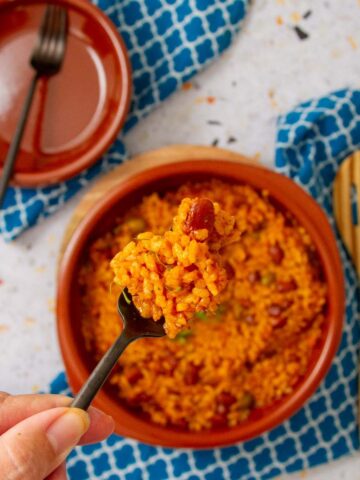
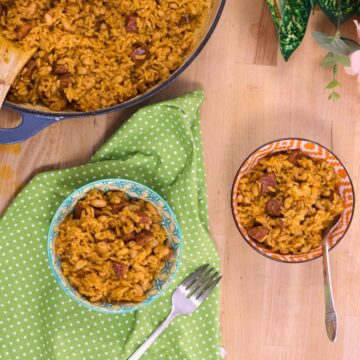
Between the chorizo's paprika and the achiote oil swirled in with the rice, this dish comes out a deeper amber than most Puerto Rican rice recipes. Achiote is the seed the Taíno used for coloring, and it's still the go-to in Puerto Rican kitchens today. Chorizo just adds its own reddish tint on top, so don't be surprised if this one looks a shade darker than my Arroz con Habichuelas.
Ingredient Notes
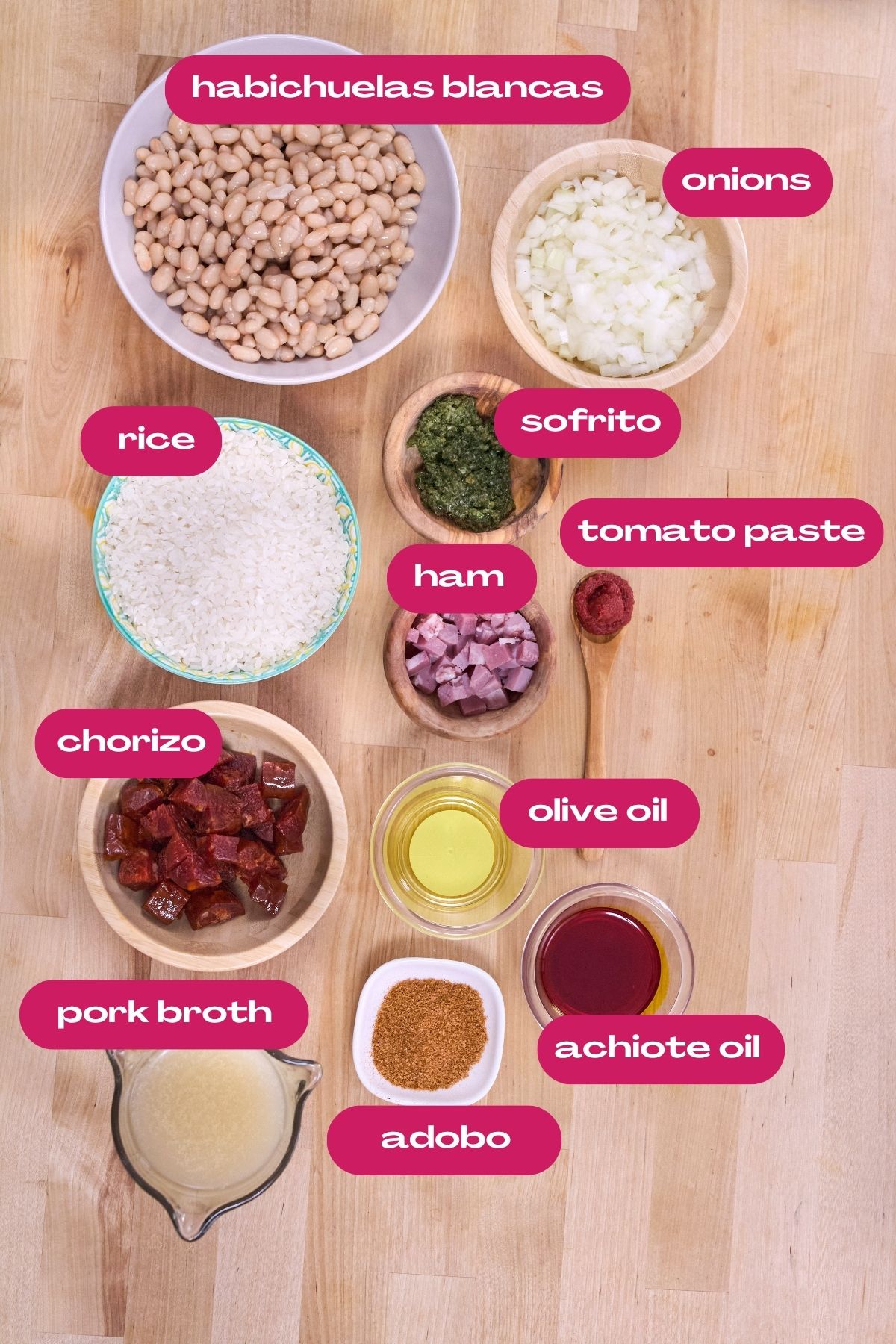
- Chorizo: I used a cured, Spanish-style chorizo here because I had it on hand; it gives that classic chorizo flavor, and it crisps up beautifully before the rice goes in, which really concentrates the flavor.
- Habichuelas blancas (white beans): Canned works perfectly here; just drain and rinse. If you're rehydrating dry beans, make sure they're fully tender before they go in, since the rice cook time won't finish them off if they're undercooked.
- Rice: Use a short- or medium-grain rice. It holds up to the longer simmer and soaks up the chorizo fat and broth without turning mushy.
See my recipe card below for a complete list of the ingredients with measurements.
Variations and Substitutions
- Fresh Chorizo: A fresh chorizo will work too, just know you'll get a softer, looser texture and a slightly different flavor profile since it won't crisp the same way.
- Swap the beans: Pink beans or kidney beans work if that's what you have on hand.
- Other Sausages: To keep this rice Puerto Rican, use longaniza instead, but you may use linguiça, andouille, kielbasa, or Italian sausage as a substitute.
- Make it spicier: A spicier chorizo or a pinch of crushed red pepper in the sofrito adds some heat.
- No pork broth: Chicken broth is a fine substitute, or water in a pinch, though the pork broth adds a rounder flavor.
Not all variations or suggestions have been tested. If you do try any of these, please let me know how it went in the comments.
Top Tip
Use equal parts rice to liquid, the same ratio as plain rice, even when beans are in the pot. A common mistake is adding extra liquid to account for the beans, which results in mushy rather than fluffy rice.
How to make Arroz con Chorizo and Habichuelas blancas
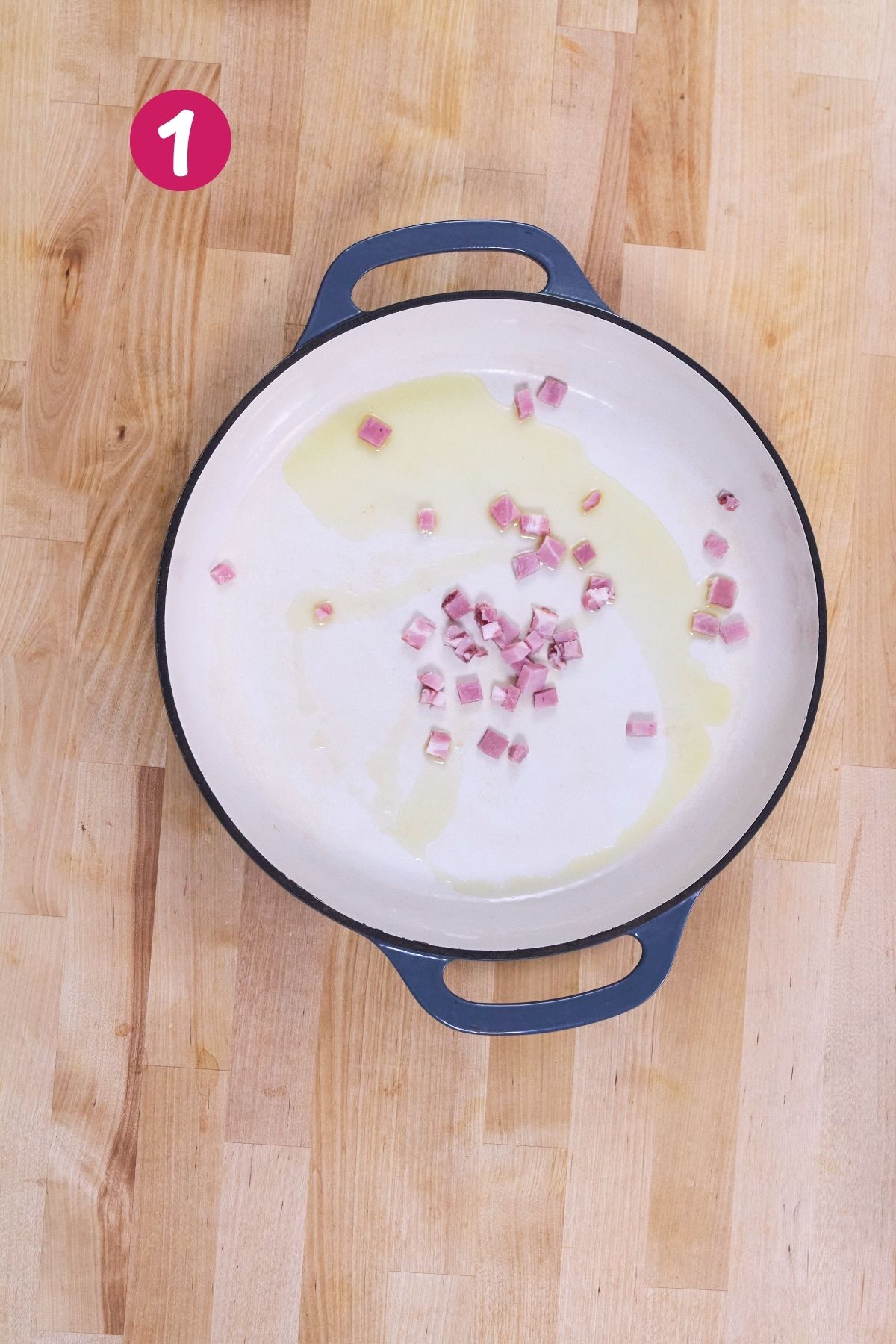
- Render the ham: Heat olive oil in a wide, heavy pot over medium heat. Add the diced ham and cook for a couple of minutes, until it starts to release its fat.
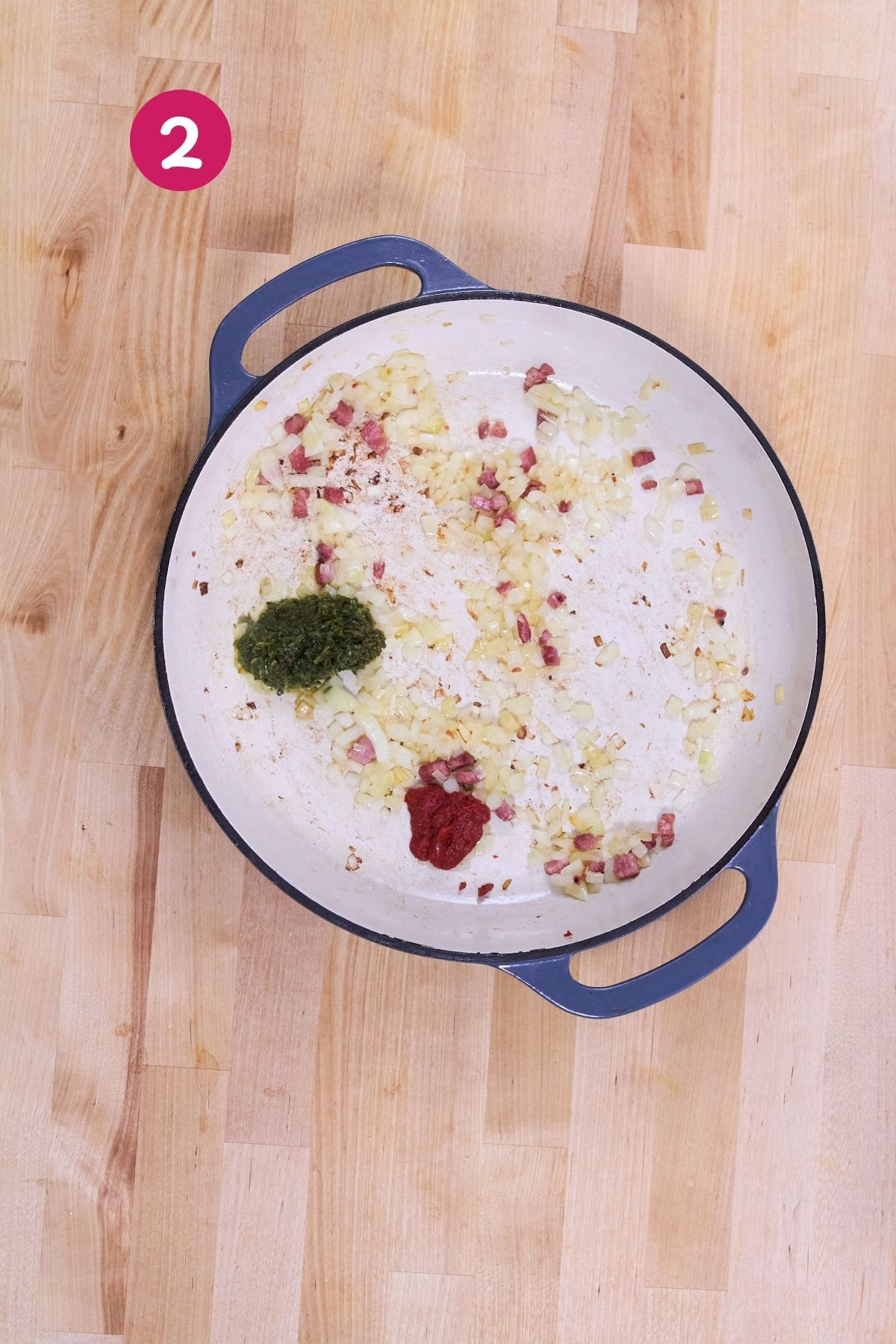
- Add the onions: Stir in the diced onions and cook until translucent, about 4-5 minutes. Sprinkle in the adobo, then add the sofrito and tomato paste, and cook for 2-3 minutes until fragrant.
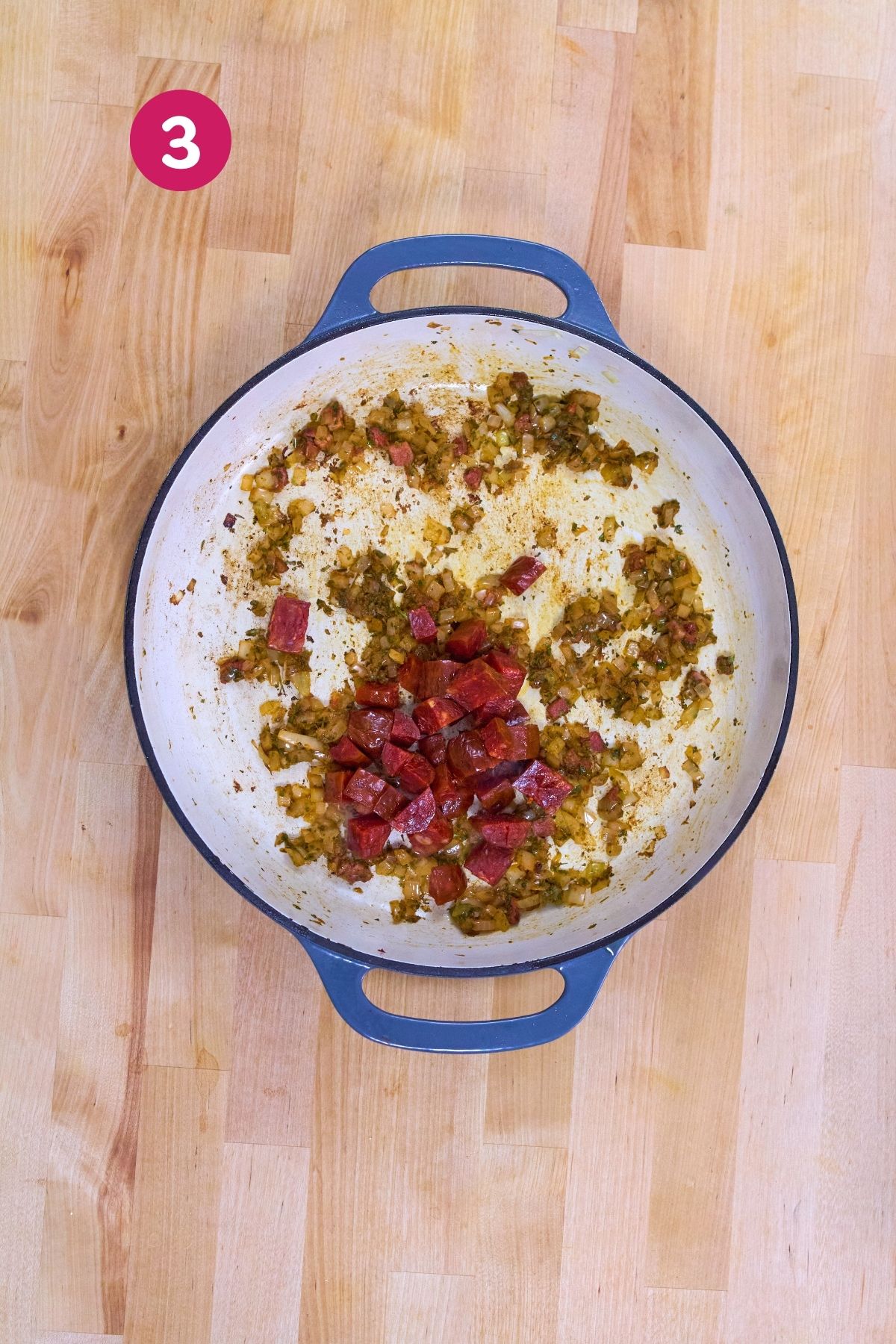
- Add the chorizo: Stir in the diced chorizo and cook until it browns and releases its reddish fat into the pot, about 3-4 minutes.
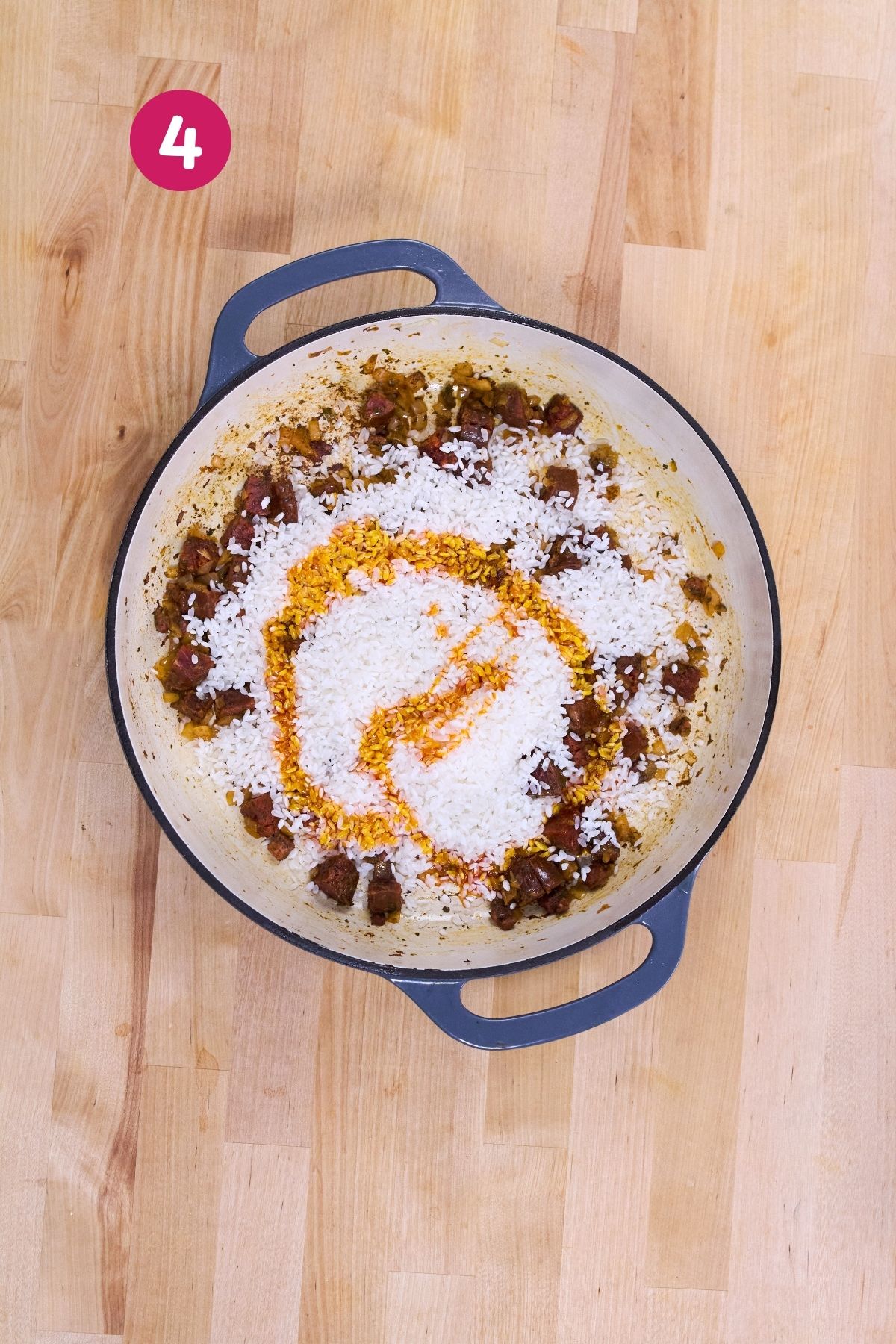
- Add the rice and achiote oil: Stir in the rice, then drizzle the achiote oil over the top. Toss everything together until the rice is coated and starts to take on that golden color.
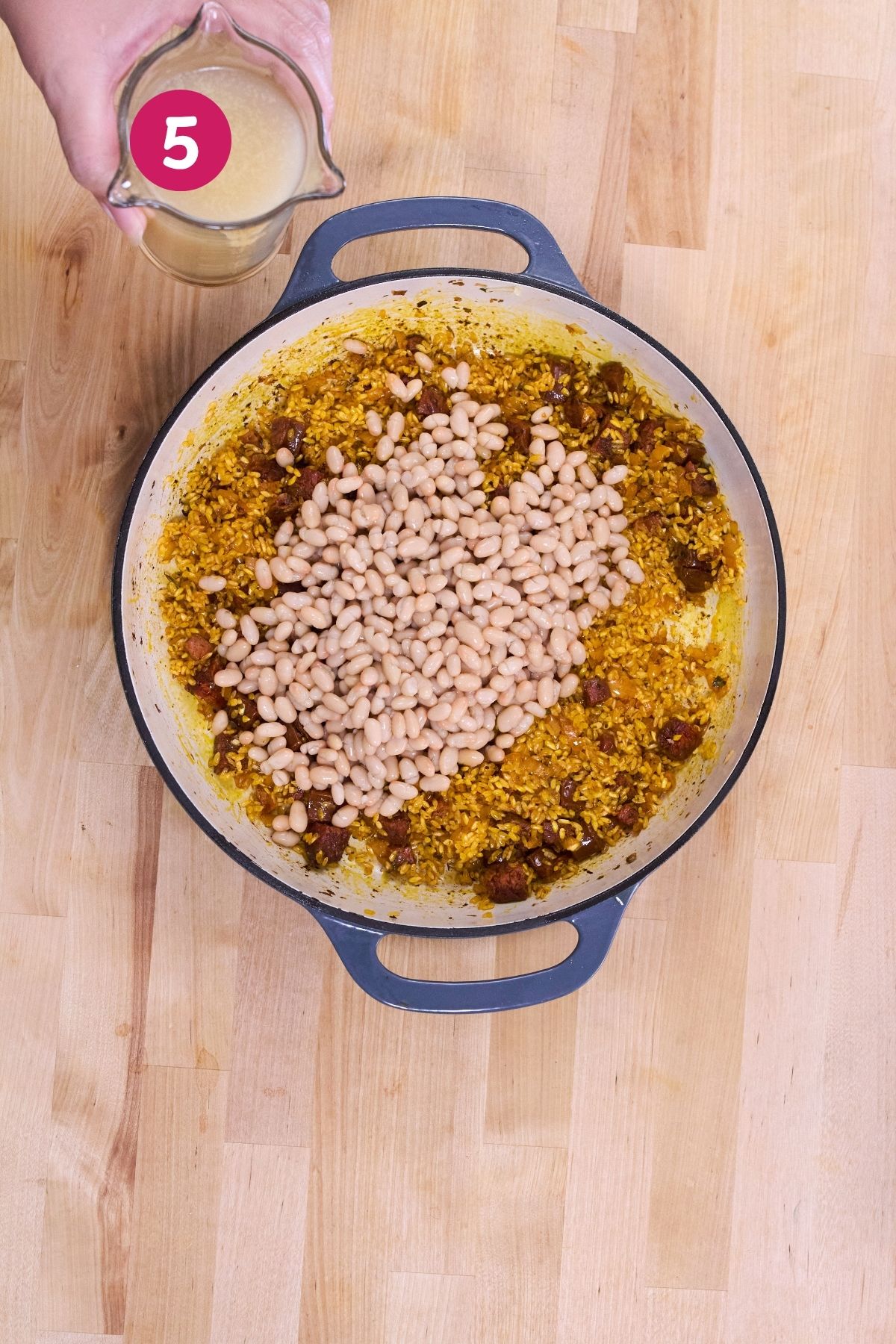
- Add the broth and beans: Pour in the pork broth and add the drained white beans. Stir once to combine.
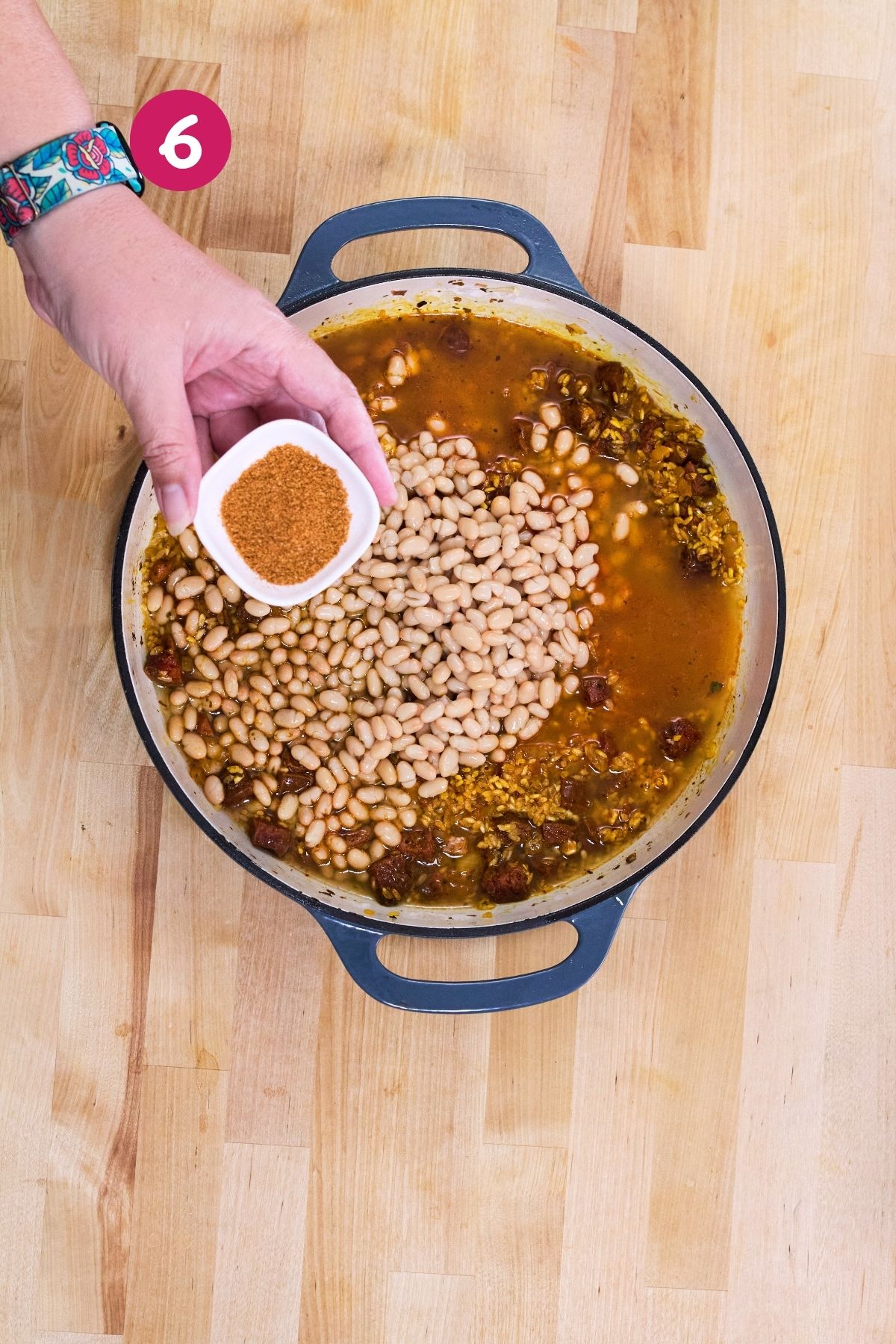
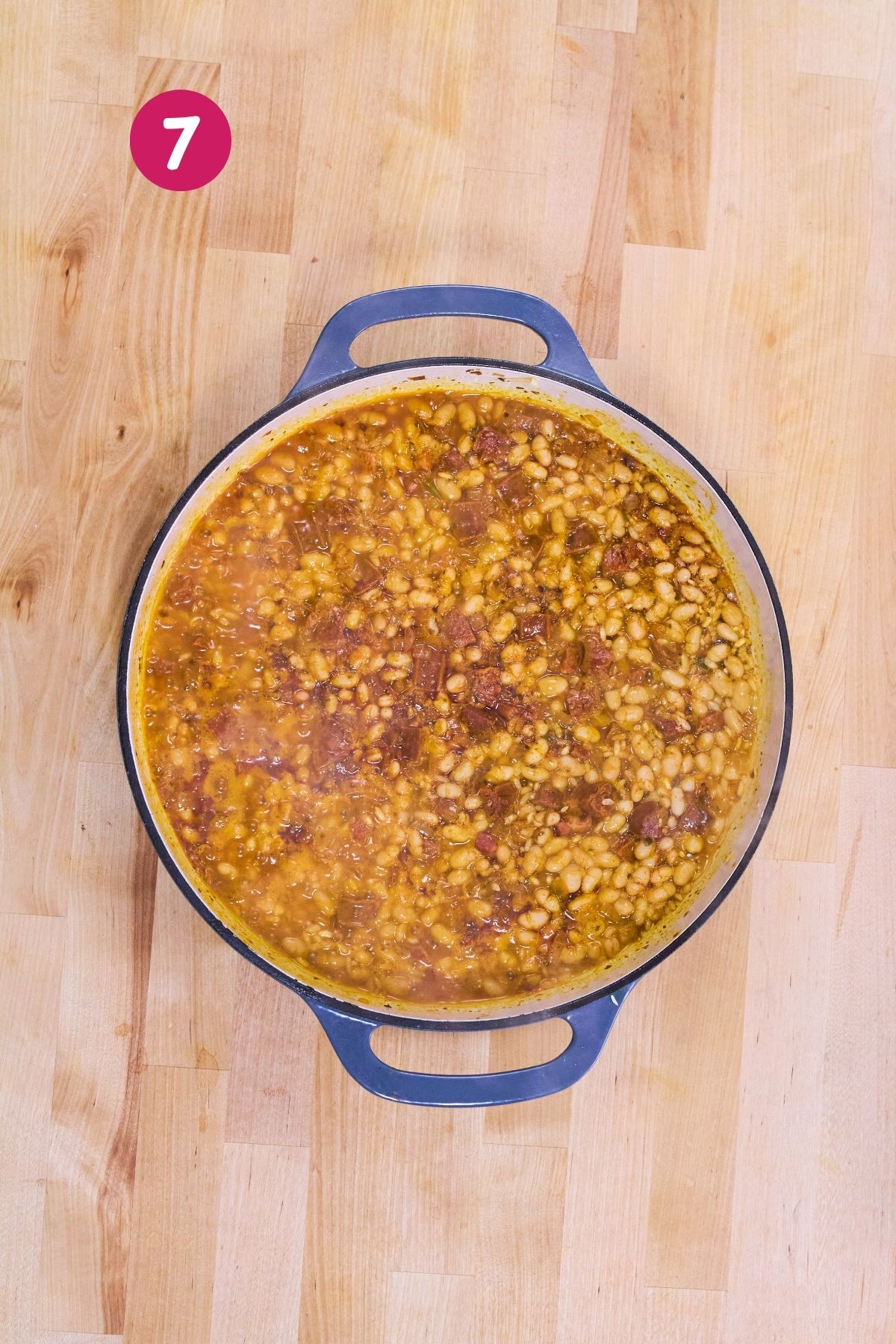
- Season and bring to a boil: Sprinkle in the remaining adobo, stir, and bring the pot to a boil over medium-high heat. Let it boil uncovered for about 5 minutes without stirring, until the liquid reduces to just below the surface of the rice.
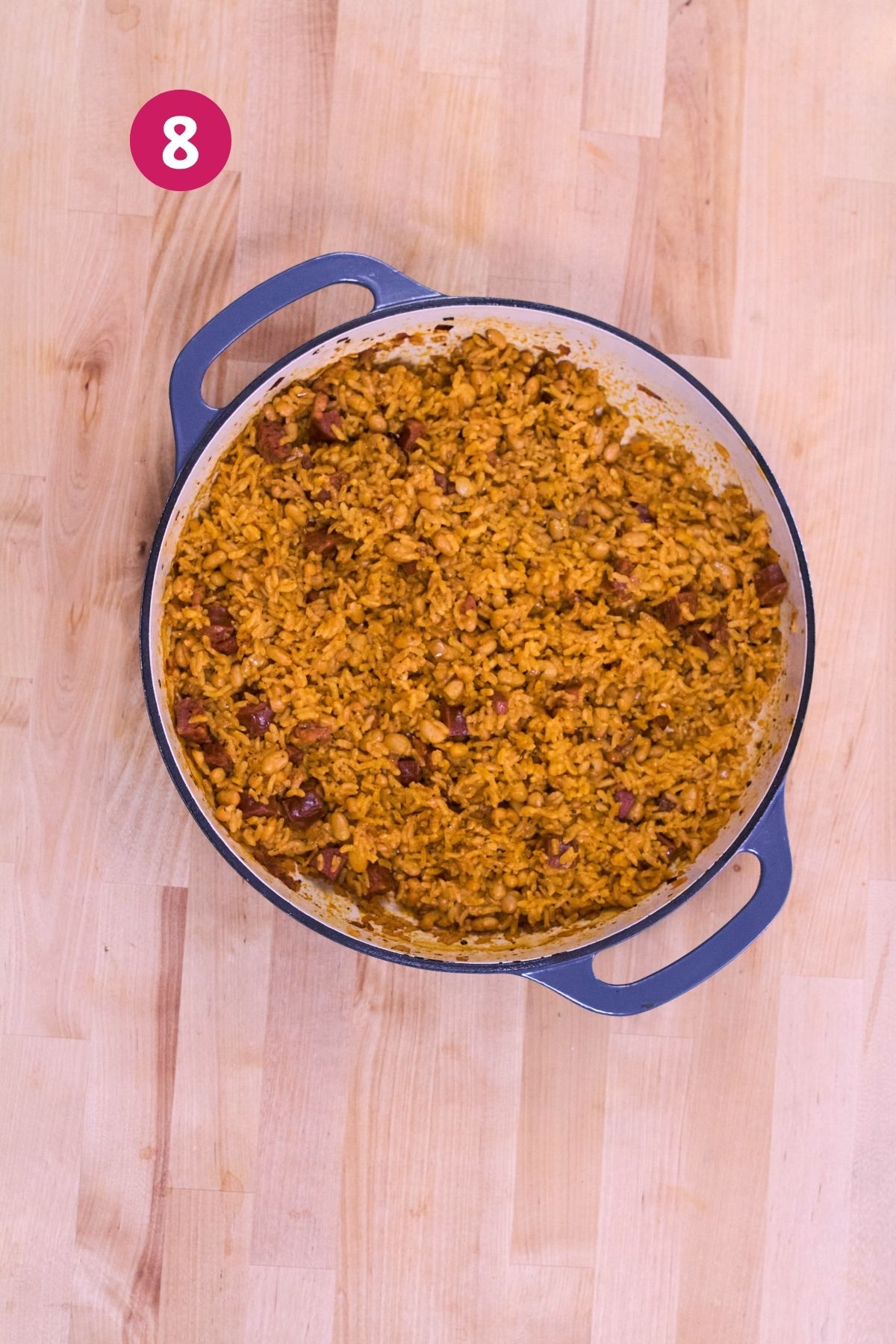
- Cover and steam: Reduce the heat to low, cover tightly, and let it steam for 15-18 minutes. Resist the urge to lift the lid; the steam is doing the work.
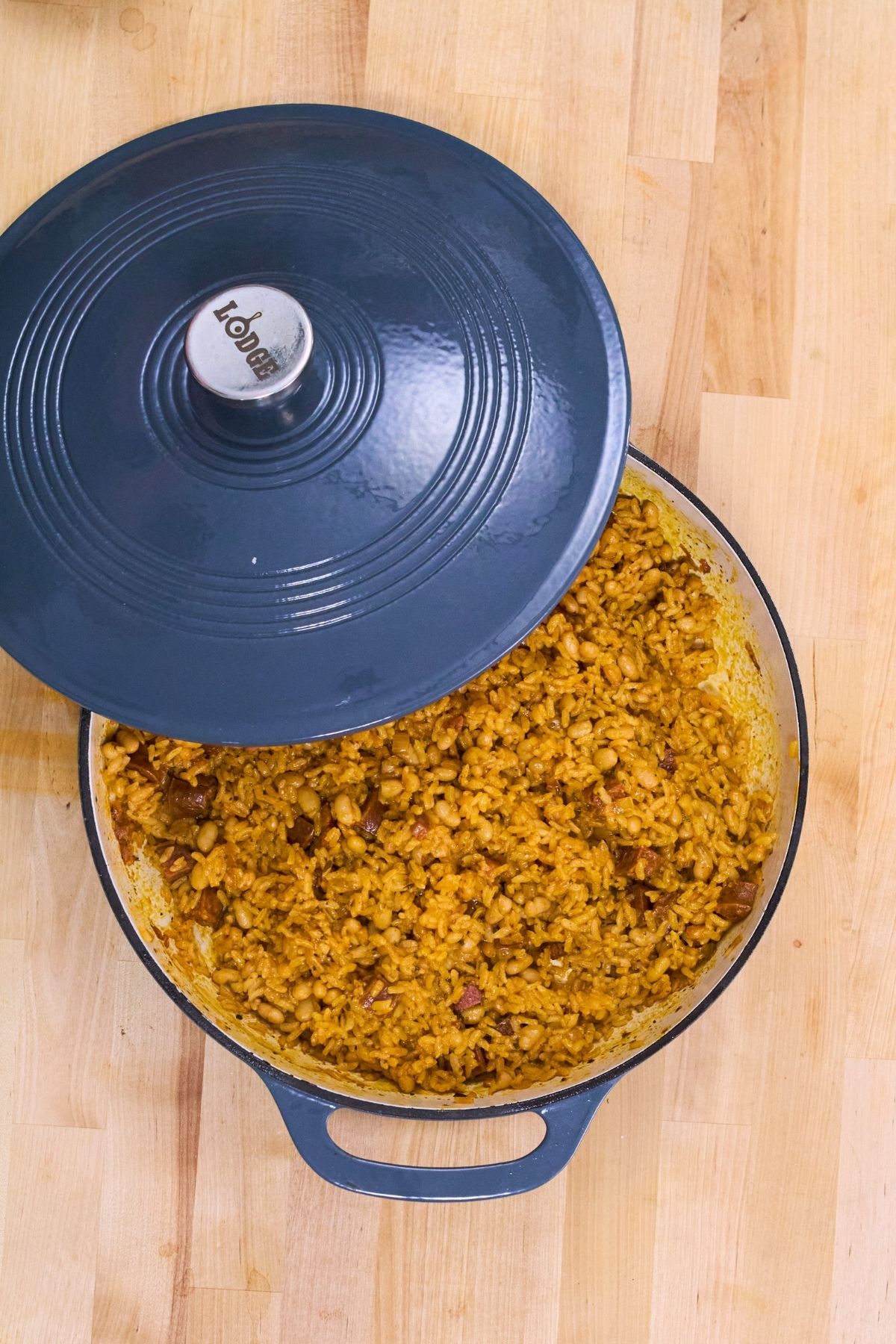
- Fluff and serve: Remove the lid and fluff the rice gently with a fork from the bottom up. Serve warm.
Expert Tips
- Sear before you simmer: Browning the ham and chorizo before adding anything else gives their flavor time to bloom and work into everything else in the pot.
- Dice the chorizo evenly: Uneven pieces mean uneven browning, and you want the fat to render consistently across every piece.
- Don't skip the achiote oil: Even with chorizo's natural color, achiote is what gives this rice its deep golden tone and adds the Puerto Rican touch.
- Check your beans before adding them: Whether canned or rehydrated, the beans should already be tender going in. The rice only simmers long enough to cook the rice itself, not to finish undercooked beans, so if you're working from dry beans, don't rush the soak and cook.
- Storage:
- Store leftovers in an airtight container in the refrigerator for up to 4 days. Reheat in a covered pan with a splash of broth or water.
- Freezes well for up to 2 months. Thaw overnight in the refrigerator before reheating.
Recipe FAQs
Use equal parts rice to liquid, the same ratio you'd use for plain rice. If you're using 2 cups of rice, use 2 cups of liquid, whether or not beans are in the pot. A common mistake is adding extra liquid to compensate for the beans, which results in mushy rice. The beans bring their own moisture, especially if they're canned or already fully cooked, so they don't need a liquid adjustment. The exception is risotto and paella, where the technique and liquid ratios work completely differently.
Yes. Longaniza is the closest Puerto Rican substitute, but andouille, kielbasa, or Italian sausage all work if that's what you have on hand.
If you're starting from dry beans, yes, soak and cook them until fully tender before adding them to the pot. This recipe's rice cook time isn't long enough to finish undercooked beans, so they need to already be tender going in. Canned beans: skip this step entirely; just drain and rinse.
A few usual culprits: too much liquid (see the water ratio question above), overstirring once the rice is simmering, or lifting the lid during the steaming stage. Let the rice cook undisturbed once it's covered; the steam needs to stay trapped to cook evenly.
No, chorizo brings smokiness and depth of flavor, not heat. If you want spice, a pinch of crushed red pepper with the sofrito will do it.
Yes, it reheats well. Store leftovers in an airtight container in the refrigerator for up to 4 days, or freeze for up to 2 months. Reheat in a covered pan with a splash of broth or water to loosen the rice back up.
More Rice, Pasta, and Grains recipes
- Mamposteao, a Puerto Rican Leftover Rice Comfort Food
- 11 Puerto Rican Rice Dishes you'll make on Repeat
- Funche, Puerto Rican Grits
- Arroz con Habichuelas (Puerto Rican Rice with Beans)



Before You Go . . .
Cooked it and loved it? Rate it. Review it. Share it. Your feedback helps others and keeps this blog cooking.
📖 Recipe
Arroz con Chorizo and Habichuelas Blancas
Equipment
- 1 caldero or dutch oven
Ingredients
- 1 tablespoon olive oil
- 1 oz cooking ham diced
- 1 medium onion diced
- 2 tablespoon sofrito
- 1 tablespoon tomato paste
- 3 oz chorizo diced
- 1 can white beans drained
- 1 tablespoon adobo powder
- 2 cups dried rice washed
- 1 tablespoon achiote oil
- 2 cups broth or water
Instructions
- Render the ham: Heat olive oil in a wide, heavy pot over medium heat. Add the diced ham and cook for a couple of minutes, until it starts to release its fat.
- Add the onions: Stir in the diced onions and cook until translucent, about 4-5 minutes. Sprinkle in the adobo, then add the sofrito and tomato paste, and cook for 2-3 minutes until fragrant.
- Add the chorizo: Stir in the diced chorizo and cook until it browns and releases its reddish fat into the pot, about 3-4 minutes.
- Add the rice and achiote oil: Stir in the rice, then drizzle the achiote oil over the top. Toss everything together until the rice is coated and starts to take on that golden color.
- Add the broth and beans: Pour in the pork broth and add the drained white beans. Stir once to combine.
- Season and bring to a boil: Sprinkle in the remaining adobo, stir, and bring the pot to a boil over medium-high heat. Let it boil uncovered for about 5 minutes without stirring, until the liquid reduces to just below the surface of the rice.
- Cover and steam: Reduce the heat to low, cover tightly, and let it steam for 15-18 minutes. Resist the urge to lift the lid; the steam is doing the work.
- Fluff and serve: Remove the lid and fluff the rice gently with a fork from the bottom up. Serve warm.

Notes
Top Tip
Use equal parts rice to liquid, the same ratio as plain rice, even when beans are in the pot. A common mistake is adding extra liquid to account for the beans, which results in mushy rather than fluffy rice.Expert Tips
- Sear before you simmer: Browning the ham and chorizo before adding anything else gives their flavor time to bloom and work into everything else in the pot.
- Dice the chorizo evenly: Uneven pieces mean uneven browning, and you want the fat to render consistently across every piece.
- Don't skip the achiote oil: Even with chorizo's natural color, achiote is what gives this rice its deep golden tone and adds the Puerto Rican touch.
- Check your beans before adding them: Whether canned or rehydrated, the beans should already be tender going in. The rice only simmers long enough to cook the rice itself, not to finish undercooked beans, so if you're working from dry beans, don't rush the soak and cook.
- Storage:
- Store leftovers in an airtight container in the refrigerator for up to 4 days. Reheat in a covered pan with a splash of broth or water.
- Freezes well for up to 2 months. Thaw overnight in the refrigerator before reheating.