

This dry-brined roasted chicken uses oregano and lemon zest for a bright, savory flavor. The dry brine locks in juiciness while helping the skin crisp beautifully. Perfect for weeknight meals and special occasions.
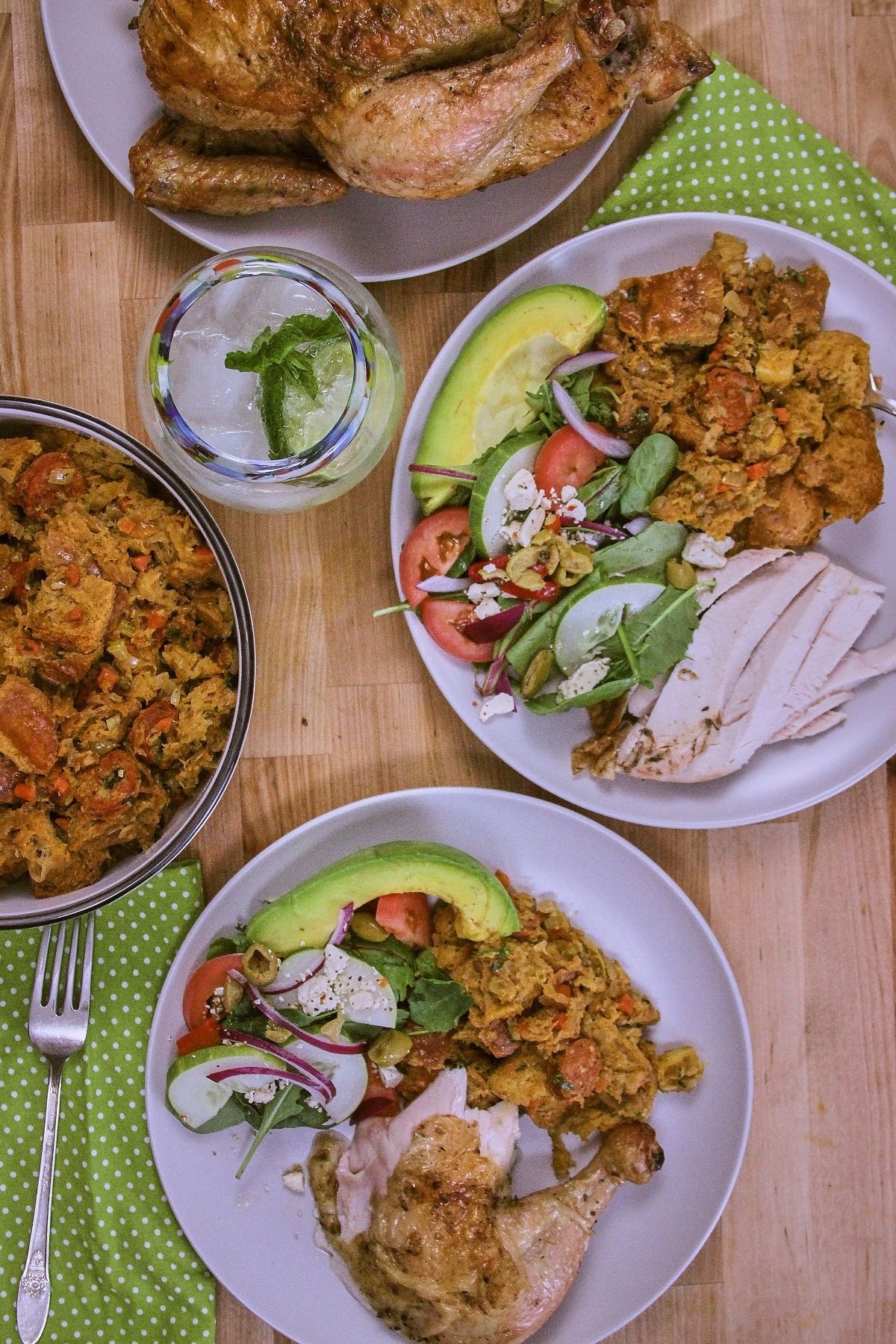
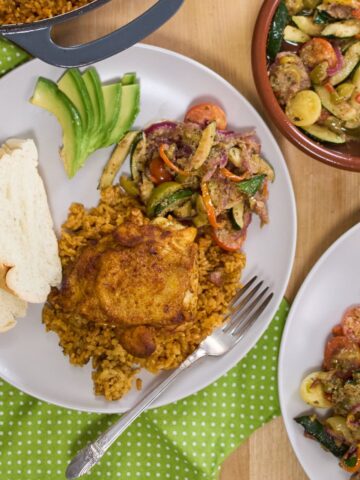
Roasting a whole bird can be tricky, since the breast tends to dry out before the thighs are fully cooked. A dry brine helps solve that. This method works well on many cuts of meat and, with poultry, delivers juicy, tender meat and crisp, golden skin. For a weeknight meal, pair this roast with a simple salad or Arroz Blanco (white rice) and Habichuelas Guisadas (stewed beans); for a celebration or gathering, serve it with Arroz con Gandules (rice with pigeon peas) and Guineitos en Escabeche. Finish the occasion with Tembleque (no-bake coconut custard), Panetela de Guayaba (guava cake), or a sip of Pumpkin Spice Coquito.
For more chicken and poultry recipes, try Pollo Asado (roasted chicken thighs); roasting chicken thighs, legs, or breast is easy with this simple technique. Try Asopao de Pollo, a hearty Puerto Rican chicken-and-rice soup perfect for cold days, or Arroz con Pollo, a one-pot meal that will make you ask for seconds.
Jump To
Why you'll love this recipe
- Juicy meat, crisp skin: the dry brine seasons the chicken deeply and dries the skin, so it crisps in the oven.
- Mostly hands-off: The work happens in the refrigerator, and the oven does the rest.
- Bright, savory flavor: Lemon zest and oregano go right into the rub instead of just sitting on the surface.
- It tastes like more effort than it is: Lemon and oregano do a lot with very little.
- Leftovers: Slice or shred leftovers over salads or into sandwiches, and use the carcass for a robust chicken stock.
Dry Brine vs Wet Brine
A traditional wet brine soaks the chicken in salty water to add moisture, but it takes space and careful calculation to get the flavors right. You need a large container and enough fridge space to submerge a whole bird in liquid. A dry brine skips the water. You rub salt directly onto the chicken, where it first draws moisture out of the meat, then dissolves in it, and the chicken reabsorbs it, seasoning throughout. With nothing added, the flavor stays concentrated, and leaving the bird uncovered in the refrigerator dries the skin so it roasts golden and crisp. It also takes less equipment and makes less mess.
Ingredient Notes
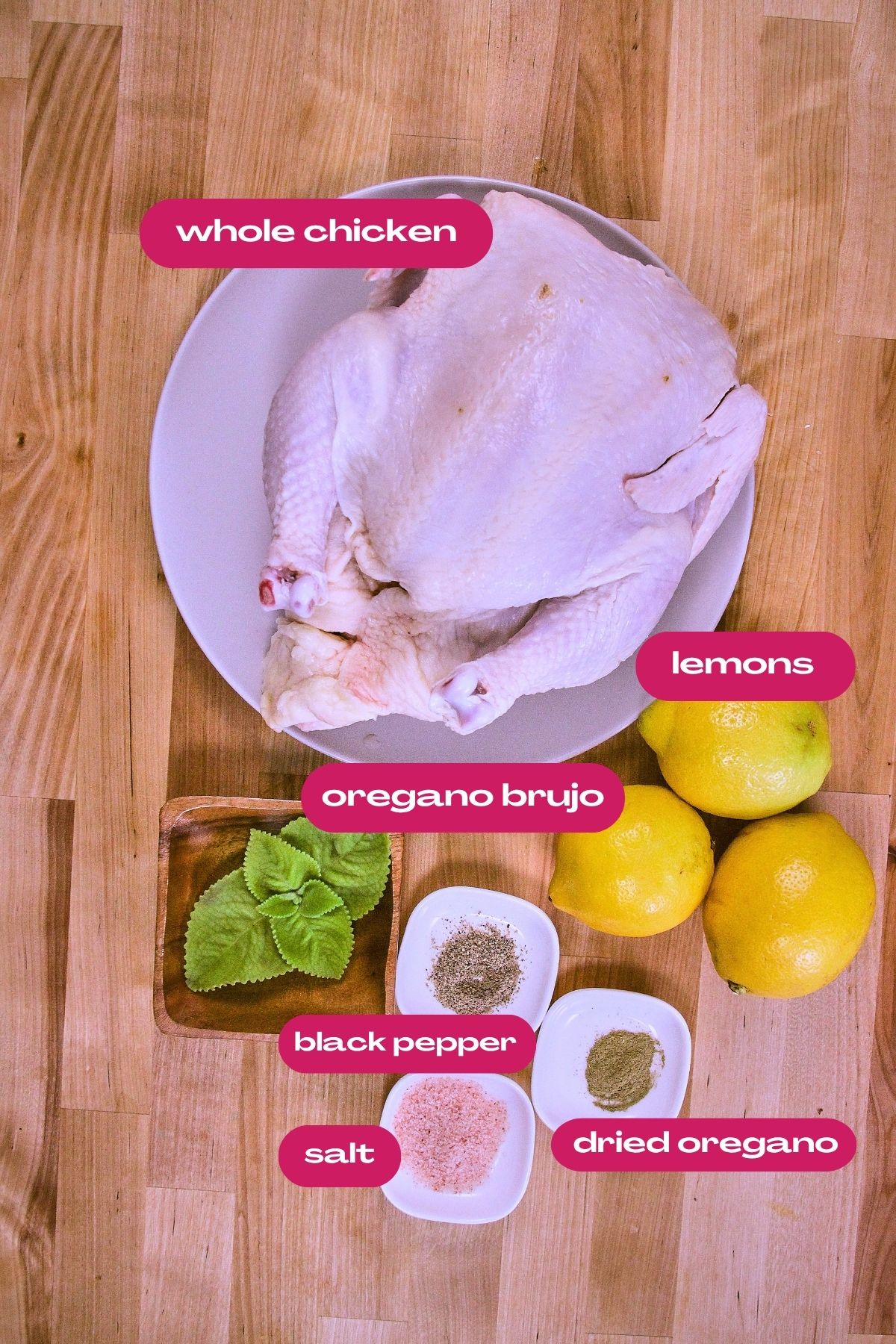
- Whole chicken: Chicken is the most accessible poultry in markets because it doesn't rely on seasonality. A whole chicken can easily feed a family of four, and you can cook two at once.
- Oregano: For this recipe, I use a mix of dried and fresh oregano. Dried oregano infuses the dry brine, while fresh oregano brujo infuses the chicken in the oven. Oregano brujo, or Mexican mint, grows almost wild in Puerto Rico, but any fresh oregano works for this recipe.
- Lemon: Lemon adds a fresh, citrusy flavor that balances the oregano's fiery oils.
See my recipe card below for a complete list of the ingredients with measurements.
Variations and Substitutions
- Salts: Using kosher salt instead of Himalayan pink salt is perfectly fine; just adjust the amount as noted. Bowl of Delicious created an informative salt guide that explains the uses and differences among the various types of salt.
- Herbs: Other herbs that would pair well with lemon are sage, tarragon, parsley, and cilantro. Use one or many in combination to create an herbed roasted chicken your family and friends will love.
- Other citrus: I find grapefruit undervalued. It has the sourness of a lemon with sweet orange undertones. The beauty of citrus is that you can often swap one for another, depending on the flavor profile you want.
- Poultry: This recipe is easy to adapt to other poultry like turkey, duck, or quail.
Not all variations or suggestions have been tested. If you do try any of these, please let me know how it went in the comments.
Top Tip
Cross-contamination happens when raw chicken, which must be cooked for safety, touches foods that are ready to eat or won't be cooked further, such as fruits, vegetables, salads, cooked meals that don't require reheating, or other meats like steak. Contact can happen in two ways: through physical contact or when particles, like dripping juices, land on other foods. While the chicken brines, keep it away from other foods and place it on the lowest shelf of the refrigerator (I used a drawer). That way, any dripping juices won't land on ready-to-eat foods. Never store raw meat or seafood on the top shelf.
How to make Dry-Brined Oregano Lemon Roasted Chicken
Oven use and temperatures are in the steps and on the recipe card.
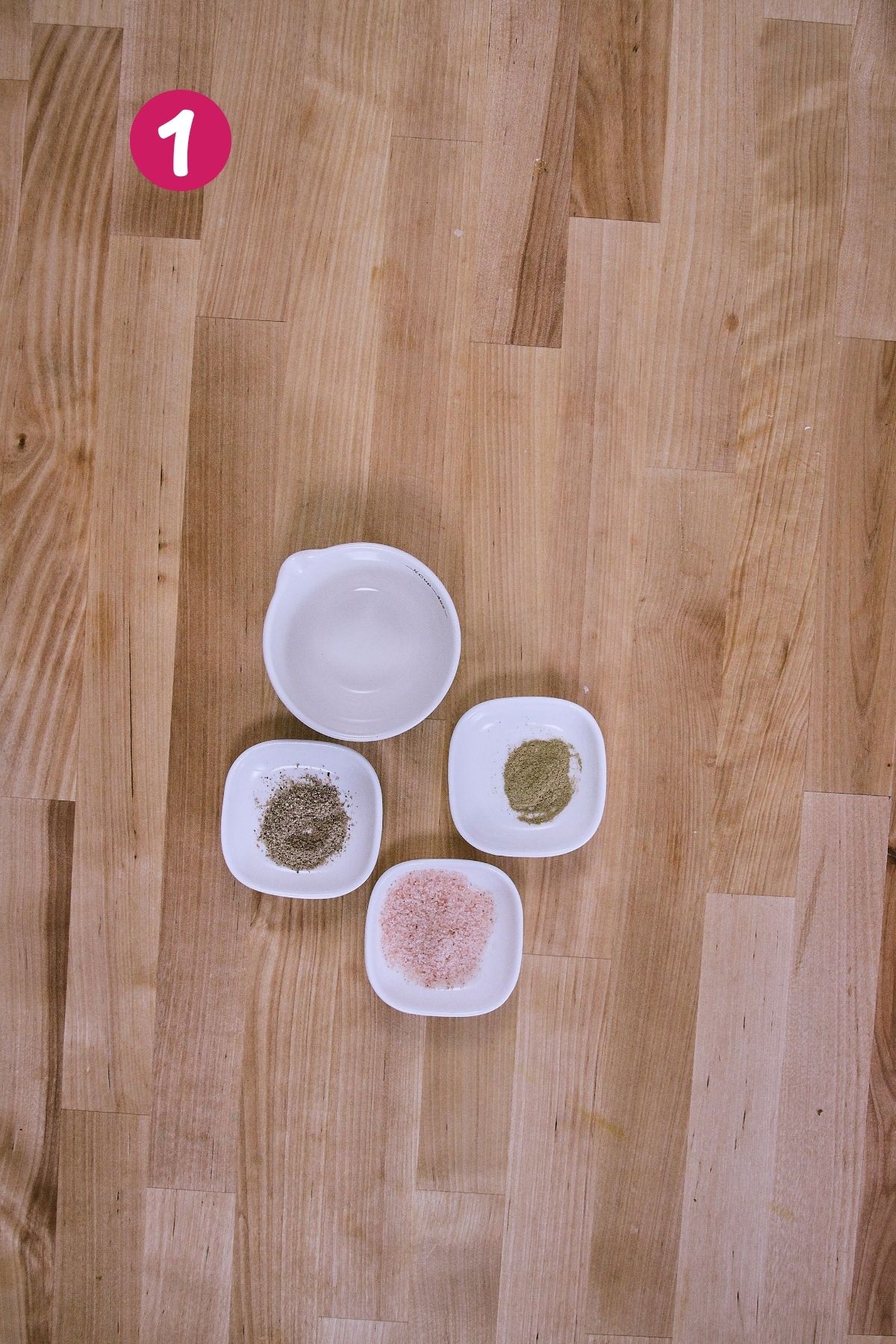
- Step 1: Pat the chicken dry with paper towels. In a small bowl, combine the salt, pepper, and dried oregano.
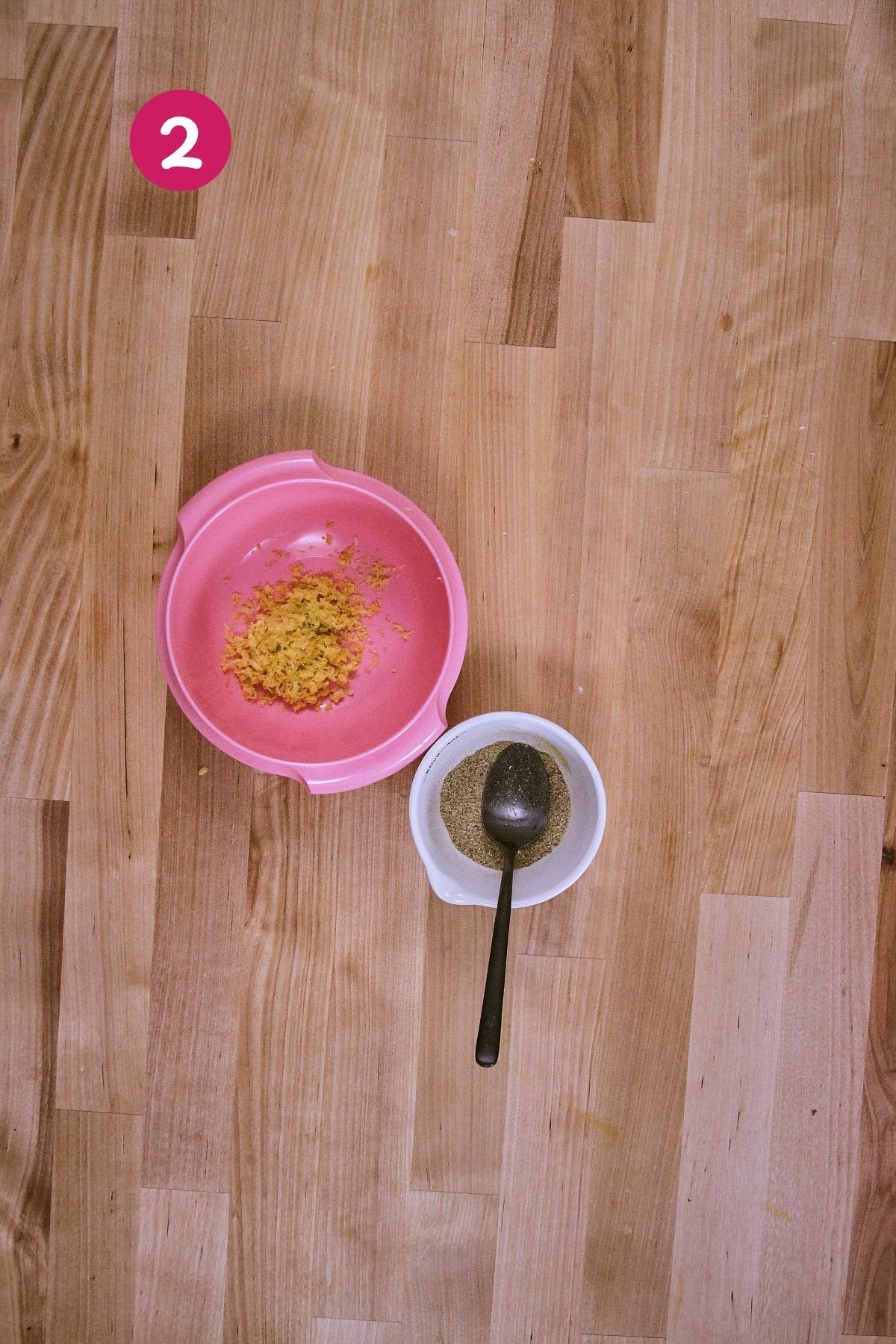
- Step 2: Zest a whole lemon and add to the dry-brine mixture. Rub the mixture all over the chicken, including under the skin where possible. Place the chicken, uncovered, on a rack over a baking sheet and refrigerate for at least 12 hours (up to 24).
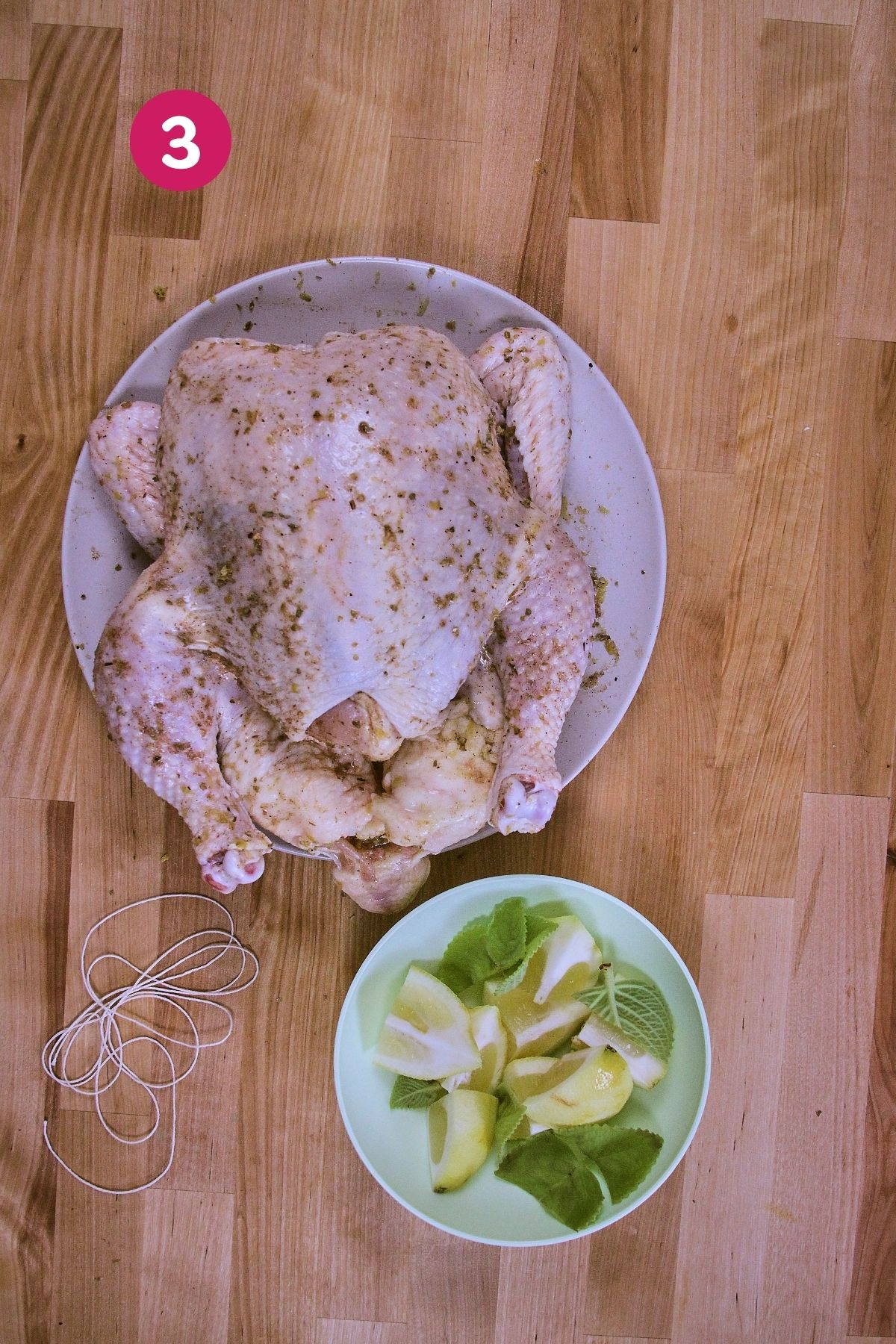
- Step 3: Preheat the oven to 425°F (220°C). Stuff the cavity with the quartered lemon, garlic cloves, and fresh oregano. Tuck the wings backward and tie the legs. This gives the chicken an aesthetically pleasing presentation and holds the lemon, garlic, and herbs in place.
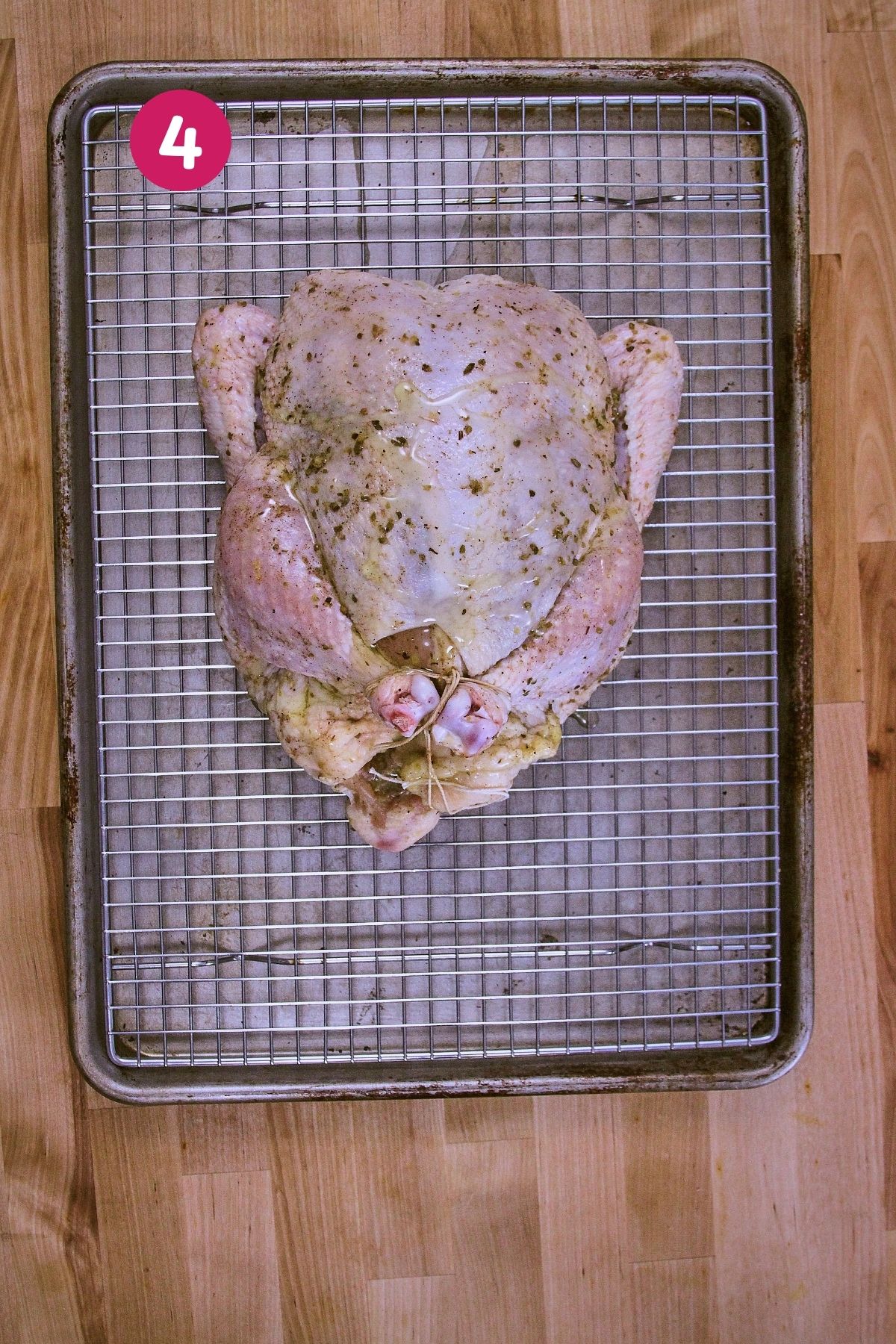
- Step 4: Brush the chicken with olive oil or melted butter. Roast breast-side up for about 1 hour, or until the thickest part of the thigh reaches 165°F (74°C).
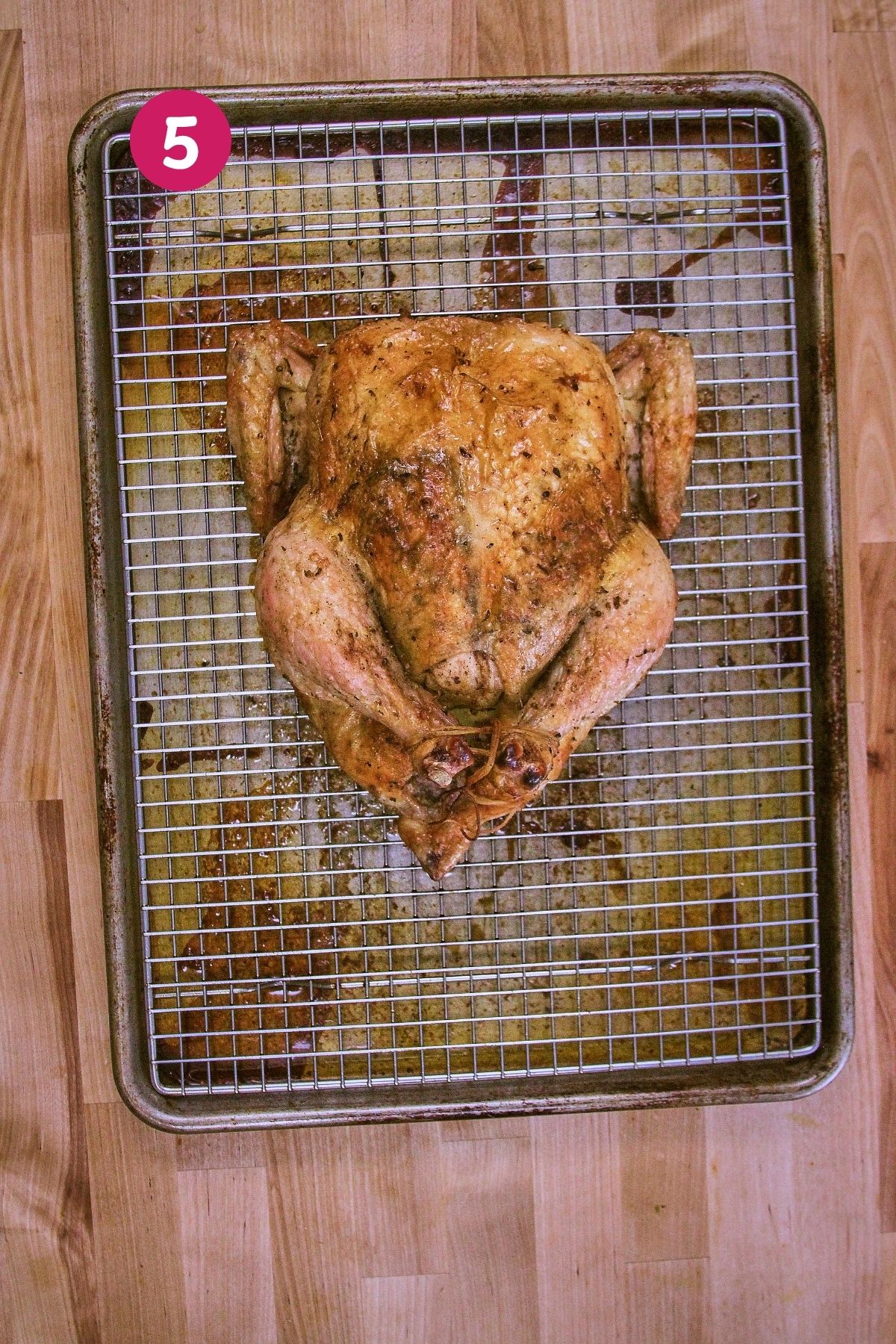
- Step 5: Let the chicken rest for 10-15 minutes before carving. Serve with the roasted lemon wedges for squeezing.

Expert Tips
- For extra-crispy skin: ensure the chicken is completely dry before applying the brine.
- Using different salts: If using kosher salt, use 1½ tablespoons. If using table salt, reduce to 2 teaspoons, since it packs more tightly and is saltier by volume than kosher salt or fine Himalayan pink salt.
- Save the pan drippings: Use the drippings for gravy or to drizzle over vegetables.
- Quick Pan Gravy
- Spoon off any excess fat from the drippings, then measure what's left and add enough low-sodium stock to make 1 cup. Add more stock if you want more gravy.
- Bring the drippings and stock to a boil.
- In a small bowl, mix 1 tablespoon cornstarch with enough cold water to make a milk-like slurry. Use about 1 tablespoon of cornstarch per cup of liquid.
- When the drippings and stock boil, whisk in the slurry a little at a time, since too much will turn the gravy into pudding.
- Keep whisking and simmer for about a minute, until the gravy thickens.
- Taste before adding any salt. The drippings come from a dry-brined chicken and are already seasoned.
- Quick Pan Gravy
- Dried vs. fresh oregano: I like to use both in this recipe. Use the dried oregano in the dry brine. Because it's dry, it adheres better to the chicken and infuses it with flavor. Use the fresh oregano in the cavity, where steam and liquids help release its flavor and further infuse the chicken. Either one alone works: use 1 tablespoon dried oregano or 2 tablespoons finely chopped fresh oregano in the rub.
- Instant-read thermometer: When cooking proteins like poultry, beef, pork, or fish, always use an instant-read thermometer. It takes the guesswork out of knowing whether the food is cooked to your desired doneness and makes your cooking more consistent. When taking the temperature of chicken or any meat with bones, insert the thermometer into the thickest, meatiest part, and avoid touching the bone. If the reading is low or you're unsure, check a second spot, such as the other thigh or the thickest part of the breast, since heat isn't always even. For this recipe, the thickest part of the thigh should reach 165°F (74°C).
- Storing and reheating leftovers: Refrigerate within 2 hours of cooking and eat within 3 to 4 days. Reheat to 165°F (74°C) before serving.
Recipe FAQs
At least 12 hours and up to 24. Within that window, the longer end gives you the most flavorful meat and the driest skin.
No. Leave it uncovered on a rack set over a baking sheet. Leaving it uncovered lets the air dry out the skin, which helps it crisp in the oven. Keep it on the lowest shelf so nothing can drip onto the other foods. If you must cover it, crumple parchment paper and place it loosely over the top so it doesn't trap moisture against the skin. Covering the chicken with aluminum foil or plastic wrap will prevent air circulation.
No. Rinsing the chicken wets the skin you just dried. If needed, pat off any excess moisture with paper towels and move on to roasting.
Resting for 10 to 15 minutes lets the juices settle back into the meat. If you carve right away, much of that moisture ends up on the cutting board.
More chicken, Turkey, and Duck Recipes
- Puerto Rican Chicken and Rice (Arroz con Pollo)
- Sancocho, Puerto Rican Stew
- Asopao de Pollo, Puerto Rican Chicken and Rice Soup
- White Bean Chicken Chili



Before You Go . . .
Cooked it and loved it? Rate it. Review it. Share it. Your feedback helps others and keeps this blog cooking.
📖 Recipe

Dry-Brined Oregano Lemon roasted Chicken
Equipment
- 1 cooling rack That will fit inside the baking sheet. optional roasting pan
- kitchen twine
- knife
Ingredients
- 1 whole chicken 4-5 lbs
- 1 tablespoon pink salt or 1½ tablespoon kosher salt
- 1 teaspoon black pepper ground
- 1 tablespoon oregano dried, or 2 tablespoon fresh finely chopped
- 1 large lemon zested. Cut in quarters after zesting.
- 3 tablespoon olive oil or melted butter
- 4 garlic cloves smashed
Instructions
- Pat the chicken dry with paper towels. In a small bowl, combine the salt, pepper, oregano, and lemon zest.
- Rub the mixture all over the chicken, including under the skin where possible. Place the chicken, uncovered, on a rack over a baking sheet and refrigerate for at least 12 hours (up to 24).
- When ready to cook, preheat the oven to 425°F (220°C). Stuff the cavity with the quartered lemon, garlic cloves, and oregano.
- Brush the outside of the chicken with olive oil or melted butter. Roast breast-side up for about 1 hour, or until the thickest part of the thigh reaches 165°F (74°C).
- Let the chicken rest for 10-15 minutes before carving. Serve with the roasted lemon wedges for squeezing.

Notes
Top Tip
Cross-contamination happens when raw chicken, which must be cooked for safety, touches foods that are ready to eat or won't be cooked further, such as fruits, vegetables, salads, cooked meals that don't require reheating, or other meats like steak. Contact can happen in two ways: through physical contact or when particles, like dripping juices, land on other foods. While the chicken brines, keep it away from other foods and place it on the lowest shelf of the refrigerator (I used a drawer). That way, any dripping juices won't land on ready-to-eat foods. Never store raw meat or seafood on the top shelf.
Expert Tips
- For extra-crispy skin: ensure the chicken is completely dry before applying the brine.
- Using different salts: If using kosher salt, use 1½ tablespoons. If using table salt, reduce to 2 teaspoons, since it packs more tightly and is saltier by volume than kosher salt or fine Himalayan pink salt.
- Save the pan drippings: Use the drippings for gravy or to drizzle over vegetables.
- Quick Pan Gravy
- Spoon off any excess fat from the drippings, then measure what's left and add enough low-sodium stock to make 1 cup. Add more stock if you want more gravy.
- Bring the drippings and stock to a boil.
- In a small bowl, mix 1 tablespoon cornstarch with enough cold water to make a milk-like slurry. Use about 1 tablespoon of cornstarch per cup of liquid.
- When the drippings and stock boil, whisk in the slurry a little at a time, since too much will turn the gravy into pudding.
- Keep whisking and simmer for about a minute, until the gravy thickens.
- Taste before adding any salt. The drippings come from a dry-brined chicken and are already seasoned.
- Quick Pan Gravy
- Dried vs. fresh oregano: I like to use both in this recipe. Use the dried oregano in the dry brine. Because it's dry, it adheres better to the chicken and infuses it with flavor. Use the fresh oregano in the cavity, where steam and liquids help release its flavor and further infuse the chicken. Either one alone works: use 1 tablespoon dried oregano or 2 tablespoons finely chopped fresh oregano in the rub.
- Instant-read thermometer: When cooking proteins like poultry, beef, pork, or fish, always use an instant-read thermometer. It takes the guesswork out of knowing whether the food is cooked to your desired doneness and makes your cooking more consistent. When taking the temperature of chicken or any meat with bones, insert the thermometer into the thickest, meatiest part, and avoid touching the bone. If the reading is low or you're unsure, check a second spot, such as the other thigh or the thickest part of the breast, since heat isn't always even. For this recipe, the thickest part of the thigh should reach 165°F (74°C).
- Storing and reheating leftovers: Refrigerate within 2 hours of cooking and eat within 3 to 4 days. Reheat to 165°F (74°C) before serving.


Comments
No Comments