

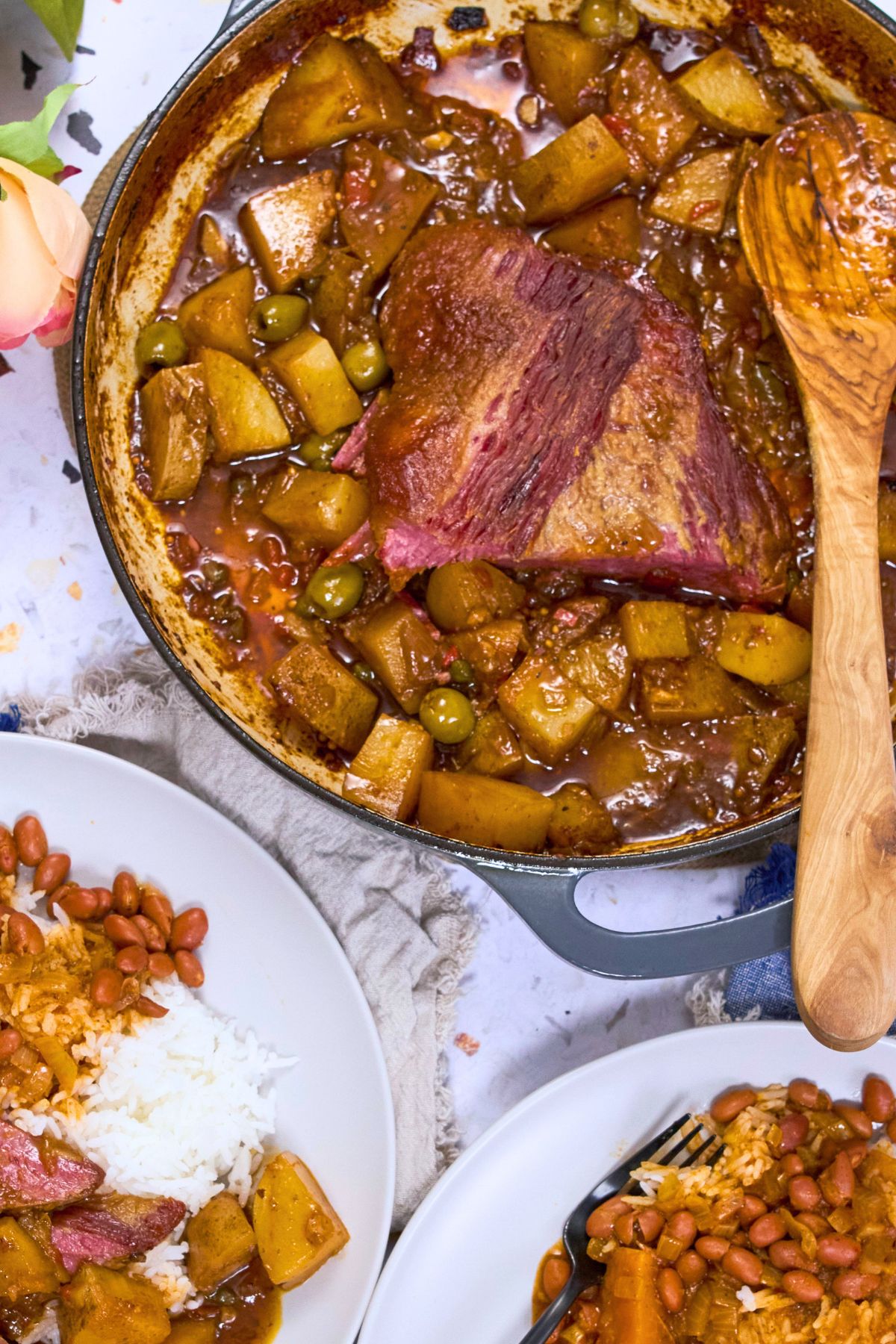
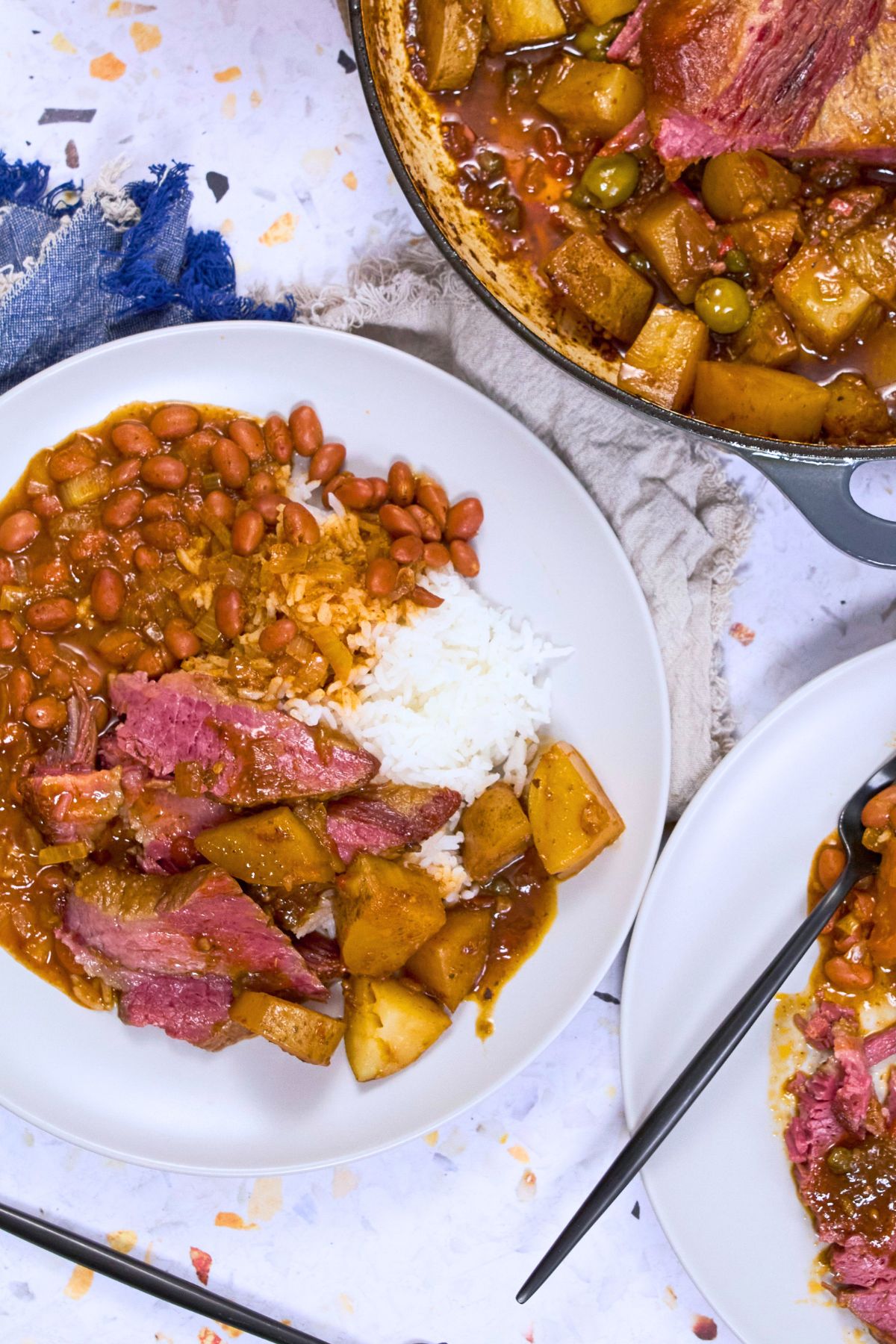
This Puerto Rican-style Dutch oven corned beef is a new take on a Puerto Rican classic we've enjoyed for decades. In this recipe, we recreate the traditional preparation of canned corned beef, but using a brined brisket. Tender and juicy, full of traditional Puerto Rican flavor.
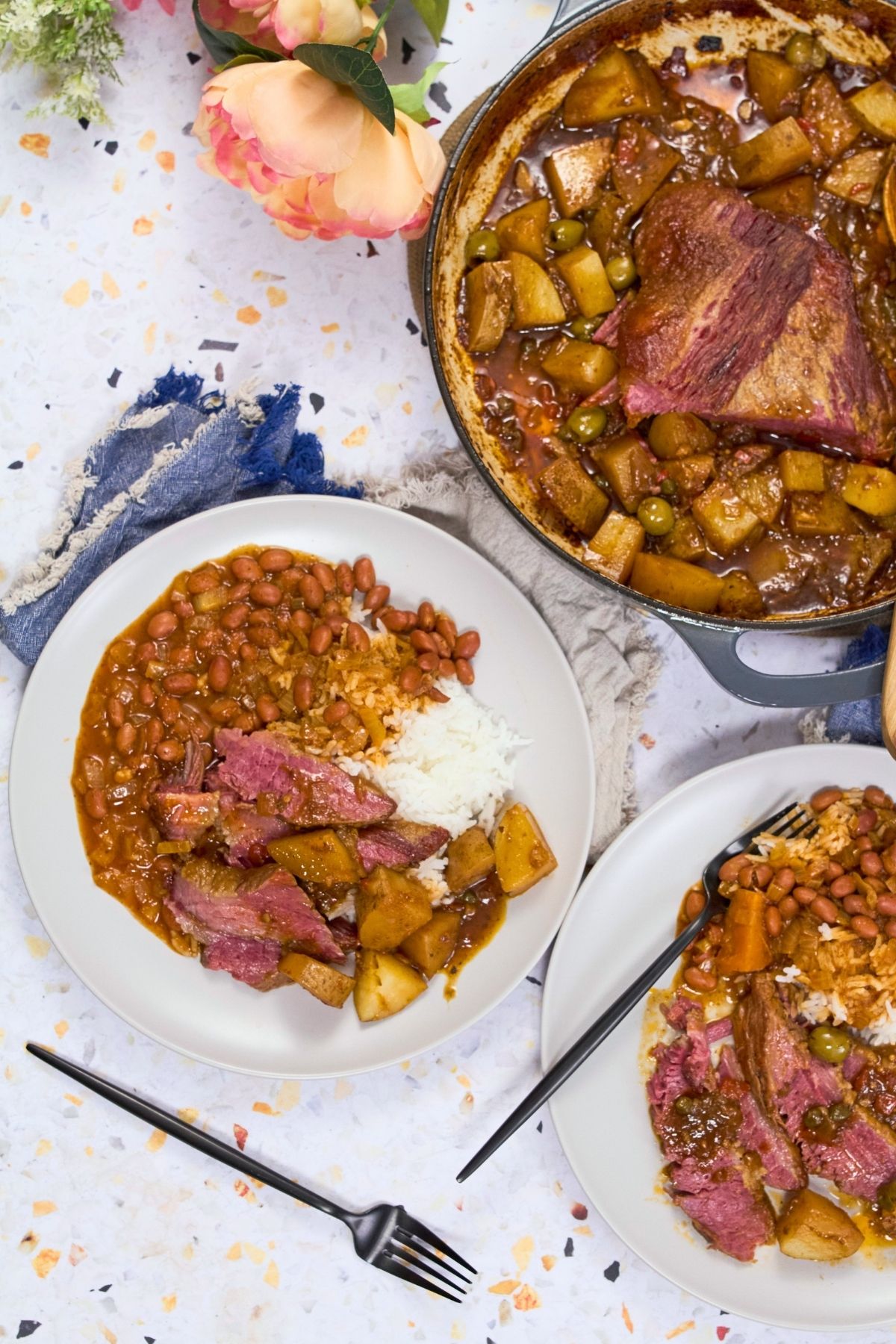
Dutch-oven corned beef is convenient in use and preparation. It easily feeds a crowd while maintaining its economical standard. But I wanted to make this pantry classic from scratch and serve it the traditional way with Arroz Blanco (white rice), Habichuelas Guisadas (stewed beans), and of course, a side of Amarillos (fried sweet plantains).
For more traditional recipes, great for a weekday meal, try Arroz con Habichuelas (rice with beans). This is the traditional go-to side for a weeknight meal. Or try Mamposteao, a combination of the above-mentioned white rice and stewed beans reheated together to create a delicious side dish. Any of these would go great with Ropa Vieja (stewed shredded beef), or Biftec Encebollado (thin steaks pan-seared and served with caramelized onions).
Jump To
Why this recipe works
- Cooks on its own: Set this brisket in a Dutch oven, and it will cook for hours.
- Tender: The slow cook will produce a super-tender cut of meat that melts in your mouth with each bite.
- Feeds a crowd: Whether you use the canned version or a full brisket, this dish goes a long way. Serve it over rice and beans, and it becomes a full, satisfying meal for the whole family without breaking the bank.
- Big flavor, simple ingredients: Sofrito and tomato sauce transform a slow-cooked brisket into something deeply familiar. The same flavors Puerto Rican home cooks have been building for generations, just made from scratch.
What is Corned Beef?
The term "corn" comes from the Germanic "Kurnam," meaning "small seed," and referred to the rock salt used to cure meats. In Ireland, beef was a luxury reserved for export and the wealthy, while traditional cured meats were made with pork. The English rule introduced large cattle populations, making beef more widely available, and salt curing became the primary method of preservation. It wasn't until the 19th century in America that the dish took its modern form: Irish immigrants settling in New York found themselves living alongside Jewish butchers who sold inexpensive brisket, and the two communities' shared love of cured meats gave rise to what we now recognize as corned beef. The American Army took note and began canning it as a reliable source of nourishment for soldiers. So why do Puerto Ricans eat corned beef? In 1917, when Puerto Rico became an American territory and Puerto Ricans entered the military, canned corned beef made its way into our homes and never left.
Ingredient Notes
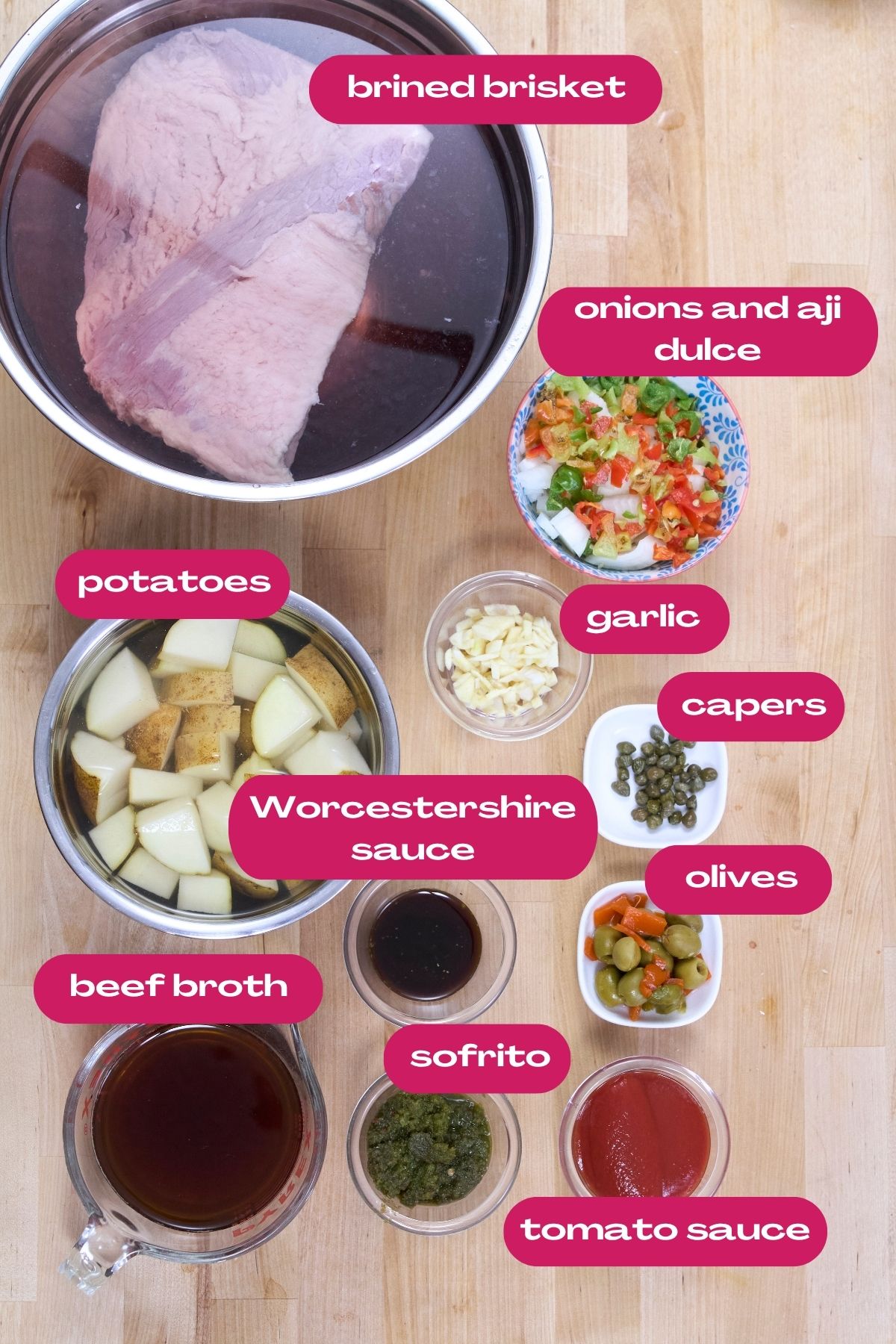
- Brisket: Brisket is the traditional cut for corned beef. Beautifully marbled yet full of muscle, it makes a tender final product. I used the packet of already brined brisket, but you can brine your own.
- Tomato Sauce: Tomato sauce is what differentiates Puerto Rican corned beef from Irish or American corned beef, as it is cooked in the Spanish tradition.
- Sofrito: Sofrito is what pinpoints this particular dish to Puerto Rico. The mixture of culantro, onions, sweet chilies, and garlic gives this corned beef traditional Puerto Rican flavor.
See my recipe card below for a complete list of the ingredients with measurements.
Variations and Substitutions
- Meat alternatives: Look for cuts that withstand long, slow cooking, such as Round (Eye of Round, Top or Bottom), Chuck Roast, Short Ribs, or Tri Tip. For pork, try Pork Belly, Pork Shoulder (Boston Butt, aka Pernil), or Ham Hocks
Not all variations or suggestions have been tested. If you do try any of these, please let me know how it went in the comments.
How to make Puerto Rican-style Dutch Oven Corned Beef
Preheat oven to 325℉. Rinse the brisket under cold water to remove excess salt. Save the pickling seasoning packet for later use in the recipe.
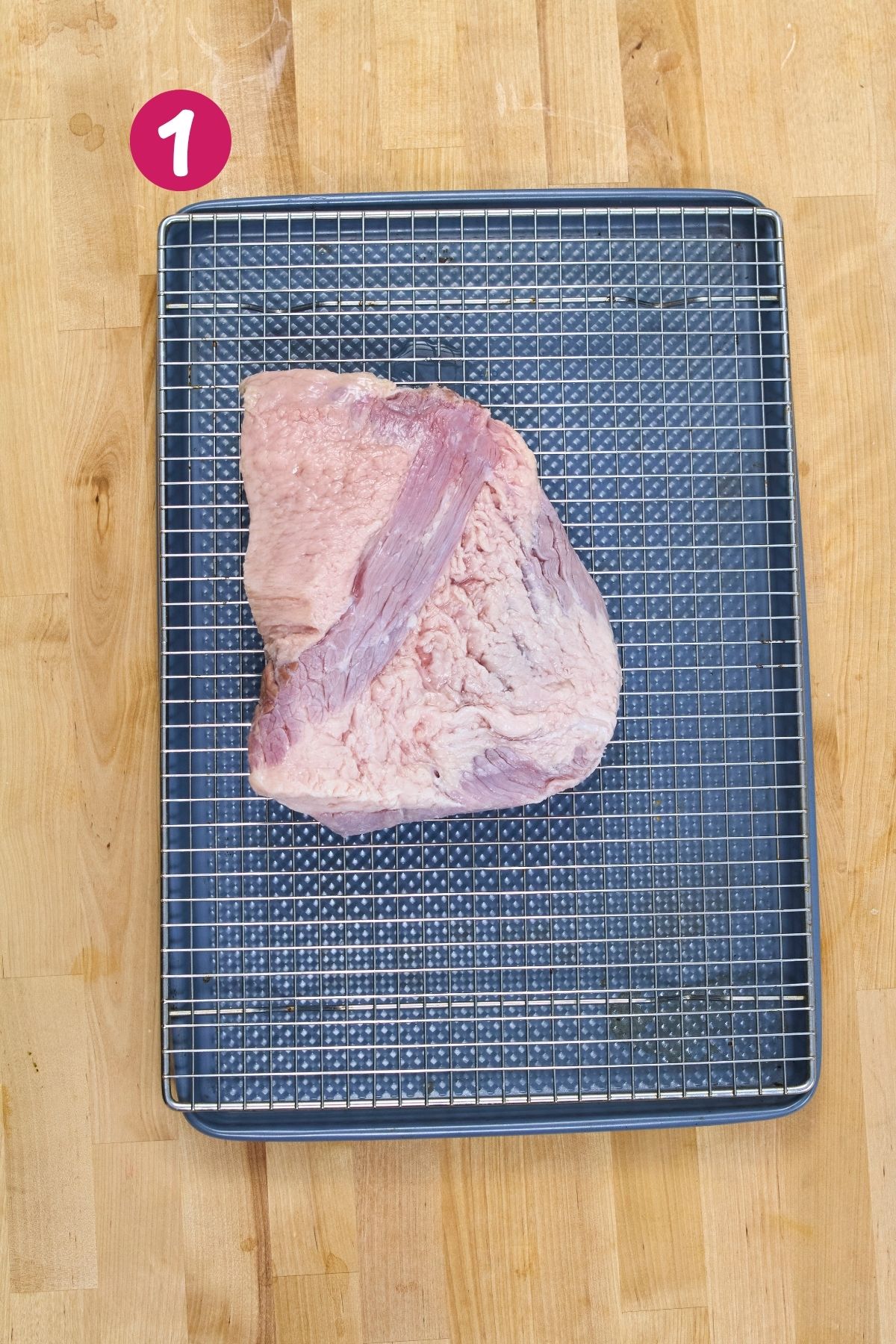
- Let the brisket drain for a few minutes. Then pat it dry with paper towels before searing in the Dutch oven.
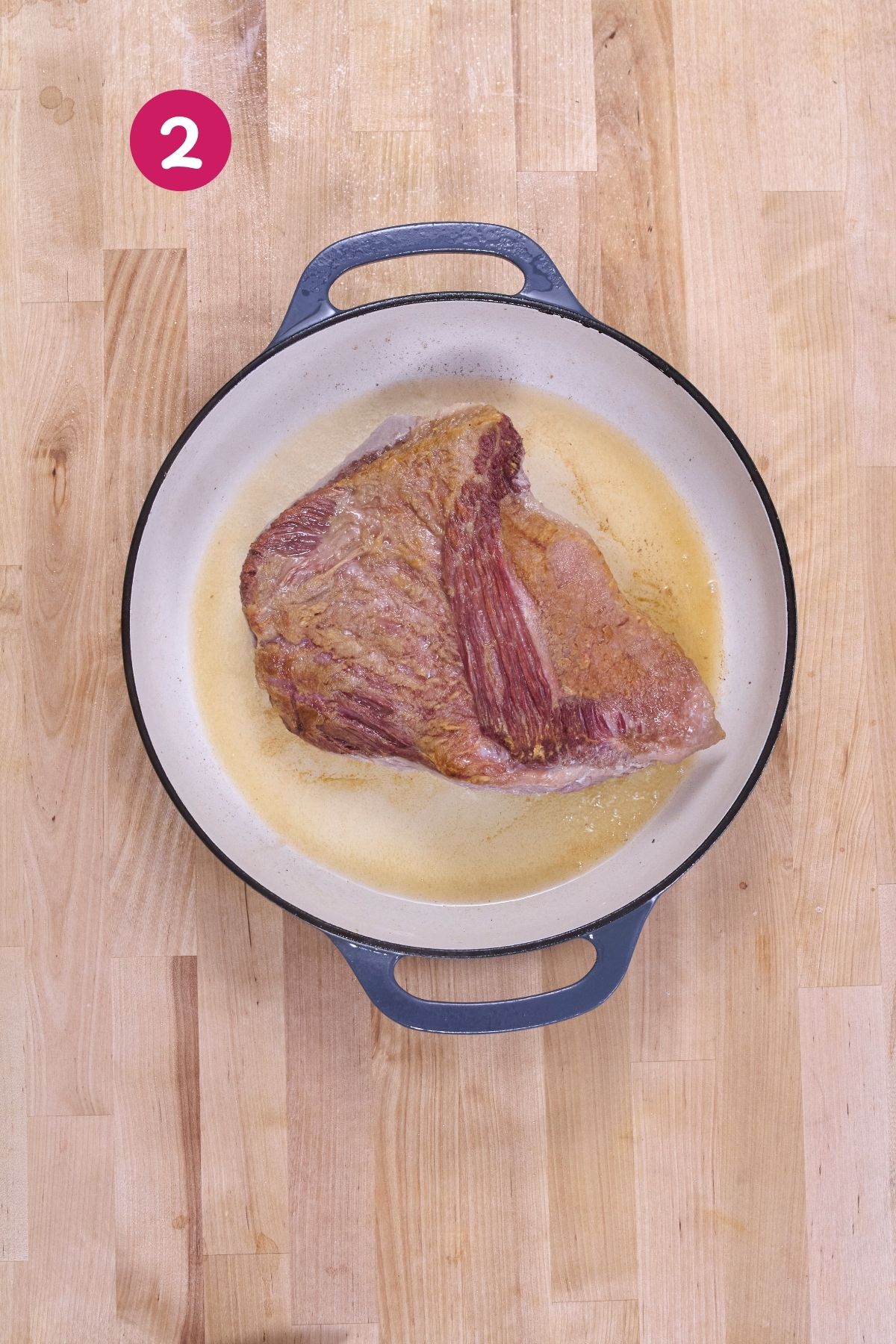
- Heat olive oil in the Dutch oven over medium-high heat. Do not let the oil smoke. Sear the brisket on both sides until browned, about 5 to 8 minutes per side.
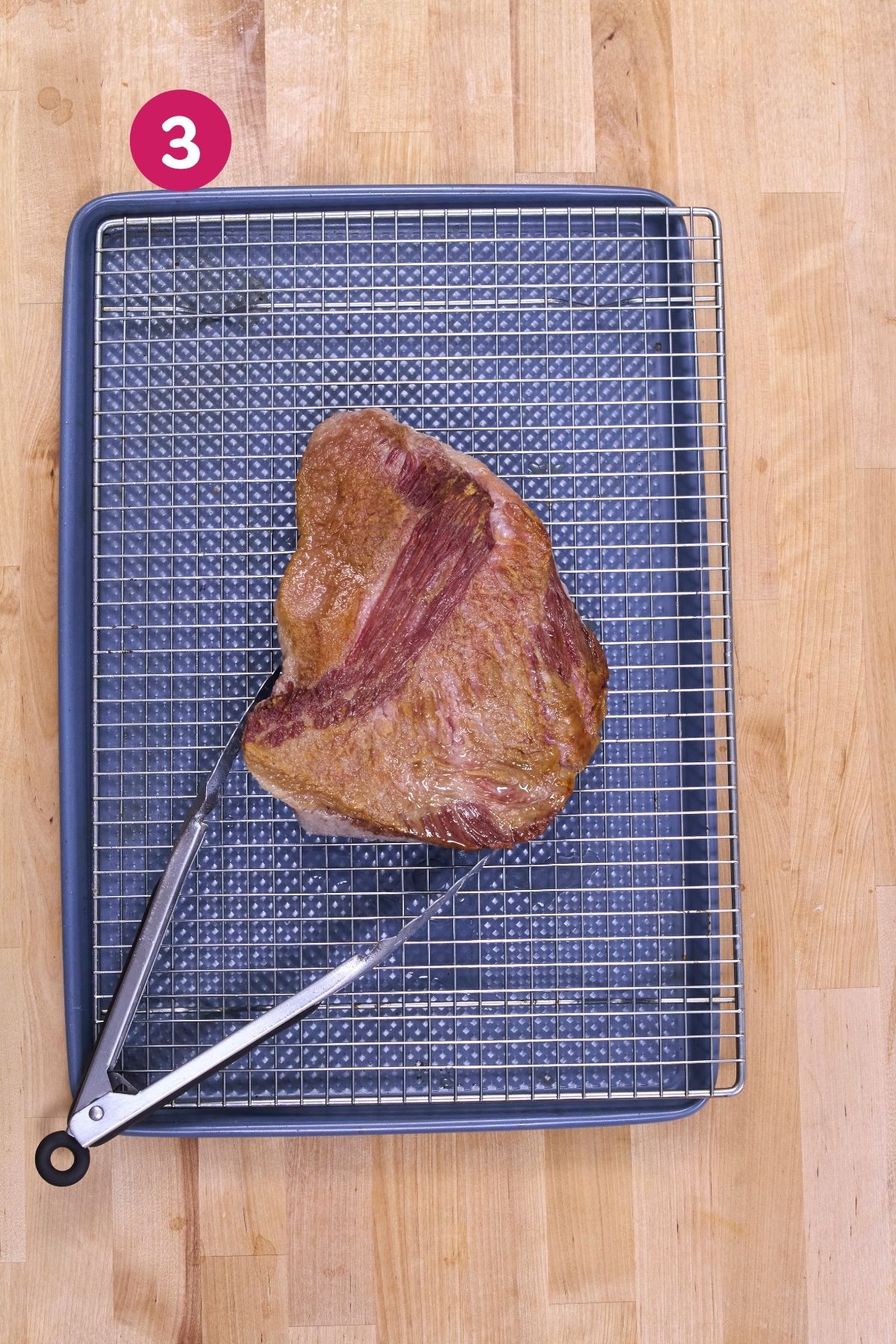
- Set the brisket aside and let it rest, while we start working on the sauce.
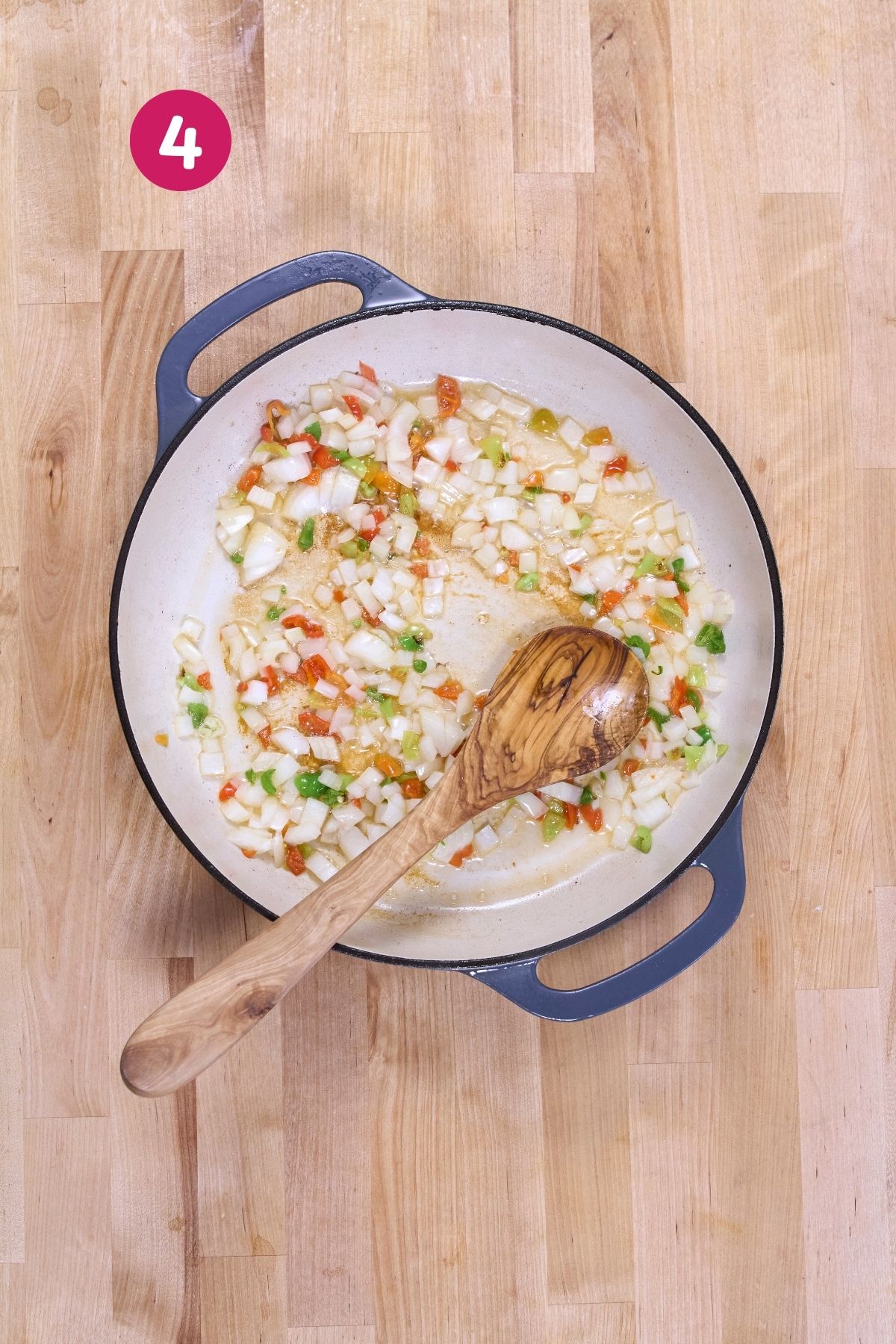
- In the same pan, lower the heat to medium and add the onions and sweet chile peppers. Sauté until soft and tender, about 5 minutes.
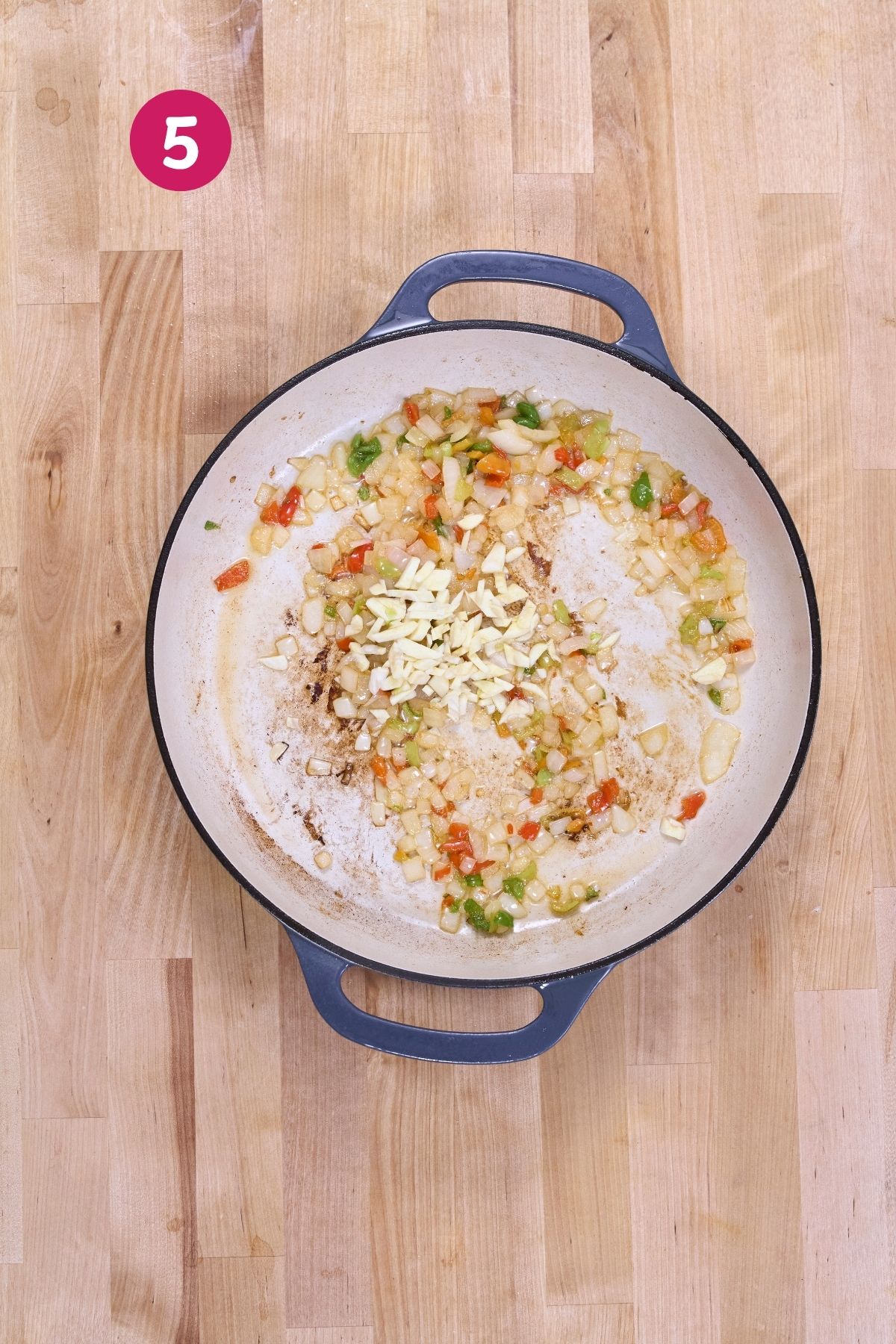
- Add the garlic and saute until fragrant.
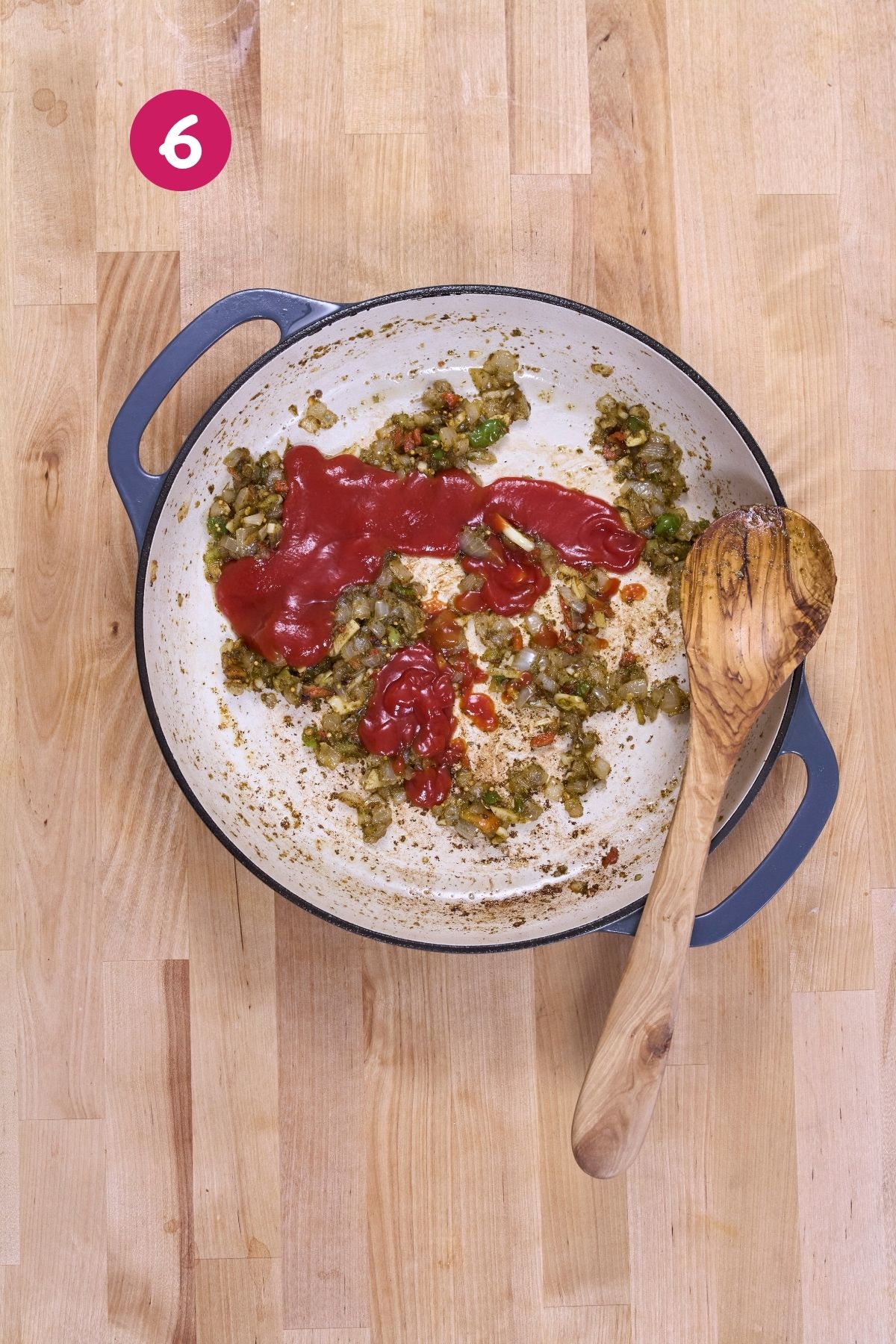
- Add achiote oil, sofrito, and tomato sauce, and cook until the tomato sauce caramelizes slightly.
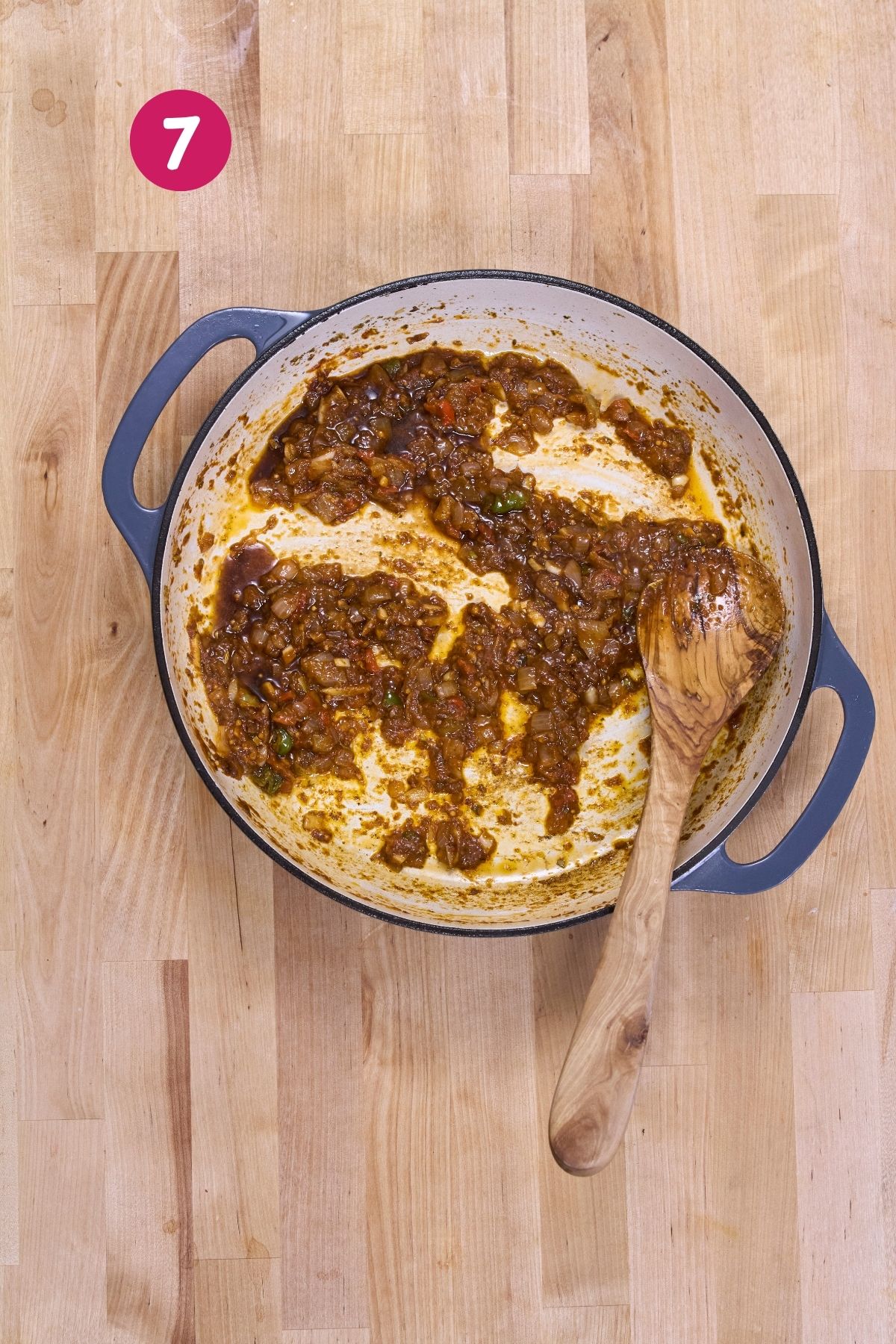
- Deglaze the pan with Worcestershire sauce and a bit of broth to lift the brown bits left from searing the brisket and vegetables.
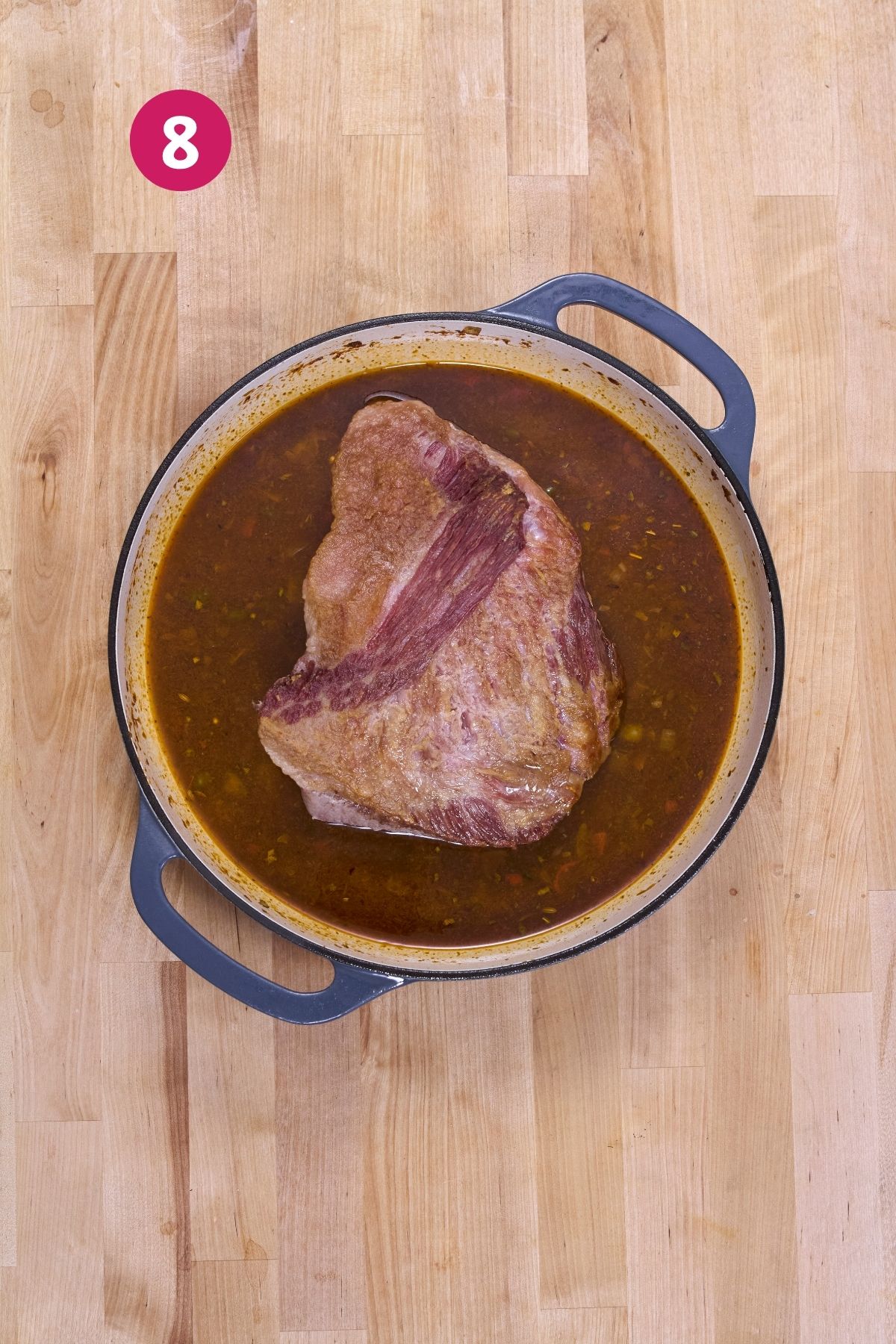
- Incorporate the brisket into the Dutch oven, fat side up, along with any residual liquid it may have released. Pour the remaining broth to cover about half of the brisket.
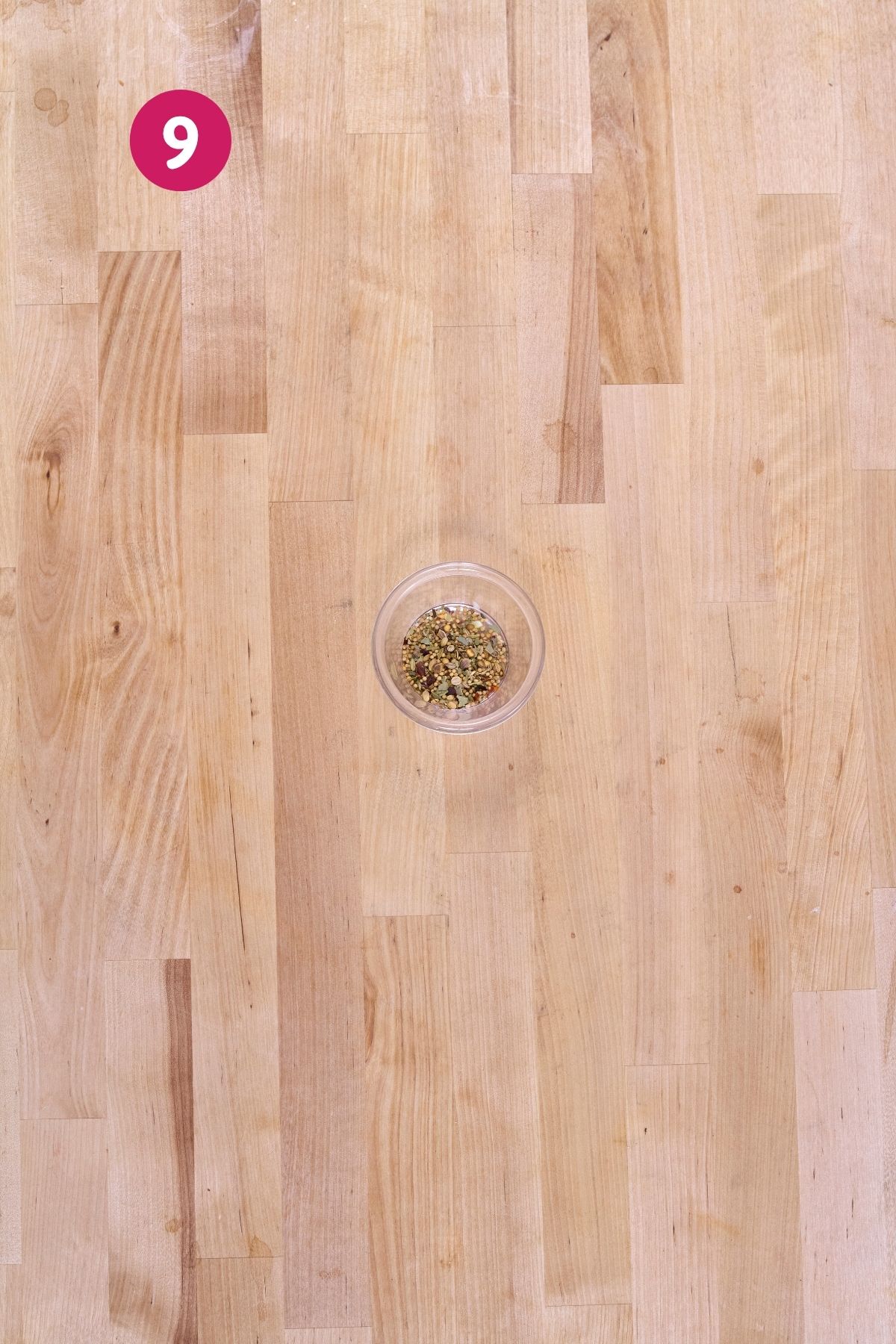
- Add the pickling seasoning that comes with your brisket to the broth. Cover the Dutch oven and place the brisket in the oven for about 2 hours.
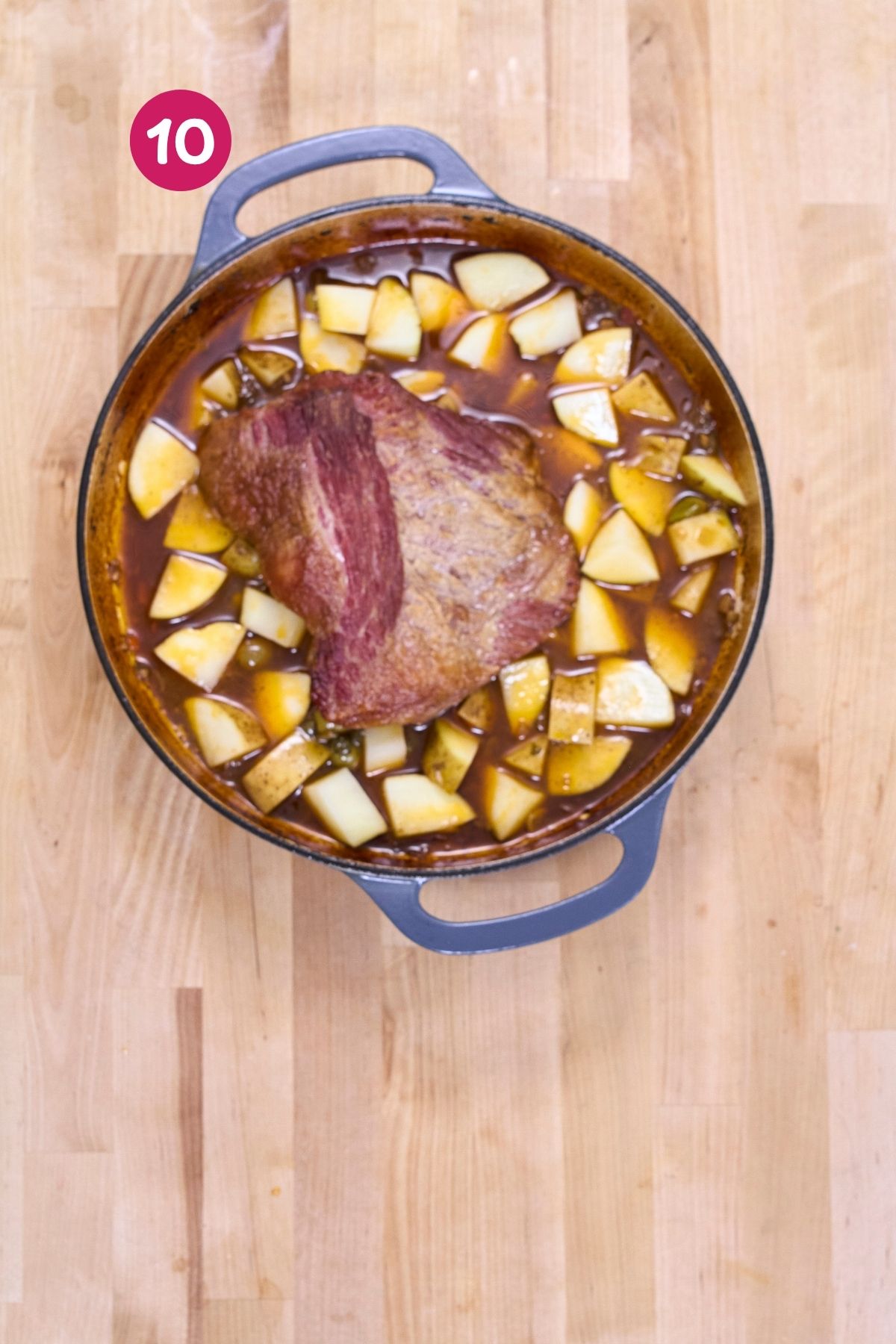
- Add potatoes, olives, and capers in the last 30 minutes of cooking. Check your liquid levels. The broth will thicken and reduce, but if it is too low, you can add half a cup more of broth or water. After 2 hours, remove from the oven and let it rest for 10 minutes before serving.
Expert Tips
- Soak before you rinse: Soak the brisket in cold water for at least 30 minutes before rinsing. This gives any salt pockets time to dissolve and keeps the final dish from turning out too salty.
- Pat it dry: Let the brisket drain for a few minutes, then pat it dry with paper towels. A dry surface is what gives you a deep, even sear instead of a steamed one.
- Toast the spice packet: Add the pickling spices while sautéing the vegetables instead of dropping them straight into the broth. Toasting them in the hot oil wakes up their flavor before the liquid goes in.
- Crockpot option: This recipe works in a crockpot, too. After searing and building the sauce, transfer everything and cook on low for 6 to 8 hours or on high for about 4, adding the potatoes, olives, and capers in the last hour.
Recipe FAQs
Corned beef in Puerto Rico is just like it is in many parts of the world, the trapezoidal cubed can that comes with the funny key to open it. This canned minced corned beef is then reheated in sofrito and tomato sauce with potatoes and other vegetables, and served with rice and stewed beans. Delicious!
Corned beef is the beef that is brined in a solution of salt, mustard seeds, herbs, spices, and sugar. It is brined for about a week, then removed, rinsed, and braised. However, commercially, corned beef is a minced version of the same brined and braised meat, then canned.
Corned beef is not necessarily bad for you, since it does contain a good amount of protein, vitamins, and minerals, but due to the curing process, it does not necessarily make it good for you either. We have to remember that the process of curing and canning meat was used for preservation because there was no refrigeration. It was a way of maintaining your product, and in the case of the military, feeding their soldiers a high-protein meal that would keep them fit for battle more easily. This means that eating corned beef in moderation, rather than regularly, is the best way to enjoy it. However, brining your own cut of meat can reduce the added nitrates found in commercial canned and raw-brined corned beef.
Slow and long. I cook my corned beef in the oven for hours, but if you have a crockpot or Instant Pot, you can let it cook on its own for as long as you need. It can also be cooked on the stovetop, but on the lowest burner setting.
Canned foods have been around since the 1800s, and Spain has sent canned goods to Puerto Rico, and Puerto Ricans have embraced them because they are easy to store and last longer than fresh foods, which has become a lifeline during hurricane season. However, it was the United States that commercialized canned corned beef and used it for the military. In 1917, Puerto Ricans became US citizens and were allowed to join the US military, where they were introduced to corned beef. As a US territory, Puerto Rico also receives federal aid in times of hardship, which includes canned and shelf-stable foods.
More Beef, Lamb, and Pork Recipes
- Sancocho, Puerto Rican Stew
- Chuletas Fritas, Puerto Rican Fried Pork Chops
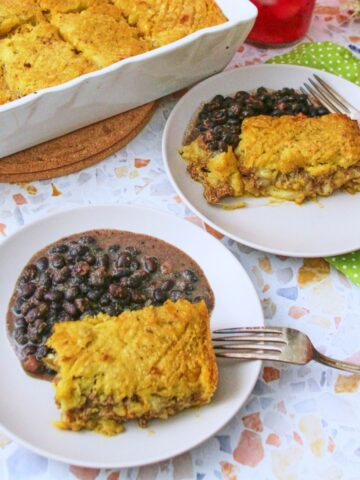
- Pastelón de Plátano Maduro (Puerto Rican Plantain Casserole)
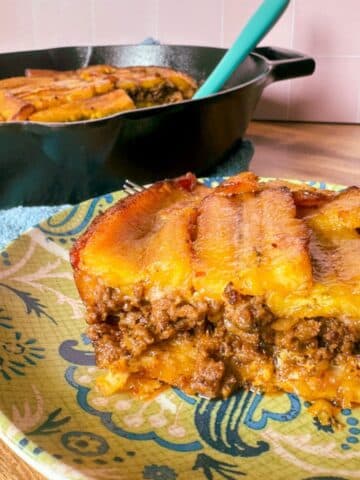
- Sweet Plantain Lasagna (Piñon)
Before You Go . . .
Cooked it and loved it? Rate it. Review it. Share it. Your feedback helps others and keeps this blog cooking.
📖 Recipe
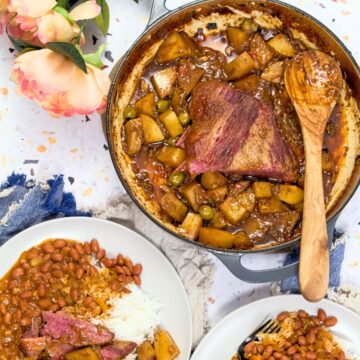
Puerto Rican-Style Dutch-Oven Corned Beef
Equipment
Ingredients
- 1 tablespoon olive oil
- 3.5 lbs corned beef raw brisket with spice packet
- 1 small onion small diced
- 4 sweet chiles minced
- 4 cloves garlic minced
- 1 tablespoon achiote oil
- 3 tablespoon sofrito
- 8 oz tomato sauce
- 2 tablespoon Worcestershire sauce
- 2 cup beef broth have more ready if needed
- 3 potatoes large diced or use baby potatoes
- 1 teaspoon capers
- 12 Manzanilla olives rough chopped
Instructions
- Preheat oven to 325℉. Rinse the brisket under cold water to remove excess salt. Save the pickling seasoning packet for later use in the recipe.
- Let the brisket drain for a few minutes. Then pat it dry with paper towels before searing in the Dutch oven.3.5 lbs corned beef raw brisket with spice packet
- Heat olive oil in the Dutch oven over medium-high heat. Do not let the oil smoke. Sear the brisket on both sides until browned, about 5 to 8 minutes per side.1 tbsp olive oil, 3.5 lbs corned beef raw brisket with spice packet
- Set the brisket aside and let it rest, while we start working on the sauce.
- In the same pan, lower the heat to medium and add the onions and sweet chile peppers. Sauté until soft and tender, about 5 minutes.1 small onion, 4 sweet chiles
- Add the garlic and saute until fragrant.4 cloves garlic
- Add achiote oil, sofrito, and tomato sauce, and cook until the tomato sauce caramelizes slightly.1 tbsp achiote oil, 3 tbsp sofrito, 8 oz tomato sauce
- Deglaze the pan with Worcestershire sauce and a bit of broth to lift the brown bits left from searing the brisket and vegetables.2 tbsp Worcestershire sauce, 1 cup beef broth
- Incorporate the brisket into the Dutch oven, fat side up, along with any residual liquid it may have released. Pour the remaining broth to cover about half of the brisket.1 cup beef broth
- Add the pickling seasoning that comes with your brisket to the broth. Cover the Dutch oven and place the brisket in the oven for about 2 hours.
- Add potatoes, olives, and capers in the last 30 minutes of cooking. Check your liquid levels. The broth will thicken and reduce, but if it is too low, you can add half a cup more of broth or water. After 2 hours, remove from the oven and let it rest for 10 minutes before serving.3 potatoes, 1 tsp capers, 12 Manzanilla olives

Notes
Expert Tips
- Soak before you rinse: Soak the brisket in cold water for at least 30 minutes before rinsing. This gives any salt pockets time to dissolve and keeps the final dish from turning out too salty.
- Pat it dry: Let the brisket drain for a few minutes, then pat it dry with paper towels. A dry surface is what gives you a deep, even sear instead of a steamed one.
- Toast the spice packet: Add the pickling spices while sautéing the vegetables instead of dropping them straight into the broth. Toasting them in the hot oil wakes up their flavor before the liquid goes in.
- Crockpot option: This recipe works in a crockpot, too. After searing and building the sauce, transfer everything and cook on low for 6 to 8 hours or on high for about 4, adding the potatoes, olives, and capers in the last hour.


