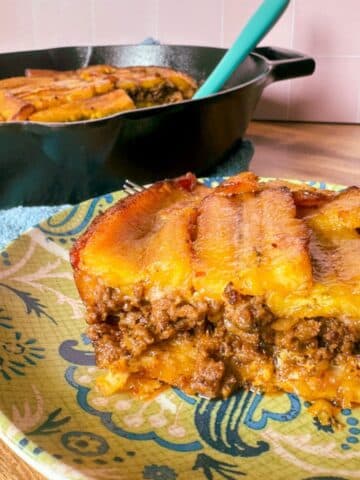
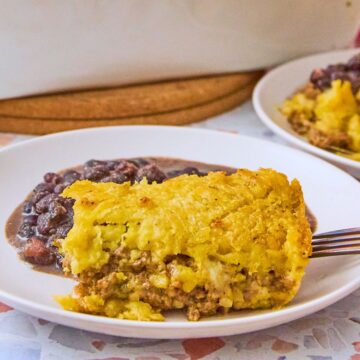
Pastelón de plátano maduro, or plantain casserole, turns ripe plantains into a delicious dish. Stuff it with your choice of meat, top it with cheese, and you've got a delicious one-pot meal.
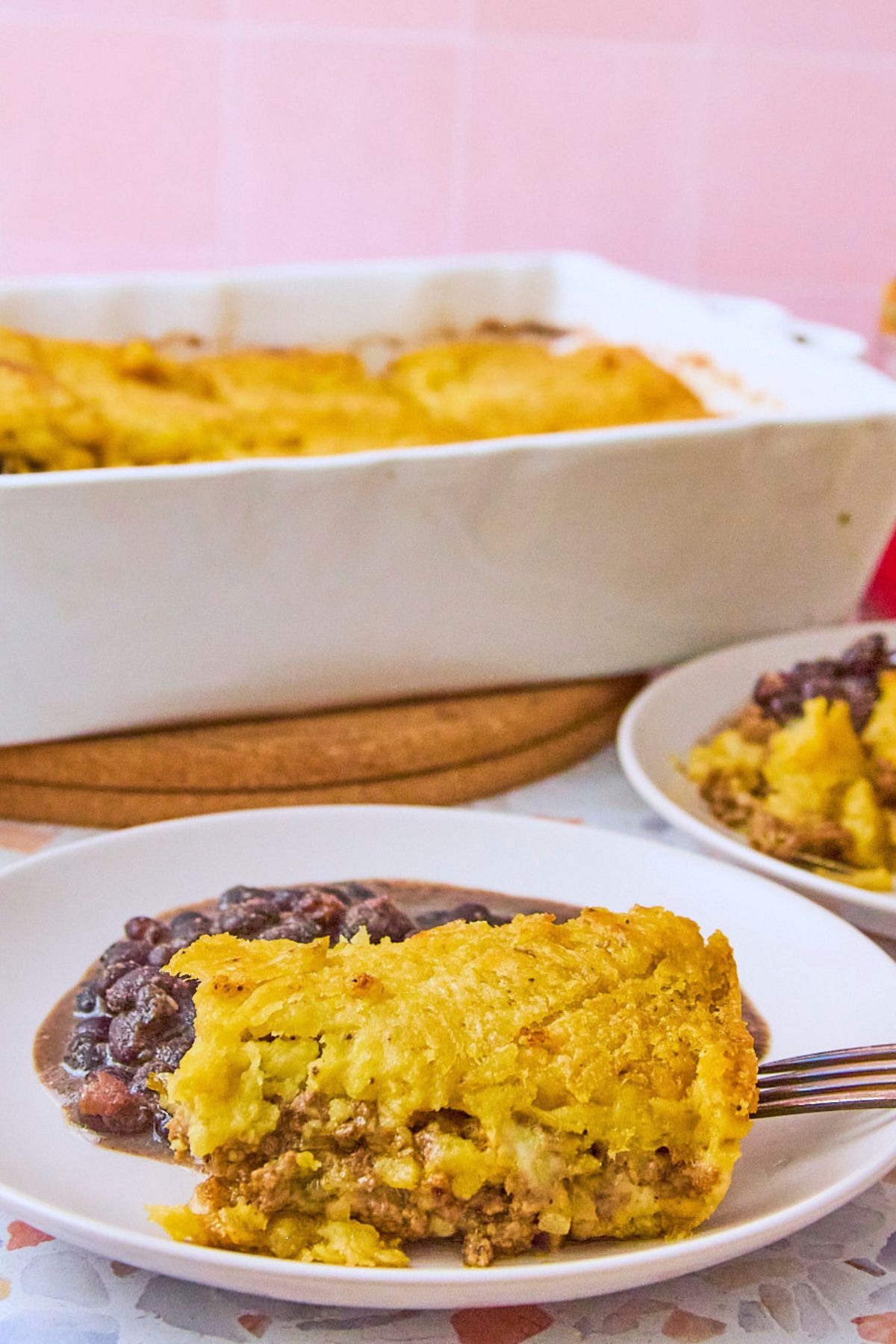
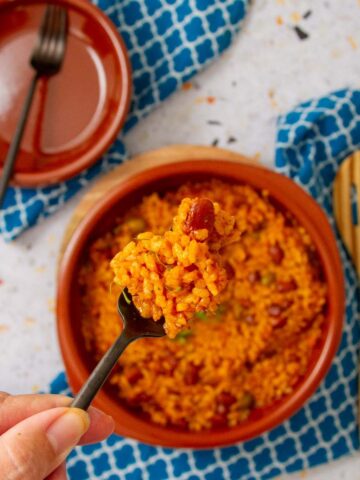
Pastelón has been confused with Piñón for quite a long time, but we can discuss that a bit later. However, this version of pastelón is as close to the traditional as it gets and just as delicious as the piñón version. This plantain casserole is a meal in itself, but it pairs well with arroz con habichuelas or a green salad.
If you are looking for more traditional Puerto Rican dishes to pair with or complement this casserole, try my Biftec Encebollado (not a typo, bistec or biftec all mean beef steak 😉). Even though this casserole has a meat filling, you can make it with just cheese to better complement the Biftec. Arroz con Gandules, a traditional Puerto Rican side dish, or Yuca salad with Bacon and Mustard (a Puerto Rican twist to the German Potato Salad), this salad delivers a tart mustard-vinegar bite with crispy bacon that cuts right through the richness of the salad.
Jump To
Why you'll love this recipe
- Easy to make: Because this recipe uses mashed plantains instead of fried sliced plantains, it comes together quite easily.
- Family Friendly: The kids can join in the fun of smashing the plantains, and it is easy to build. This is one of those family bonding recipes they will remember forever.
- Sweet meets savory: The sweet plantains pair great with the savory ground beef and nutty Swiss cheese.
- It feeds a crowd and improves overnight: this pastelón tastes better the next day once the layers have had time to settle and the flavors have married. Make it ahead for holidays, family dinners, or any gathering that calls for something substantial.
What is Pastelón?
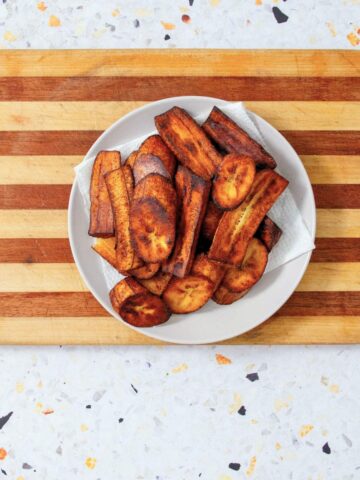
So let's unravel the mystery of what, truly, a pastelón is. There is a long-standing debate and confusion about pastelón, and I'll admit I've been confused too. My mom made a sliced plantain dish with ground beef and called it pastelón. But Puerto Rican cuisine (as per Puerto Rican Cookery by Carmen Aboy Valldejuli and Borden, which actually did a commercial campaign in the island and featured Doña Toñita making pastelón) actually has two distinct plantain casseroles: pastelón, made with mashed ripe plantains, and piñón, made with sliced fried ripe plantains (this is the one many call the Puerto Rican plantain lasagna).
So why the different names and techniques? I cannot answer this with certainty, but my working theory is that it comes down to region. It is possible that both dishes are the same thing under different names. Some sources suggest piñón is the term used in the southern and western parts of the island, while pastelón is the name used in the northern and eastern parts of the island for the same dish. But I don't have concrete evidence for this yet. If you have definitive information about why these two names exist for such similar recipes, please leave a comment below.
Ingredient Notes
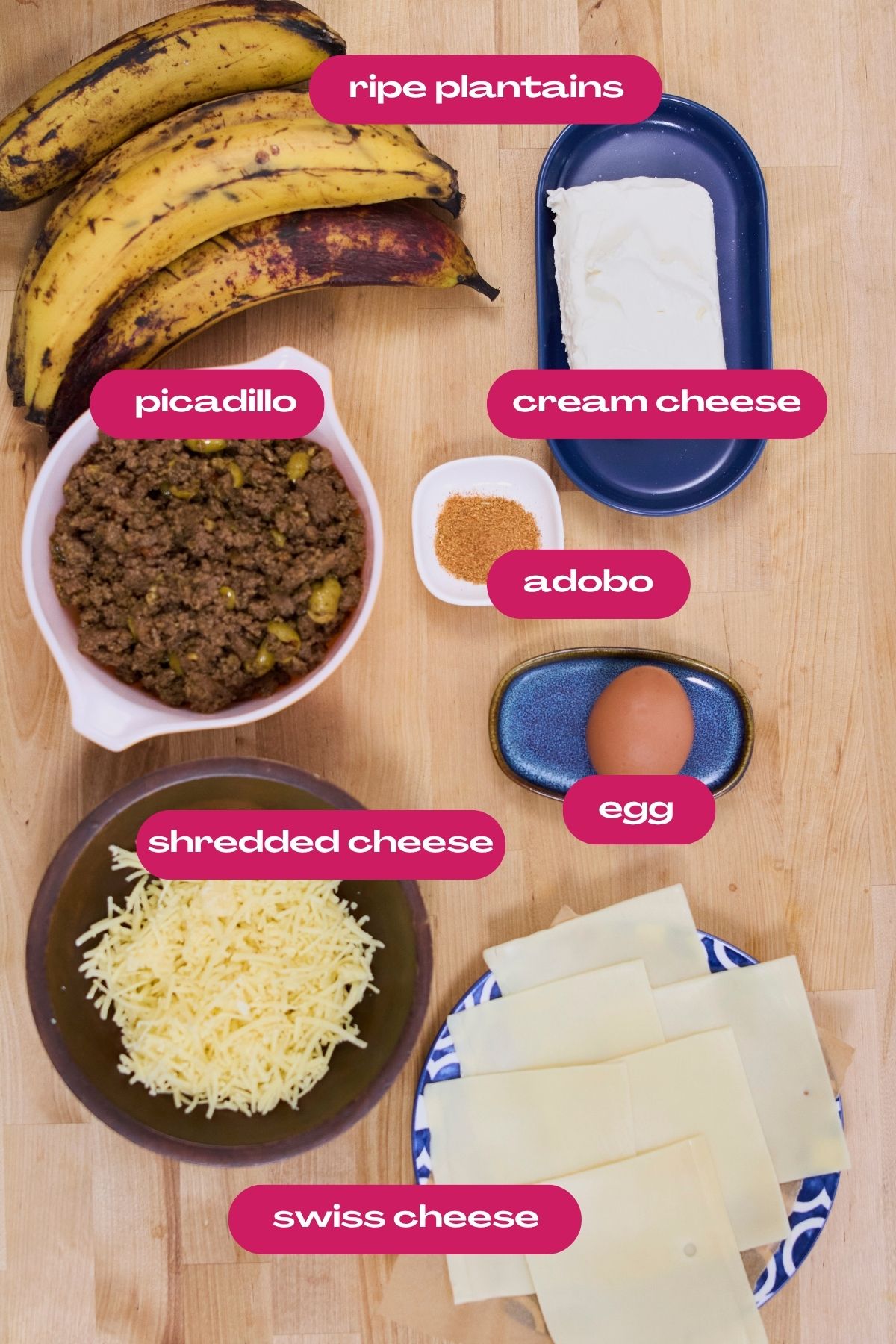
- Ripe Plantains (Maduros): You want plantains with fully yellow skin and significant black spotting. The more sugar they've developed, the better the mash.
- Ground beef: Picadillo is the traditional filling. The combination of sofrito, garlic paste, olives, achiote oil, and tomato paste creates a savory, aromatic filling that contrasts beautifully with the sweet plantain.
- Swiss Cheese: Nutty, slightly sweet, and an excellent melter. Swiss cheese has been the traditional choice for this dish for decades and pairs well with both the plantain and the picadillo.
- Cream Cheese: I added cream cheese to enhance the dish's creaminess.
See my recipe card below for a complete list of the ingredients with measurements.
Variations and Substitutions
- Plantain alternatives: Mashed butternut squash, sweet potato, or cauliflower can all be good substitutes, though the textures will differ.
- Fillings: I honestly like adding ground chorizo to my picadillo; however, ground pork, shredded chicken, or turkey all work well. Ropa vieja, or pernil, would be other great alternatives, and for vegetarian versions, seasoned lentils or sauteed mushrooms with sofrito make satisfying substitutes.
- Cheese: Any cheese that melts smoothly, like mozzarella, provolone, Gouda, or Muenster. For a sharper bite, a mild cheddar blended with mozzarella or pepper jack cheese holds up well.
Not all variations or suggestions have been tested. If you do try any of these, please let me know how it went in the comments.
Pro tip
The Secret to Perfect Mash
Drain the plantains, but don't let them cool down before mashing or ricing. Hot mash is easier to work with than letting the plantains (or any vegetable that would be mashed) cool down before mashing. The reason is steam; it helps release moisture from the plantain, which prevents the starches from gelatinizing and turning hard.
How to make Pastelón de Plátano Maduro
Preheat the oven to 350℉.
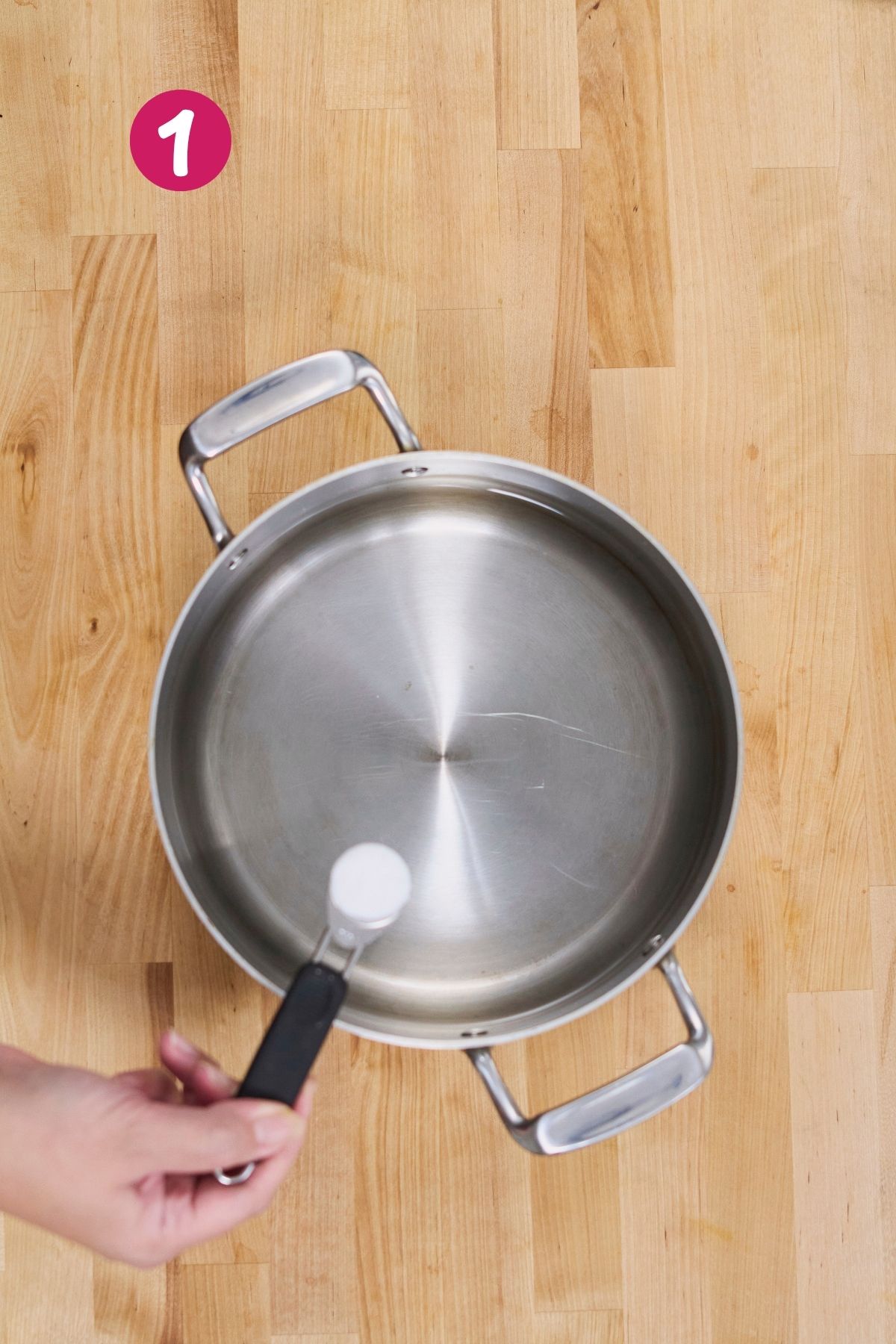
- Prepare the Plantains. Bring the water to a boil, then add salt to season the plantains. While we wait for the water to boil, trim the ends of the plantains, score the skin lengthwise, and cut them in half. Place the plantain pieces in salty water while we wait.
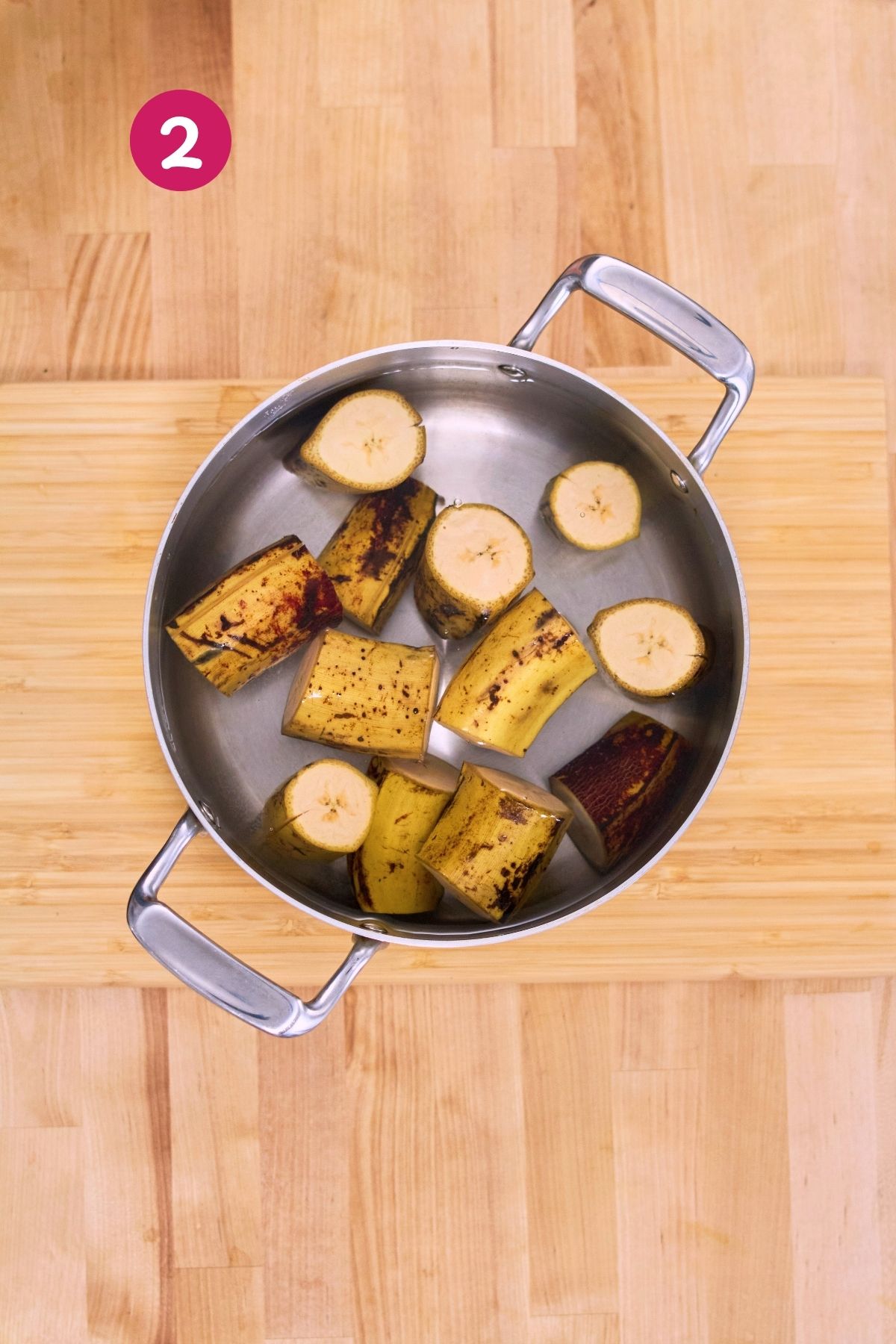
- Boil the plantains. Place the ripe plantains, with their peels on, in the pot and boil them in lightly salted water until fork-tender, about 15-20 minutes. Drain thoroughly.
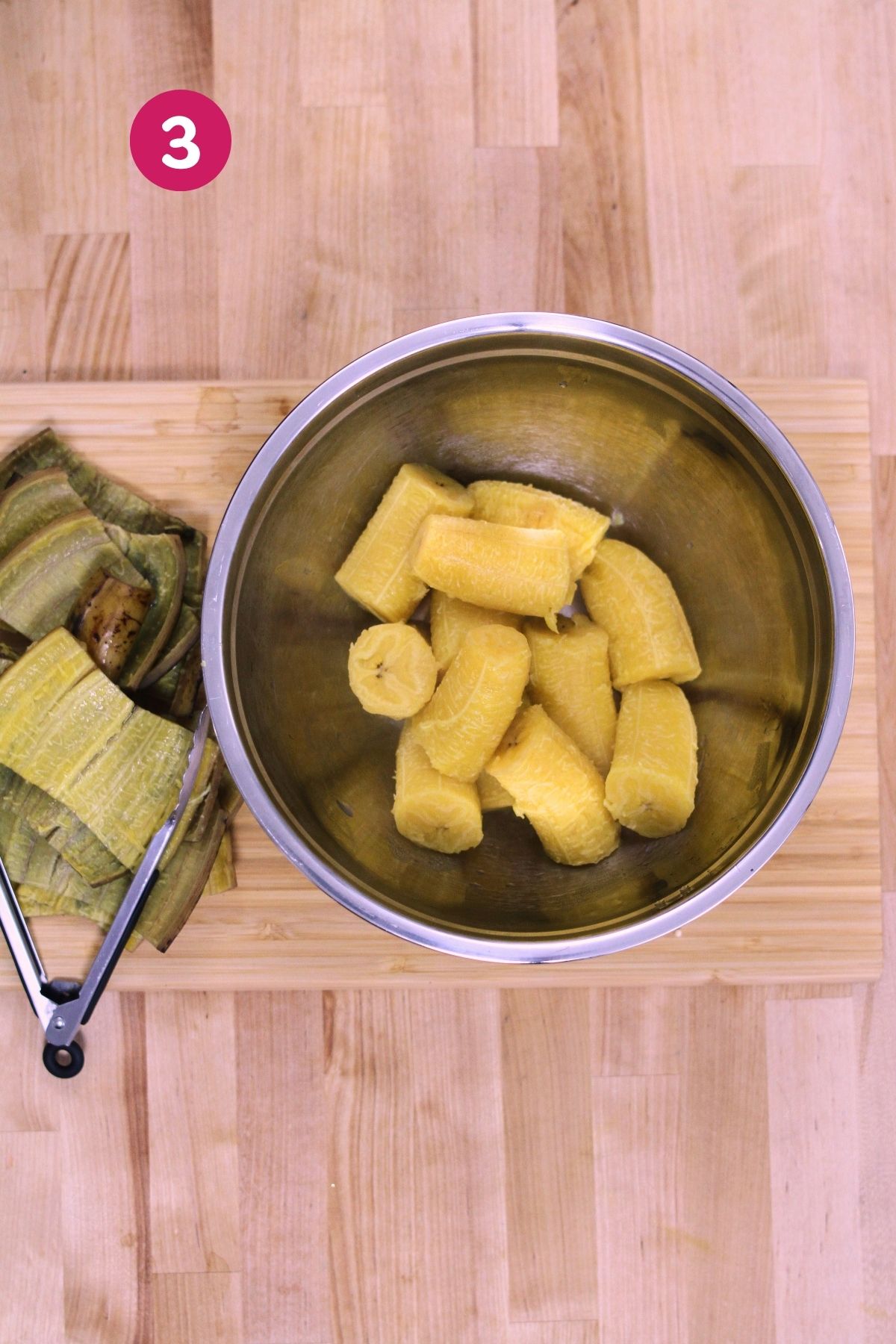
- Mash with egg. Remove the skin from the plantains and mash them while still hot. Beat one egg and mix it into the mash until fully incorporated. Season lightly with salt. The mixture should be mostly smooth with some texture, not chunky. If it is too soft, add a tablespoon of flour to tighten it.
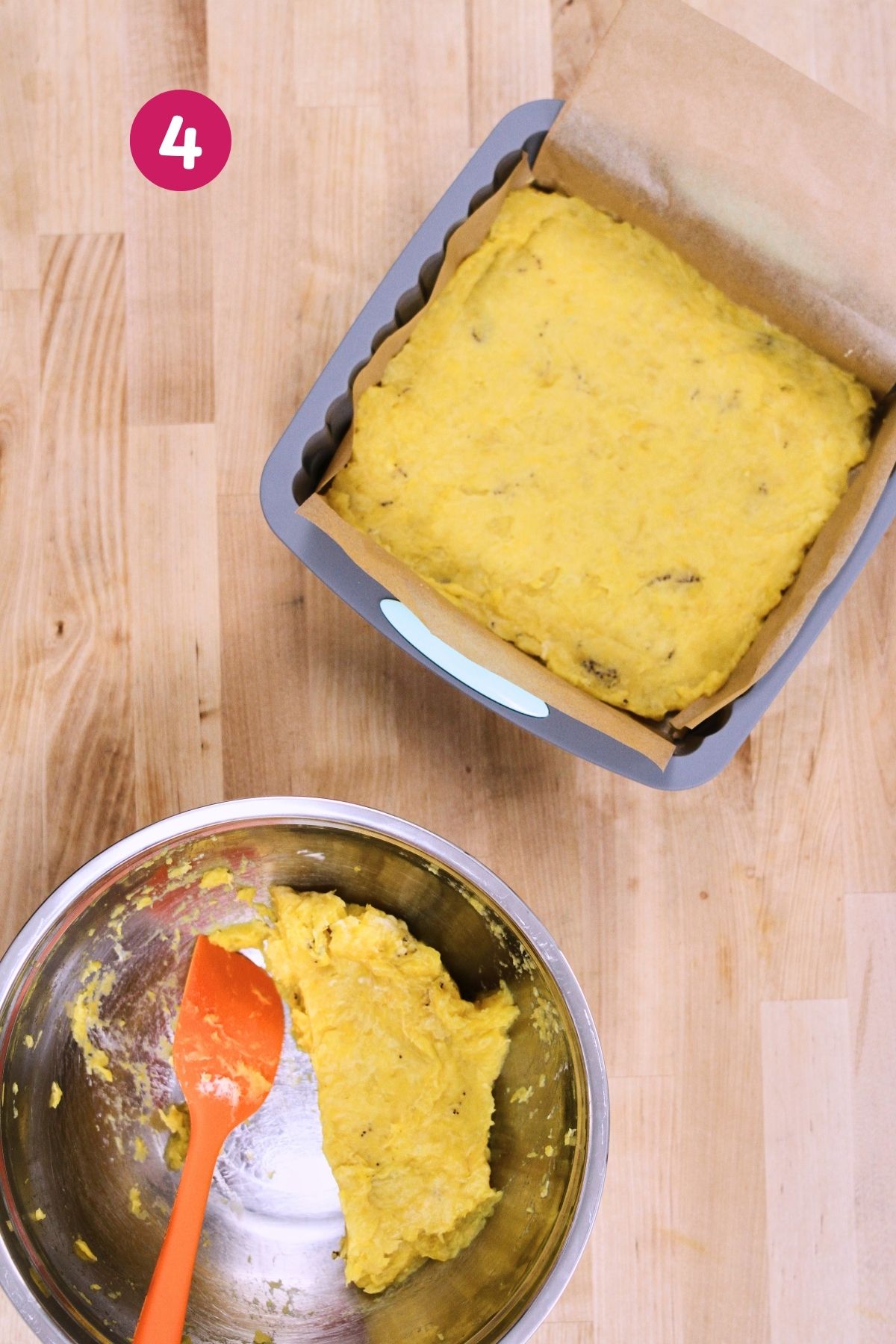
- Prep your pan. I like to line a baking pan with parchment paper to add half of the plantain mixture. I press this into the pan, then use the sides of the parchment to lift the half off the pan. This half will be used to close the casserole. Then, I butter or oil the baking dish and add the second half of the mixture.
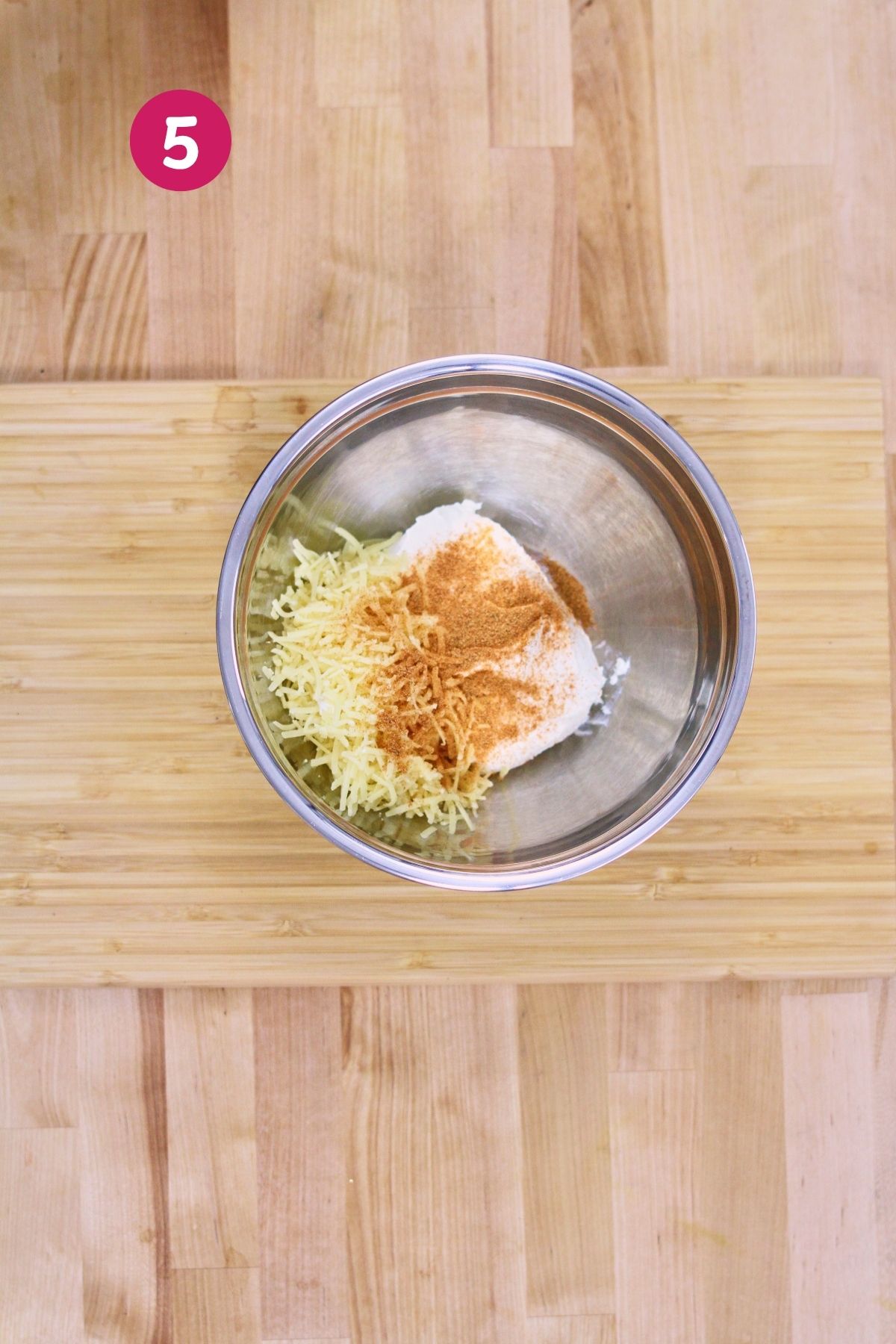
- Cheese Mixture. Mix cream cheese with shredded cheese and powdered adobo.
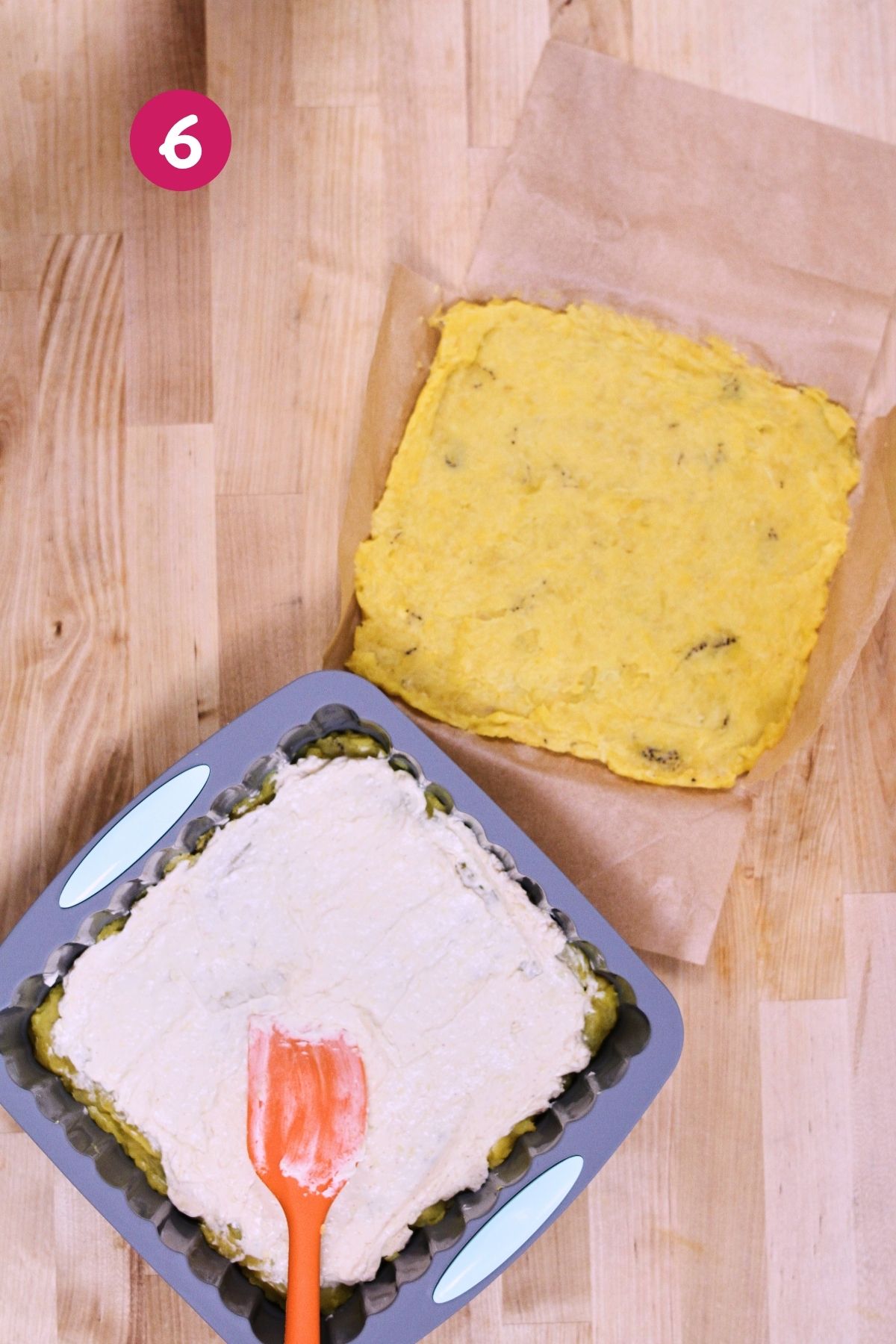
- Start building the casserole. On to the bottom layer, spread the cream cheese mixture.
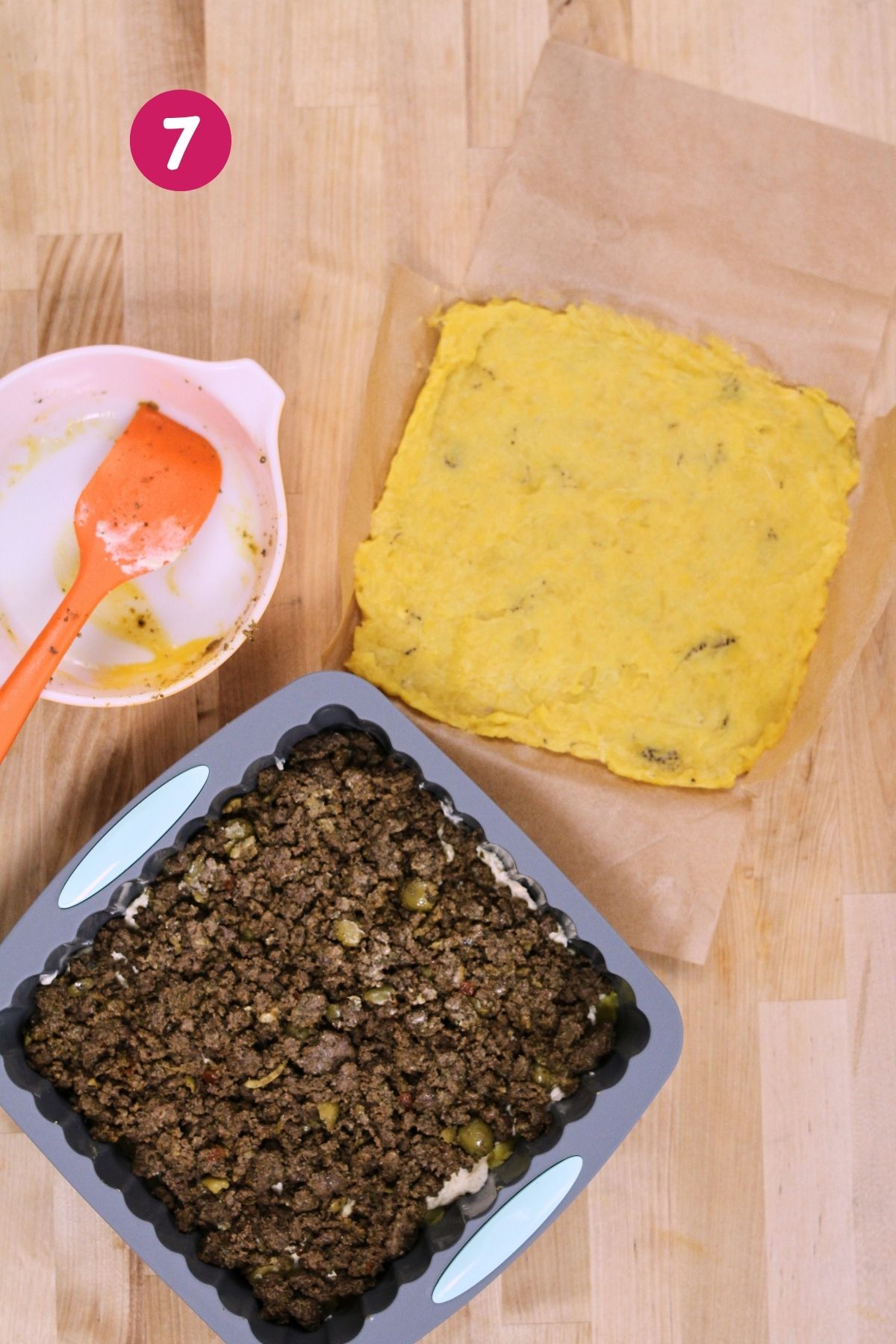
- Add meat filling. Spread the meat filling over the cream cheese.
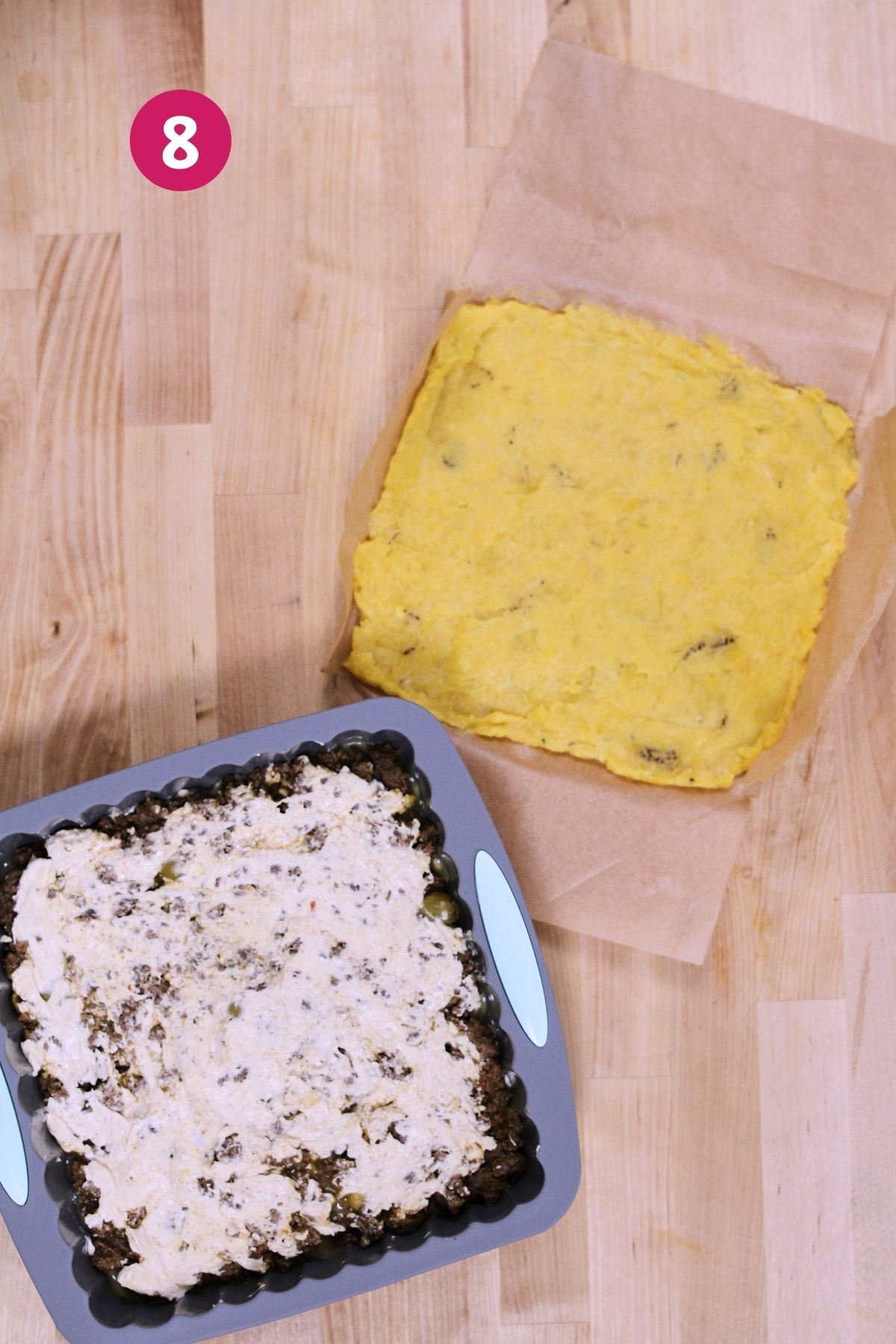
- Second layer of cream cheese. In retrospect, spread the second half of the cream cheese on the plantain top layer. It is significantly easier.
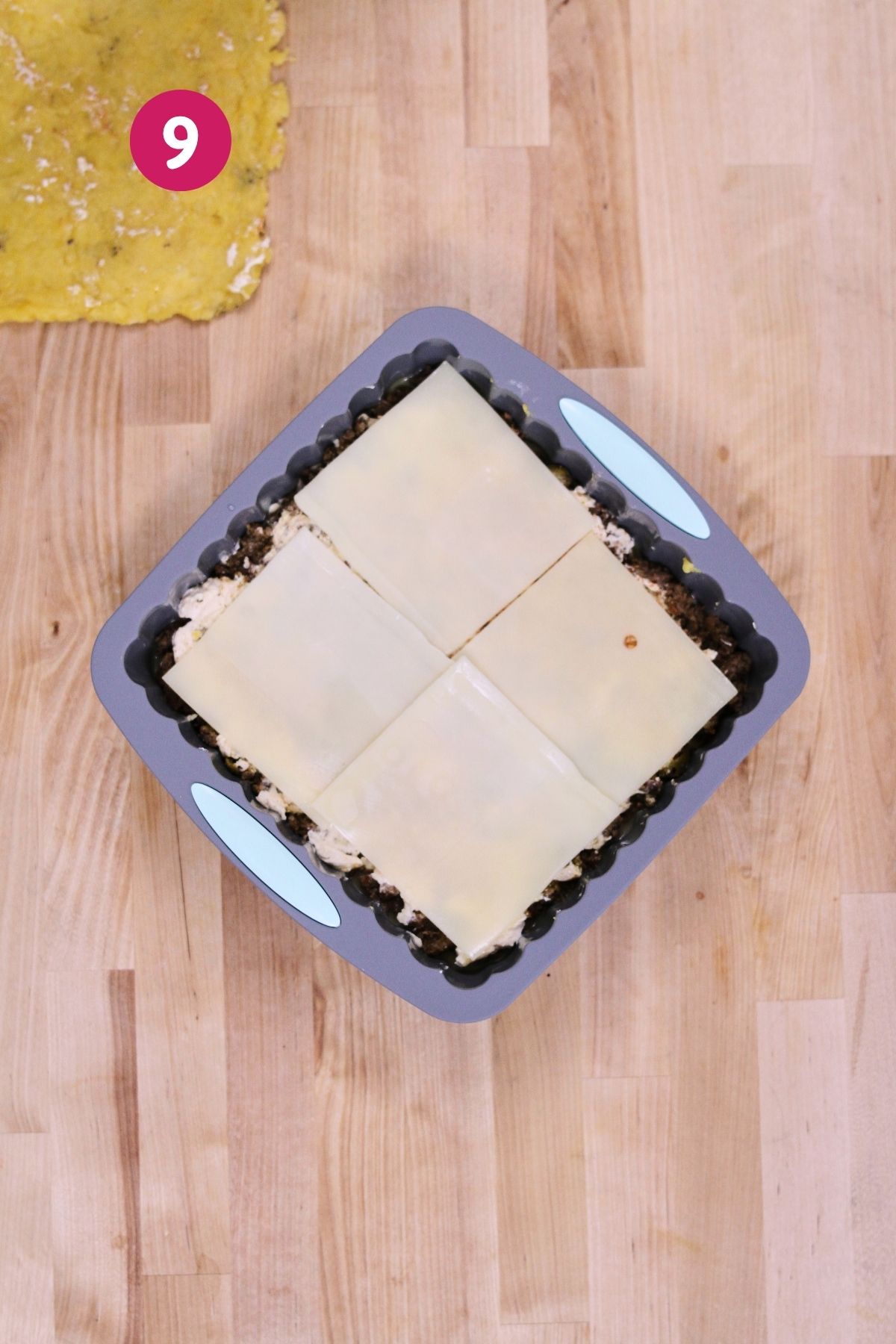
- Add Swiss cheese. Add Swiss cheese or your favorite melty cheese on top of the meat layer.
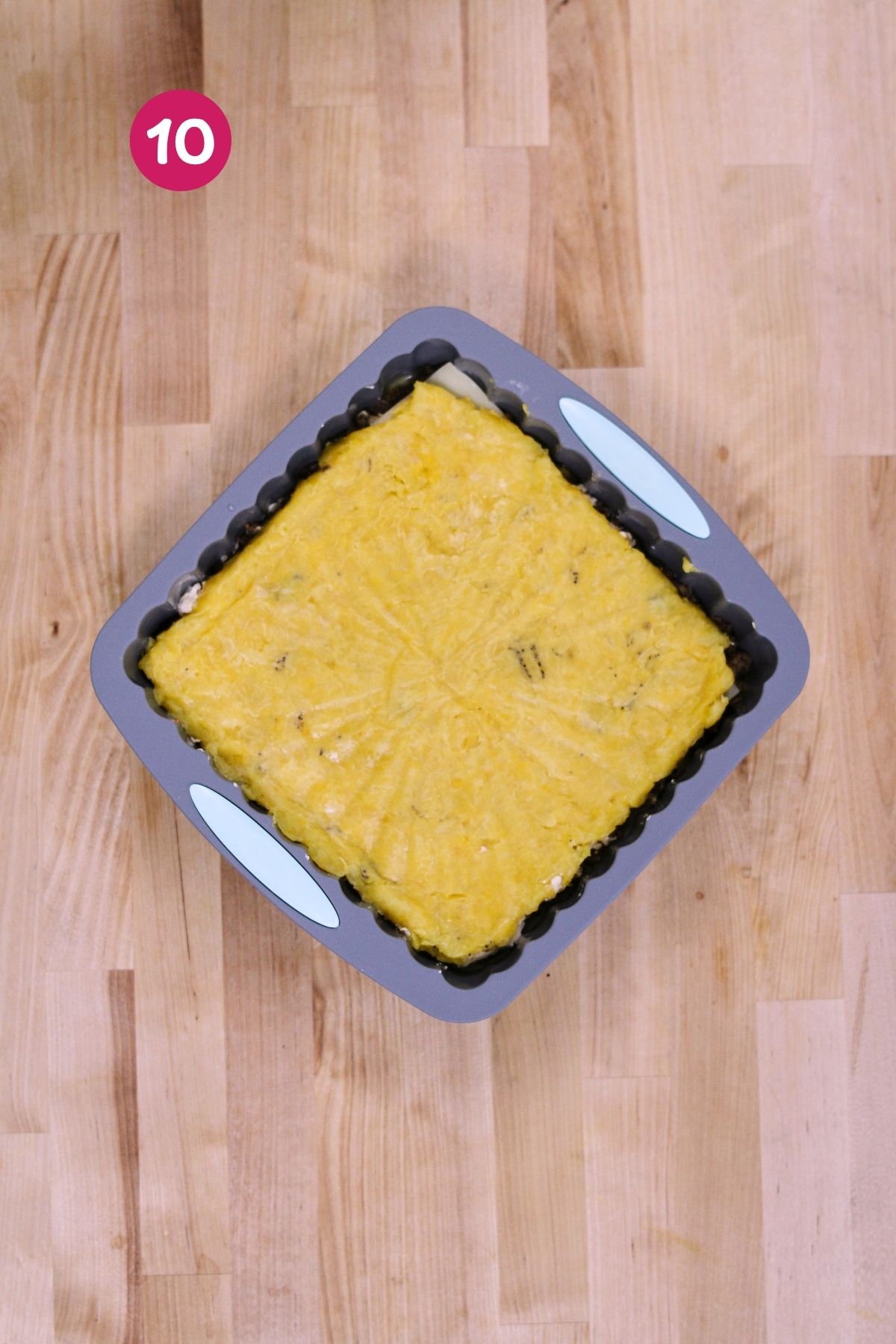
- Close the casserole. Using the parchment paper, flip the second half of the plantain onto the casserole. Press lightly to close it. The egg in the plantain and the cheese mixture will seal the dish in the oven. Bake for 20-30 minutes or until the thermometer reads 165℉.
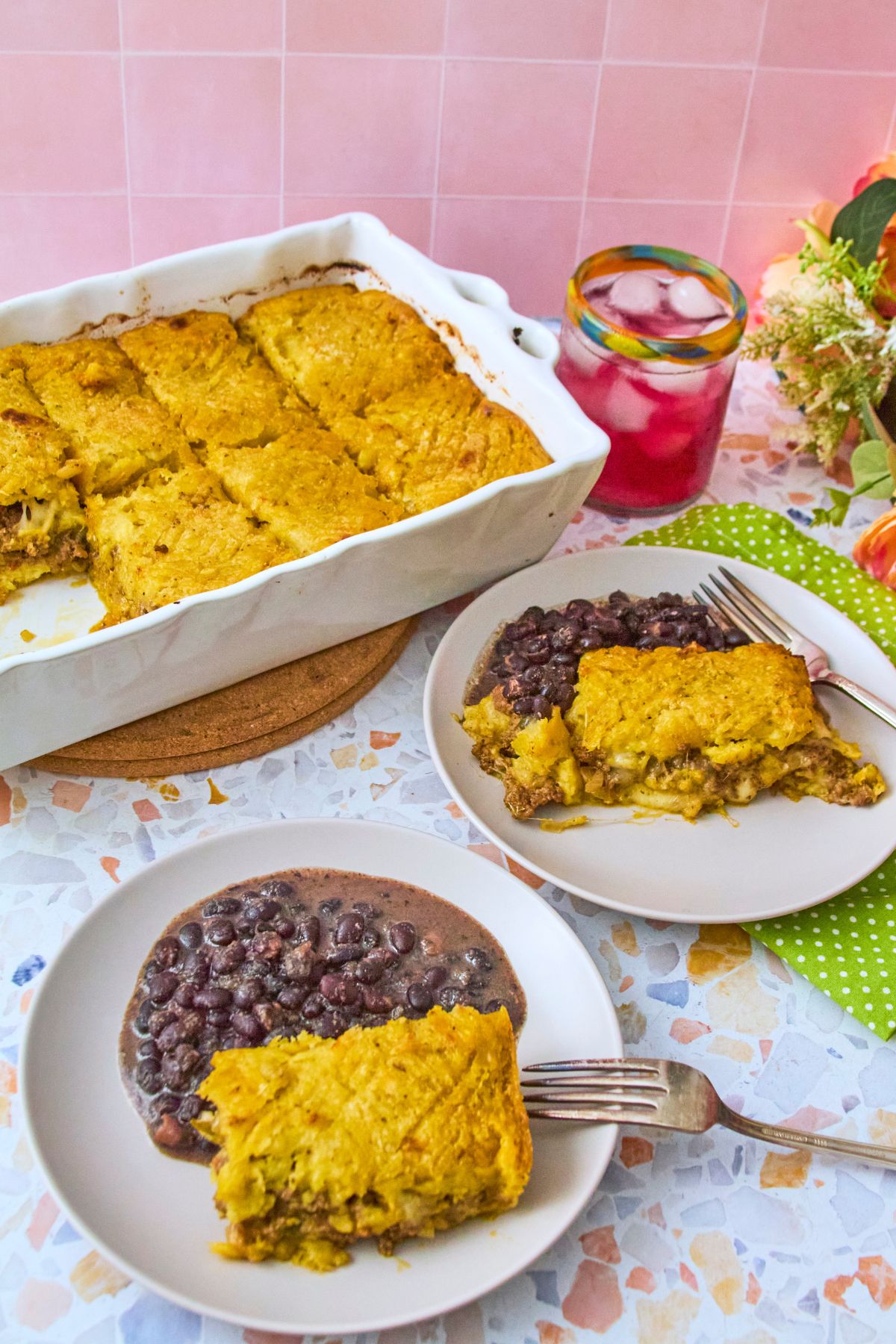
Expert Tips
- Salty water: Placing the cut plantains in salty water before boiling them helps minimize oxidation and neutralize the sap in the plantains.
- Peels on: Leaving the peels on the plantains keeps the plantains' meat bright and colorful.
- Boil, don't fry: The defining technique of pastelón is boiling the plantains before mashing. This keeps the base soft and spreadable, and the natural sugars concentrate without caramelizing into spots that could crack or separate.
- Mixture too loose: Because ripe plantains have higher sugar content, you might end up with a looser mixture that might not set when assembled. Add a tablespoon of flour to the mash mixture to tighten it. The mixture should be soft but hold its shape.
- Make the picadillo ahead: Picadillo reheats well and benefits from sitting overnight. Prepping it the day before means assembly on cooking day is straightforward: mash, layer, bake, enjoy!
- Check ripeness carefully: For pastelón, you want plantains that are sweet all the way through. A green-tinged plantain will produce a starchy, dense mash that won't sweeten properly. Hold out for fully ripe ones with heavy black spotting, or make the pastelon with "pintón" plantains (not quite ripe, yet not green plantains). The casserole will not be as sweet, but it is an alternative.
Recipe FAQs
Pastelón is made with mashed ripe plantains mixed with egg and flour, creating a smooth, pie-like consistency (think Shepherd's pie). Piñón uses sliced, fried ripe plantains layered into a casserole (like a lasagna).
"Pastel" means pie in Spanish. A product comprised of a filling (sweet or savory) surrounded by "dough" or masa. The suffix "ón" signals the size, in this case, a large size since it is made in a baking tin. In comparison, a "pastelillo" with the suffix "illo" means it is smaller in size, like a handled one. The mashed plantain base functions as the crust that encloses the filling, which is why the name fits this version more precisely than the sliced-plantain version.
Yes, and it's actually better for it. Assemble the casserole, refrigerate it unbaked, and bake it the day you plan to serve it. Leftover pastelón reheats well, and the flavors deepen overnight.
It freezes reasonably well after baking. Let it cool completely, wrap tightly, and freeze for up to two months. Thaw overnight in the refrigerator and, using a thermometer, reheat to 165℉ before serving.
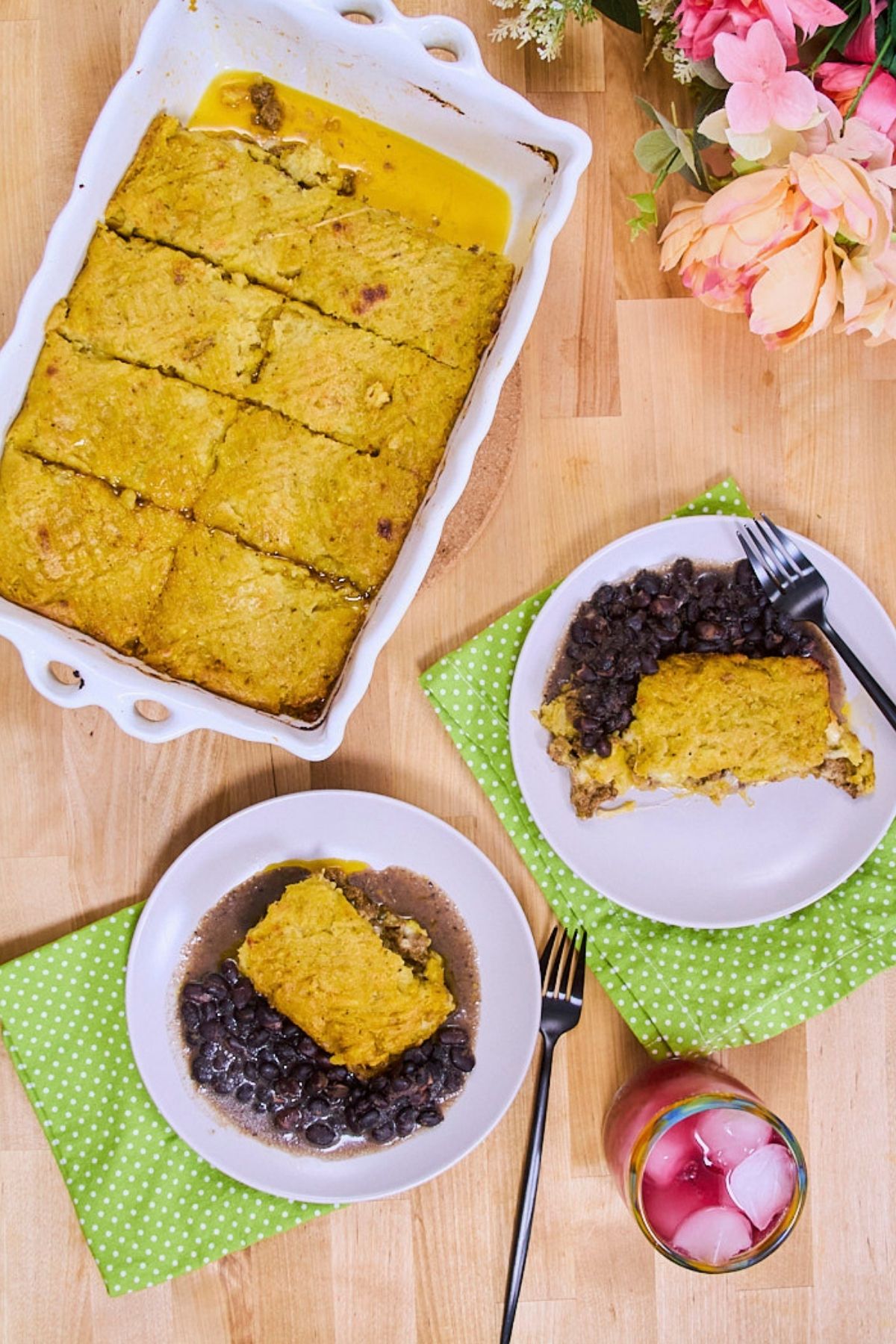
More Traditional Puerto Rican Classic Recipes


Before You Go . . .
Cooked it and loved it? Rate it. Review it. Share it. Your feedback helps others and keeps this blog cooking.
📖 Recipe
Pastelón de Plátano Maduro
Equipment
- 1 9x13 Baking dish for 6-8 plantains (serves up to 10 people)
- 1 8x8 Baking dish for 4-6 plantains (serves about 4 people)
Ingredients
For Picadillo
- 1 lb lean ground beef
- 1 onion peeled and chopped
- 3 sweet chili peppers seeded and chopped
- 1 tablespoon sofrito
- 2 cloves garlic peeled and chopped
- 6 olives
- 1 teaspoon capers
- 1 tablespoon adobo powder
- 1 teaspoon dried oregano
- 1 tablespoon Worcestershire sauce
- ¾ cup tomato sauce
For Mashed Plantain
- 6 cups water
- 2 teaspoon salt
- 6 large ripe plantains amarillos
- 1 egg
- 1 tablespoon flour
- 1 tablespoon adobo powder
- 8 oz cream cheese at room temperature
- 1 cup shredded cheese
- ¼ lb Swiss cheese sliced
Instructions
Ground Beef filling
- In a caldero or heavy kettle, brown the ground beef.1 lb lean ground beef
- Add the onions and sweet chilies and cook until vegetables are translucent.1 onion, 3 sweet chili peppers
- Add the garlic and sofrito and cook until the garlic is tender.1 tbsp sofrito, 2 cloves garlic
- Add olives, capers, oregano, Worcestershire sauce, and tomato sauce. Let it simmer for about 20 minutes or until the meat is tender and flavorful. Set aside or chill overnight to use the next day.6 olives, 1 tsp capers, 1 tsp dried oregano, 1 tbsp Worcestershire sauce, ¾ cup tomato sauce, 1 tbsp adobo powder
Boiling Plantains and Assembling Casserole
- Prepare the Plantains. Bring the water to a boil, then add salt to season the plantains. While we wait for the water to boil, trim the ends of the plantains, score the skin lengthwise, and cut them in half. Place the plantain pieces in salty water while we wait. (Use more water if you need to cover the plantains)3 cups water, 1 tsp Salt, 6 large ripe plantains
- Boil the plantains. Place the ripe plantains, with their peels on, in the pot and boil them in lightly salted water until fork-tender, about 15-20 minutes. Drain thoroughly.3 cups water, 1 tsp Salt
- Mash with egg. Remove the skin from the plantains and mash them while still hot. Beat one egg and mix it into the mash until fully incorporated. Season lightly with salt. The mixture should be mostly smooth with some texture, not chunky. If it is too soft, add a tablespoon of flour to tighten it.1 egg, 1 tbsp flour
- Prep your pan. I like to line a baking pan with parchment paper to add half of the plantain mixture. I press this into the pan, then use the sides of the parchment to lift the half off the pan. This half will be used to close the casserole. Then, I butter or oil the baking dish and add the second half of the mixture.
- Cheese Mixture. Mix cream cheese with shredded cheese and powdered adobo.8 oz cream cheese, 1 cup shredded cheese, 1 tbsp adobo powder
- Start building the casserole. On to the bottom layer, spread the cream cheese mixture.
- Add meat filling. Spread the meat filling over the cream cheese.
- Second layer of cream cheese. In retrospect, spread the second half of the cream cheese on the plantain top layer. It is significantly easier.
- Add Swiss cheese. Add Swiss cheese or your favorite melty cheese on top of the meat layer.¼ lb Swiss cheese
- Close the casserole. Using the parchment paper, flip the second half of the plantain onto the casserole. Press lightly to close it. The egg in the plantain and the cheese mixture will seal the dish in the oven. Bake for 20-30 minutes or until the thermometer reads 165℉.

Notes
The Secret to Perfect Mash
Drain the plantains, but don't let them cool down before mashing or ricing. Hot mash is easier to work with than letting the plantains (or any vegetable that would be mashed) cool down before mashing. The reason is steam; it helps release moisture from the plantain, which prevents the starches from gelatinizing and turning hard.Expert Tips
- Salty water: Placing the cut plantains in salty water before boiling them helps minimize oxidation and neutralize the sap in the plantains.
- Peels on: Leaving the peels on the plantains keeps the plantains' meat bright and colorful.
- Boil, don't fry: The defining technique of pastelón is boiling the plantains before mashing. This keeps the base soft and spreadable, and the natural sugars concentrate without caramelizing into spots that could crack or separate.
- Mixture too loose: Because ripe plantains have higher sugar content, you might end up with a looser mixture that might not set when assembled. Add a tablespoon of flour to the mash mixture to tighten it. The mixture should be soft but hold its shape.
- Make the picadillo ahead: Picadillo reheats well and benefits from sitting overnight. Prepping it the day before means assembly on cooking day is straightforward: mash, layer, bake, enjoy!
- Check ripeness carefully: For pastelón, you want plantains that are sweet all the way through. A green-tinged plantain will produce a starchy, dense mash that won't sweeten properly. Hold out for fully ripe ones with heavy black spotting, or make the pastelon with "pintón" plantains (not quite ripe, yet not green plantains). The casserole will not be as sweet, but it is an alternative.