

Mashed Malanga, or Majado de Malanga, is earthy, creamy, and deeply satisfying. A great alternative to mashed potatoes with a Caribbean twist.
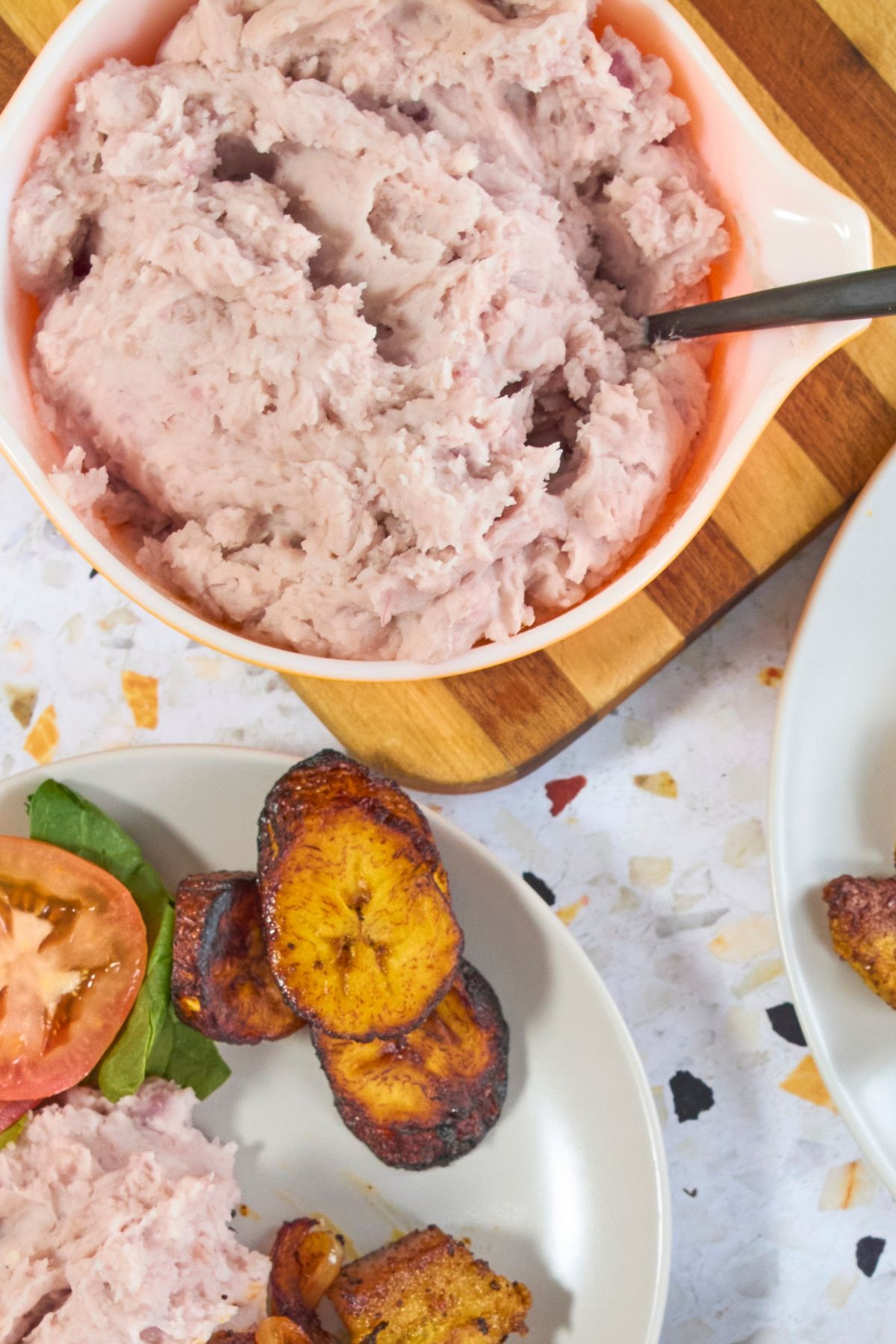
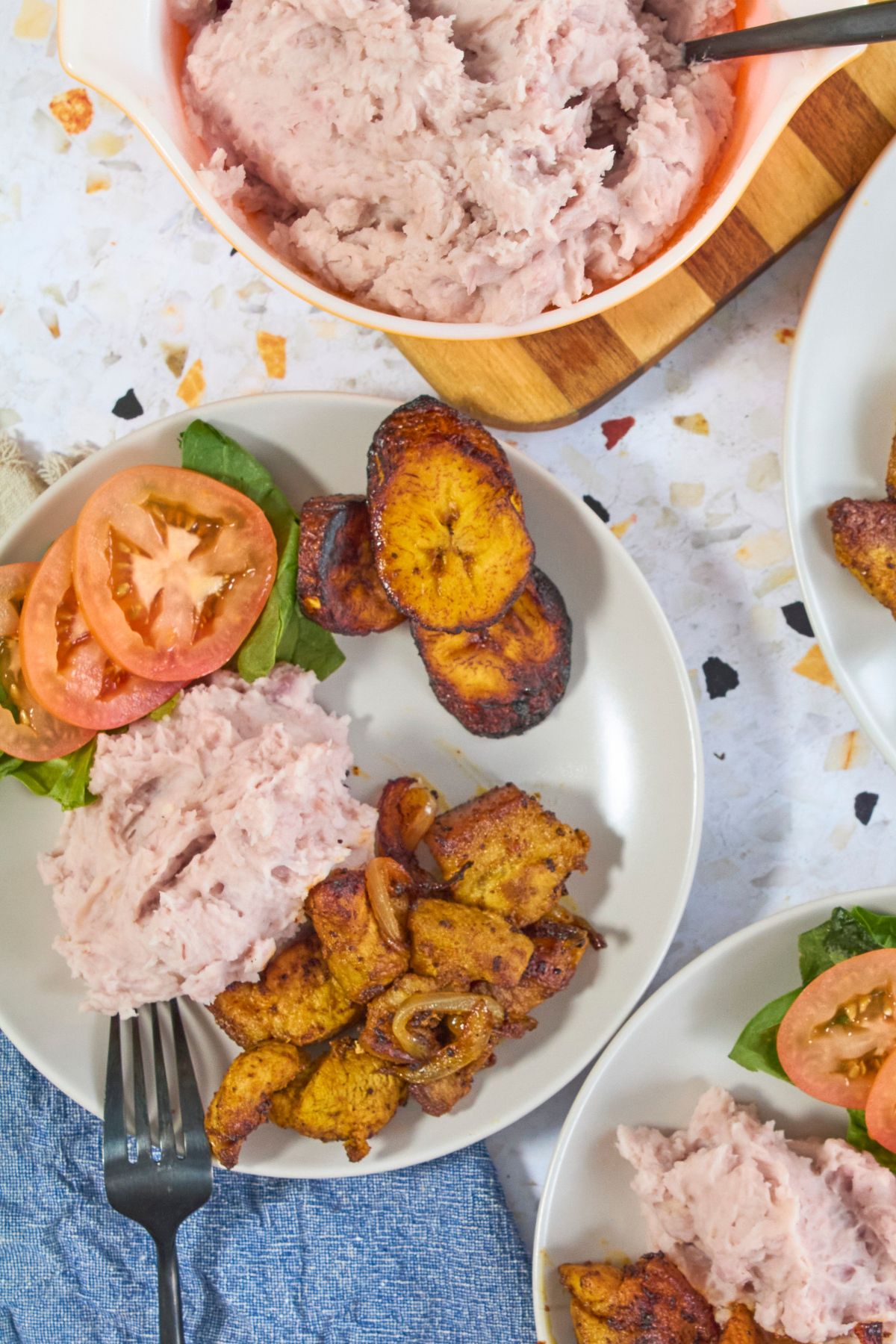
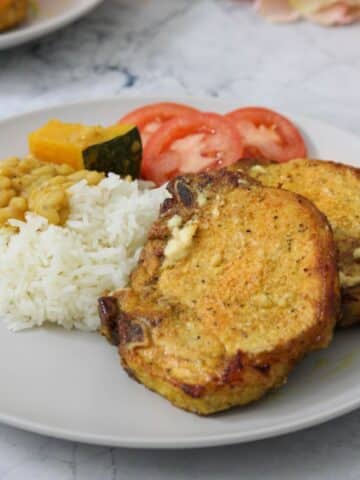
Majado de Malanga is one of those Puerto Rican side dishes that shows up without fanfare and disappears from the table first. Earthy, creamy, and deeply satisfying, it is the kind of comfort food that earns its place next to Bacalao a la Vizcaina, Chuletas Fritas (fried pork chops), Pollo Asado, or Biftec Encebollado.
For more Puerto Rican Side dishes, try Guineitos en Escabeche (green pickled bananas); Funche (Puerto Rican grits); Mampostao (a leftover white rice-and-beans side dish); Mofongo (fried and smashed green plantains with garlic and pork rinds); or Arroz Amarillo (traditional yellow rice).
Jump To
Why you'll love this recipe
- Simple: Boil, mash, season. Majado de malanga comes together with minimal ingredients and no special equipment. If you can make mashed potatoes, you can make this.
- Better than mashed potatoes: Malanga has a naturally sweet, faintly floral flavor that potatoes simply lack. The texture is creamier, the taste is more interesting, and it carries garlic and butter beautifully.
- Genuinely nutritious: Malanga is a good source of fiber, potassium, magnesium, calcium, and iron, as well as vitamin B6, folate, and beta-carotene. For a starchy comfort food, it earns its place on the plate.
- A taste of Puerto Rico: This is the kind of dish that shows up at Sunday tables and family gatherings without fanfare. Comfort food with roots, literally.
What is Malanga?
Malanga is a large starchy corm and one of the viandas, the root vegetables that anchor Puerto Rican cooking. Botanically known as Colocasia esculenta, it is the same plant known worldwide as taro, originally cultivated in tropical Asia before spreading throughout the Caribbean. In the Dominican Republic, it is called yautía coco; in Cuba, the word malanga refers to what Puerto Rico calls yautía, a different plant entirely, which is why you will occasionally see yautía coco on labels in Puerto Rican supermarkets, a nod to the island's large Cuban and Dominican communities.
At the market, look for:
- An oblong corm, four to eight inches long
- Rough, semi-hairy exterior, the color of dark bark
- Firm flesh with even skin color and no soft spots
- Pale cream to white flesh with a soft pink or mauve tinge inside
Like all members of the Araceae family, malanga contains calcium oxalate and must always be fully cooked before eating. Cooked, it is sweet, creamy, and faintly floral. It softens beautifully but demands attention: boil it too long, and it will dissolve. At my grandmother's table, it was always the first thing gone.
Ingredient Notes
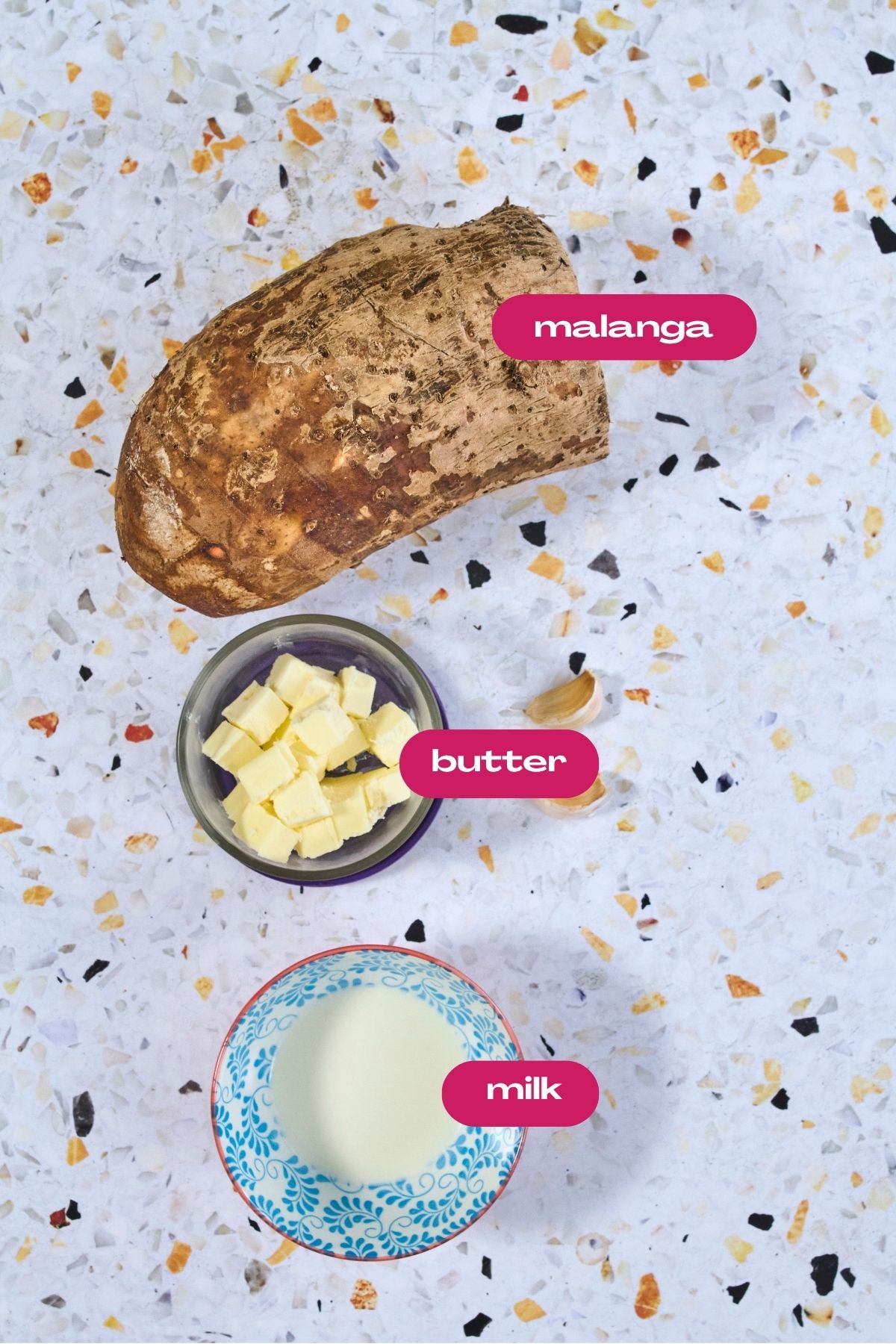
- Malanga: Because of its floral bouquet and natural creaminess, this tuber is perfect for a mash that complements any protein on the table.
- Garlic: Enhances malanga's natural sweetness and adds a savory element to the dish.
- Butter: Adds fat that carries the malanga's creaminess and creates a cohesive texture throughout.
See my recipe card below for a complete list of the ingredients with measurements.
Variations and Substitutions
- Roasted Garlic: Roasted garlic is sweet and soft, making it easy to incorporate into the mash. The sweetness of the garlic will pair well with the malanga's nutty, floral notes.
- Yautía: The natural substitution for malanga (also sold as yautía coco, cocoyam, or taro). Yautía comes in several varieties, including white, yellow, and purple (lila). It has a similar creamy texture and floral bouquet since both belong to the same Araceae family.
- Coconut Milk: Any mashed vianda needs a little liquid to help it come together. If you do not buy milk regularly, coconut milk works beautifully here. It enhances the Caribbean flavors and accentuates the malanga's natural sweetness and floral notes. Trust me, it will be delicious.
- Oils: If you prefer not to use butter, coconut oil or olive oil are good alternatives. You will lose some of the richness that milk fat provides, but the mash will still be flavorful and cohesive.
- Other Root Vegetables: Yuca, ñame, or sweet potato would all work as substitutes, though each brings its own flavor profile and texture to the dish.
Not all variations or substitutions have been tested. If you try any of them, please let me know in the comments.
Top Tip
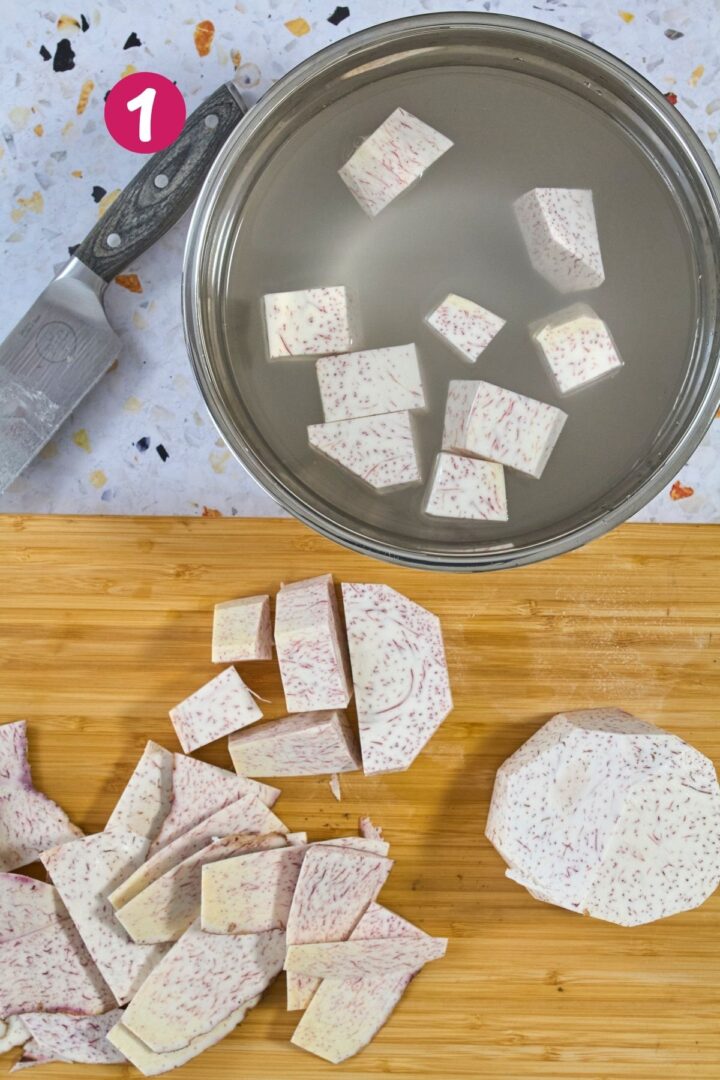
Malanga is naturally sticky and can feel slimy when cut, thanks to its calcium oxalate content. Keeping the cubes in lightly salted water while you prep reduces that sliminess and prevents browning.
How to make this recipe
Wash the Malanga as you would a potato. Set them aside to drain or dry them with a paper towel before you begin. Have butter and milk at room temperature before beginning.
Step 1
Cut the ends off the malanga and stand it upright on the flat end. If one end tapers, place it at the top for better stability. Using a knife, cut downward to remove the skin, staying as close to the skin as possible. Once peeled, cut into 1-2-inch cubes and place in a bowl of lightly salted water.
Step 2
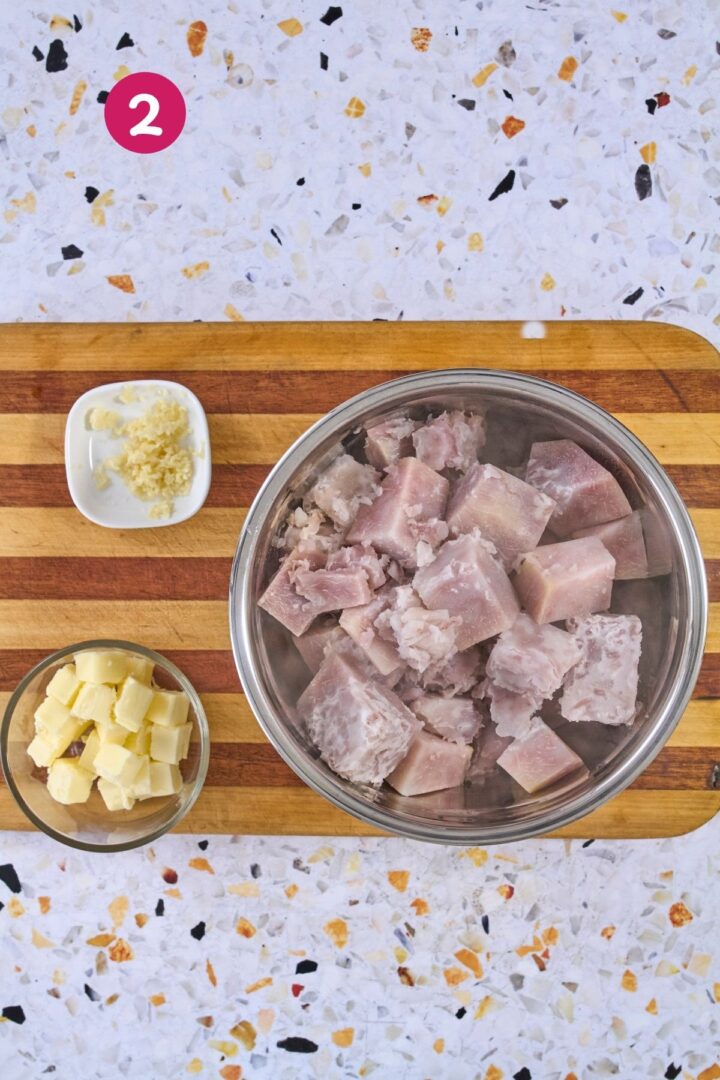
Drain the malanga and place it in a pot. Cover with cold salted water and bring to a boil over medium-high heat. Cook for 20 minutes or until a fork inserted into a cube slides off cleanly. The flesh will deepen to a more saturated lilac color throughout. Drain well.
Step 3
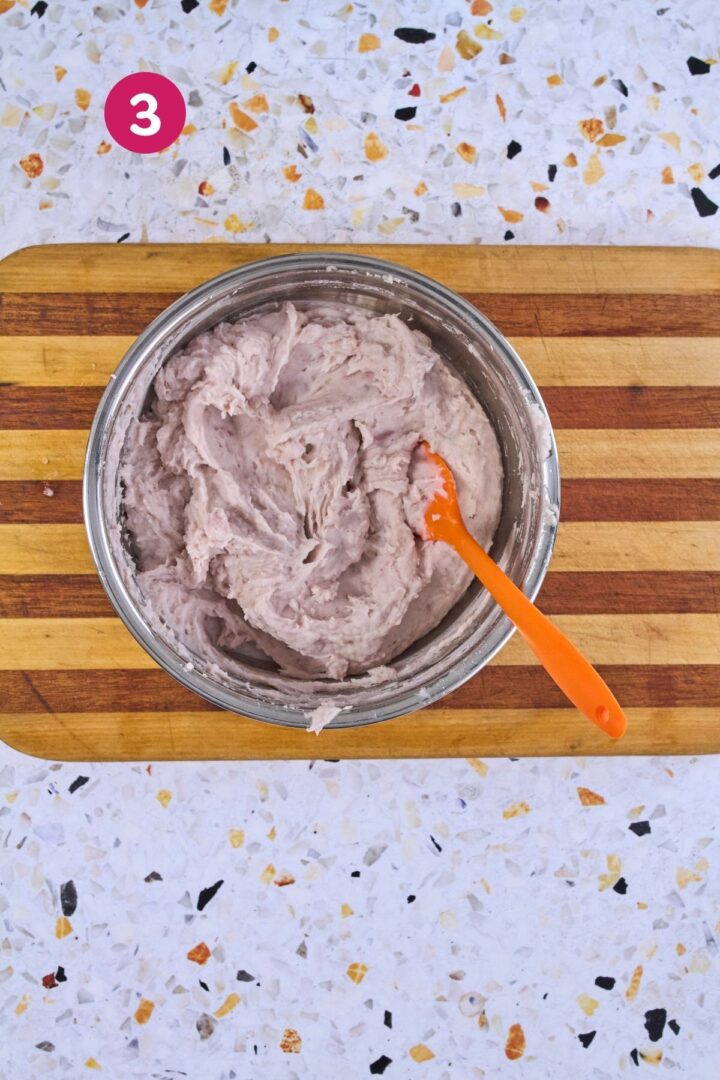
Return the malanga to the pot or a serving bowl, then mash lightly, or use a potato ricer for a more even mash. Add the minced garlic and butter and mash to combine. Add warm milk little by little, mashing as you go, until you reach your desired consistency. Season with salt to taste.
Expert Tips
- Wash your malanga first: Malanga grows in the ground and holds onto dirt in its rough, hairy skin. Rinse it well before you start peeling, or your cutting board will turn muddy mid-prep.
- Watch the color: As the malanga boils, the flesh will deepen from pale pink to a more saturated lilac. This color change is a visual cue that the corm is nearly done, though always confirm with a fork test.
- Use room temperature butter and warm milk: Cold butter and cold milk cause the mash to seize, resulting in a gluey, uneven texture. Pull your butter out ahead of time and warm your milk before adding it little by little.
- Try a ricer: For a smoother, more refined texture, pass the cooked malanga through a potato ricer before adding the garlic, butter, and milk.
- Inspect before you mash: Minor bruising or slight discoloration can be trimmed away. If the flesh shows large dark patches, soft spots, or an off smell, discard that section entirely.
- Garlic your way: Raw minced garlic gives the mash a sharp, savory bite that mellows as it incorporates into the hot malanga. For a sweeter, more mellow result, try roasted or confit garlic instead.
Recipe FAQs
You can, but proceed with caution. Malanga can turn gummy very quickly when over-processed. If using an immersion blender or food processor, work in short pulses and stop as soon as the mash comes together. A hand masher or potato ricer gives you the most control and the best rustic texture.
This is completely normal. Malanga contains natural pigments that deepen when the corm is cooked, giving the mash a soft lilac or dusty rose hue. The color intensity varies depending on the corm. It has no effect on flavor and is one of the things that makes majado de malanga visually unlike anything else on the table.
No. Like all members of the Araceae family, malanga contains oxalate crystals that are toxic when consumed raw. Cooking neutralizes the compound completely. Always boil, roast, or otherwise fully cook malanga before eating.
In Puerto Rico, malanga refers to Colocasia esculenta, which is the same plant known globally as taro. So yes, Puerto Rican malanga and taro are the same. The confusion runs deeper across the Caribbean: in Cuba and parts of Latin America, the word malanga refers to Xanthosoma, which is what Puerto Rico calls yautia. Two different plants, same name, depending on which island you are on. On the Puerto Rican market shelf, malanga and yautia are distinct: malanga is the large, round to oblong corm, and yautia is the smaller, fingerling variety.
Store leftovers in an airtight container in the refrigerator for up to three days. Mashed malanga thickens considerably as it cools. To reheat, add a splash of warm milk and stir over low heat until loosened to your preferred consistency. It does not freeze well as the texture breaks down upon thawing.
It depends on which malanga and which health metric you are looking at. Compared to a white potato, taro (Puerto Rico's malanga) offers more fiber, nearly five times more calcium, more potassium, and a lower glycemic index. Keeps you full longer. Xanthosoma sagittifolium, or Puerto Rico's yautía, has been studied as a medicinal food for infant development and digestive health, and has been shown to support gut microbiome diversity (good bacteria) compared with a potato diet. Which will come as no surprise to Puerto Rican families who have been mashing viandas as a baby food for generations. However, the same study found a higher blood sugar response than potato, so it is not the right swap for everyone. For most people, eating it as a traditional side dish in reasonable portions, malanga (taro or yautia) is a nutritious and flavorful alternative worth adding to your rotation.
More Sides and Salads Recipes
- How To Cook Dried Beans
- Mamposteao, a Puerto Rican Leftover Rice Comfort Food
- 11 Puerto Rican Rice Dishes you'll make on Repeat
- Funche, Puerto Rican Grits



Before You Go . . .
Cooked it and loved it? Rate it. Review it. Share it. Your feedback helps others and keeps this blog cooking.
📖 Recipe
Mashed Malanga (Majado de Malanga)
Equipment
- 1 potato ricer
Ingredients
- 2 lbs malanga peeled and chopped
- 1 qrt salted water for cleaning the malanga and boiling
- 3 tablespoon butter or olive oil
- 2 cloves garlic minced or grated
- ½ teaspoon salt or to taste
- ¼ cup milk or at room temperature (adjust for desired consistency)
Instructions
- Cut the ends off the malanga and stand it upright on the flat end. If one end tapers, place it at the top for better stability. Using a knife, cut downward to remove the skin, staying as close to the skin as possible. Once peeled, cut into 1-2-inch cubes and place in a bowl of lightly salted water.½ qrt salted water, 2 lbs malanga
- Drain the malanga and place it in a pot. Cover with cold salted water and bring to a boil over medium-high heat. Cook for 20 minutes or until a fork inserted into a cube slides off cleanly. The flesh will deepen to a more saturated lilac color throughout. Drain well.½ qrt salted water
- Return the malanga to the pot or a serving bowl, then mash lightly, or use a potato ricer for a more even mash. Add the minced garlic and butter and mash to combine. Add warm milk little by little, mashing as you go, until you reach your desired consistency. Season with salt to taste.3 tbsp butter, 2 cloves garlic, ½ tsp salt, ¼ cup milk

Notes
Expert Tips
- Wash your malanga first: Malanga grows in the ground and holds onto dirt in its rough, hairy skin. Rinse it well before you start peeling, or your cutting board will turn muddy mid-prep.
- Watch the color: As the malanga boils, the flesh will deepen from pale pink to a more saturated lilac. This color change is a visual cue that the corm is nearly done, though always confirm with a fork test.
- Use room temperature butter and warm milk: Cold butter and cold milk cause the mash to seize, resulting in a gluey, uneven texture. Pull your butter out ahead of time and warm your milk before adding it little by little.
- Try a ricer: For a smoother, more refined texture, pass the cooked malanga through a potato ricer before adding the garlic, butter, and milk.
- Inspect before you mash: Minor bruising or slight discoloration can be trimmed away. If the flesh shows large dark patches, soft spots, or an off smell, discard that section entirely.
- Garlic your way: Raw minced garlic gives the mash a sharp, savory bite that mellows as it incorporates into the hot malanga. For a sweeter, more mellow result, try roasted or confit garlic instead.


Zoe Forestier Villegas says
Creamy and slightly sweet.