

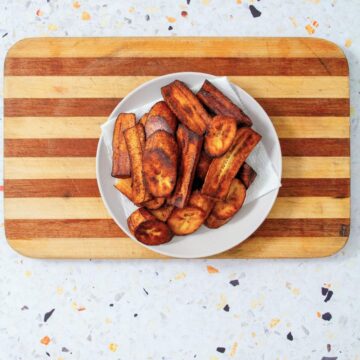
Amarillos, or Puerto Rican fried sweet plantains, are one of the simplest and most beloved side dishes on the island. Made from ripe plantains fried until golden and caramelized, they bring the perfect balance of sweet and savory to the plate.
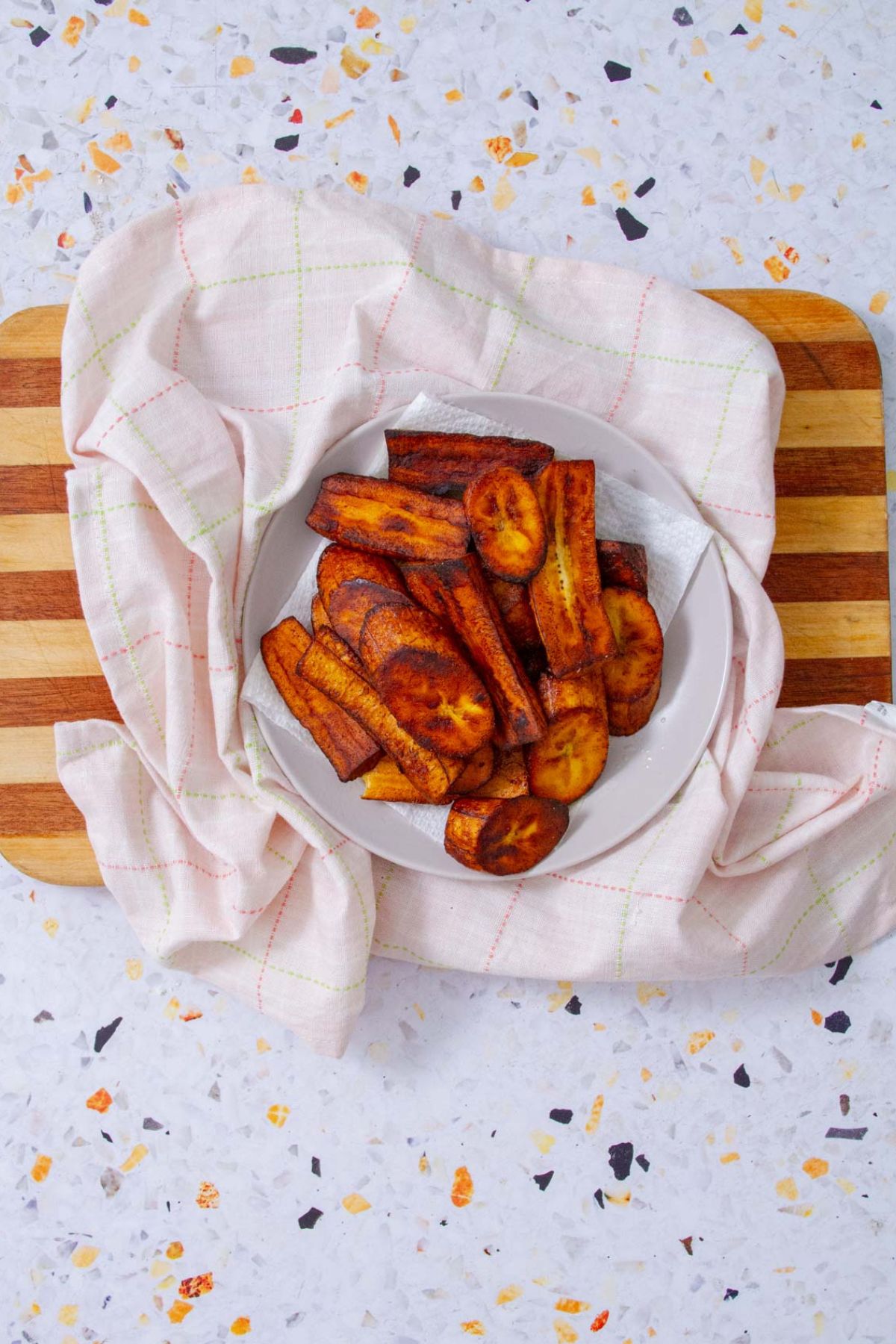
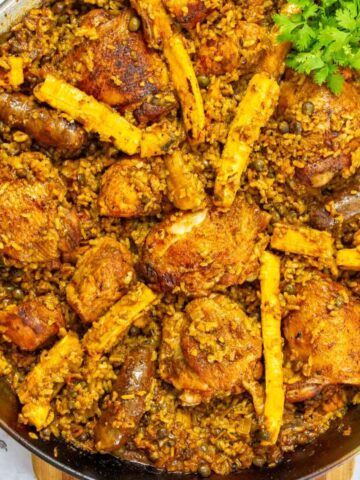
Amarillos could be found served alongside classics like Arroz con Habichuelas (rice cooked with red beans), Carne Guisada (Puerto Rican-style beef stew), Ropa Vieja (a shredded, Cuban-inspired beef stew), or Chuletas Fritas (pan-seared pork chops), but they're just as delicious on their own as a quick snack.
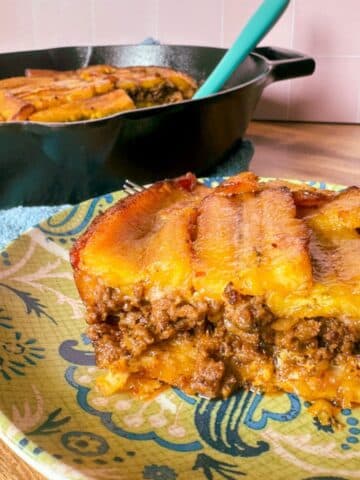
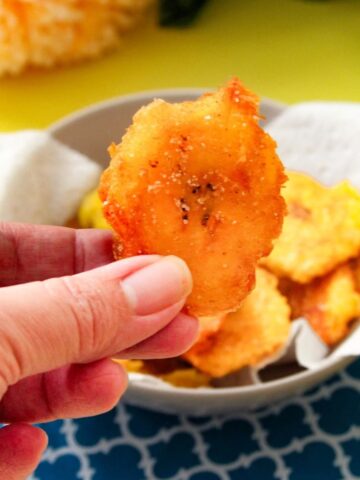
If you're looking for more plantain dishes and accompaniment recipes, check out Tostones, double-fried and smashed plantains. Mofongo, same concept as tostones, but at a higher level. These are mashed with pork rinds, garlic, and butter for a unique flavor. For a showstopper main entree, Pastelón, a mashed sweet plantain casserole stuffed with ground beef and cheeses.
Jump To
Why you'll love this recipe
- Quick and easy: In just minutes, fried plantains can add an authentic Puerto Rican touch to your meal.
- Perfect for ripe plantains: When those green plátanos ripen, this is the best way to put them to good use.
- Always a crowd favorite: Kids and adults alike can't resist their sweet, caramelized flavor.
- Pairs with almost anything: Their natural sweetness balances savory mains-think pastelón, the Puerto Rican cottage pie layered with sweet plantains, ground beef, and cheese.
Ingredient Highlight
What are Amarillos
Amarillos are ripe plantains sliced and fried until golden brown and caramelized. The name means "yellows" in Spanish, a nod to the bright yellow skin of a ripe plantain. You'll also hear them called maduros or plátanos maduros fritos, especially on restaurant menus across Latin America. What do you call them where you're from? Leave a comment below!
Ripeness is everything with plantains. They move through three stages: green (verde), where they're starchy and savory and best for tostones or mofongo; pinto (painted), the in-between stage where the skin is streaked or "painted" with yellow and green, and the sweetness is just starting to develop. Pinto plantains can still be used for tostones and mofongo, but expect a hint of sweetness. And ripe (maduro or amarillo), when the skin turns yellow-orange with brown speckles and the sugars are fully developed. For a deeper look at how Puerto Ricans use plantains at every stage, visit my guide to guineos, plátanos, and banana leaves.
Ingredient Notes
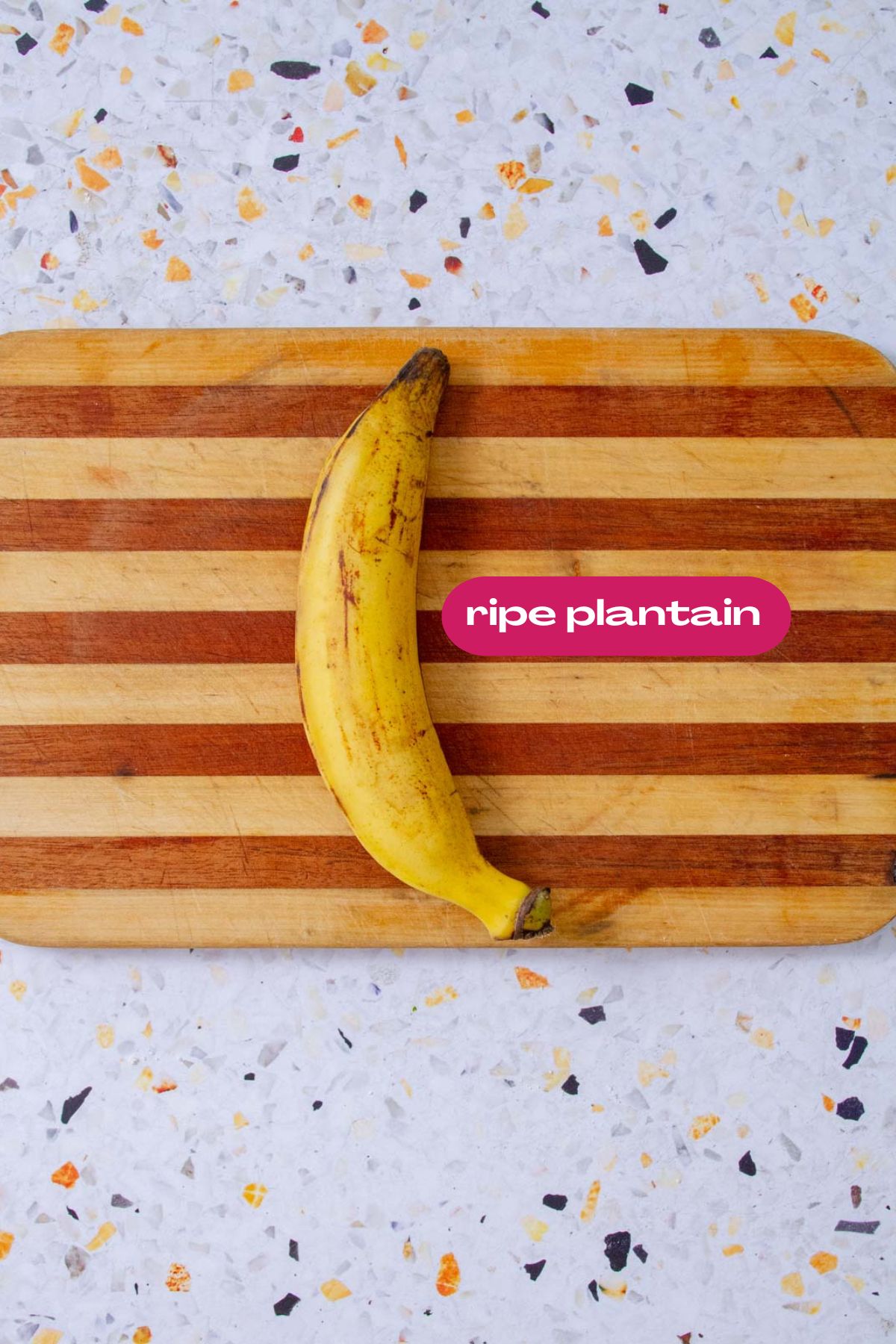
- Ripe plantains: Plantains ripen like bananas, from green to yellow to black. For amarillos, look for bright yellow or orange-yellow skins with brown speckles. The spottier the skin, the sweeter the plantain, and the faster it can caramelize (and burn) in the oil.
- Oil: Use a neutral frying oil. Vegetable or canola oil works well, but peanut oil gives a richer flavor when available.
See my recipe card below for a complete list of the ingredients with measurements.
Top Tip
The spottier the plantain, the sweeter the flavor, but also the quicker it can burn. Maintain a steady heat and keep a close watch.
How to make Amarillos
Heat the oil: Add enough oil to cover the plantains. Heat until hot but not smoking (325-350°F).
Step 1
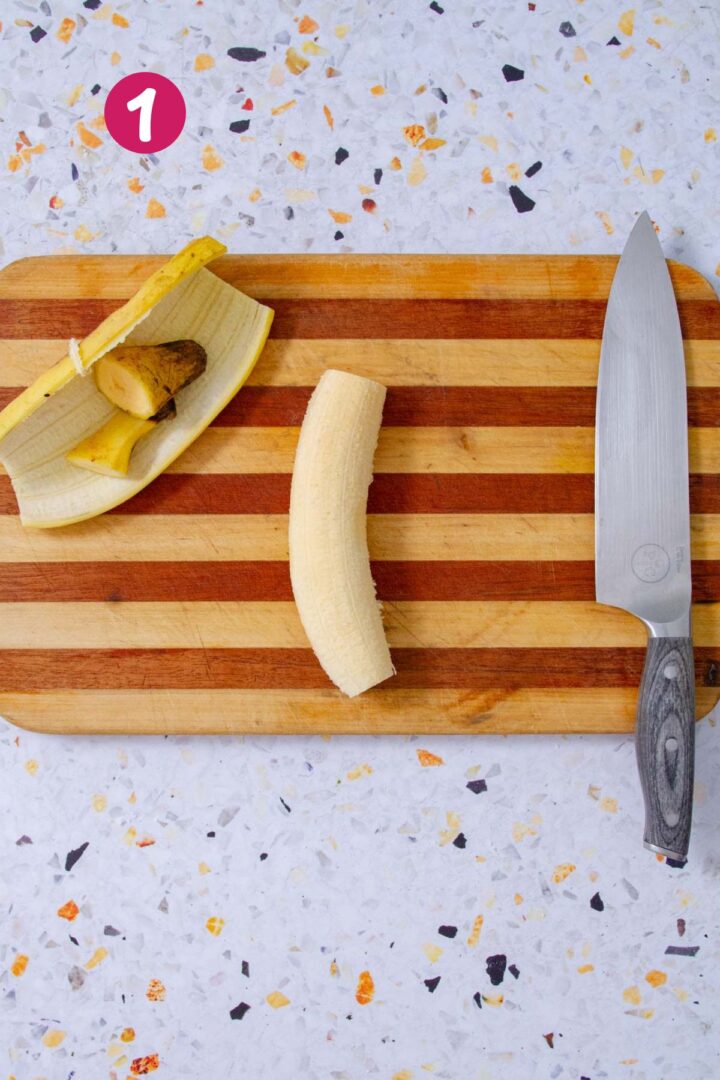
Peel the plantains: Trim both ends, then score the skin lengthwise from top to bottom, being careful not to cut into the flesh. Use the tip of your knife to lift and peel the skin away. Ripe plantains are easier to peel than green ones, but the scored-skin method works at any stage. For a full walkthrough, see my guide to guineos, plátanos, and banana leaves.
Step 2
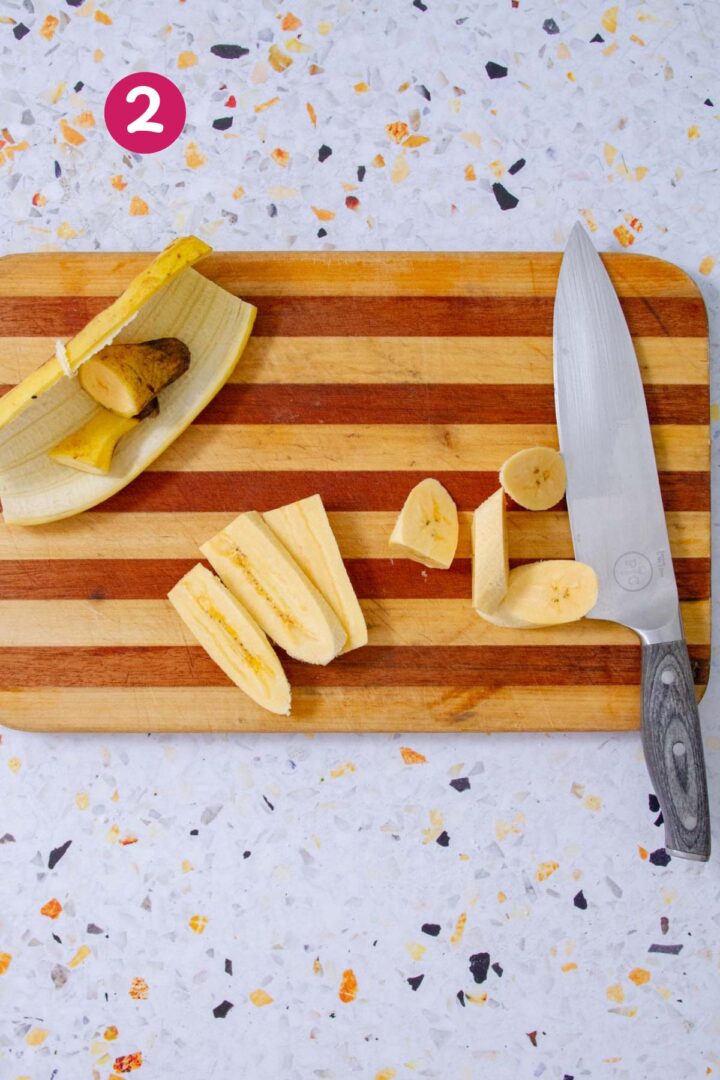
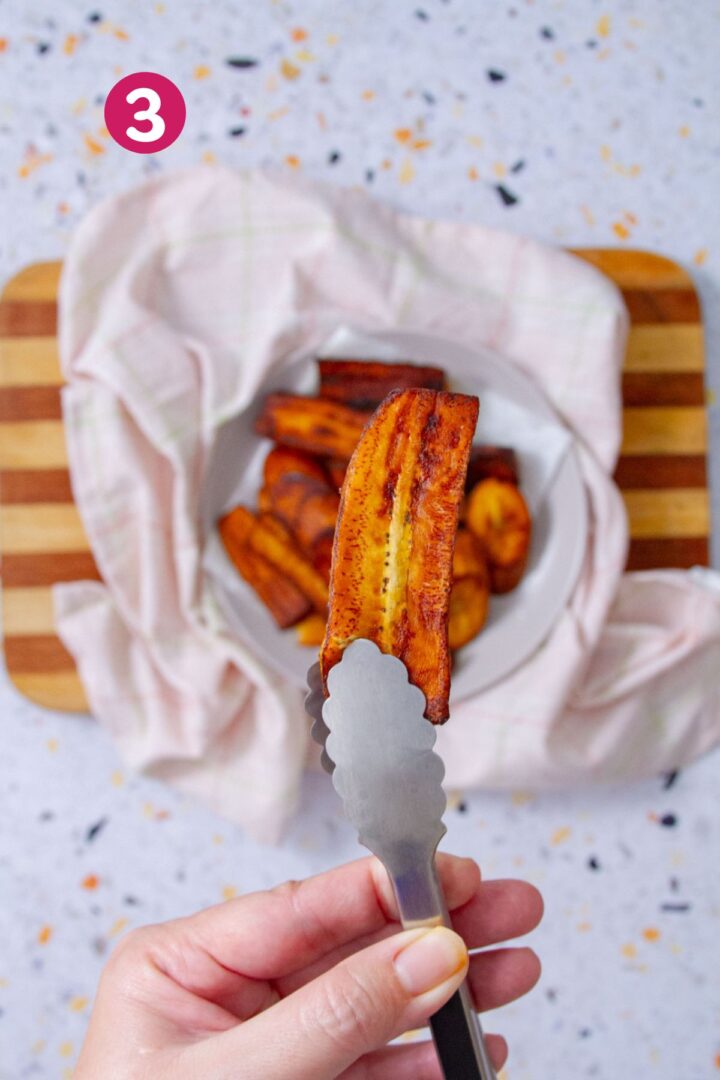
Cut the plantains into 1-inch discs at a bias or into thirds lengthwise. Each plantain yields about eight pieces, enough to serve roughly two people.
Step 3
Carefully place the slices in the hot oil, being mindful not to overcrowd them. Fry until golden brown. This happens quickly, so keep a close eye on them.
Step 4
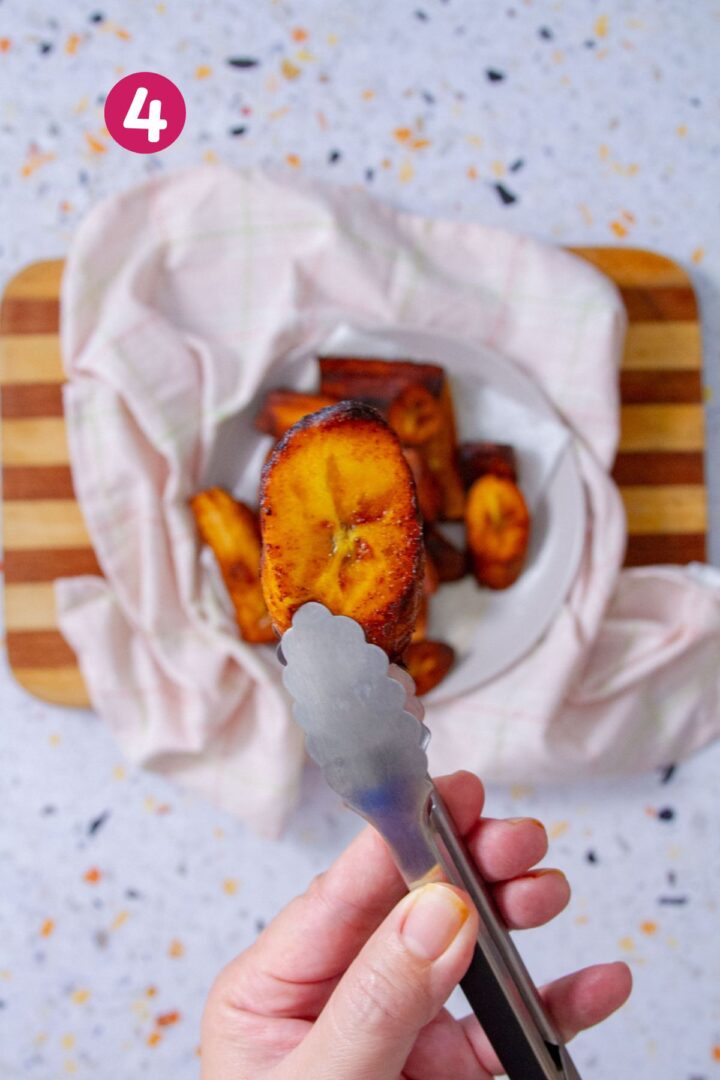
Transfer to a paper towel-lined plate to absorb excess oil. Plan on serving 2-4 per person.
Expert Tips
- Sap: Ripe plantains have less sap than green ones, but if you're concerned about staining, a little oil on your hands before you start helps.
- Choose your ripeness wisely: Yellow with a few spots gives you sweetness without too much risk of scorching. Fully blackened plantains are best suited for extra-sweet desserts, rather than frying.
- Control the oil temperature: If the oil is too cool, plantains absorb it and become greasy; if it's too hot, they burn before cooking through. Test one piece to gauge your heat. You want an even bubble as the plantain fries with no smoke.
- Batch frying is preferable: Overcrowding lowers the oil temperature, causing steaming instead of crisping. Fry in small batches for the best caramelization.
- Flip halfway: Turning the discs ensures even browning on both sides. But do allow the plantains to fry on one side for at least a minute before flipping. Continuous flipping extends cooking time and, in my mind, almost creates steam.
- Plan ahead for ripeness: If you can only find green plantains, there are two reliable ways to ripen them. The fastest method: place them in a paper bag for a few days, and check regularly. The trapped ethylene speeds ripening. If you have more time, simply leaving them on the counter works just as well. How quickly they ripen depends on your climate; in the heat and humidity of Puerto Rico and Florida, counter-ripening can happen faster than you'd expect.
Recipe FAQs
Amarillos are ripe plantains sliced and fried until golden brown and caramelized. The name means 'yellows' in Spanish. They're also called maduros or plátanos maduros fritos across Latin America. For amarillos, you want plantains at the ripe stage; yellow-orange skin with brown speckles, and fully developed sugars.
Tostones are made from green, unripe plantains that are fried twice for a crispy, savory bite. Amarillos are made from ripe plantains and fried once, giving them a soft, sweet, caramelized flavor.
The quickest way is to place green plantains in a paper bag for a few days and check them regularly. The enclosed space traps ethylene gas that plantains naturally emit, which speeds up ripening. If you're not in a hurry, leaving them on the counter works just as well. Buying them a few days before you plan to cook is the simplest approach. Keep in mind that how fast they ripen depends on where you live; in a warm, humid climate, they'll be ready sooner than in a cooler, drier one.
Plantains are now carried at many major supermarkets, usually in the produce section near the bananas. For the widest selection and best prices, check Latin specialty grocery stores and bodegas, where you can often find them at various stages of ripeness.
No, plantains are not keto-friendly. However, unlike the simple carbs found in processed foods, plantains contain fiber and complex carbohydrates that digest more slowly, and keep you fuller longer. That said, they are a whole, unprocessed food and a traditional part of Puerto Rican cuisine. A few pieces alongside a balanced plate is how they've always been enjoyed on the island.

Before You Go . . .
Cooked it and loved it? Rate it. Review it. Share it. Your feedback helps others and keeps this blog cooking.
📖 Recipe
Amarillos (Puerto Rican Fried Sweet Plantains)
Equipment
- 1 saute pan
Ingredients
- 1 whole plantain
- 1.5 cups vegetable oil for frying enough to cover or almost cover the plantain slices
Instructions
- Heat the oil: Add enough oil to cover the plantains. Heat until the oil is hot but not smoking (325-350℉).
- Peel the plantains: For tips, see my post on guineos, platanos, and banana leaves.
- Slice: Cut the plantains into 1-inch discs. Each plantain yields about eight pieces, enough to serve roughly two people.
- Fry: Carefully place the slices in the hot oil, being mindful not to overcrowd them. Fry until golden brown. This happens quickly, so keep a close eye on them.
- Drain: Transfer to a paper towel-lined plate to absorb excess oil.
- Serve: Plan on 3-4 pieces per person.

Notes
Expert Tips
- The spottier the plantain, the sweeter the flavor, but also the quicker it can burn. Maintain a steady heat and keep a close watch.
- Sap: Ripe plantains have less sap than green ones, but if you're concerned about staining, a little oil on your hands before you start helps.
- Choose your ripeness wisely: Yellow with a few spots gives you sweetness without too much risk of scorching. Fully blackened plantains are best suited for extra-sweet desserts, rather than frying.
- Control the oil temperature: If the oil is too cool, plantains absorb it and become greasy; if it's too hot, they burn before cooking through. Test one piece to gauge your heat. You want an even bubble as the plantain fries with no smoke.
- Batch frying is preferable: Overcrowding lowers the oil temperature, causing steaming instead of crisping. Fry in small batches for the best caramelization.
- Flip halfway: Turning the discs ensures even browning on both sides. But do allow the plantains to fry on one side for at least a minute before flipping. Continuous flipping extends cooking time and, in my mind, almost creates steam.
- Plan ahead for ripeness: If you can only find green plantains, there are two reliable ways to ripen them. The fastest method: place them in a paper bag for a few days, and check regularly. The trapped ethylene speeds ripening. If you have more time, simply leaving them on the counter works just as well. How quickly they ripen depends on your climate; in the heat and humidity of Puerto Rico and Florida, counter-ripening can happen faster than you'd expect.

Zoe Forestier Villegas says
This is one easy side that everyone will love.