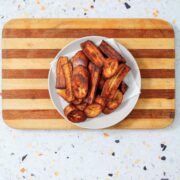
Amarillos (Puerto Rican Fried Sweet Plantains)
Made from ripe plantains fried until golden and caramelized, they bring the perfect balance of sweet and savory to the plate.
Servings: 8 pieces
Calories: 361kcal
Equipment
- 1 saute pan
Ingredients
- 1 whole plantain
- 1.5 cups vegetable oil for frying enough to cover or almost cover the plantain slices
Instructions
- Heat the oil: Add enough oil to cover the plantains. Heat until the oil is hot but not smoking (325-350℉).
- Peel the plantains: For tips, see my post on guineos, platanos, and banana leaves.
- Slice: Cut the plantains into 1-inch discs. Each plantain yields about eight pieces, enough to serve roughly two people.
- Fry: Carefully place the slices in the hot oil, being mindful not to overcrowd them. Fry until golden brown. This happens quickly, so keep a close eye on them.
- Drain: Transfer to a paper towel-lined plate to absorb excess oil.
- Serve: Plan on 3-4 pieces per person.
Notes
Expert Tips
- The spottier the plantain, the sweeter the flavor, but also the quicker it can burn. Maintain a steady heat and keep a close watch.
- Sap: Ripe plantains have less sap than green ones, but if you're concerned about staining, a little oil on your hands before you start helps.
- Choose your ripeness wisely: Yellow with a few spots gives you sweetness without too much risk of scorching. Fully blackened plantains are best suited for extra-sweet desserts, rather than frying.
- Control the oil temperature: If the oil is too cool, plantains absorb it and become greasy; if it's too hot, they burn before cooking through. Test one piece to gauge your heat. You want an even bubble as the plantain fries with no smoke.
- Batch frying is preferable: Overcrowding lowers the oil temperature, causing steaming instead of crisping. Fry in small batches for the best caramelization.
- Flip halfway: Turning the discs ensures even browning on both sides. But do allow the plantains to fry on one side for at least a minute before flipping. Continuous flipping extends cooking time and, in my mind, almost creates steam.
- Plan ahead for ripeness: If you can only find green plantains, there are two reliable ways to ripen them. The fastest method: place them in a paper bag for a few days, and check regularly. The trapped ethylene speeds ripening. If you have more time, simply leaving them on the counter works just as well. How quickly they ripen depends on your climate; in the heat and humidity of Puerto Rico and Florida, counter-ripening can happen faster than you'd expect.
Nutrition
Serving: 2pieces | Calories: 361kcal | Carbohydrates: 0.04g | Net Carbohydrates: 0.04g | Protein: 0.001g | Fat: 41g | Saturated Fat: 6g | Polyunsaturated Fat: 23g | Monounsaturated Fat: 9g | Trans Fat: 0.3g | Sodium: 0.01mg | Potassium: 1mg | Fiber: 0.003g | Sugar: 0.02g | Vitamin A: 1IU | Vitamin C: 0.02mg | Calcium: 0.004mg | Iron: 0.01mg | Phosphorus: 0.04mg
