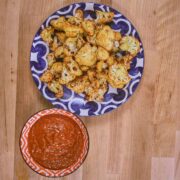
Roasted Cauliflower Bravas
Cauliflower Bravas are oven-roasted cauliflower florets tossed in a smoky spice blend and served with a bold, brick-red brava sauce seasoned with smoked paprika, cayenne, and achiote oil. A Spanish tapas classic reimagined as a naturally low-carb and vegetarian appetizer or side dish.
Servings: 4 servings
Calories: 112kcal
Equipment
- 1 Lodge braiser
Ingredients
- 1 head cauliflower cut into florets
Spice Blend
- ¼ teaspoon cayenne pepper
- 1 tablespoon achiote powder
- 1 tablespoon smoked paprika
- 1 tablespoon adobo
- 1 teaspoon cumin
- 1 teaspoon salt
- 1 teaspoon black pepper
Sauce
- 1 tablespoon olive oil
- 1 small yellow onion peeled and diced
- 6 cloves garlic peeled and chopped
- 1 tablespoon achiote oil use olive oil if achiote is not available
- 2 tablespoon red wine vinegar
- 2 tablespoon tomato paste
- ½ cup broth
Instructions
- Start by breaking down the cauliflower. Place the cauliflower upside down with the stem pointing up. Place the tip of the knife and pry the cauliflower in half.1 head cauliflower
- Cut the pieces into bite-sized pieces. To keep the florets looking organic, insert the tip of the knife; you may use a paring knife for this, and separate the florets at the base from the main stem. Once you have your florets ready, place them on a drying rack or over paper towels to absorb any extra water left over from washing.
- Place the ground spices in a bowl and combine.1 tsp salt, 1 tsp black pepper, 1 tbsp smoked paprika, ¼ tsp cayenne pepper, 1 tsp cumin, 1 tbsp adobo, 1 tbsp achiote powder
- Drizzle the cauliflower with olive oil and one to two teaspoons of seasoning. Mix thoroughly.1 tbsp olive oil
- Place the cauliflower on the baking sheet with a drying rack (if available). My baking sheet has divots that allow for air circulation. You can line the baking sheet with parchment for ease of cleaning. Roast the cauliflower at 425℉ for 15-20 minutes.
- In a saute pan, heat the olive oil and add the onions. Once the onions are translucent, add the chopped garlic and saute until soft.1 small yellow onion, 6 cloves garlic
- Add the achiote oil with the rest of the spices and lightly toast before adding the tomato paste. Caramelize the tomato paste, and add the vinegar.1 tbsp achiote oil, 2 tbsp tomato paste, 2 tbsp red wine vinegar
- Deglaze the pan by adding the broth, lifting the browned bits from the pan. Cook at a low simmer for about 5 minutes, or until the vegetables are soft.½ cup broth
- Using an immersion blender, puree the sauce until it reaches a creamy, smooth texture. If the sauce seems too oily, make a slurry of 1 tablespoon water and 1 tablespoon cornstarch. Add the slurry a little at a time and allow it to cook before adding more.
- Remove the cauliflower from the oven. Let it rest for 5 minutes before serving in a bowl with a drizzle of brava sauce or on the side.
Notes
Top Tip
Don’t skip the tomato paste cook-down. Letting it caramelize in the pan for a full minute before adding any liquid is what gives the brava sauce its deep, jammy flavor. Rushed tomato paste just tastes sharp; cooked tomato paste tastes like something.
Expert Tips
- Use a rack if possible. Elevating the cauliflower on a wire rack set over a baking sheet allows heat to circulate beneath the florets, promoting browning rather than steaming. A perforated pan works the same way. If you only have a standard sheet pan, flip the cauliflower halfway through without skipping it.
- Dry the cauliflower thoroughly. After washing the cauliflower, place it on a drying rack for 15 to 30 minutes, then season. Water on the surface creates steam and prevents browning. Dry first, then oil and spice.
- Make the sauce ahead. The brava sauce keeps in the fridge for up to 5 days and actually improves with time. The paprika and achiote deepen as they sit. Reheat gently with a splash of broth to loosen the consistency.
- On leftovers. Roasted cauliflower loses its texture once refrigerated, regardless of the sauce. Reheat in a hot oven or air fryer to revive some crispness, though it won't be quite the same as fresh. I don't own an air fryer, but many readers swear by it for reheating roasted vegetables. What I do is repurpose the leftovers by adding them to my Tortilla Española, and drizzling the reserved brava sauce over the finished dish.
Nutrition
Serving: 4oz | Calories: 112kcal | Carbohydrates: 15g | Protein: 4g | Fat: 5g | Saturated Fat: 1g | Polyunsaturated Fat: 1g | Monounsaturated Fat: 3g | Sodium: 1581mg | Potassium: 632mg | Fiber: 5g | Sugar: 5g | Vitamin A: 1274IU | Vitamin C: 74mg | Calcium: 65mg | Iron: 2mg
