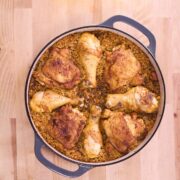
Puerto Rican Chicken And Rice (Arroz Con Pollo)
An original one-pot wonder. Arroz con pollo combines rice and chicken in one pot. Add a few sides like a slice of avocado and some stewed red beans to complete and satisfying meal.
Servings: 6 servings
Calories: 219kcal
Equipment
Ingredients
- 8 pcs bone-in chicken thighs and legs boneless/skinless work as well, the cooking time will be slightly less.
- 2 tablespoon adobo
- 2 tablespoon achiote oil
- 1 oz cooking ham optional, could also be substituted with bacon
- 1 cup onion small diced. (1 small onion or half of large)
- ½ cup Cubanelle pepper small diced. (about 1 pepper)
- 1 tablespoon garlic paste
- 1 tablespoon sofrito
- 1 tablespoon tomato paste or tomato sauce
- 1½ cups rice
- 1 ½ cup chicken broth or water
Instructions
- Season the chicken: Season and marinate the chicken in advance if possible. Use adobo and a little achiote oil. Allow it to marinate for at least 30 minutes at room temperature or overnight. Marinating overnight will make the chicken stand out and develop its own flavor.8 pcs bone-in chicken thighs and legs, 1 tbsp adobo, 1 tbsp achiote oil
- Sear the chicken: Sear the chicken in sections in the pan you will use for the rice over medium to medium-high heat. This step introduces the chicken flavor early into the dish, which the rice will absorb as it cooks. Once the chicken browns on all sides, remove it from the pot and set aside.
- Aromatics: Add the cooking ham and brown it, then add the onions and Cubanelle pepper, and sauté until translucent. Once these are browned, add sofrito, garlic paste, and tomato paste for a quick caramelization of flavors.1 oz cooking ham, 1 cup onion, ½ cup Cubanelle pepper, 1 tbsp garlic paste, 1 tbsp sofrito, 1 tbsp tomato paste
- Toasting the rice: Add rice and achiote oil. Toss the rice in the oil to coat the grains and absorb the flavors.1 tbsp achiote oil, 1½ cups rice
- Adjust for color: If your rice seems a bit more pale, add another tablespoon of achiote oil.
- Putting it all together: Add the broth or water. Taste and adjust flavors with salt, pepper, or adobo. Add the chicken pieces to the top of the pot, along with any residual juices from the plate where the chicken was resting. Cook uncovered for about 5 minutes.1 ½ cup chicken broth, 2 tbsp adobo
- Cover: Cover the rice once the liquid begins to absorb and the rice starts to peek through, but there is still liquid in the pot. Lower the heat to the lowest setting and cook for about 15 minutes. You can cover the rice with banana leaves for a touch of pasteles aroma.
- Fluff: The pot may be crowded with chicken, but use a fork to fluff the rice and test for doneness. If the rice still needs a bit longer, add about a quarter cup of water, cover, and let it cook on the lowest setting for another 5 minutes. Once cooked, let the rice rest covered off the heat for 5 minutes before serving.
Notes
- Wash the rice: There is much debate about whether or not to wash the rice. I grew up sorting or picking through the rice for undesirable twigs, small stones, or off-color rice grains. After picking through the rice, we would wash and rinse it at least three times.
- To wash the rice: Place the rice in a bowl and fill with water to wash the rice. Toss the rice with your fingers for a few seconds, then pour the water onto your other hand while holding on to any grains that escaped with the water. Repeat three times.
- Water needed for cooking: It has been my experience to use the same amount of water as rice. So, for every cup of rice, use a cup of water. You can always adjust the water towards the end of the cooking process, but you can't remove the excess water once you have added it.
- The rice is not cooked: The basic formula that has worked for me has been to cook the rice uncovered for about 5 minutes, with a roaring simmer. Then, lower the heat to low, cover it, and cook it for 10 to 15 minutes. Check for doneness and allow to sit covered for 5 minutes away from the heat.
- If the rice was still mostly raw: then there was not enough water to begin with. Add another one to two ounces (about a quarter of a cup), and cook for an additional five to ten minutes.
- Tomato Paste: Cooking the tomato paste with the Sofrito will start to caramelize the tomato paste giving the paste a bit of taste and sweetness. I use tomato paste over tomato sauce often, so I do not have tomato sauce available all the time. If you do have tomato sauce and not paste, just use one to two tablespoons instead of tomato paste.
Nutrition
Serving: 8oz | Calories: 219kcal | Carbohydrates: 44g | Net Carbohydrates: 42g | Protein: 6g | Fat: 2g | Saturated Fat: 0.4g | Polyunsaturated Fat: 0.3g | Monounsaturated Fat: 1g | Trans Fat: 0.002g | Cholesterol: 5mg | Sodium: 1337mg | Potassium: 195mg | Fiber: 2g | Sugar: 3g | Vitamin A: 675IU | Vitamin C: 29mg | Calcium: 36mg | Iron: 1mg | Phosphorus: 79mg
