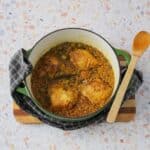
Puerto Rican Arroz con Pollo, Chicken and Rice
An original one-pot wonder. Arroz con pollo combines rice and chicken in one pot. Add a few sides like a slice of avocado and some stewed red beans to complete and satisfying meal.
Servings: 4 servings
Calories: 333kcal
Ingredients
- 8 pcs bone-in chicken thighs and legs boneless/skinless work as well, the cooking time will be slightly less.
- 1 tablespoon Garlic Paste
- 2 tablespoon Adobo some for the chicken and the rest for the dish
- 1 tablespoon Paprika
- 1 Small Onion, or half of a medium/large Small Diced
- 1 tablespoon Sofrito
- 1 tablespoon Sazon
- 1 tablespoon Tomato Paste
- 1½ Cups Rice
- 1 tablespoon Achiote Oil
- 1 ½ cup Chicken broth
- 12 Manzanilla Olives
- 1 teaspoon Capers
- 1 Bay Leaf
Instructions
- Season and marinate the chicken with garlic paste, adobo, and paprika in advance. Allow the chicken to marinate at room temperature for at least 30 minutes, or overnight if time allows. You want the chicken to hold its own flavor separate from the rice.8 pcs bone-in chicken thighs and legs, 1 Tbsp Garlic Paste, 2 Tbsp Adobo, 1 Tbsp Paprika
- Heat a Dutch oven or large pot that can hold all the chicken and rice over medium-high heat. Add olive oil or achiote oil. Once hot but not smoking, begin to sear the chicken. Let the chicken sear on one side undisturbed for about 3-4 minutes, then flip it over. Do not crowd the chicken; sear it in batches. We do not want the chicken fully cooked.
- Once the chicken has browned on all sides, remove it from the pot and set it aside. Lower the heat to medium and add the diced onions to the pot, sautéing until translucent. Do not walk away from the pot; onions could burn quickly.1 Small Onion, or half of a medium/large
- Add sofrito, tomato paste, sazon, and adobo to the onions. We are building the flavor profile for the rice and, in part, the chicken. Sauté all the ingredients until lightly caramelized.1 Tbsp Sofrito, 1 Tbsp Sazon, 1 Tbsp Tomato Paste
- Add rice and extra achiote oil. Toss the rice in the oil to cover the grains. Cook until the rice begins to look opaque. Adjust the heat if necessary.1½ Cups Rice, 1 Tbsp Achiote Oil
- Once the rice is coated with all the flavors, incorporate the chicken. Add broth, olives, capers, and bay leaf. Allow to simmer uncovered for five. We are looking for a rapid boil, and the rice will begin to dry. If it is boiling too fast, lower the heat. After five minutes, cover and bring the heat to low for an additional 15 minutes.1 ½ cup Chicken broth, 12 Manzanilla Olives, 1 Tsp Capers, 1 Bay Leaf
- The rice should have absorbed the liquid. Check for doneness by tasting the rice to see if the grains are fully cooked. If grains are still hard, add about 1 ounce to a ¼ cup (2 ounces) of water. Cover and let cook on low for another 5 to 10 minutes. Once cooked, turn the rice with a fork and serve.
Notes
- Wash the rice: There is much debate about whether or not to wash the rice. I grew up sorting or picking through the rice for undesirable twigs, small stones, or off-color rice grains. After picking through the rice, we would wash and rinse it at least three times.
- To wash the rice: Place the rice in a bowl and fill with water to wash the rice. Toss the rice with your fingers for a few seconds, then pour the water onto your other hand while holding on to any grains that escaped with the water. Repeat three times.
- Water needed for cooking: It has been my experience to use the same amount of water as rice. So, for every cup of rice, use a cup of water. You can always adjust the water towards the end of the cooking process, but you can't remove the excess water once you have added it.
- The rice is not cooked: The basic formula that has worked for me has been to cook the rice uncovered for about 5 minutes, with a roaring simmer. Then, lower the heat to low, cover it, and cook it for 10 to 15 minutes. Check for doneness and allow to sit covered for 5 minutes away from the heat.
- If the rice was still mostly raw: then there was not enough water to begin with. Add another one to two ounces (about a quarter of a cup), and cook for an additional five to ten minutes.
- Tomato Paste: Cooking the tomato paste with the Sofrito will start to caramelize the tomato paste giving the paste a bit of taste and sweetness. I use tomato paste over tomato sauce often, so I do not have tomato sauce available all the time. If you do have tomato sauce and not paste, just use one to two tablespoons instead of tomato paste.
Nutrition
Serving: 8oz | Calories: 333kcal | Carbohydrates: 64g | Net Carbohydrates: 61g | Protein: 7g | Fat: 5g | Saturated Fat: 1g | Polyunsaturated Fat: 1g | Monounsaturated Fat: 3g | Trans Fat: 0.003g | Cholesterol: 4mg | Sodium: 2114mg | Potassium: 267mg | Fiber: 3g | Sugar: 2g | Vitamin A: 997IU | Vitamin C: 4mg | Calcium: 59mg | Iron: 2mg | Phosphorus: 118mg
