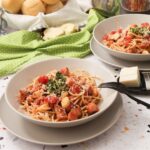
Seafood Pomodoro with Linguine
Seafood Pomodoro is a bold, tomato-based seafood pasta made with a mix of scallops, squid, shrimp, and mussels simmered in garlicky tomato sauce. Tossed with linguine, it’s quick, satisfying, and loaded with coastal flavor. Whether you’ve got a fresh catch or a frozen seafood mix, this flexible dish brings the beach to your kitchen — no stress, just sabor.
Servings: 4 servings
Calories: 104kcal
Ingredients
- 2 tablespoon olive oil extra virgin
- 1 shallot small dice
- 1 tablespoon garlic paste
- 2 oz ham diced
- 1 tablespoon tomato paste
- 1 tablespoon italian seasoning
- 1 cup wine
- 1 cup fish broth
- 1 can tomatoes diced or crushed
- ½ pound linguine
- 1 pack seafood medley or choice of fresh seafood
- 1 lemon zested
- 3 cloves garlic chopped
- 2 leaves culantro sub with parsley
- 1 sprig oregano optional
Instructions
- If you're using fresh seafood, please refer to the notes below.
- Heat Extra Virgin Olive Oil. Sautee diced shallots until soft and tender, then add garlic paste.
- Add diced ham and brown with shallots and garlic.
- Caramelize tomato paste.
- And add Italian seasoning. Be careful not to burn the pan, but do caramelize the ingredients to bring forth their aroma and flavor.
- Deglaze the pan with wine; you may use red or white. Add canned tomatoes and fish broth to lift the caramelized residue from the pot. Allow to simmer on medium-low heat for 10-15 minutes, allowing the flavors to incorporate.
- While the sauce brews its flavors, start cooking the pasta. Bring water to a boil in a pot. Once it boils, add salt to the water; you want the water to have a salty taste, similar to the sea. This will bring flavor to the pasta, and the pasta will not have to rely on the sauce.
- Cook the pasta until al dente, meaning that when you eat it, it has some chewiness and is not soft. Sometimes, it is better to undercook than overcook. Remember, this pasta will be tossed in the sauce.
- Drain the pasta and reserve some of its liquid in case our sauce dries.
- Chop the lemon zest, fresh garlic, culantro (or substitute with cilantro or parsley), and oregano (optional).
- Mix the herbs with garlic to make a gremolata. This will give your pasta a fresh, bright taste.
- Add seafood to the sauce and cook for about 5 minutes.
- Add pasta.
- Toss pasta and seafood together and cook for an additional 5 minutes. Serve in bowls, topped with gremolata and, optionally, shredded Parmesan or Asiago cheese.
Notes
🦐 Cooking with Fresh Seafood?
If you’re using fresh seafood instead of frozen, here’s how I’d do it: choose 20/30 sea scallops, 16/20 shrimp, and about one lb. of mussels. Sear the scallops to get a golden crust—don’t cook them through. Same with the shrimp—just until pink, then remove and set aside. Begin by sautéing the sauce with shallots and garlic. While the pasta cooks, add the mussels to the sauce with extra fish broth if needed. Once the mussels open, add the scallops and shrimp (plus their juices), then toss in your pasta. Fancy, flavorful, and worth it.🔥 Top Tip:
Don’t skip the caramelization—this step builds the foundation of flavor. When tomato paste darkens and sticks slightly to the pan, that’s where the magic lies. Deglazing with wine captures all that flavor and lifts it straight into your sauce. 💡 Expert Tips:- Shallots vs. Onion: Shallots give a milder, slightly sweet flavor that won’t overpower the seafood. It’s a small detail, but it makes a difference in delicate sauces.
- Pasta Water = Liquid Gold: Always save some! A splash can loosen a tight sauce and help the pasta absorb flavor, rather than just getting coated.
- Culantro Gremolata: Using culantro instead of parsley is a nod to Caribbean cooking. It adds a deeper herbal note that plays beautifully against the bright lemon zest.
Nutrition
Serving: 2cups | Calories: 104kcal | Carbohydrates: 13g | Protein: 6g | Fat: 2g | Saturated Fat: 0.4g | Polyunsaturated Fat: 0.2g | Monounsaturated Fat: 1g | Cholesterol: 2mg | Sodium: 258mg | Potassium: 129mg | Fiber: 1g | Sugar: 1g | Vitamin A: 208IU | Vitamin C: 4mg | Calcium: 16mg | Iron: 1mg
