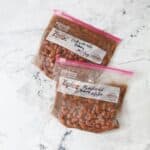
Cooking Dried Beans
Learning how to cook dried beans is key to creating the rich, hearty flavors of traditional Puerto Rican dishes like habichuelas guisadas. It’s not just about convenience; it’s about honoring tradition, enhancing digestion, and making every bite a reflection of Puerto Rican warmth and care.
Servings: 6 servings
Calories: 103kcal
Equipment
- bowl
Ingredients
- 4 cups water
- 1 cup dried beans
Instructions
- Measure your beans and place them on a baking sheet. We are looking for small stones or defective beans. Pull those out of the mix.
- Place the beans in a quart container or pot, leaving enough room to soak and expand. Refrigerate the beans overnight.
- The beans will double in size when rehydrated.
- Rinse the beans a few times, then place them in a large pot. A large pot will help you use the full amount of water without adding more water as the beans soften.
- If you are using the Bouquet garni, cut a piece of cheesecloth. Place half an onion, two bay leaves, and about six peppercorns.
- Gather the cheesecloth around the ingredients and tie the top closed. Then, tie the other end onto the pot handle and drop the bouquet into the pot.
- Bring the beans to a boil, then reduce the heat and simmer until tender for about an hour. Some beans vary in cooking time, so check periodically to find the time for your beans.
Notes
- Choose Quality Beans: Use fresh, dried beans (ideally not over a year). Older beans take longer to rehydrate and may not cook evenly.
- Sort and Rinse: Remove debris, small stones, or broken beans. Rinse thoroughly under cold water to remove dirt or dust.
- No-Soak Option: If you're short on time, cook beans directly without soaking. This works best for smaller beans like lentils or black beans but will take longer.
- Rinse After Soaking: Drain and rinse beans before cooking to remove anti-nutrients or excess starches released during soaking.
- Water Temperature Matters: Always soak beans in cool or room-temperature water to avoid premature splitting.
- Be Aware of the Bean Type: Smaller beans (e.g., lentils, black beans) require less soaking time, while larger beans (e.g., chickpeas, kidney beans) benefit from overnight soaking.
- Cooking After Rehydration: Use fresh water, not the soaking water, for cooking. Add salt halfway through cooking, as early salting can toughen skins. Simmer gently; boiling can cause beans to break apart.
- Freeze Soaked Beans: If you soak too many beans, drain them and freeze them in portions. They’ll cook quickly when you're ready to use them.
Nutrition
Serving: 4oz | Calories: 103kcal | Carbohydrates: 19g | Protein: 7g | Fat: 0.3g | Saturated Fat: 0.05g | Polyunsaturated Fat: 0.2g | Monounsaturated Fat: 0.02g | Sodium: 12mg | Potassium: 417mg | Fiber: 5g | Sugar: 1g | Vitamin C: 1mg | Calcium: 30mg | Iron: 2mg
